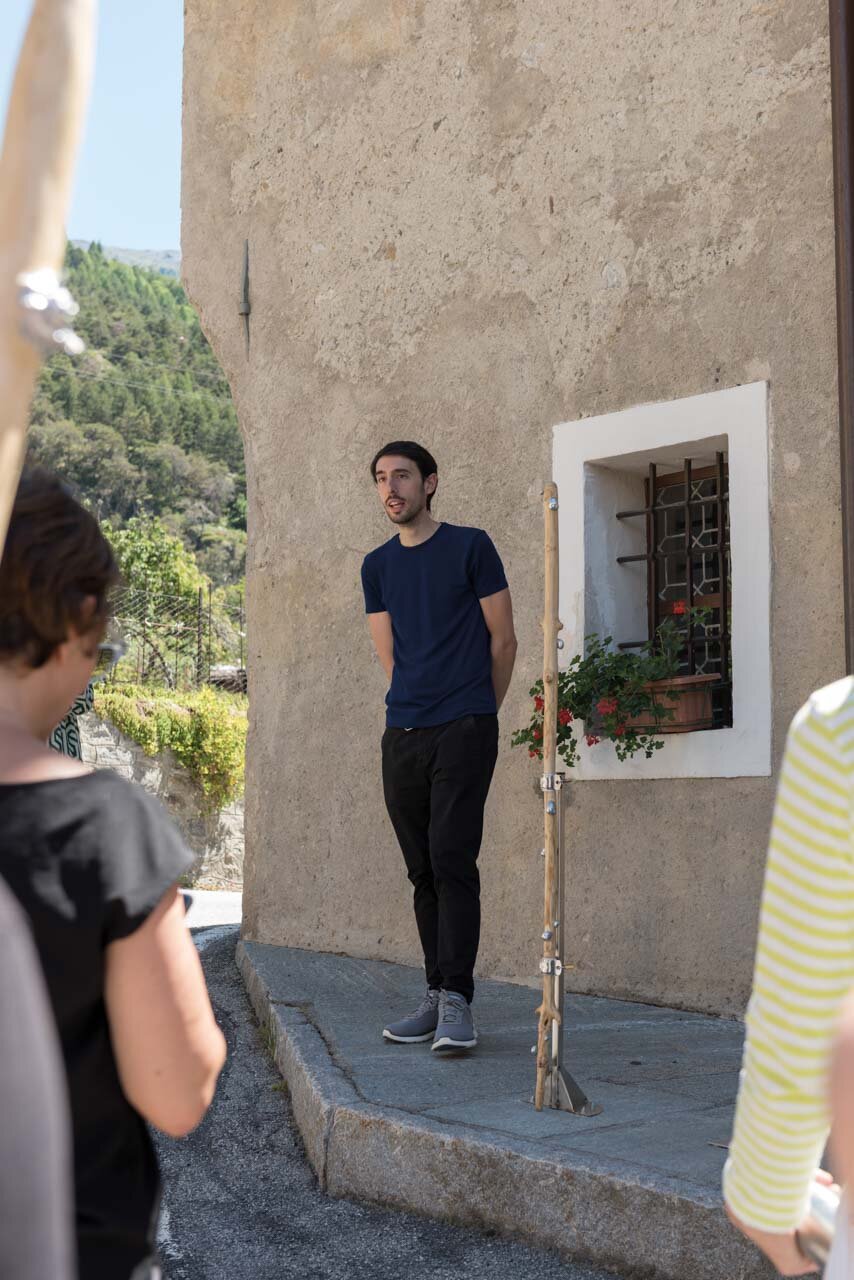
Antonio Della Guardia
Ai camminatori di storie
Funzionali in quanto bastoni di aiuto agli esploratori, le sculture si trasformano durante il cammino in strumenti di evocazione immaginifica. delle entità che danno vita a delle poetiche pratiche performative da compiere sul mondo.
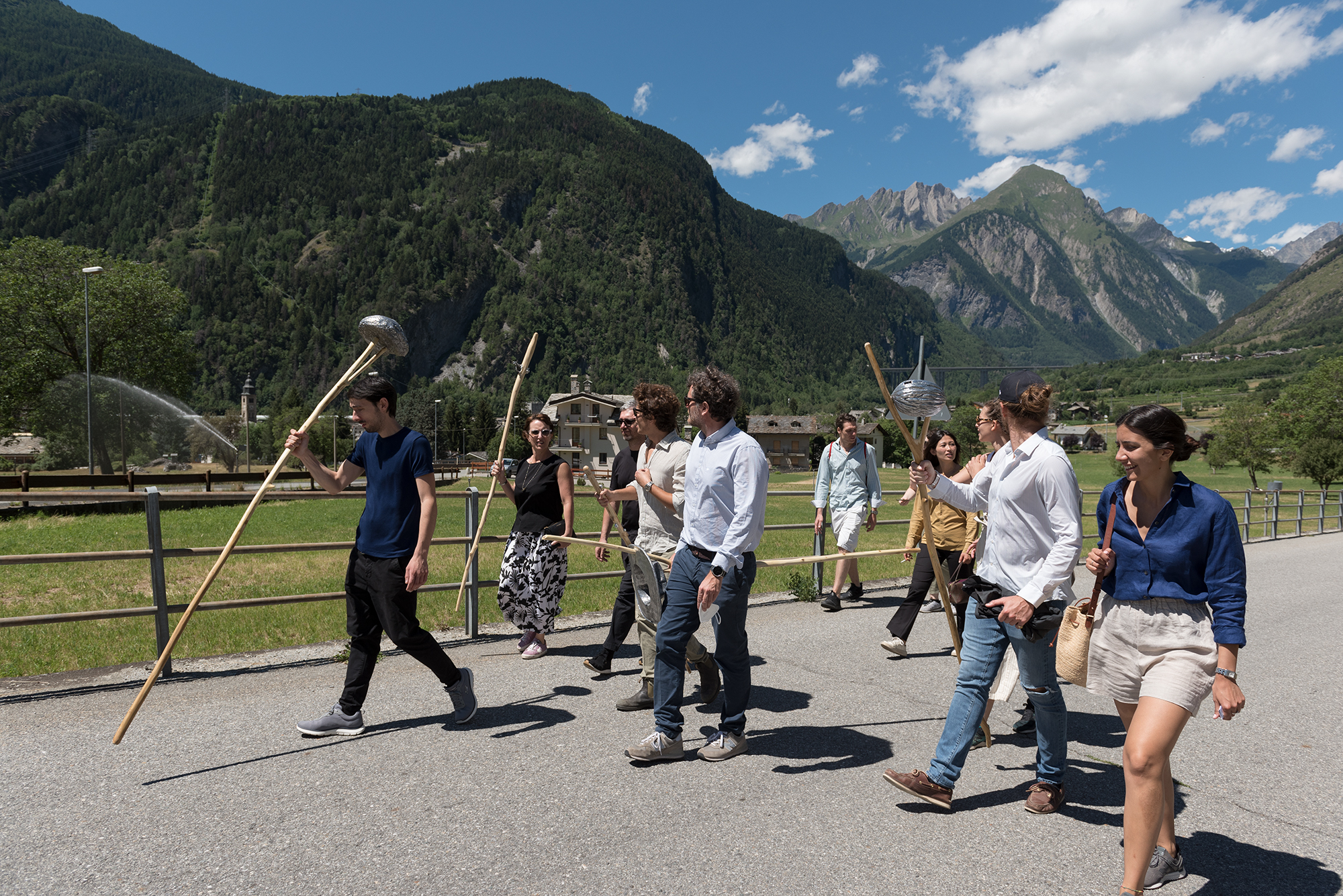
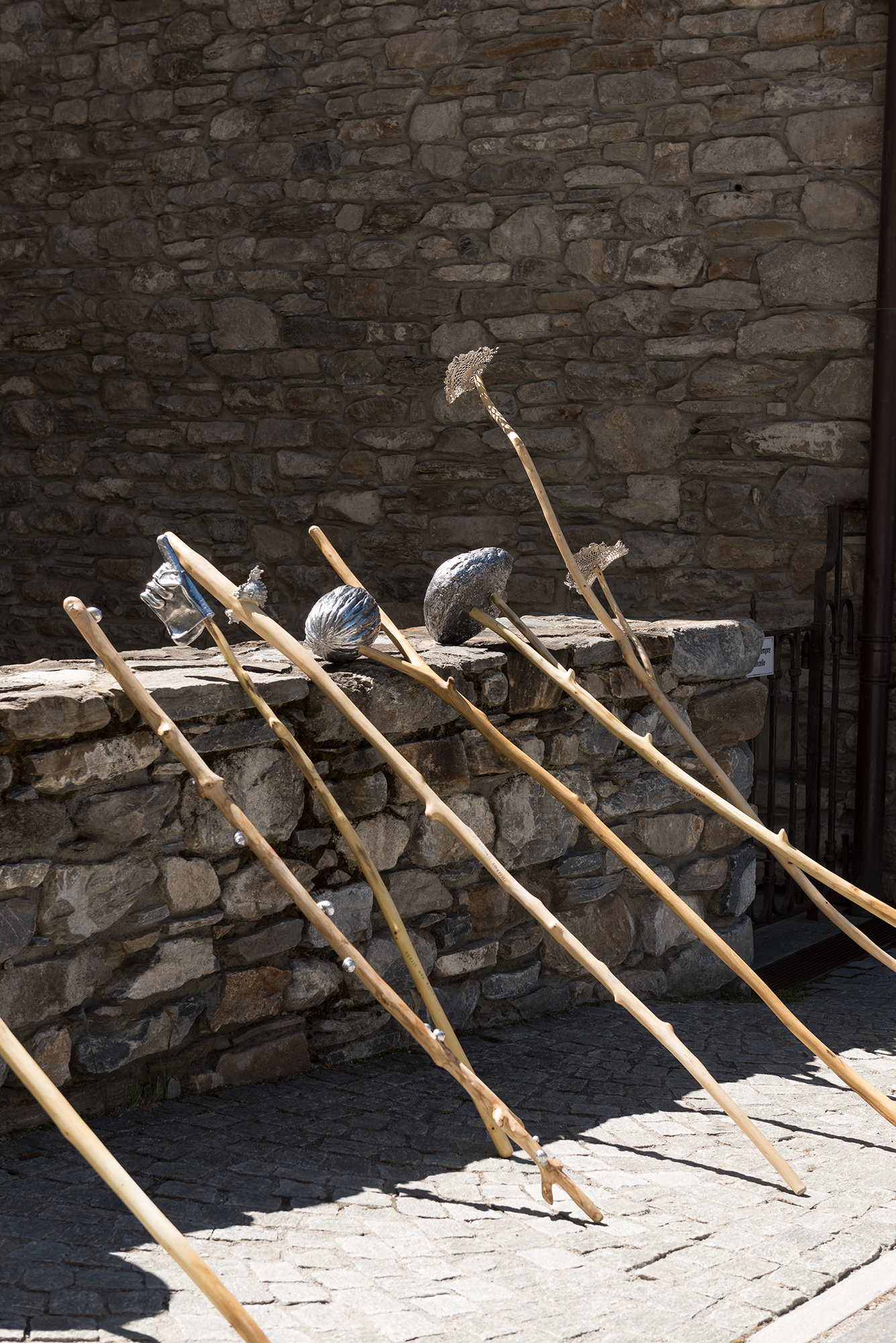
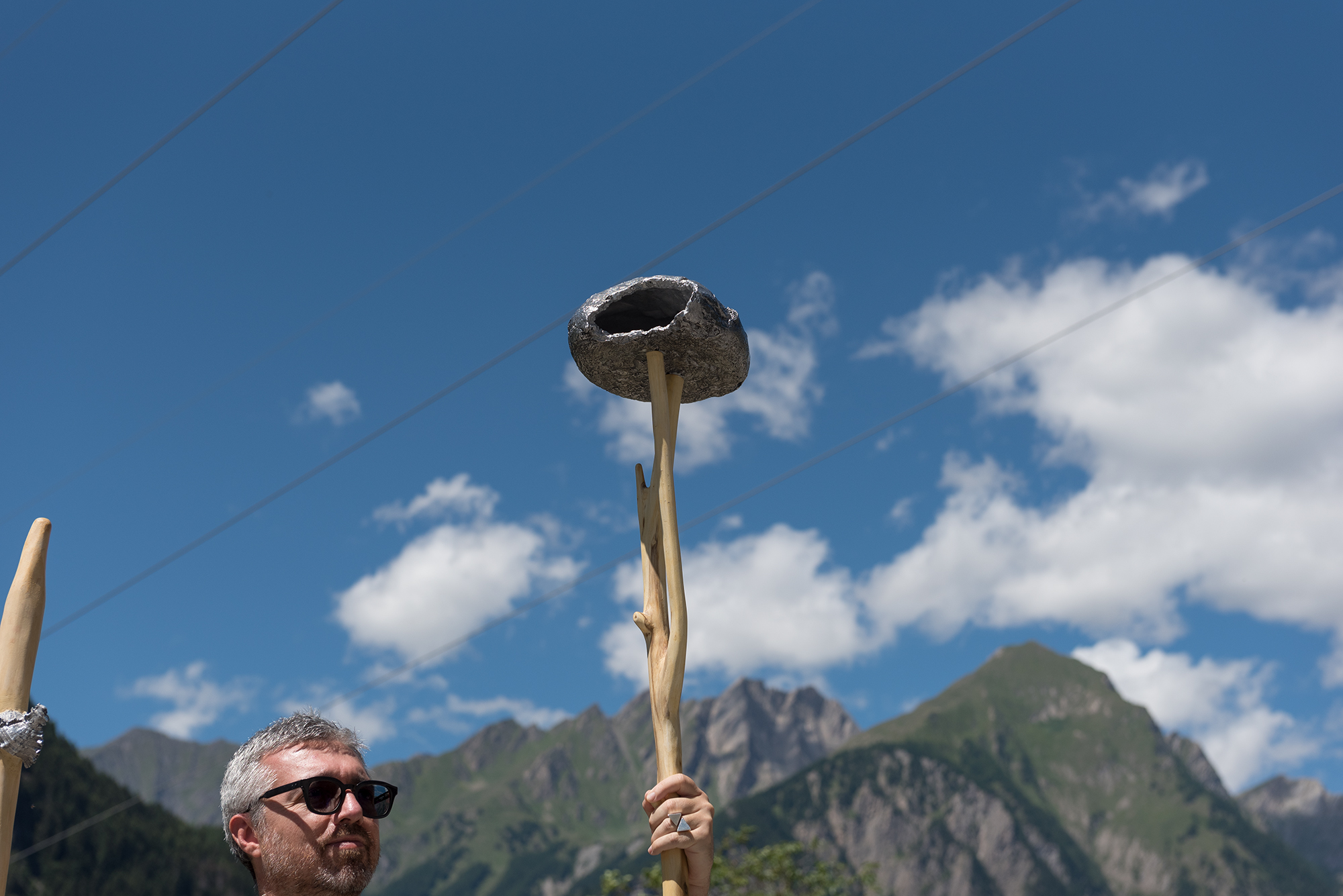
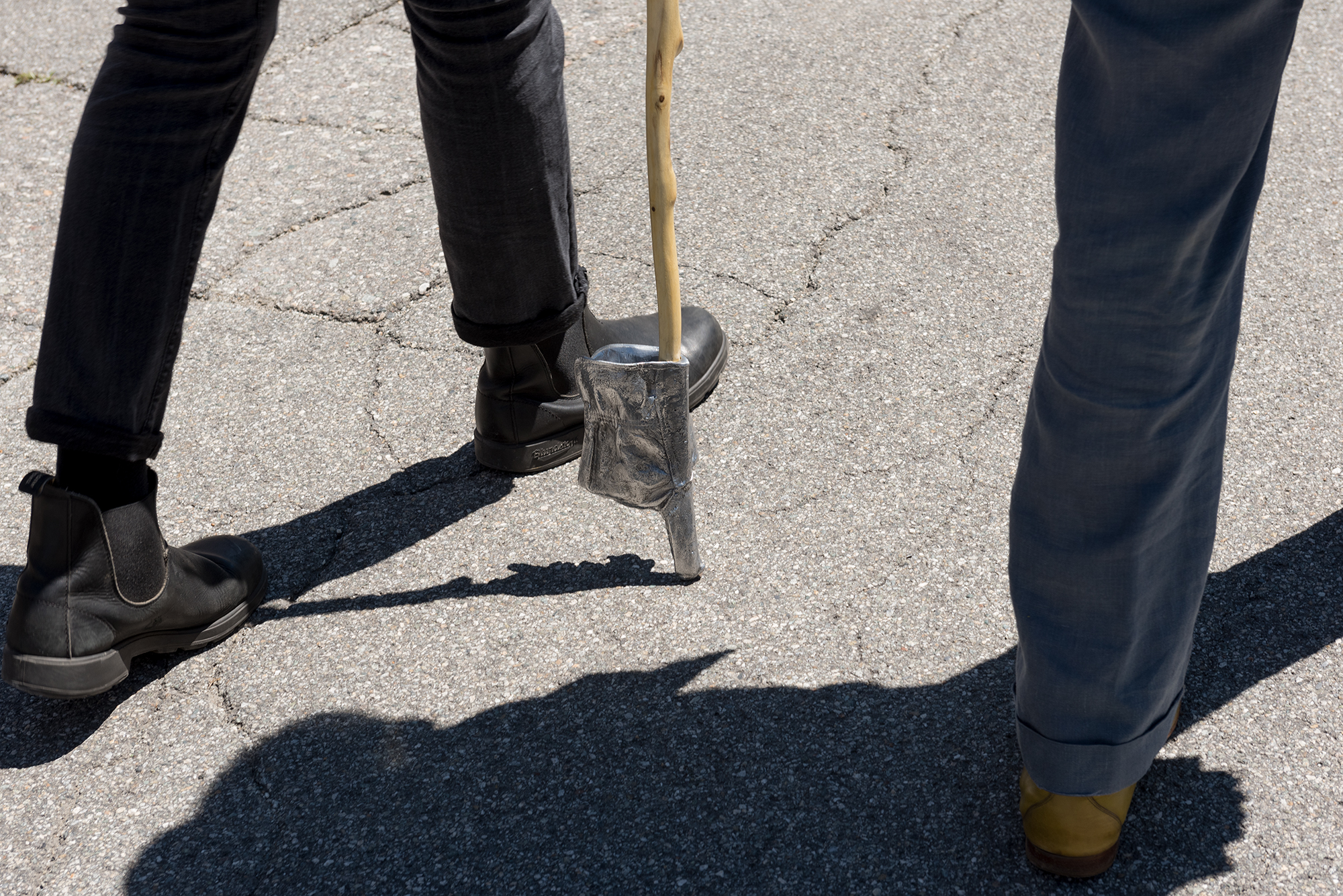
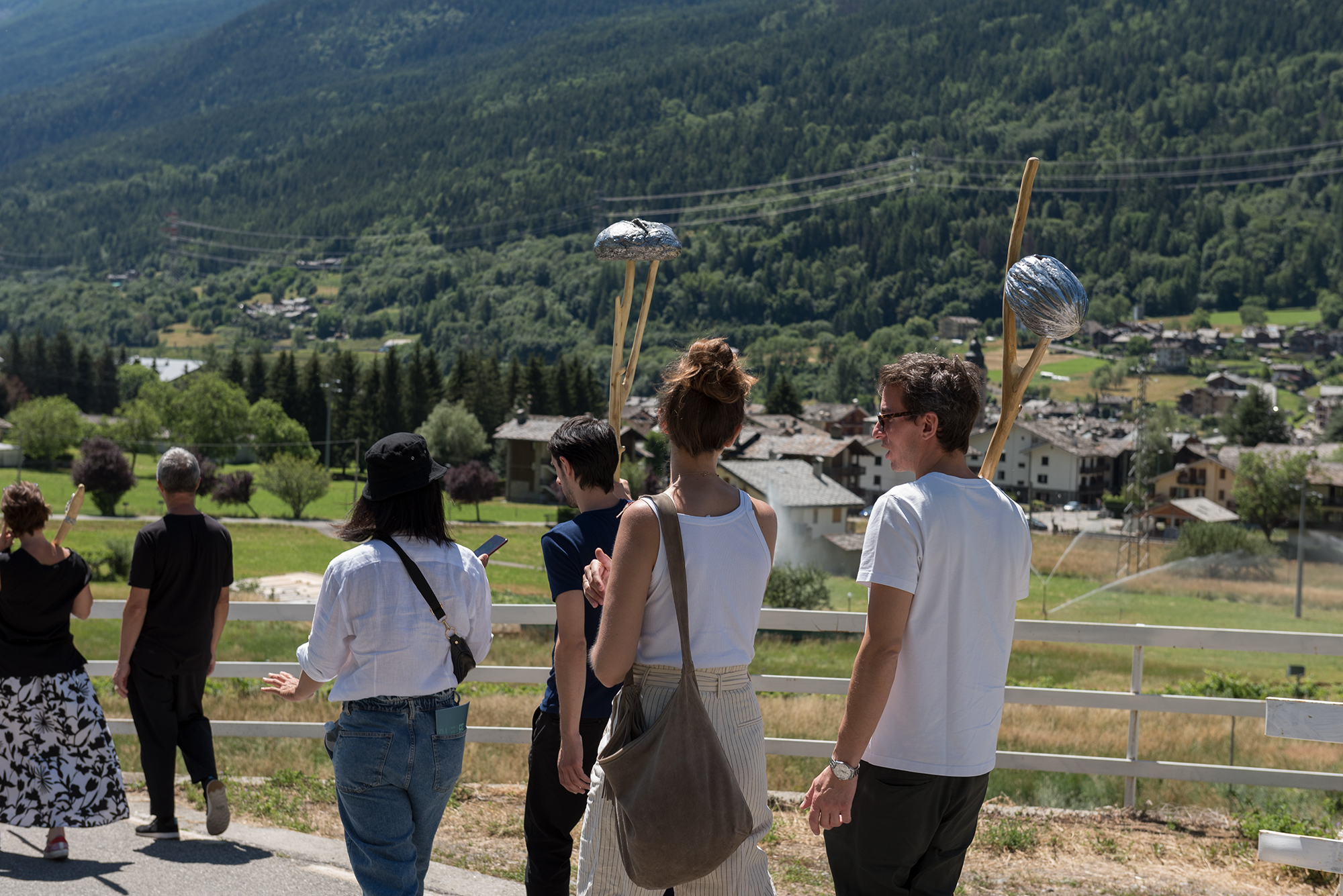
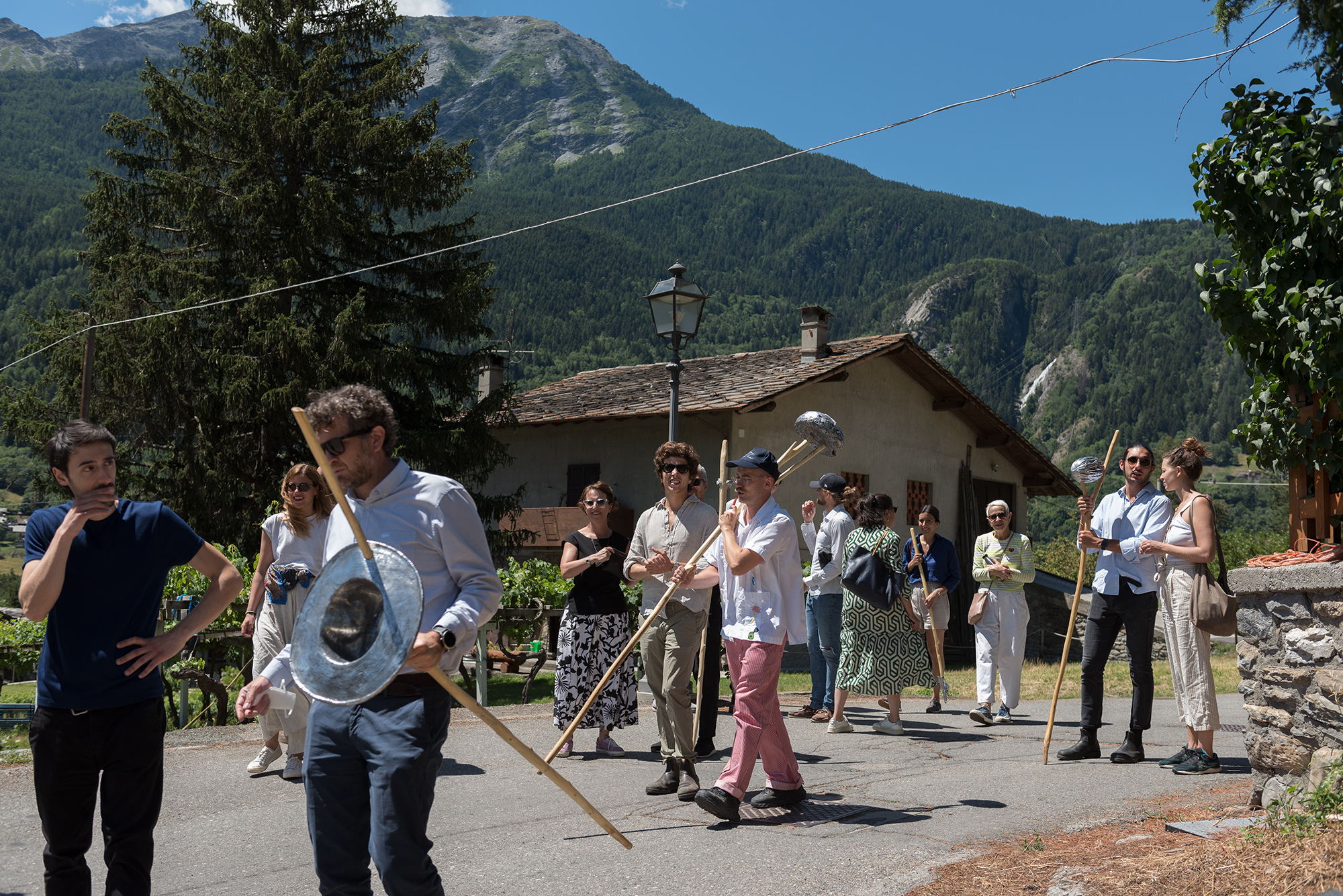
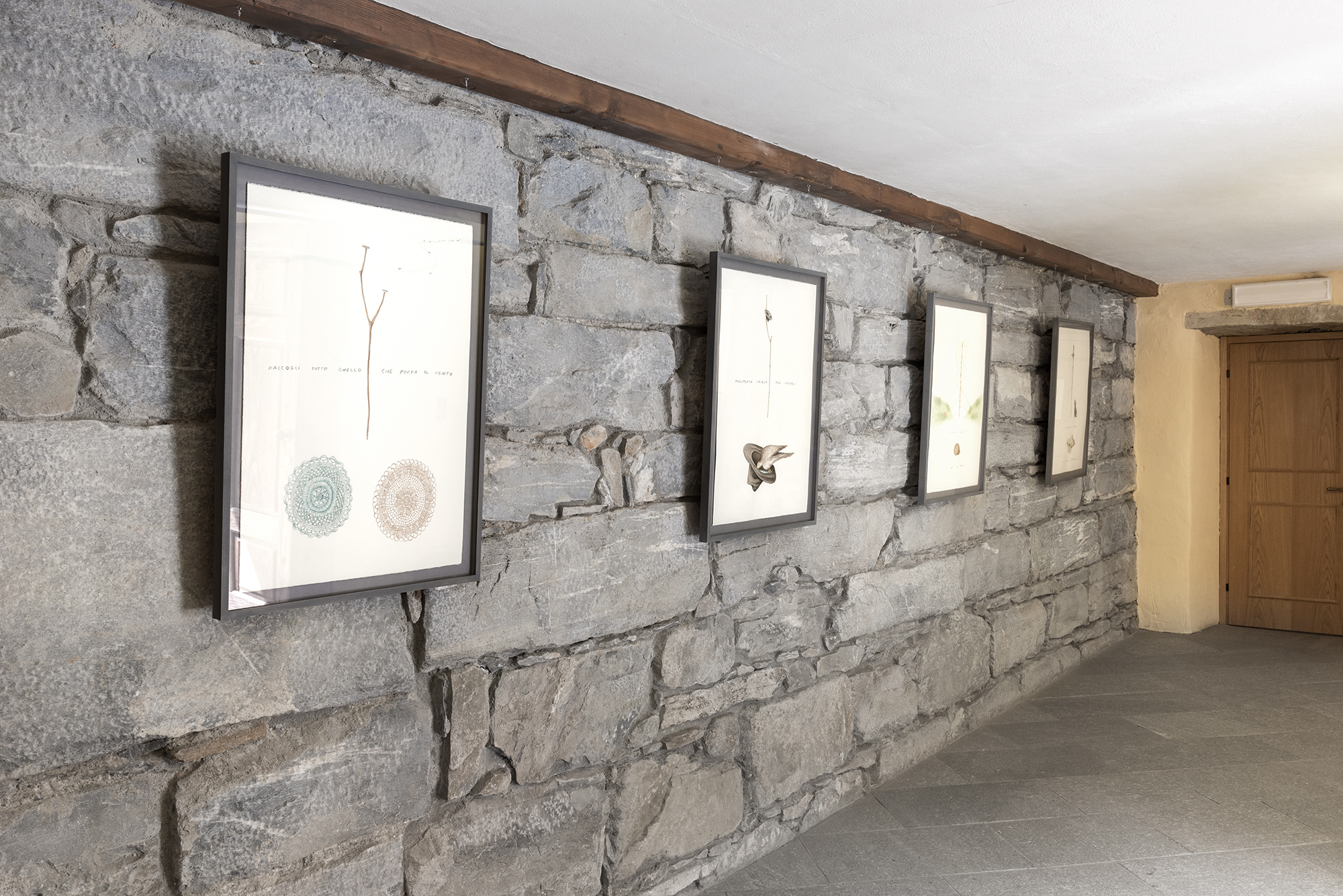
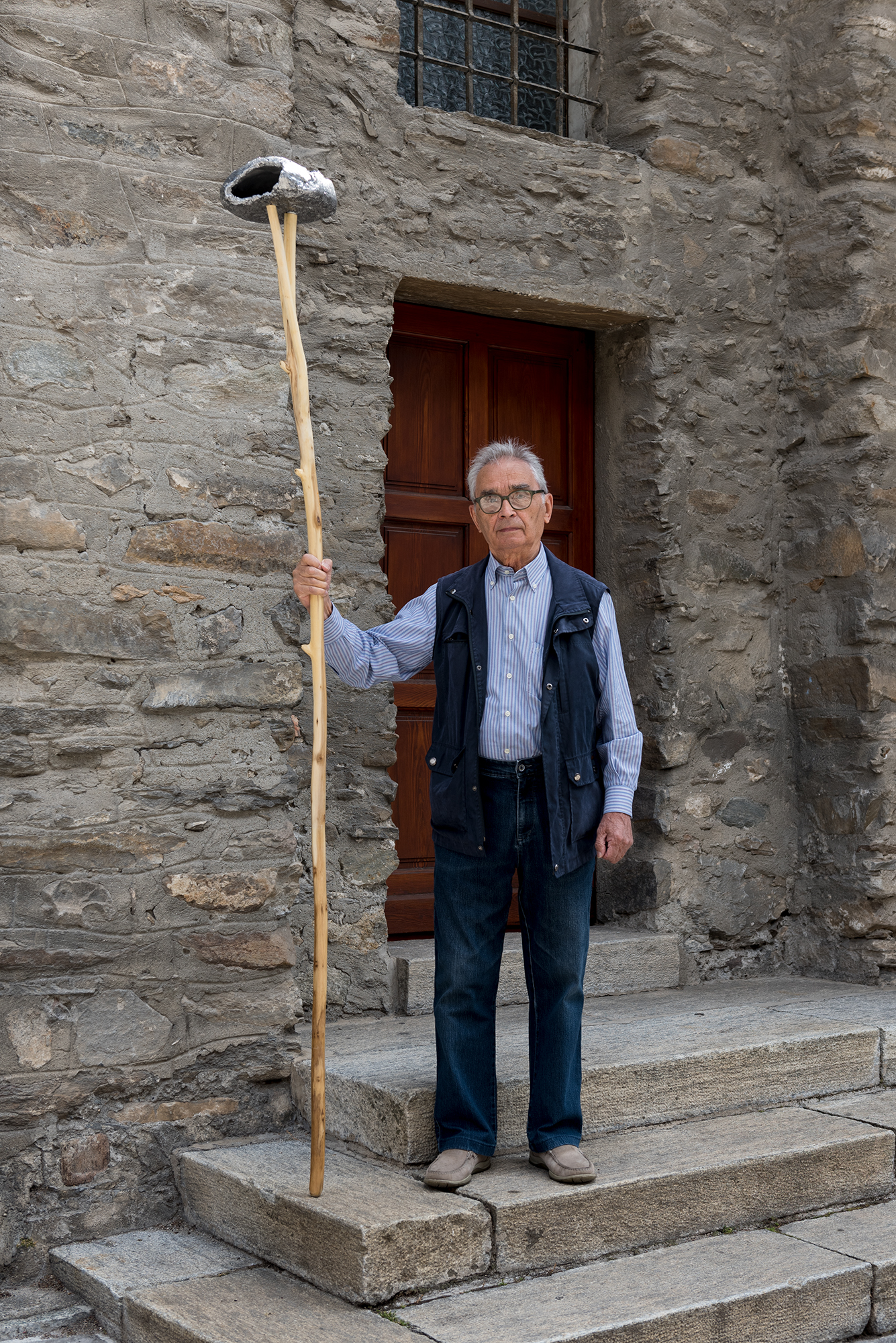
Antonio Della Guardia, Ai camminatori di storie, 2022, Morgex (AO), Valle d’Aosta. Ph Michela Pedranti
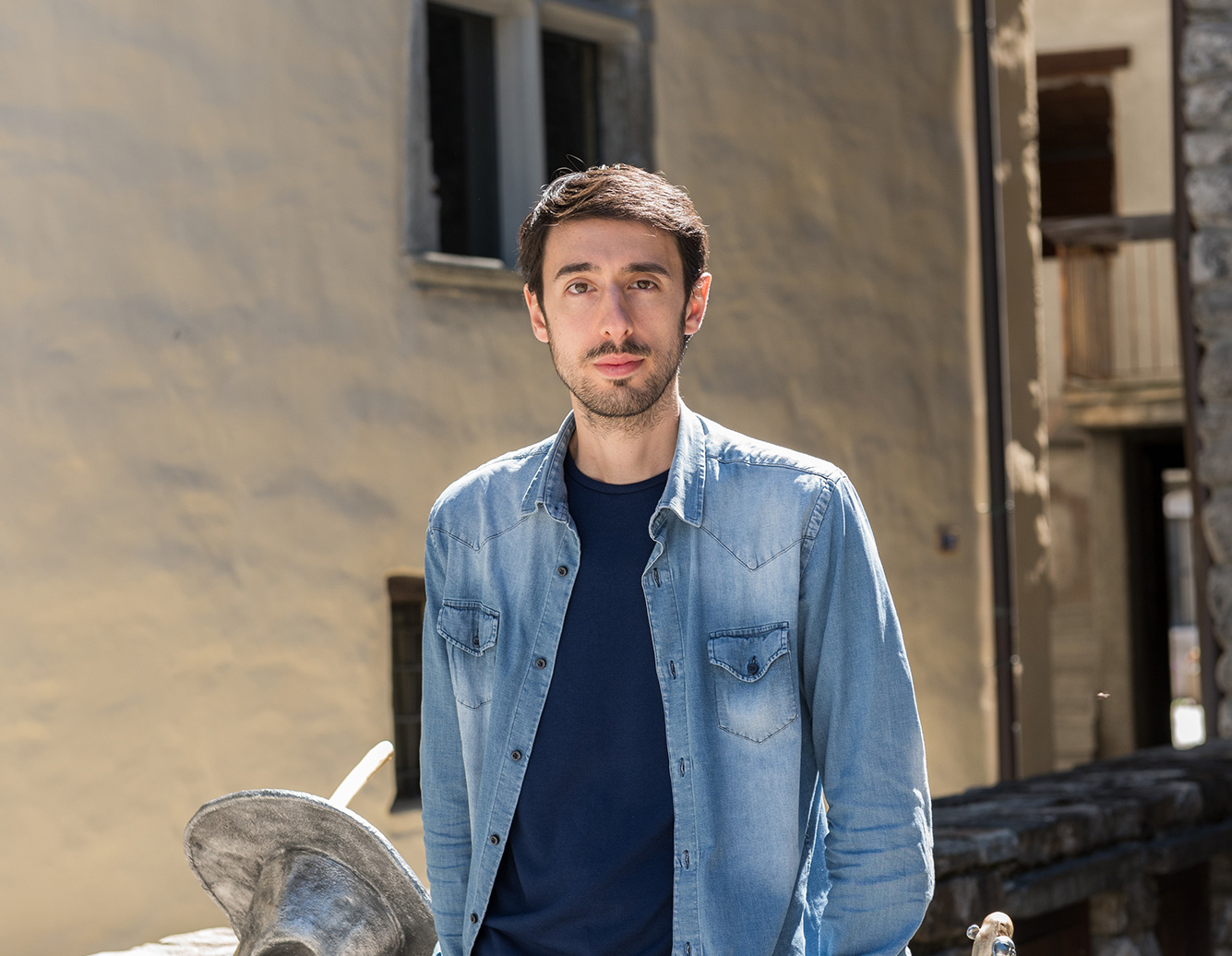
The research of Antonio Della Guardia (Salerno, 1990) focuses on the conditioning imposed by contemporary work on the body, on cognitive processes and on the most intimate spheres of private life, detecting their signs and at the same time imagining poetic forms and strategies of shared emancipation.
Among his personal exhibitions: Per un prossimo reale, Fondazione Pastificio Cerere, Rome (2021); La luce dell’inchiostro ottenebra, Galleria Tiziana Di Caro, Naples (2018); Index, Studioconcreto, Lecce (2018). Some of his group shows: Burning Speech, Fondazione Sandretto Re Rebaudengo, Turin (2021); Panorama, Procida (2021); There is no time to enjoy the sun, Fondazione Morra Greco, Naples (2021); The corrosion of character, l’uomo flessibile, Izolyatsia Platform for Cultural Initiatives, Kiev (2019); Kizart, videoart festival, MAXXI, Rome (2019), Samoupravna interesna zajednica u galeriji waldinger, Galleria Wladinger, Osijek (2018); Mind the gap, Associazione Barriera, Turin (2018); Sensibile comune, le opere vive, Galleria Nazionale d’Arte Moderna e Contemporanea, Rome (2017); Disio, nostalgia del futuro, La Caja, Caracas (2017).
In 2016, he took part in the residence at Fondazione Antonio Ratti in Como.
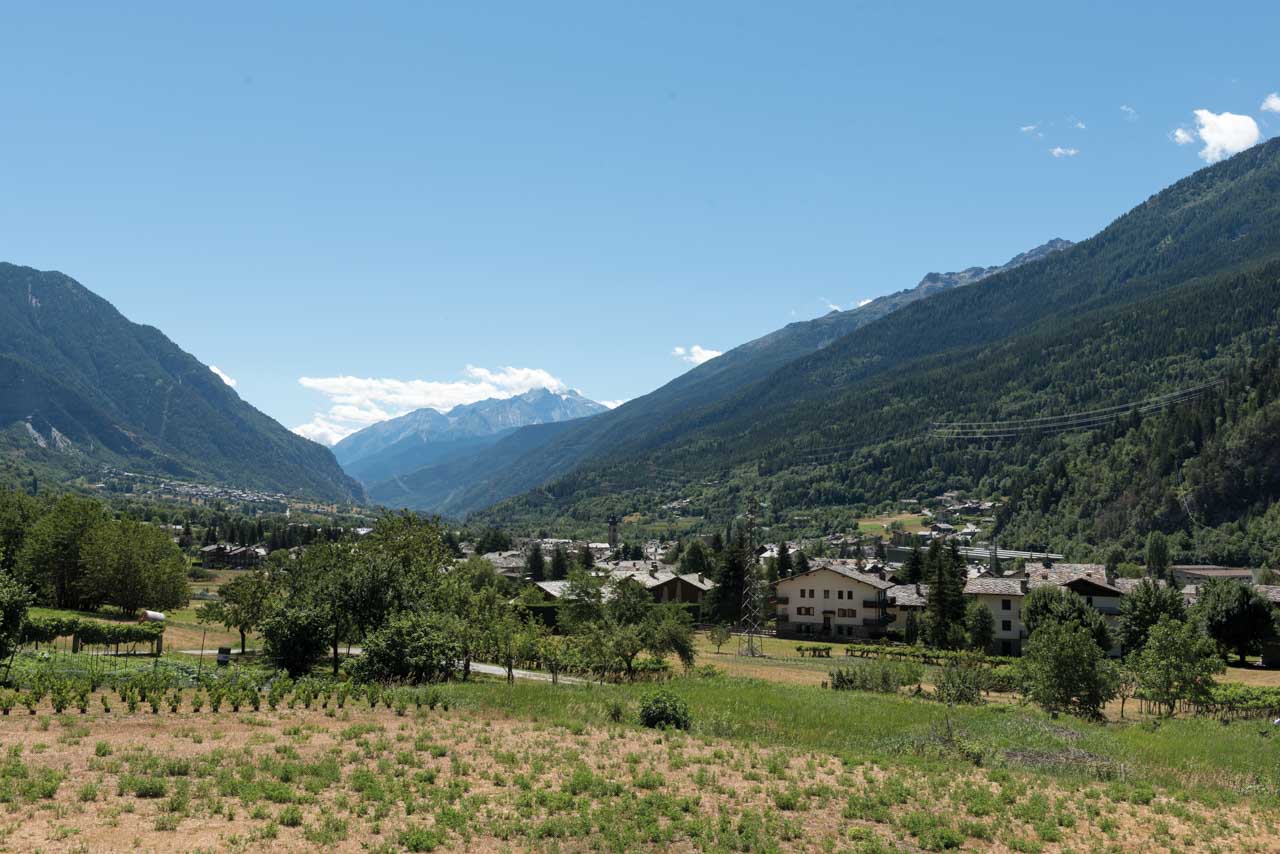
With about 2,000 inhabitants, Morgex is a municipality located over 900 meters above sea level in Valdigne, in the northwestern Aosta Valley. The first inhabitants of Valdigne were the Salassi, a population of Celtic origin who then had to succumb to Roman rule. From the 11th century, under the rule of the Counts of Savoy, Morgex experienced a long period of stability and freedom. Traces of that era can still be seen: the Bozel stronghold in Villair, Pascal Castle in La Ruine and the Tour de l’Archet, in the centre of the village. The tower built around 998 AD is one of the oldest in the region: measuring 21 metres high it makes up the oldest part of Morgex’s castle, a stronghold of the valley floor that leads to France. Today, it is the seat of the “Natalino Sapegno” Center for Historical and Literary Studies Foundation, established in memory of the homonymous professor, literary critic and historian who is among the greatest scholars of fourteenth century Italian literature.
Morgex is home to the highest vineyards in Europe which extend up to 1200 meters above sea level. Here, the “Blanc de Morgex et de La Salle” and the “Chaud de lune” are produced, the grapes of which are harvested at temperatures below zero. The village is also known for its production of excellent produce such as fontina cheese, saffron, honey, apples, cereals, and mountain trout; there is also a historic tradition of coffee roasting. Morgex offers a great variety of routes for lovers of mountain trekking. Walking these routes, you can admire the beauty of the mountain landscapes: Lake d’Arpy, Lake Licony or the Marais Nature Reserve where it is possible to spot various species of water birds during the migratory seasons.