Natalya Marconini Falconer
Canzàre
a cura di Irene Angenica
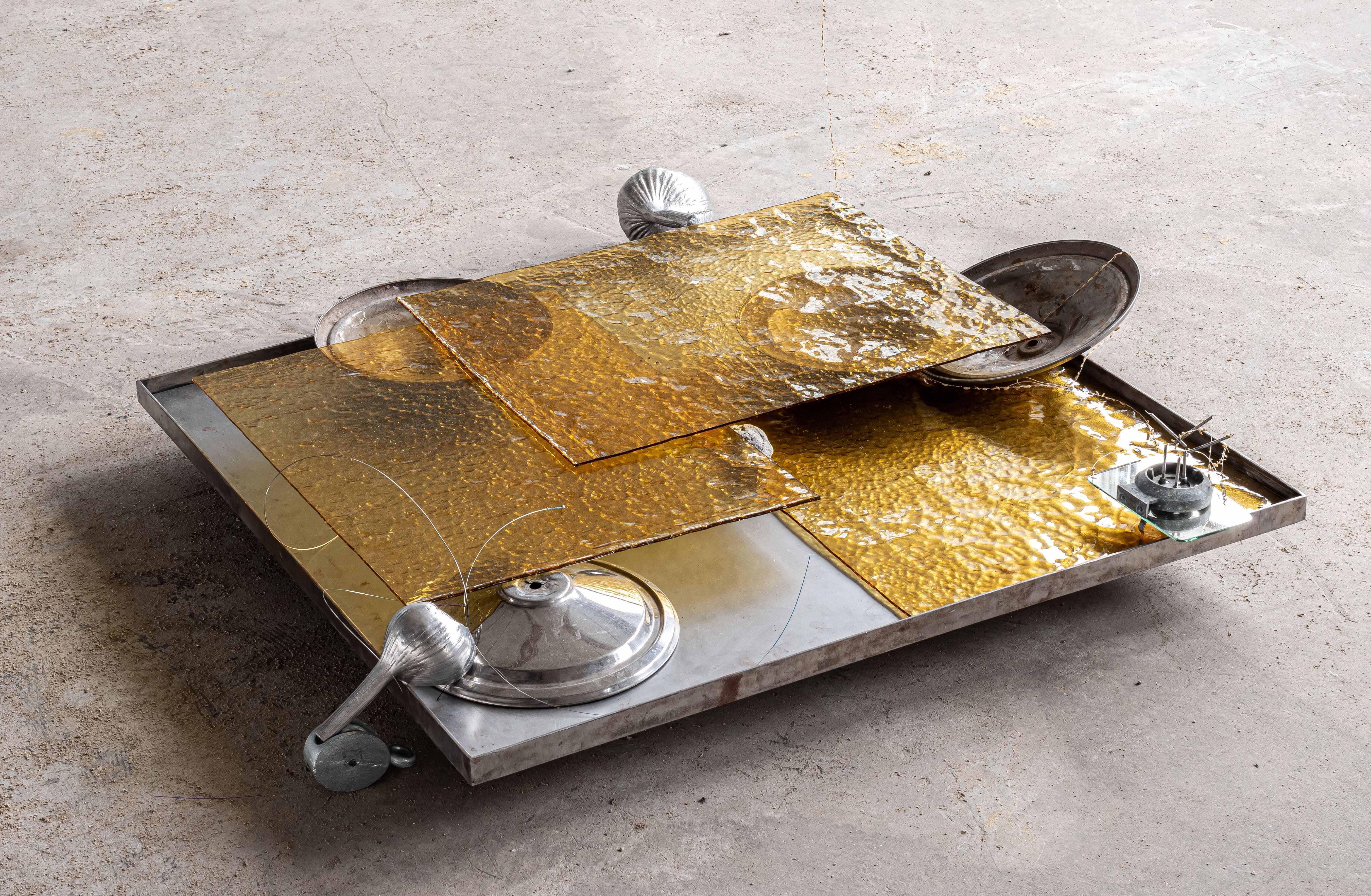
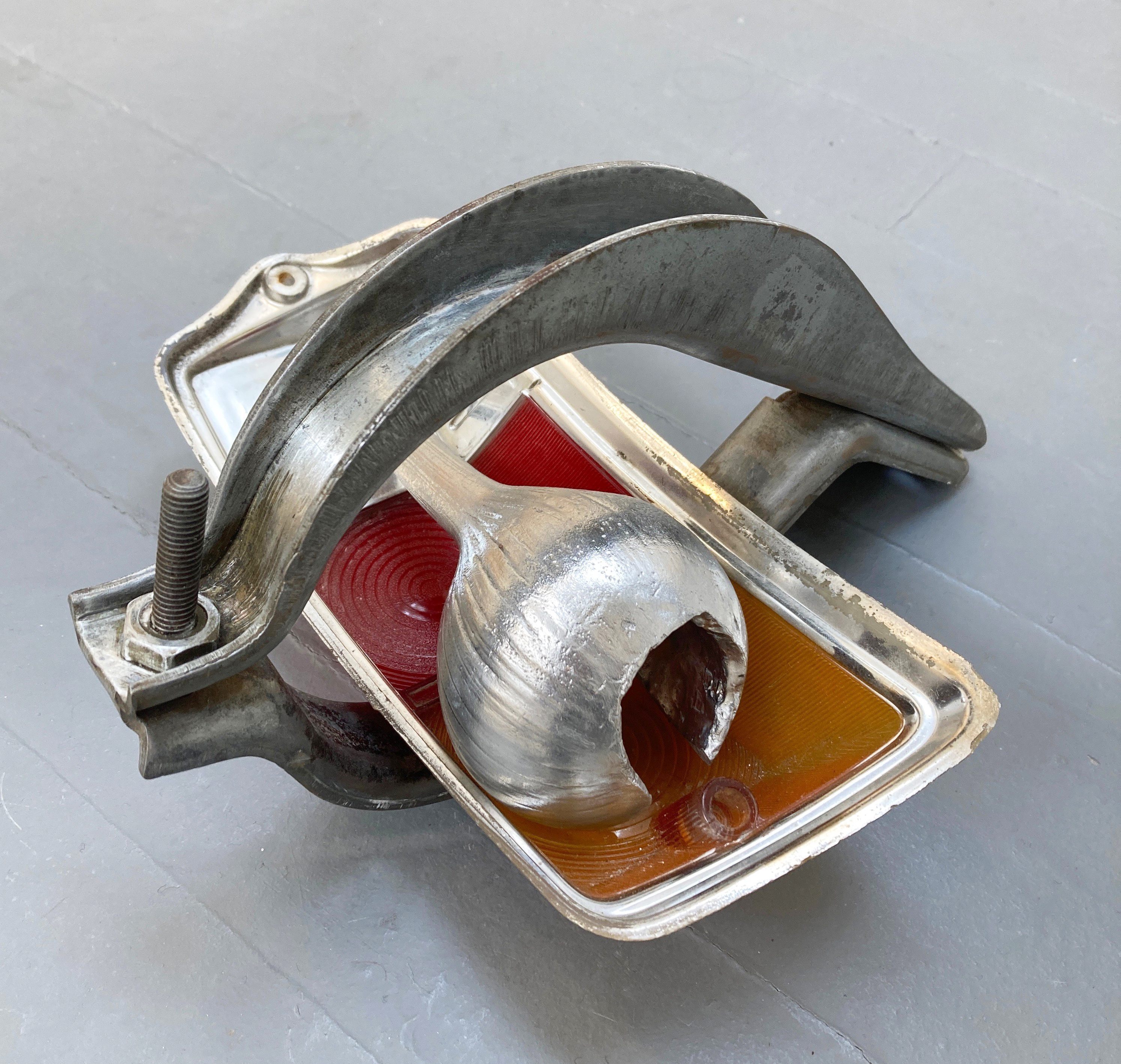
Natalya Marconini Falconer, Upon a single seed - A dizzy music make, 2024. Steel, aluminum, hubcaps, rearview mirror, and spring system from a Fiat 500, violin strings, pumice stone, aluminum pulley, thread, fennel seeds, environmental dimensions. Ph Studio Adamson
"Canzàre means to cross through private land.
A village born from volcanic, generative entropy, made of things that unravel as they become something else. Signs of life, slippery acts of magic, re-emerge from the cracks of destruction. How can material cross through the past, into the present, to tell the stories of what is no longer there?"
In Pofi, the foundations of a house destroyed by the bombings of the Second World War now surface as a small square, whose perimeter still preserves the original layout of the dwelling, with recognizable thresholds and steps. It is from this site that Natalya Marconini Falconer’s project takes shape, developed from impressions gathered during site visits and extended periods of observation.
This space, suspended between private memory and collective use, becomes the starting point of the intervention. The artist proposes a re-signification of the site through the repaving of a portion of the former house, symbolically evoking a process of reconstruction and renewal.
Embedded in the new paving are casts connected to local history, including flint arrowheads found by children in the fields in the 1950s, and traveller’s joy (vitalba), a symbol of resilience. The work takes shape as a tribute to the memory of the place and, at the same time, as a wish for the community’s renewal: a gesture that brings together past and present, transforming traces of destruction into a narrative of continuity and regeneration.
Case che restano (Houses that remains)
16 May 2026
Pofi (FR)
The workshop invites the inhabitants of Pofi to engage in dialogue with the students of the Academy of Fine Arts of Frosinone, sharing family memories and recollections of everyday life: gestures, objects, memories, sensations. Together with the students, these stories will become a large painted canvas, transforming memory into living, collective matter.
Thanks to: Marco Savarese, James Hillman, Massimo Schiavoni from Fonderia Schiavoni, Chiara Gerpini, Lorenzo D’Amici, Edmondo D’Amici, Anna Maria Fiorini, Hagopian, Marisa Colonnelli, Gruppo Folklore Pofano.
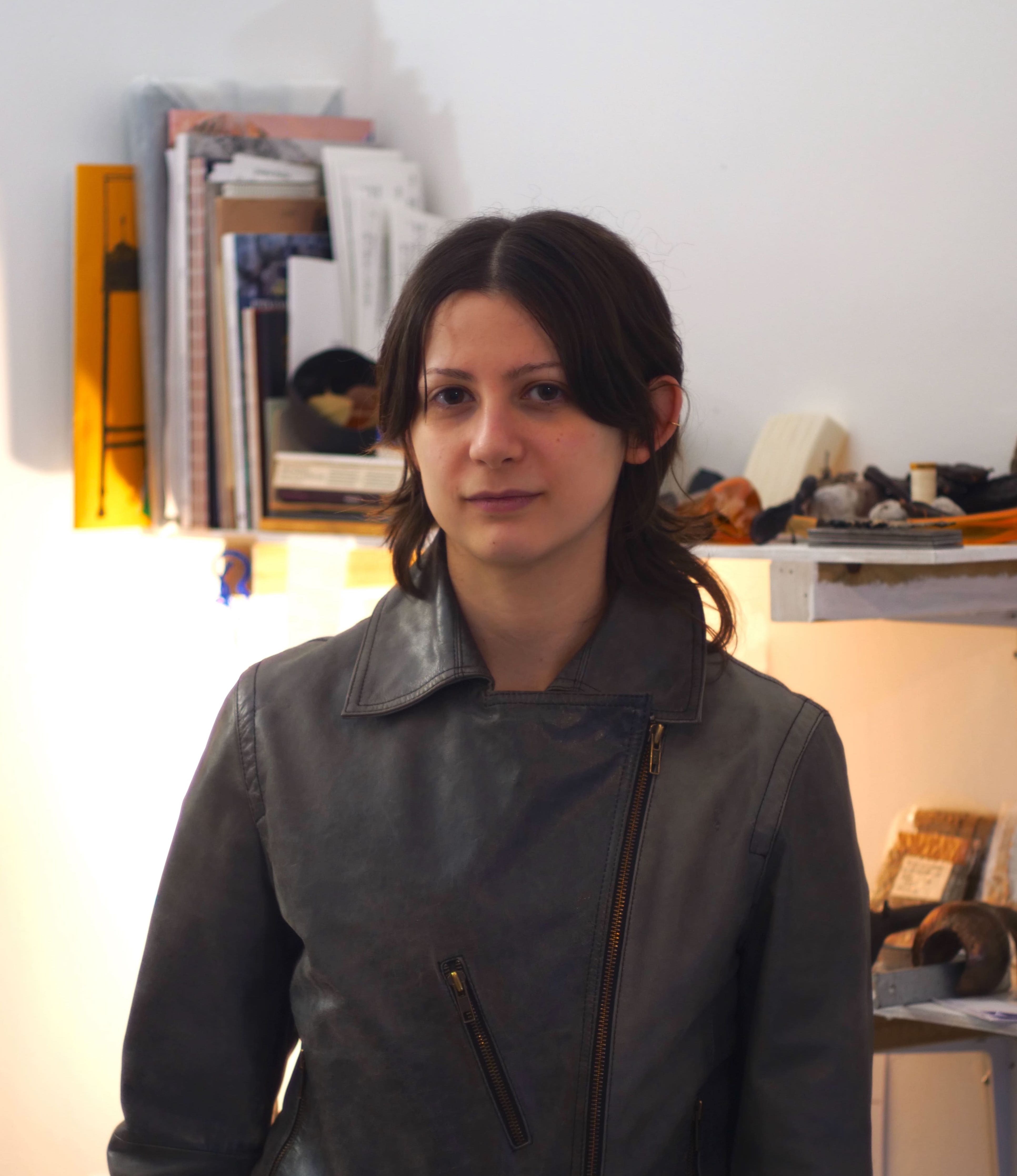
Natalya Marconini Falconer (London, 1997) is an artist and writer working between London and Italy. After earning a BA in English Literature from University College London in 2019, she completed a Master of Fine Arts at the Slade School of Fine Art in London in 2024, where she was awarded a Sarabande Foundation scholarship.Her practice emerges from gaps in family memory and in the history of places. Working across sculpture, installation, and writing, she investigates these absences, by often gathering material remnants left by rapid industrialization, internal migration, and natural events. In 2025, she participated in the Atelier Elpis residency and in the group exhibition A te non resta che abitare questo desiderio, both promoted by Fondazione Elpis, Milan. In 2026, she will take part in the group exhibition Reassemblage at General Assembly Gallery, London, within the Studio Programme of Castro Projects in Rome.
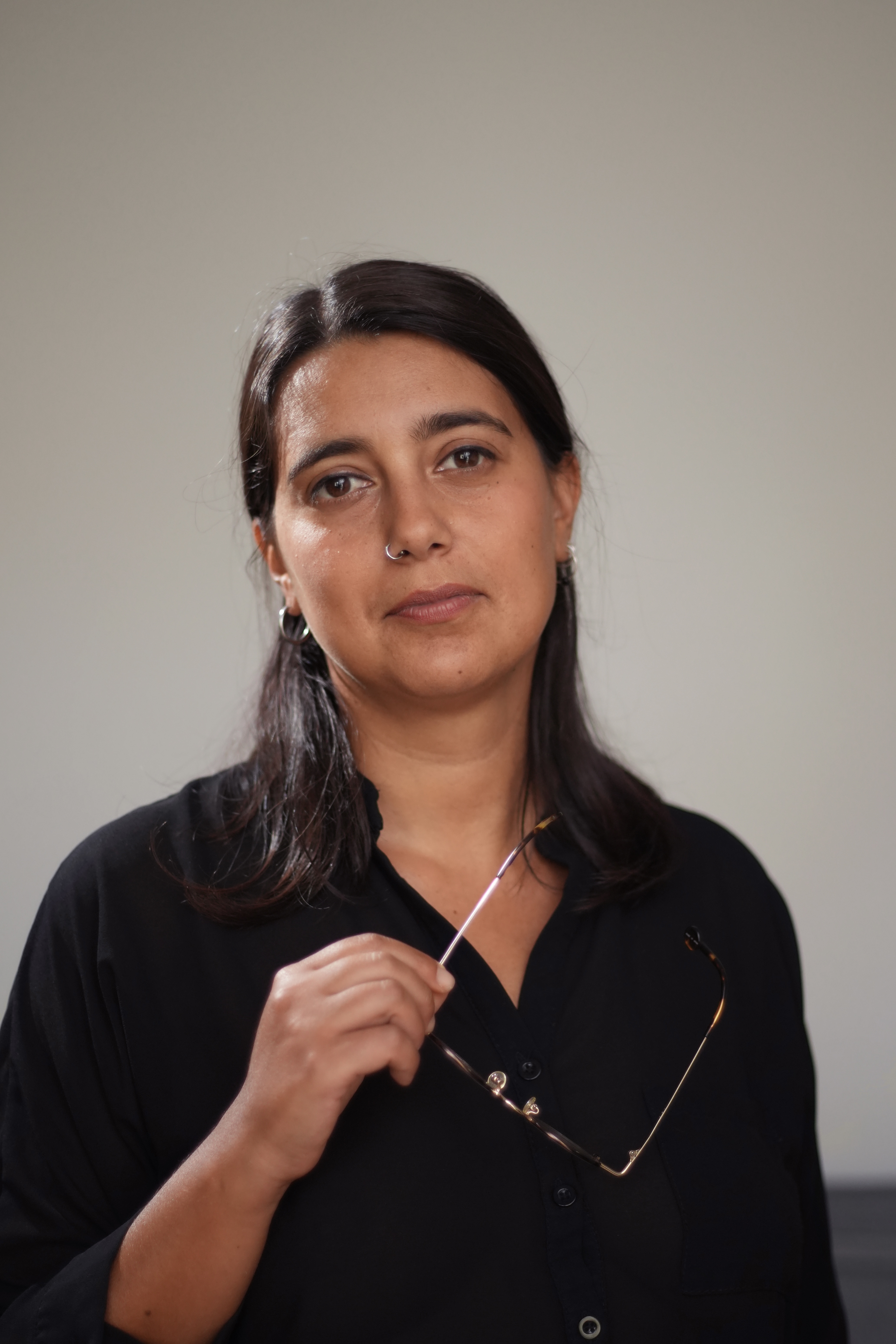
Irene Angenica (Catania, 1991) is an educational curator with degrees in Contemporary Art History and Art Education. She attended CAMPO at Fondazione Sandretto Re Rebaudengo, co-founded the CampoBase collective and worked with national and international institutions. From 2021 to 2025, she was Head of Educational Programs at MACRO – Museo d’Arte Contemporanea di Roma. She is currently pursuing a PhD at the Academy of Fine Arts of Catania. Her research focuses on discursive, workshop-based, and collective practices, emphasizing non-hierarchical and convivial approaches. For Una Boccata d'Arte, she curated the projects of Elena Rivoltini in Bassiano (2024) and Gabriele Ermini in Oriolo Romano (2025), in Lazio.
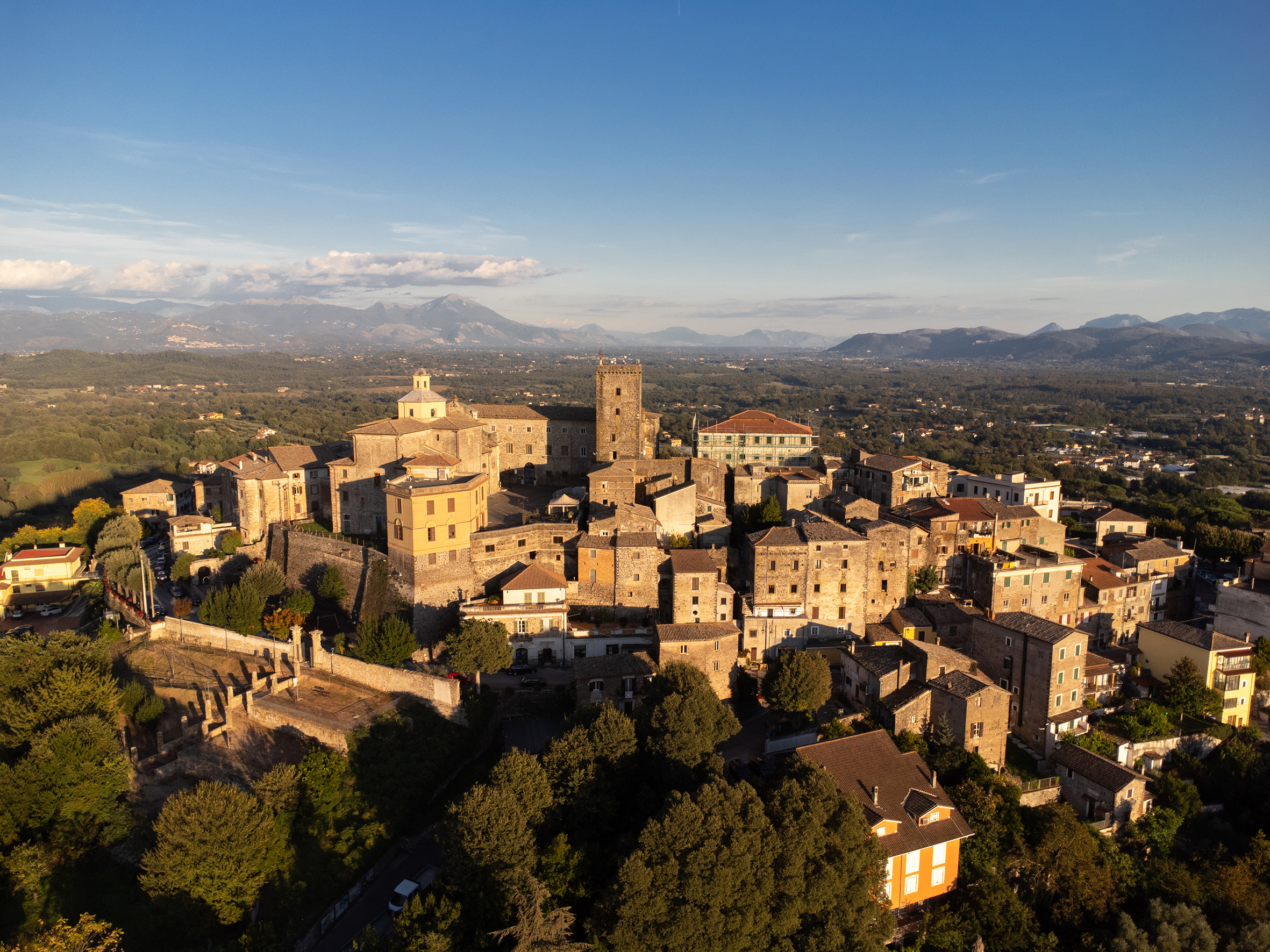
Pofi is located in the province of Frosinone, in the heart of Ciociaria. Perched on an ancient extinct volcano, it dominates the landscape with a panorama that embraces the surrounding towns and stretches across the fields and mountains of southern Lazio. The historic center, with its alleys paved in volcanic stone, preserves ancient traditions, some of which are linked to floriculture—a practice that is still deeply rooted in the town today. Among its symbolic landmarks are the 11th-century Church of Sant’Antonino, built in Romanesque style, and the Baronial Castle of the Colonna family, with its Clock Tower. Pofi also holds a central place in paleoanthropological debate thanks to the discovery of fossil remains attributed to Homo heidelbergensis, dating back around 400,000 years. The many finds, now displayed at the Pietro Fedele Prehistoric Museum, testify to the presence of humans in the Sacco Valley area since the Middle Paleolithic.