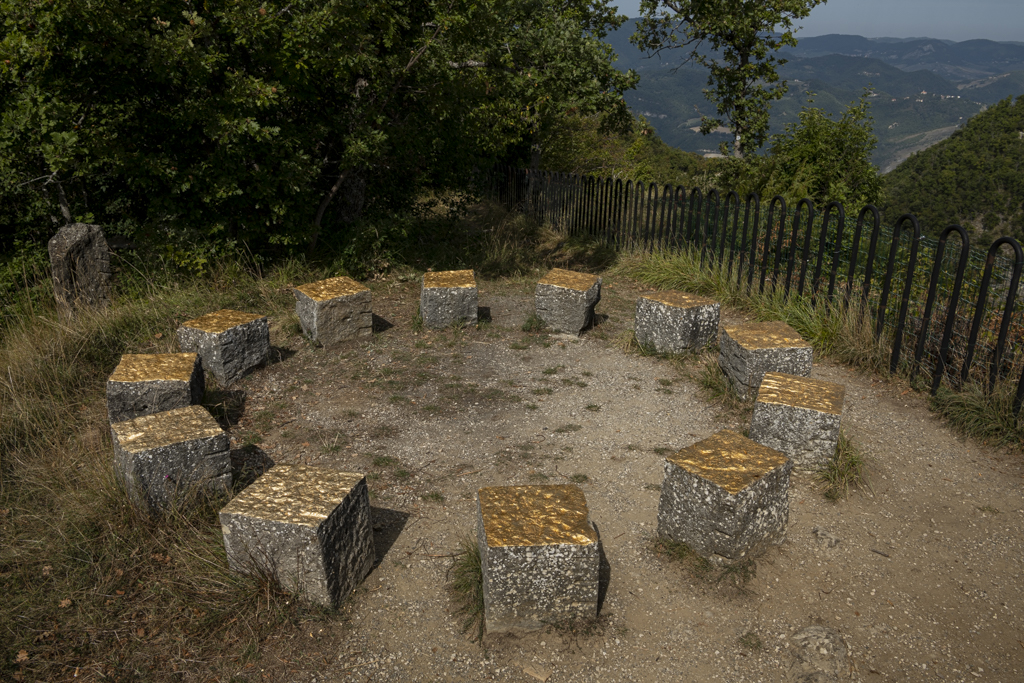
Massimo Uberti
Cinque e Dodici foglie
Visibile da lontano di giorno e di notte, grazie alle luci al neon, l’opera vuole essere un omaggio al suo mistero e alle sue verità nascoste con l’intento di affascinare senza risolvere, lasciando intatta la sua tensione e la sua magia.
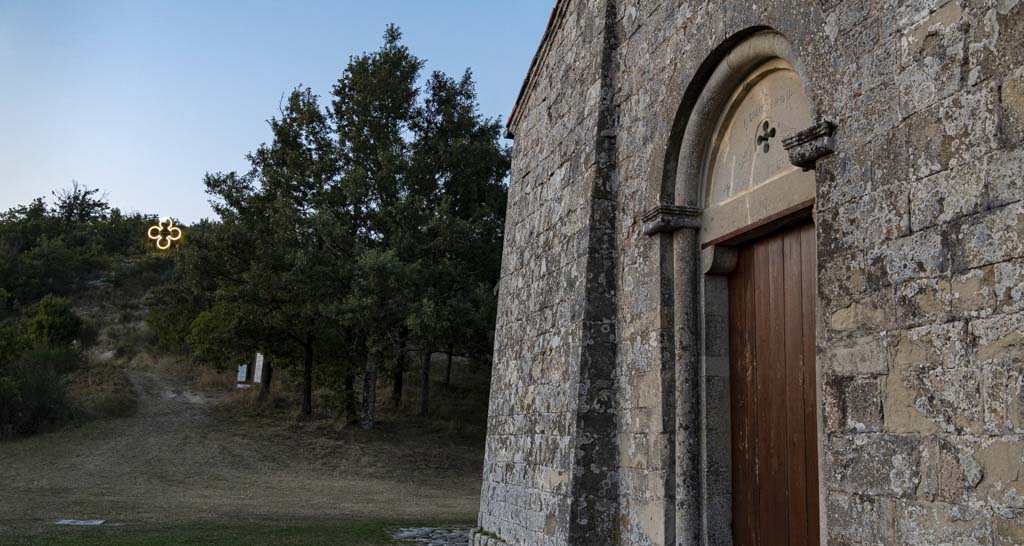
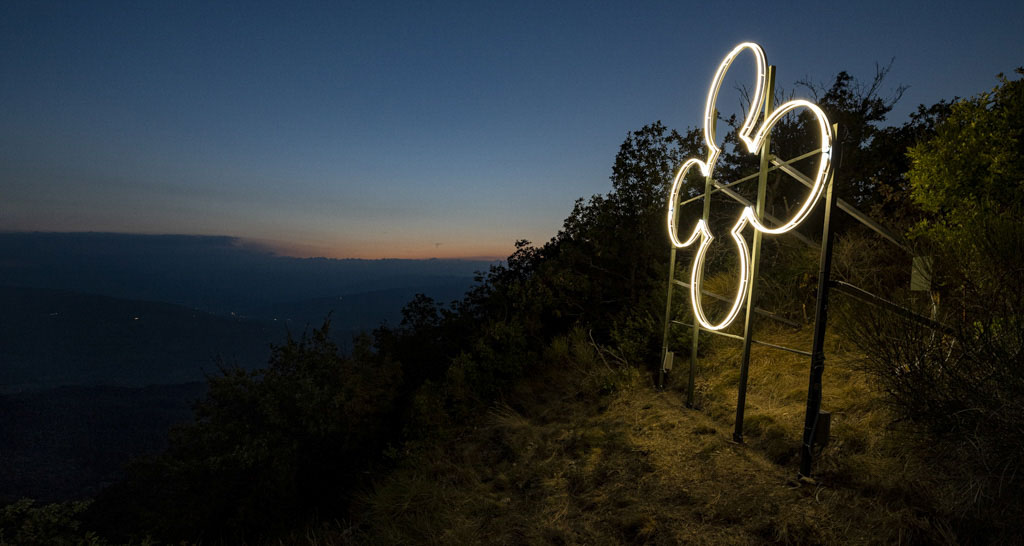
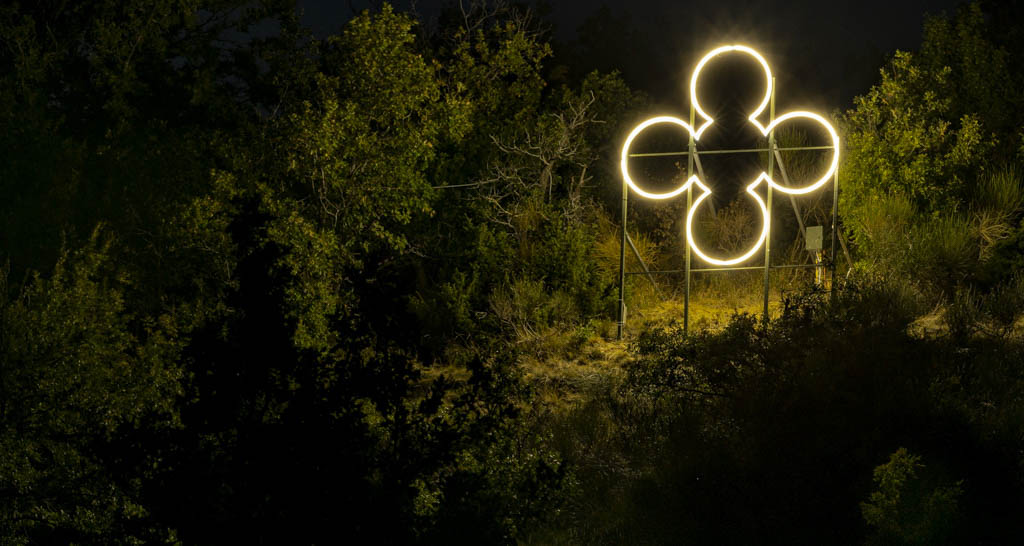
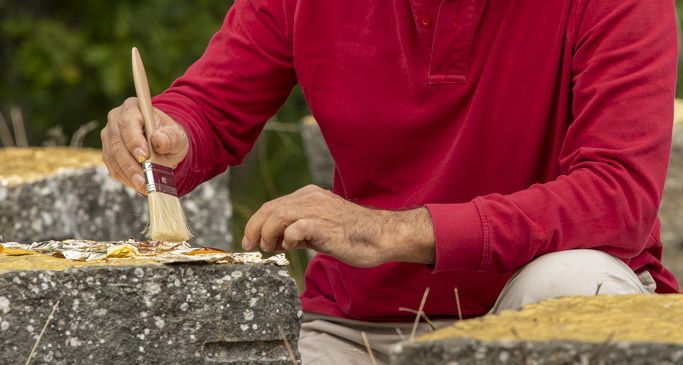
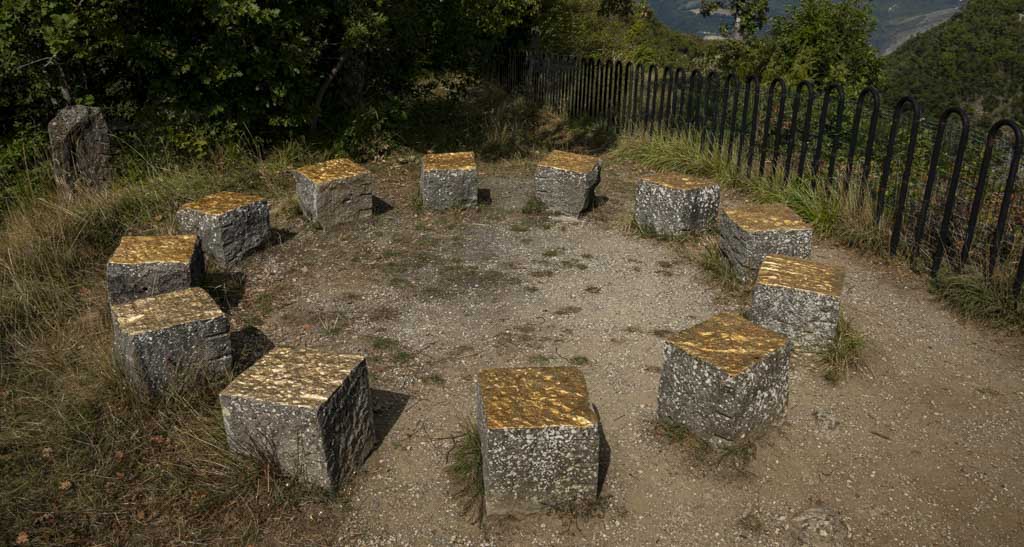
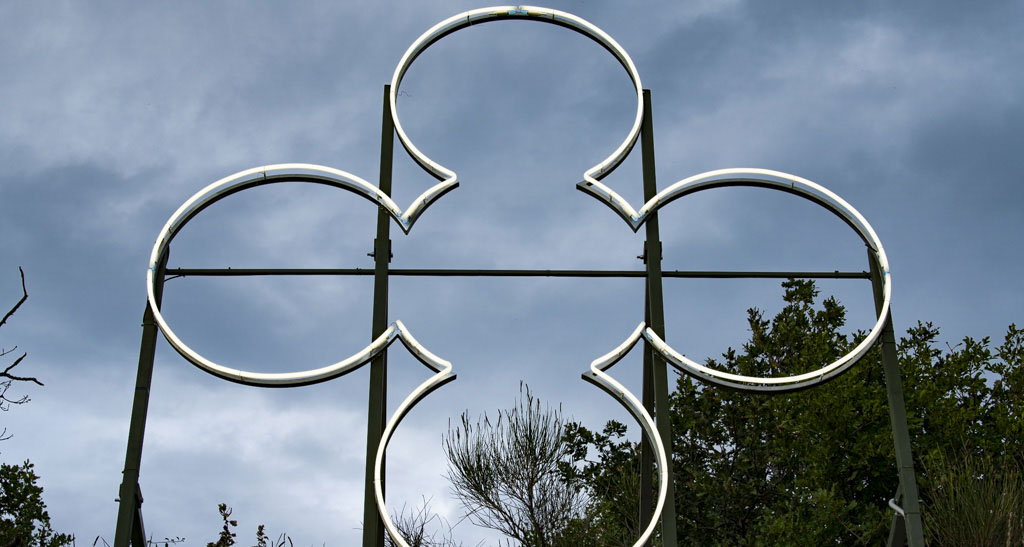
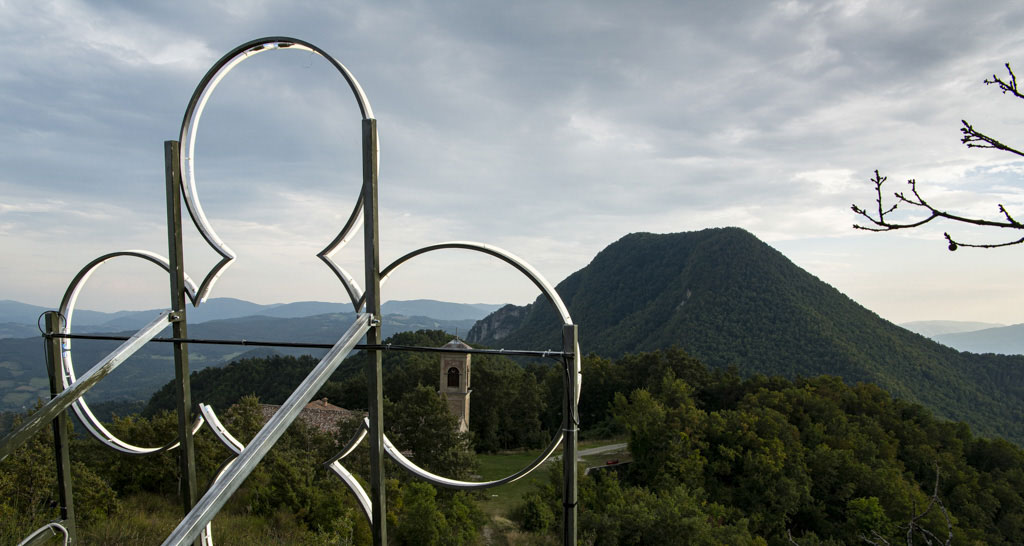
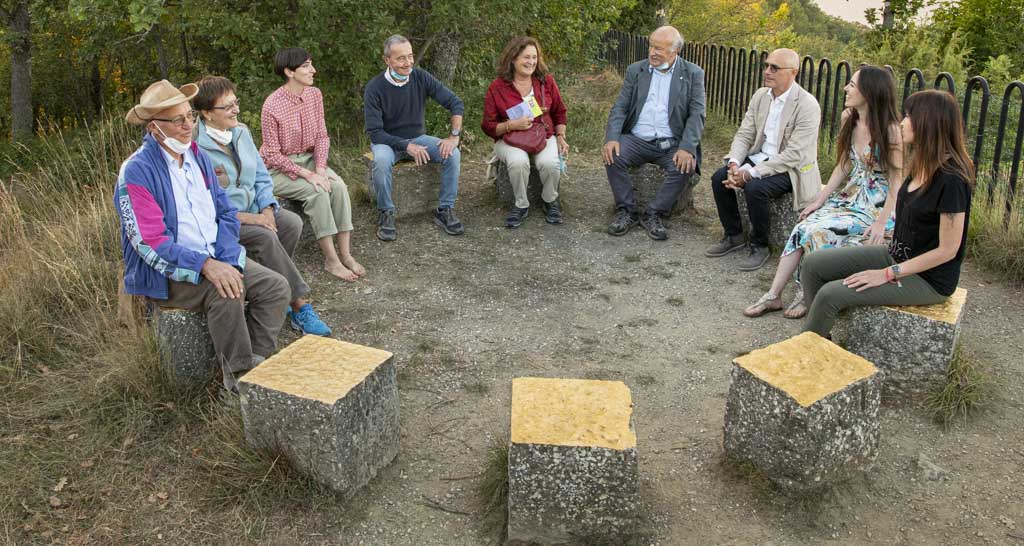
Massimo Uberti, Cinque e Dodici foglie, 2020, Montovolo, Grizzana Morandi (BO), Emilia-Romagna. Ph. Gionata Possenti
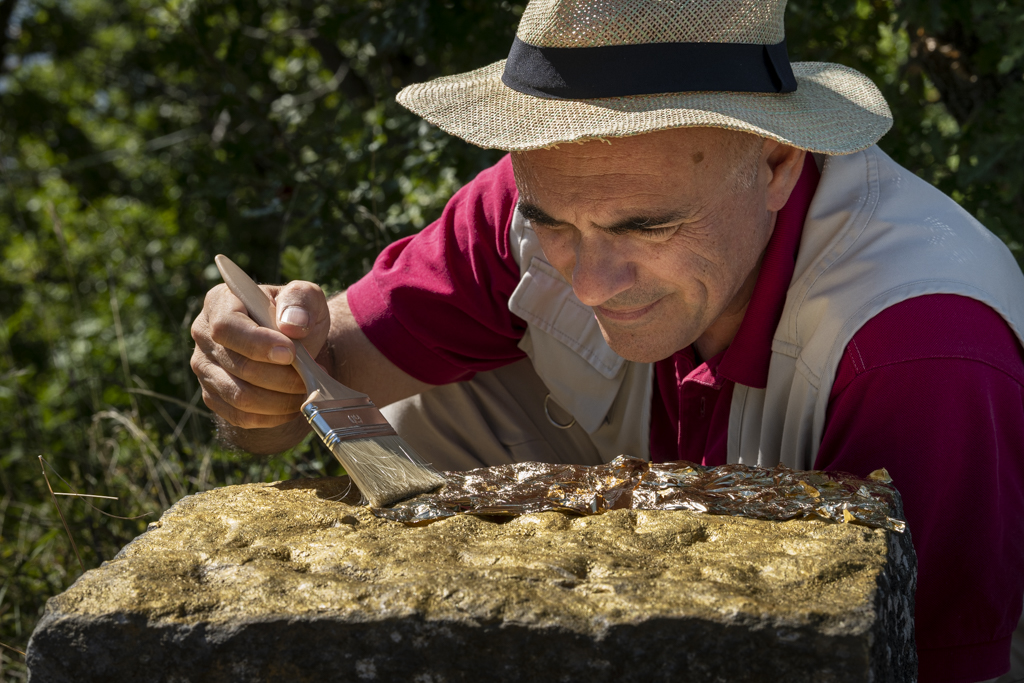
Massimo Uberti (Brescia, 1966) debuted in the early nineties at the Spazio di Lazzaro Palazzi in Milan, where he developed an artistic language centering on light, space and surface; he has always drawn in space with light. Over the last decade, the artist has been invited to make his mark on both urban and non-urban landscapes, developing a specific language of public art that the artist likes to define as “for poetic residents.”
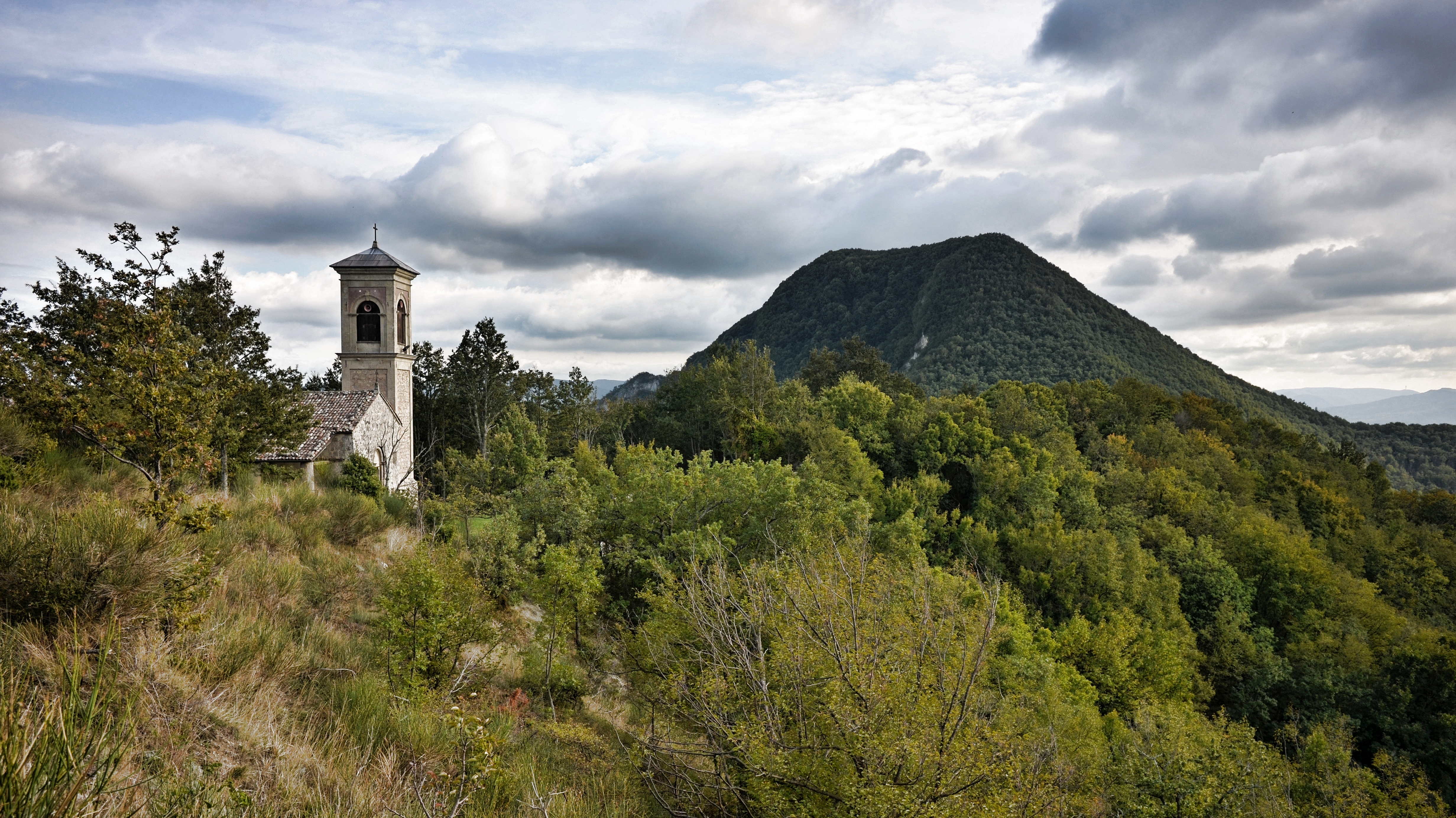
Grizzana Morandi is located in the heart of the Bolognese Apennines, nestled between the valleys of the Reno and the Setta. One of the 20th century’s greatest artists, Giorgio Morandi, took inspiration here for some of his masterpieces. Paying tribute to the Maestro, who called it “the most beautiful landscape in the world”, Grizzana decided to permanently associate its name with the artist. Today the town hosts Morandi’s House-Museum, where the Fienili del Campiaro holds the Museum of his students.
Set between the Park of Montovolo and the Historical Park of Monte Sole, which is sadly associated with the massacres of 1944, the landscape is dotted with medieval villages, including the beautiful town of La Scola. With its quintessentially defensive structure, La Scola preserves the secrets of a past etched in stone. At an altitude of over 900 meters stands Montovolo, which boasts a magnificent view of the Valle del Reno. Montovolo is home to the Sanctuary of Santa Maria della Consolazione, an interesting example of Romanesque architecture in the Apennines.