Renato Grieco
Continua
curated by Giovanni Giacomo Paolin and Sara Maggioni with Threes Productions
Continua
Performance “Doppiopasso” with Banda Galliano “la 33”
3 October 2026 h 8:30 pm
Via Vigne 3, Lugo di Vicenza (VI)
Renato Grieco
curated by Giovanni Giacomo Paolin and Sara Maggioni
with Threes Productions
"Lugo di Vicenza has, for centuries, gathered around its paper mill—between past and innovation—and around the mystery of its absent bell tower. From this community, grounded in strong values, I have learned more than one lesson. The work I conceived here is a restitution—or perhaps a celebration—of this history of resistance, poised between industrial memory, ritual, and festivity, with a tone that is at once humorous, solemn, and bittersweet."
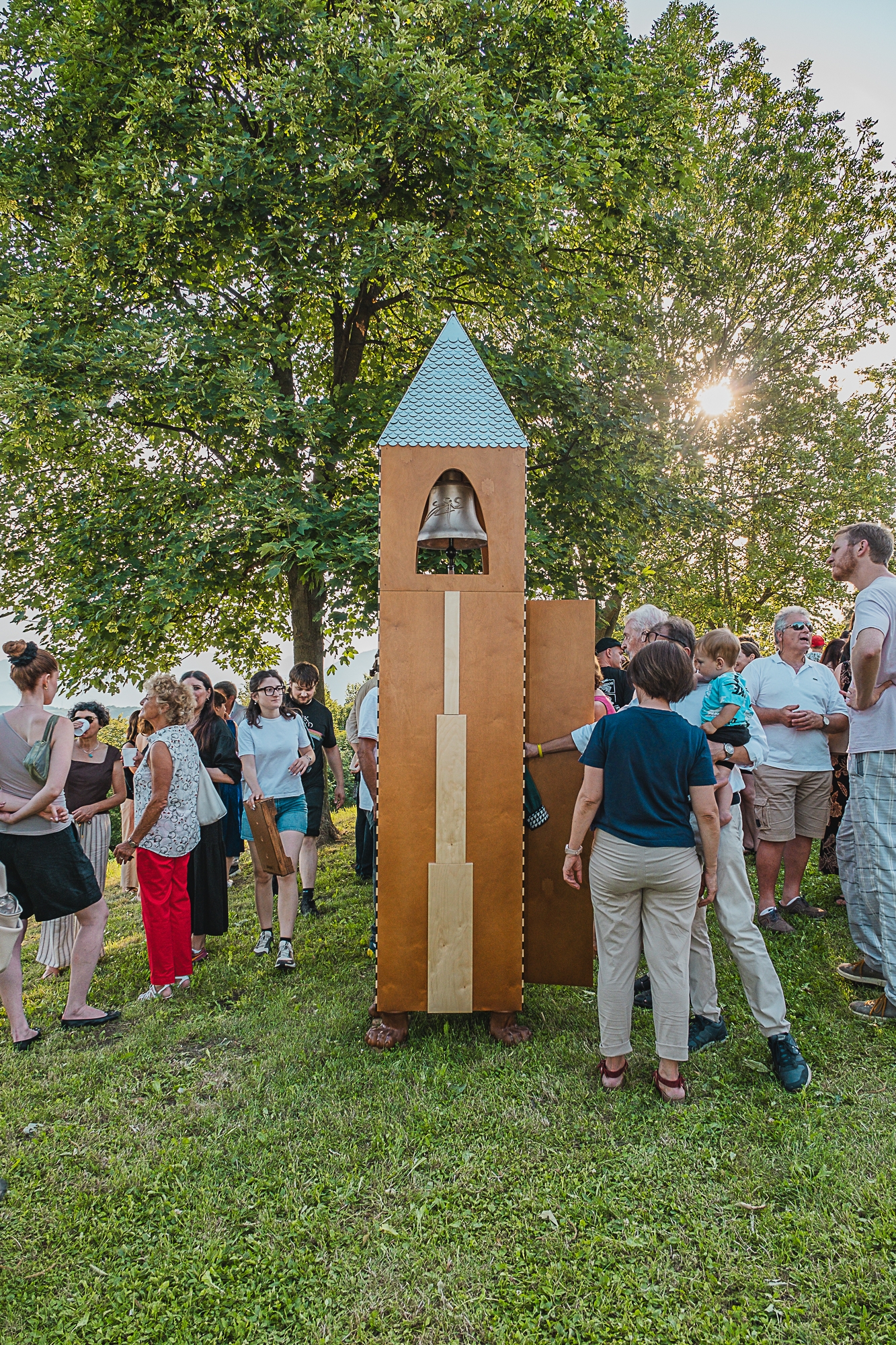
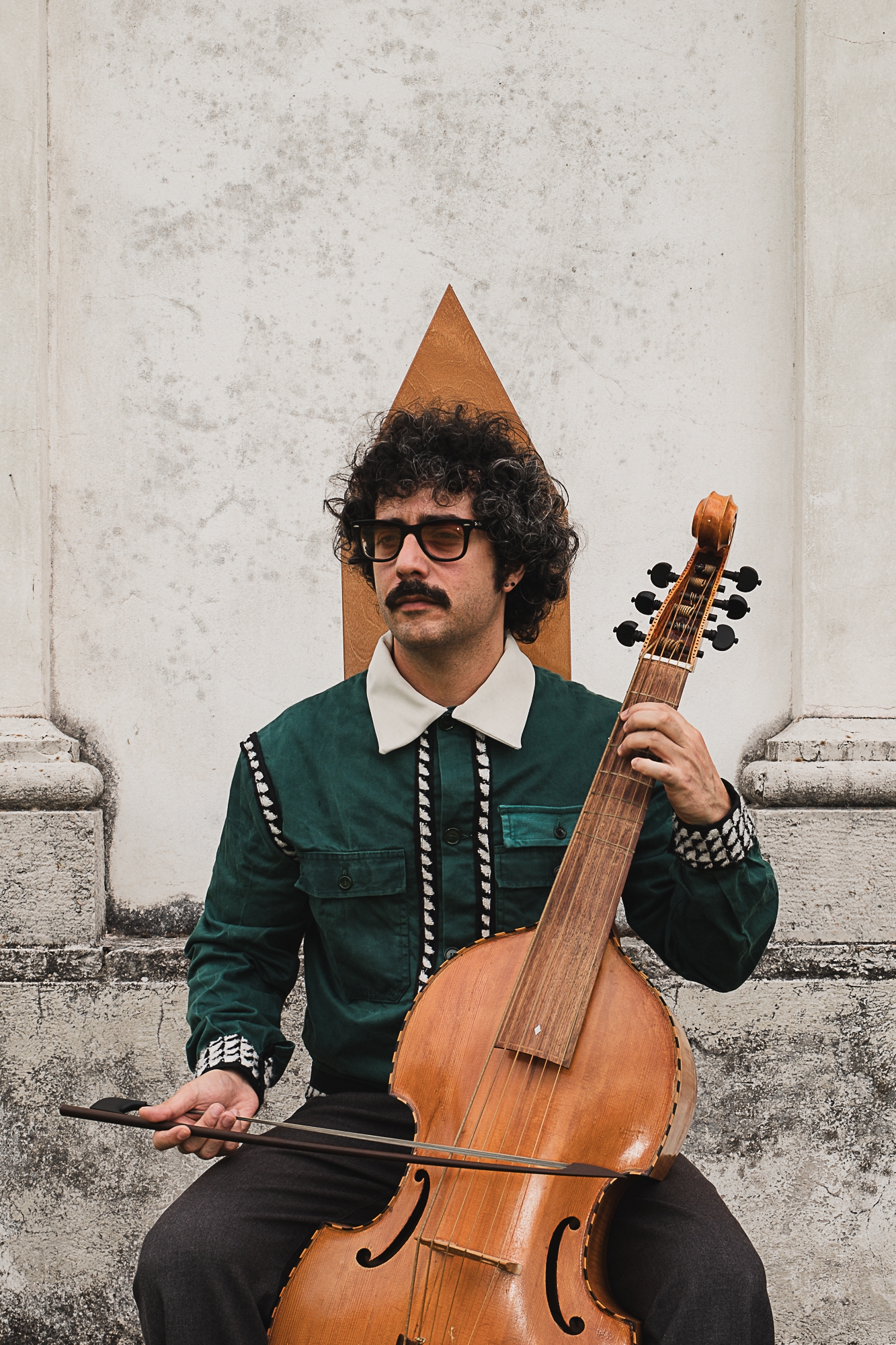
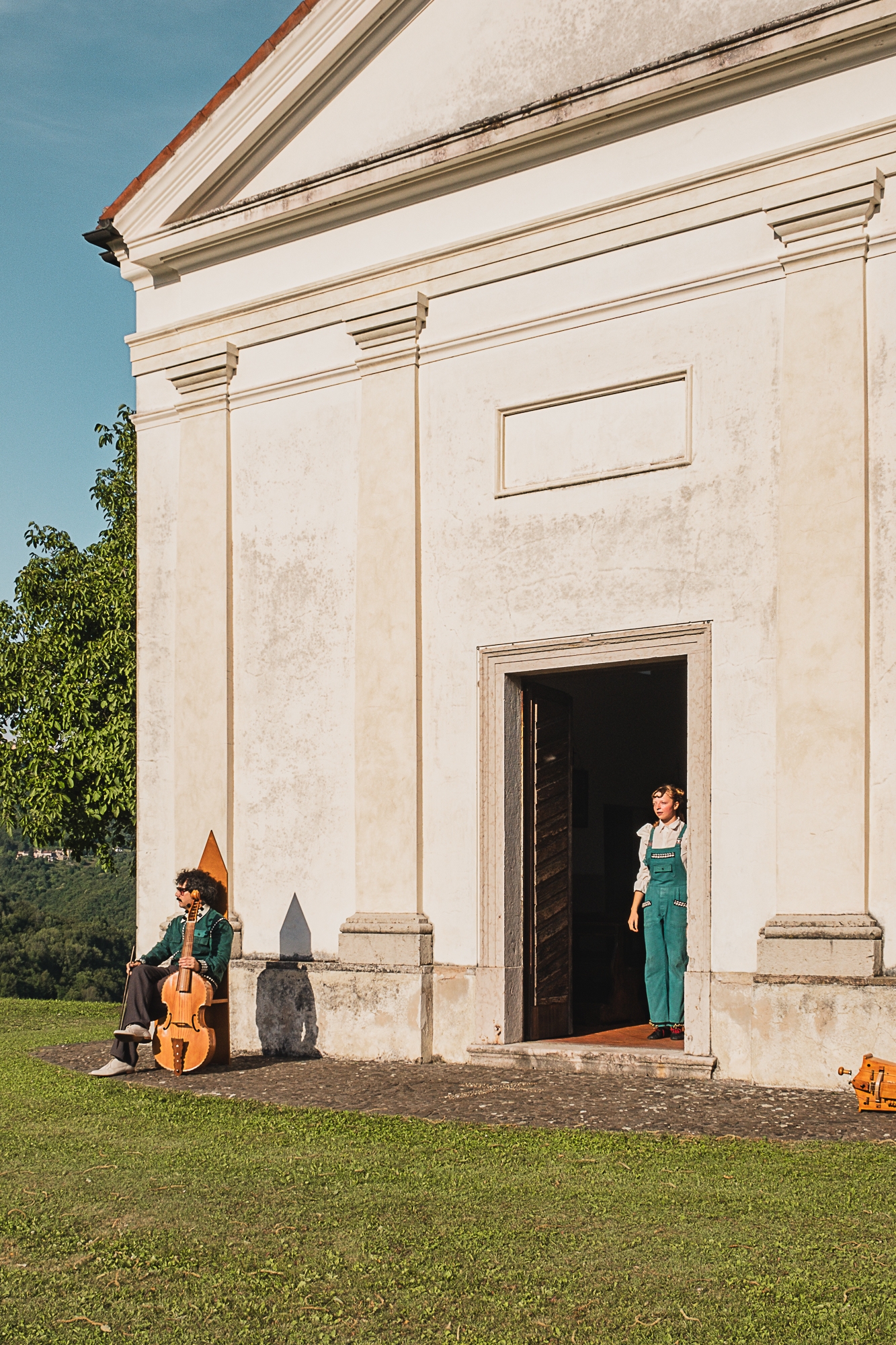
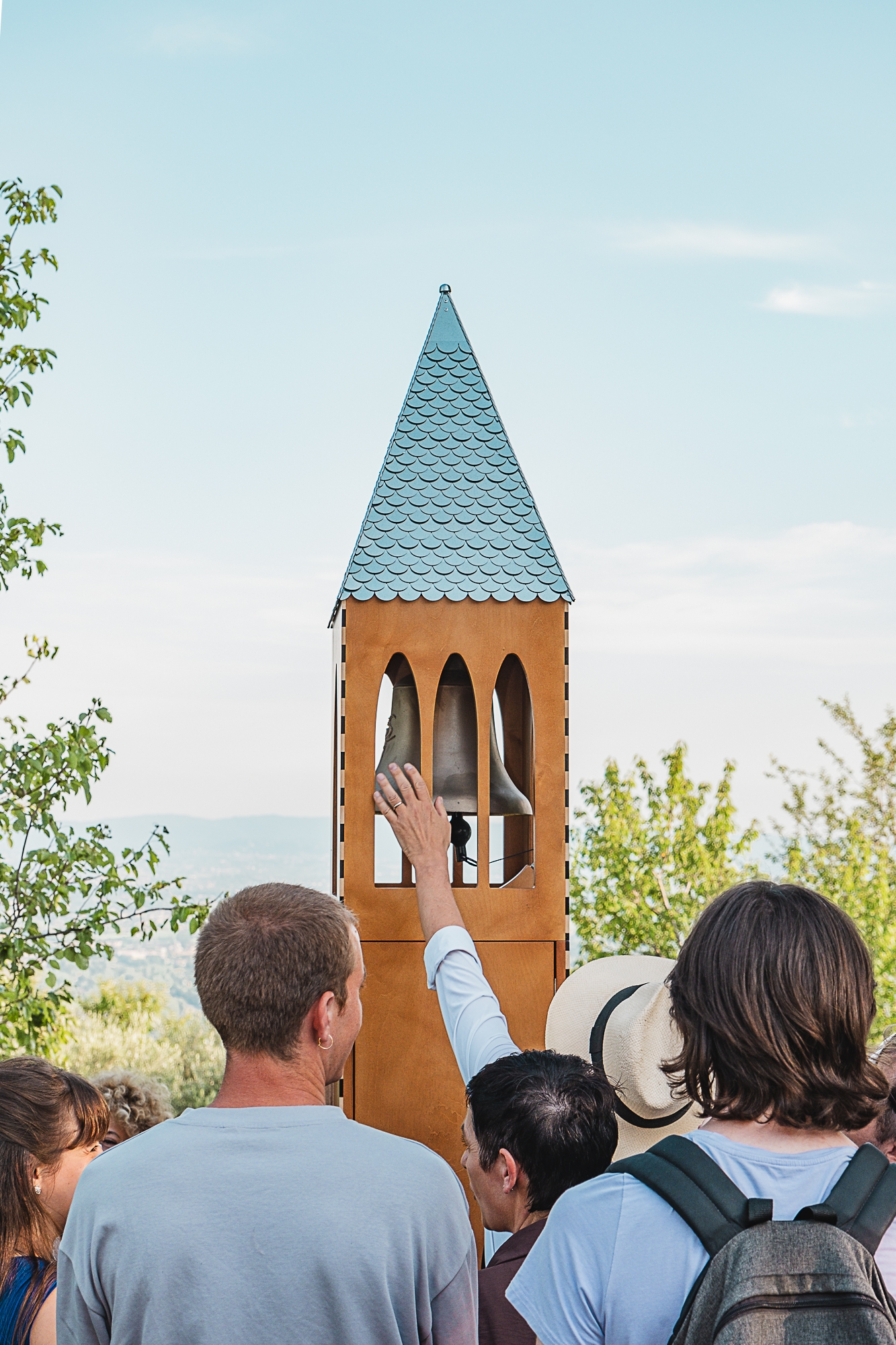
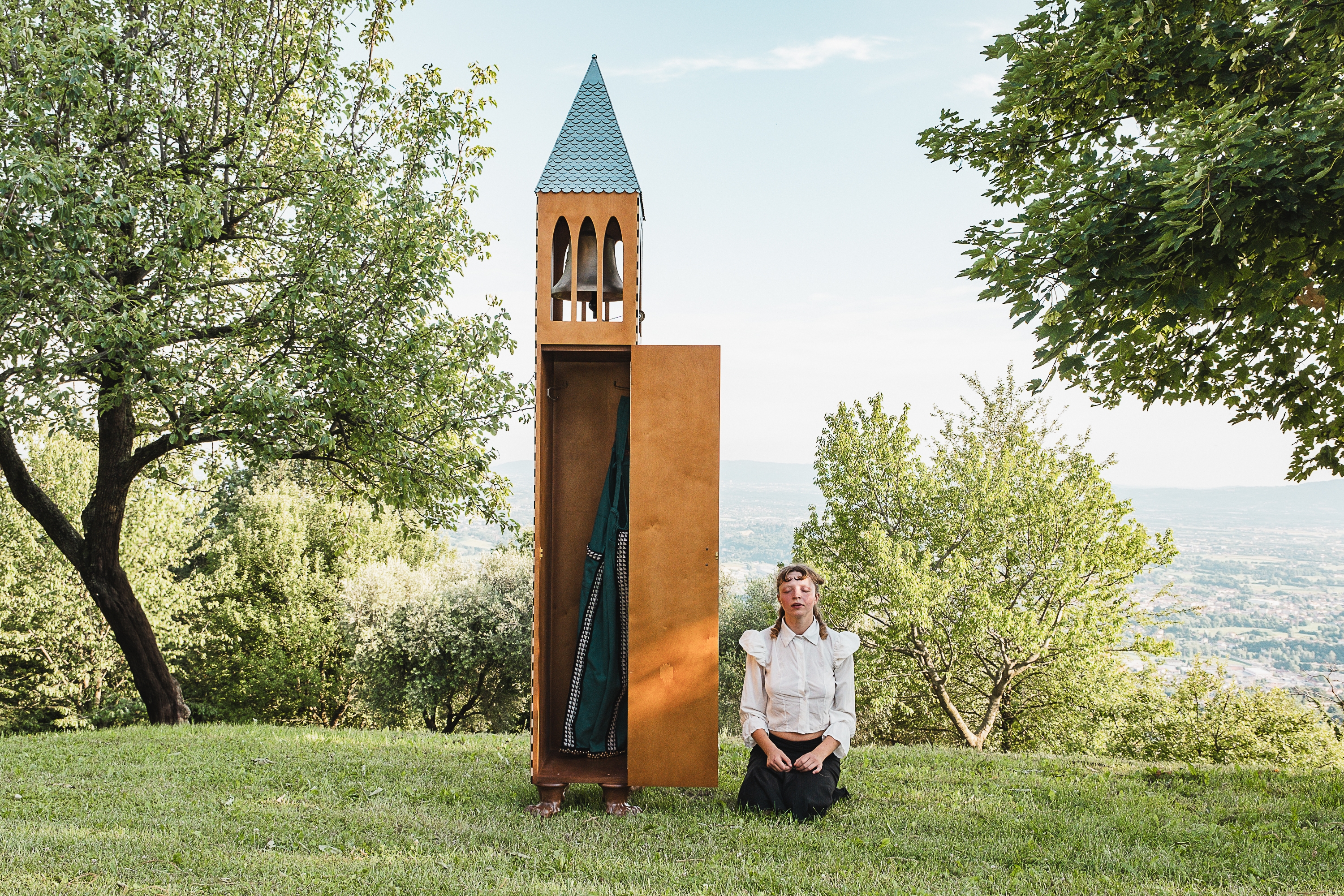
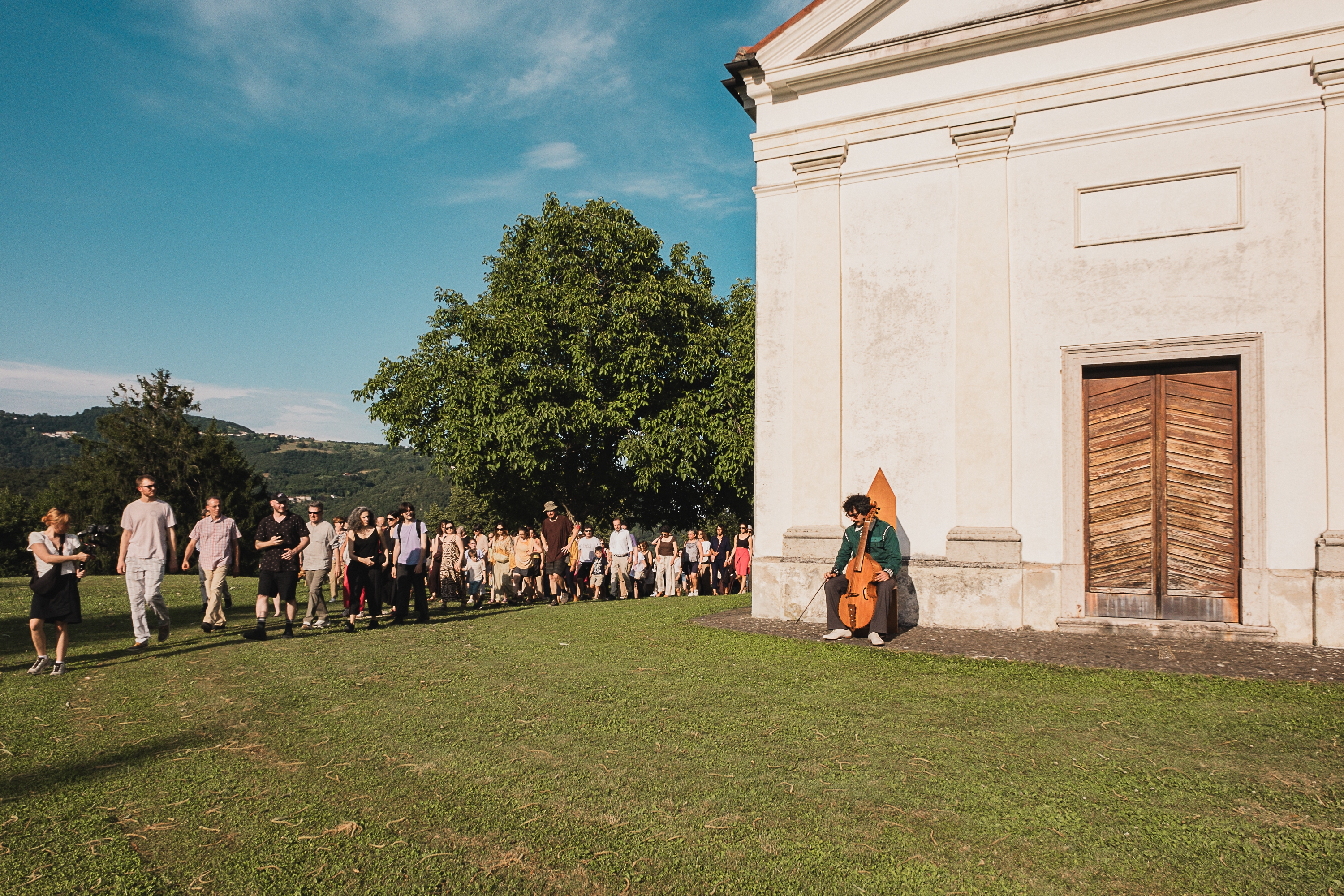
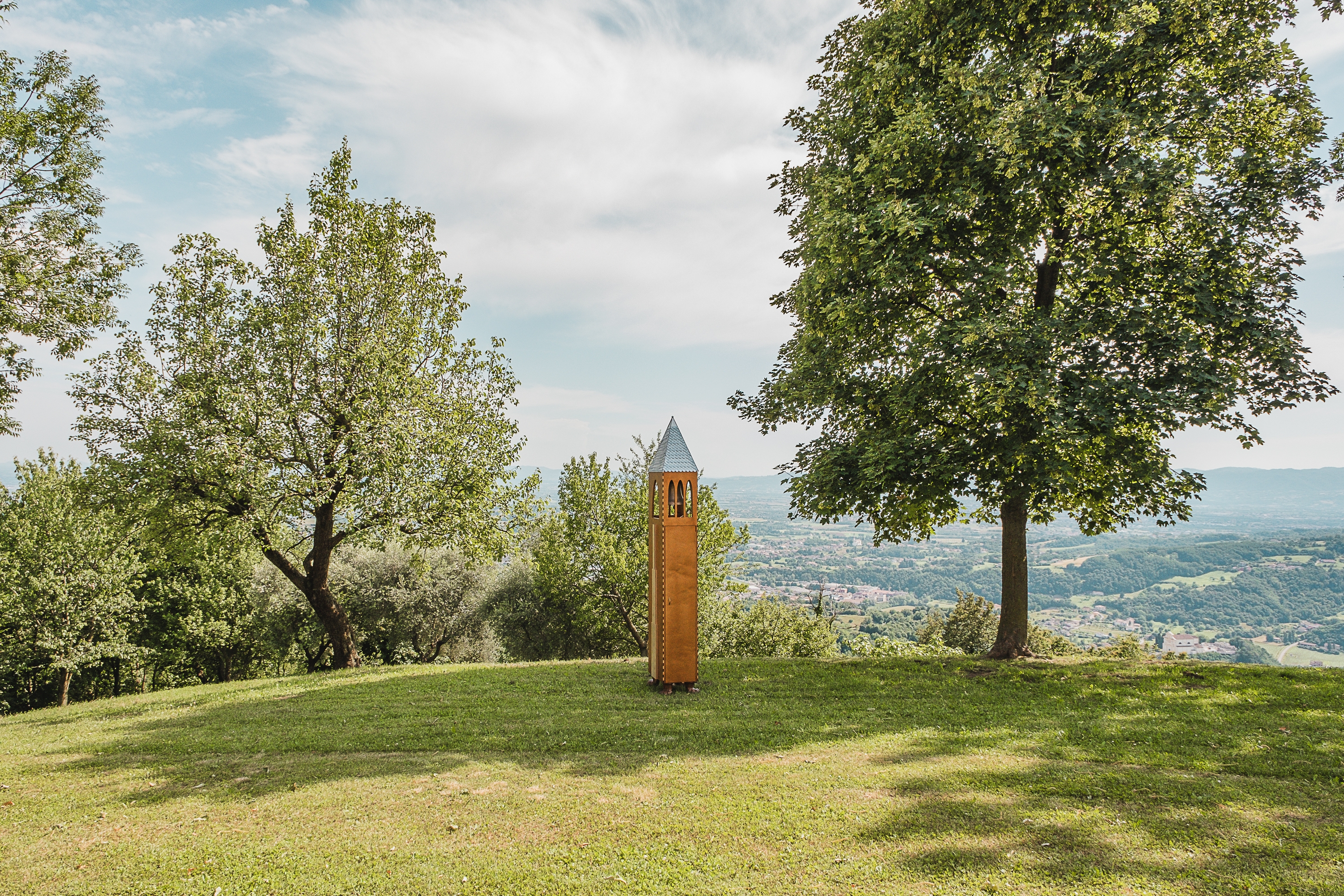
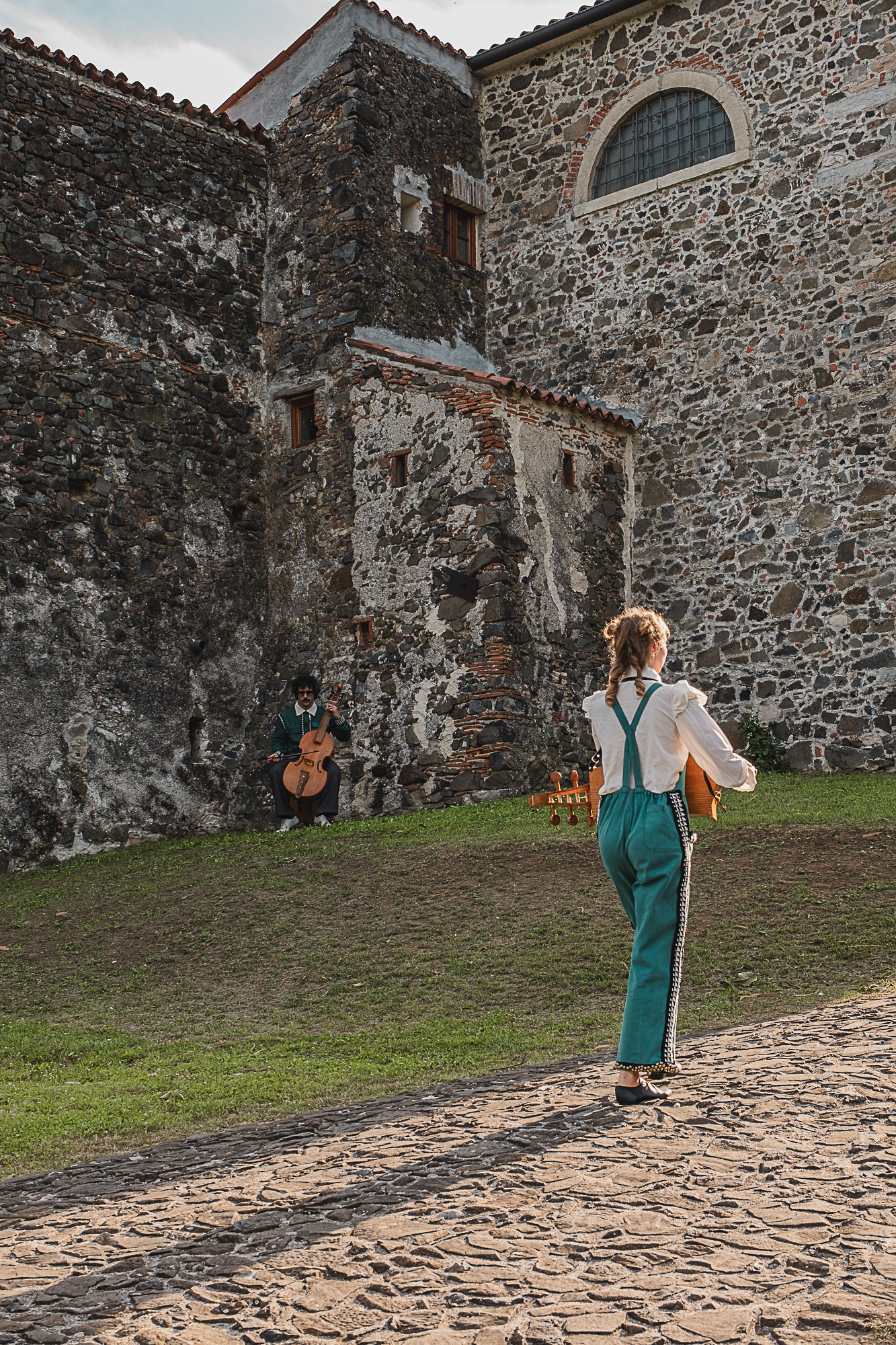
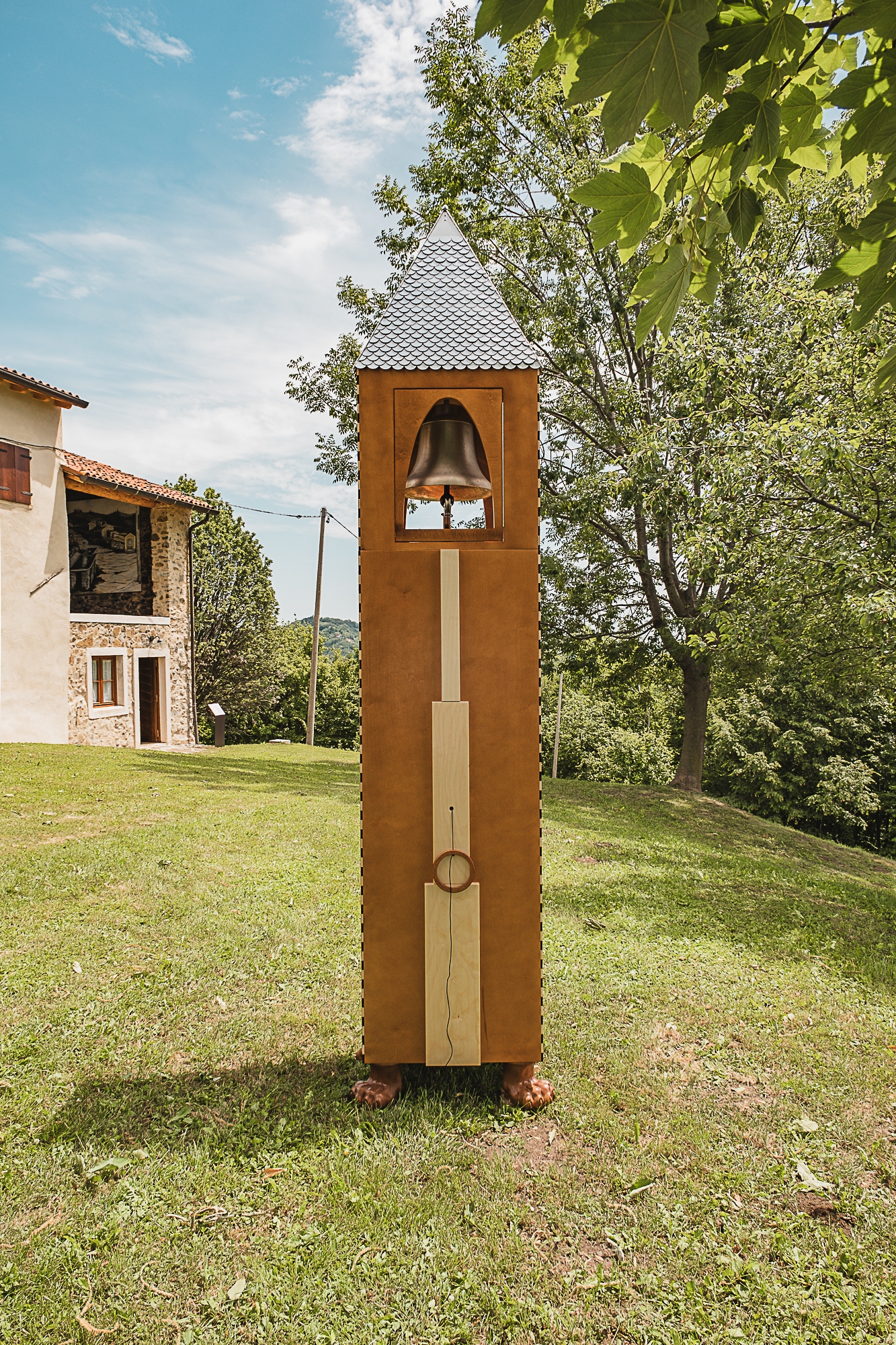
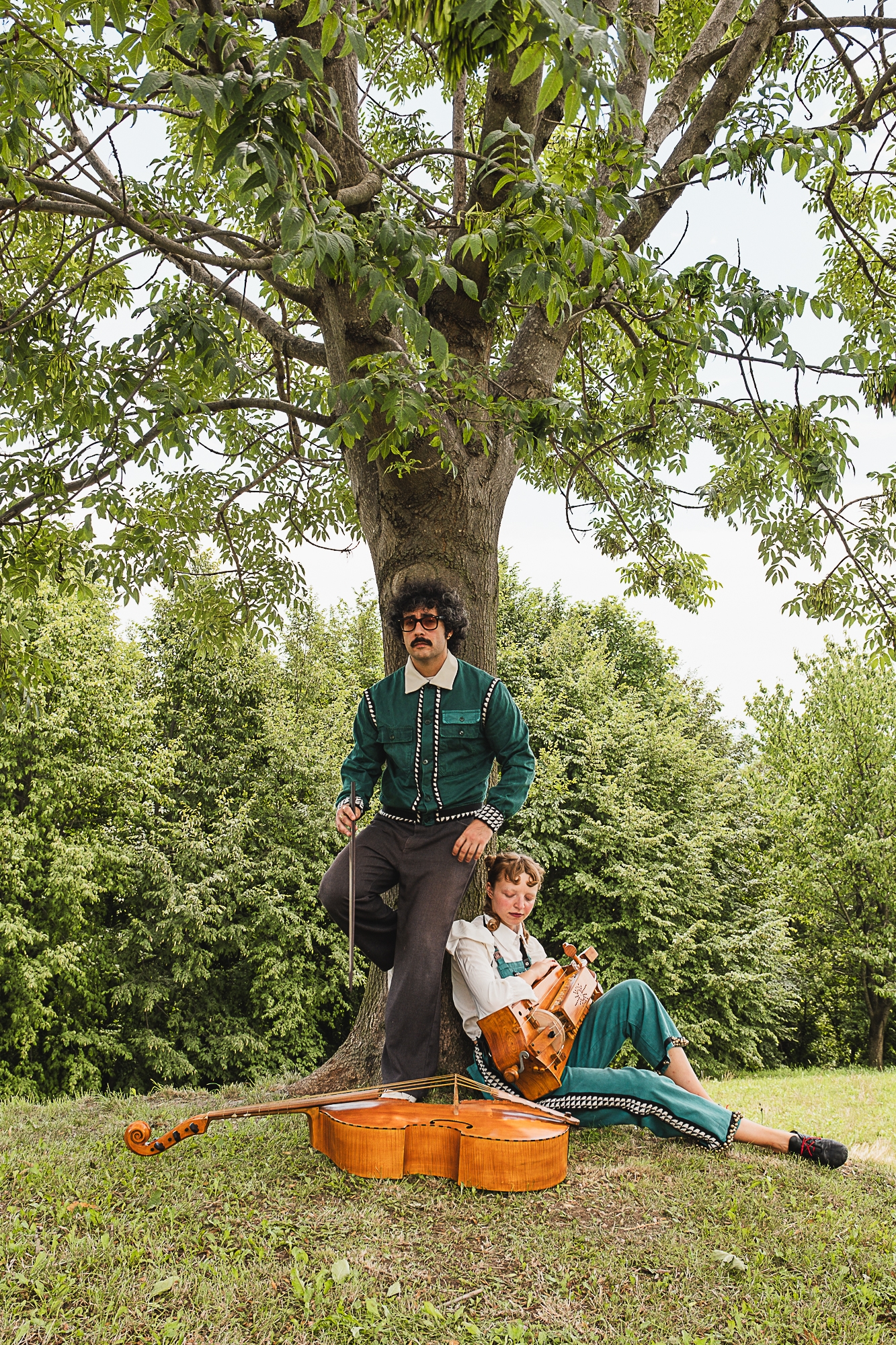
Renato Grieco, Continua, Lugo di Vicenza (VI), Veneto. Ph Fiorella Costantini
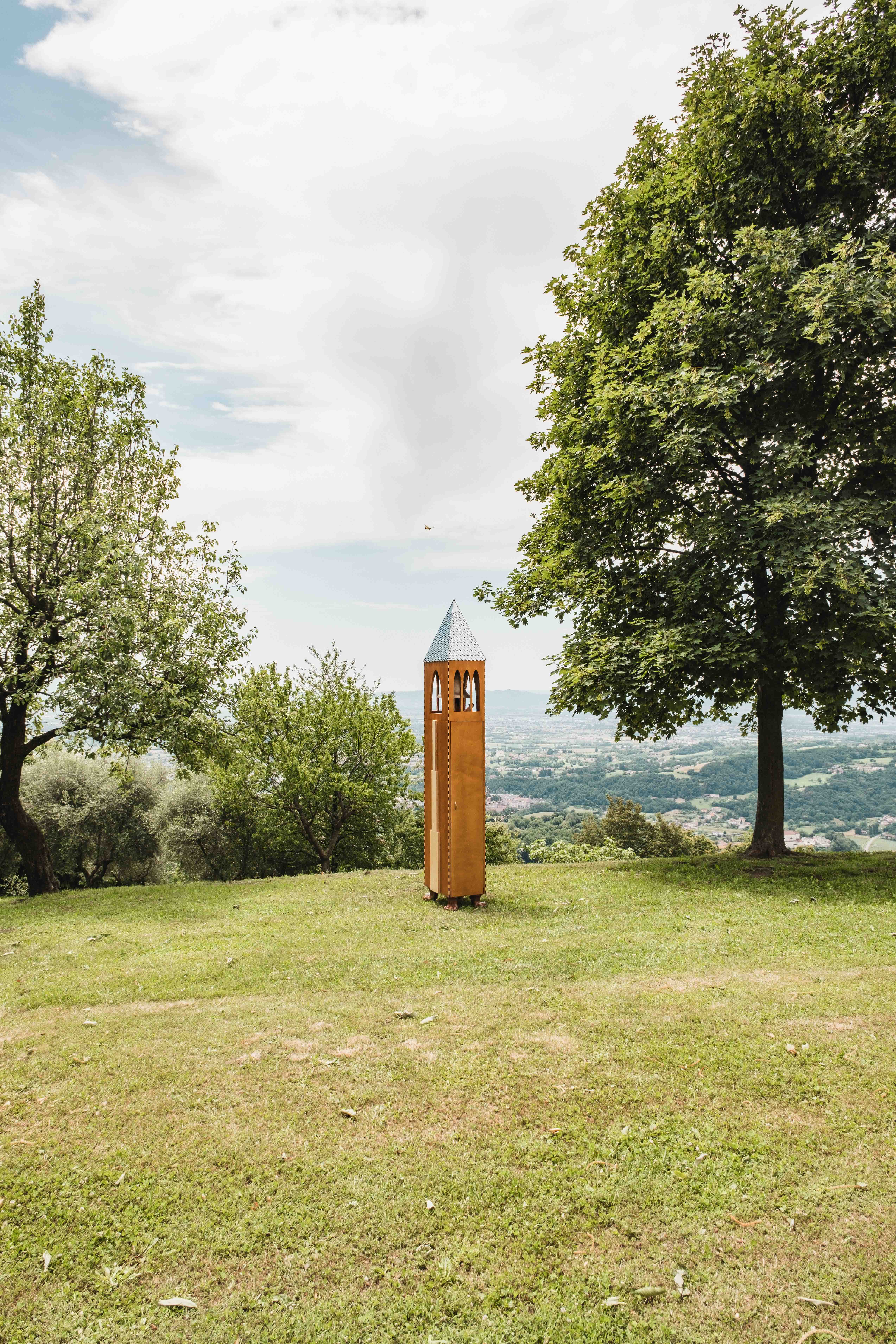
Continua is a project composed of a musical performance and a sculpture hybridized into a functional object, activated by the artist as a stage prop. Both components emerge from the layering of elements drawn from the landscape, anthropological references, and imaginative suggestions that reflect on the historical cycles of Lugo di Vicenza.
Three are the main elements of the work: the costume, the bell, and the bell tower. The costume designed for the opening performance was one of the suits used by workers in the local paper mill, both during working hours and in domestic activities. The bell, playing in F, recalls a tradition still deeply rooted in the Vicenza area, one that has marked collective time for centuries.
Enclosing these elements is a sculptural structure that echoes the form of a bell tower—a familiar figure in the Veneto landscape, here evoked in response to the absence of a tower in the town’s central square and transformed into an unexpected, almost magical presence.
Work:
01 Renato Grieco, Continua, 2026. Wood, iron, bell, stage costume, 300 x 60 x 40 cm
Chiesetta di San Pietro, Via Mare, Lugo di Vicenza (VI)
Continua
Performance “Doppiopasso” with Banda Galliano “la 33”
3 October 2026 h 8:30 pm
Via Vigne 3, Lugo di Vicenza (VI)
Renato Grieco and Banda Galliano "la 33" present Doppiopasso, an investigation at the intersection of public space, practices of bodily attunement, and musical composition for acoustic instruments. Similarly to Continua - Renato Grieco's intervention for Boccata d'Arte in the hamlet of Mare in Lugo di Vicenza - the performance is not limited to simple musical execution: it becomes the pivot of a composition made of proximity, bodies, and postures. Those who play create a relationship with the public space and read it through their own choices of movement.
Thanks to: Stefania Carollo, Francesca Carollo, Chiara Donà of the Museo Veneto delle Campane, B.D.F. Carpentry, Daciano Colbachini, Duso Nicola & Sons, Thuono Audio.
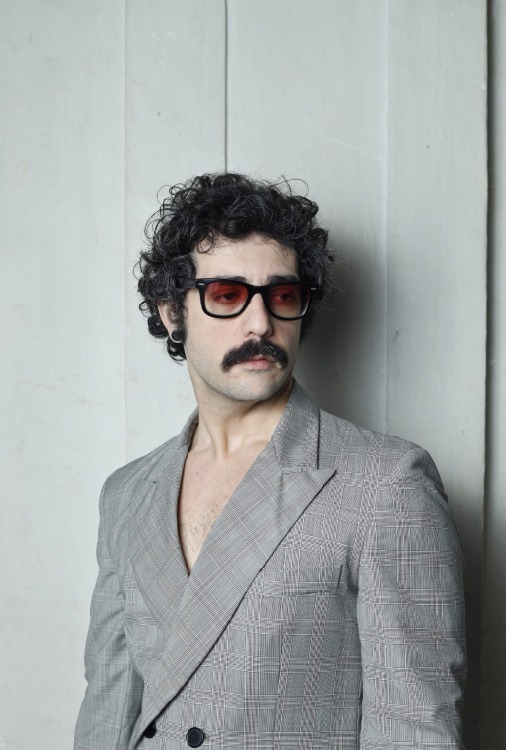
Renato Grieco is a composer and artist from Naples. Since 2012, he has performed internationally under the moniker kNN. His music emerges from the semantics of musique concrète and culminates in orchestrations where ancient instruments, imaginary lutherie, and sculptural rooms coexist. In recent years, he has developed numerous collaborations as a performer and musician as well as a sound dramaturge, producing instrumental and electroacoustic compositions, performances, installations, records, hörspiel, lectures, musical theatre works, scores, and librettos.
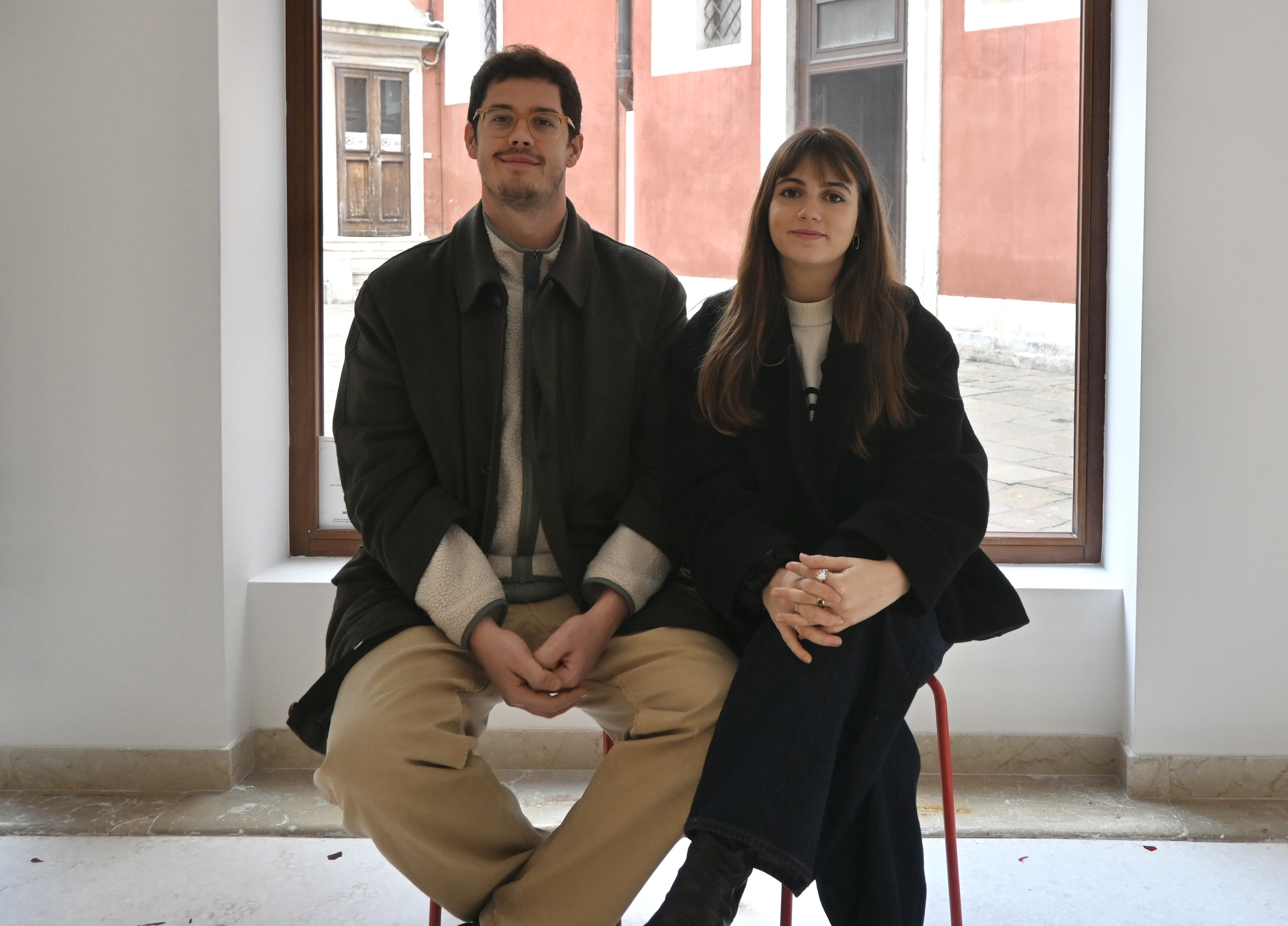
Giovanni Giacomo Paolin (Dolo, 1989) is an independent curator. He collaborates with Fondazione In Between Art Film, Rome, and Fondazione Carraro, Padua.
Sara Maggioni (Bergamo, 2000) works as a producer and assistant for the artists Bêka & Lemoine. She collaborates with the cultural association Microclima and with We Are Here Venice, in Venice.
Together, they co-curated the exhibition Stelle che sorreggono altre stelle at Fondazione Elpis (Milan, 2023) and run the independent space Panorama, Venice.
For Una Boccata d’Arte in Veneto, Paolin has curated the projects since 2020 and, together, they co-curated Giacomo Gerboni’s project in Tarzo (2025).
Threes Productions is a creative agency committed to cultural sustainability, developing and promoting experimental projects in the fields of music and art. Through a methodology grounded in research and innovation, Threes Productions has established itself as a multidisciplinary and collaborative platform, ranging from the design and organization of events to the development of editorial and musical content.
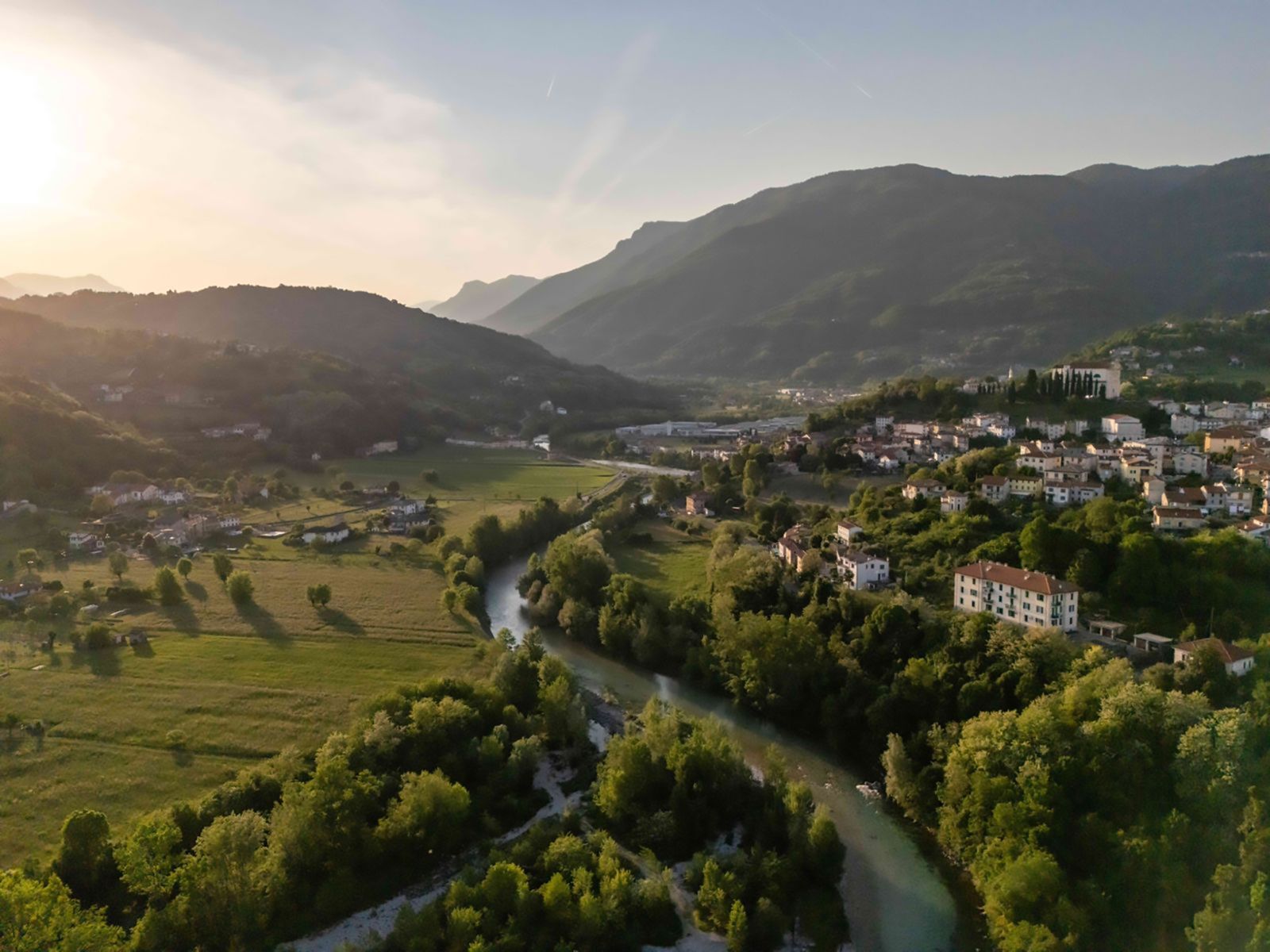
Lugo di Vicenza is located in the Venetian foothills, in the green Astico Valley, within a landscape that alternates flat areas, rolling hills, and mountainous terrain reaching up to 1,300 meters, at the southern edge of the Altopiano dei Sette Comuni. The origin of its name, from the Latin lucus—meaning “sacred grove”—reflects the deep connection with the natural landscape that still characterizes the village today, among forests, trails, and wide-ranging views.
Renowned for its UNESCO-listed Palladian villas, such as Villa Godi Malinverni and Villa Piovene Porto Godi, Lugo preserves a layered dialogue between art, architecture, and nature.
Marked over the centuries by occupations and dominations, the town was also a site of partisan Resistance during the Second World War, later embarking in the postwar period on a path of growth based on a vibrant artisanal and manufacturing economy.