Alice Minervini
Cummar a fiure
curated by Andrea Croce e MariaTeresa Daniele
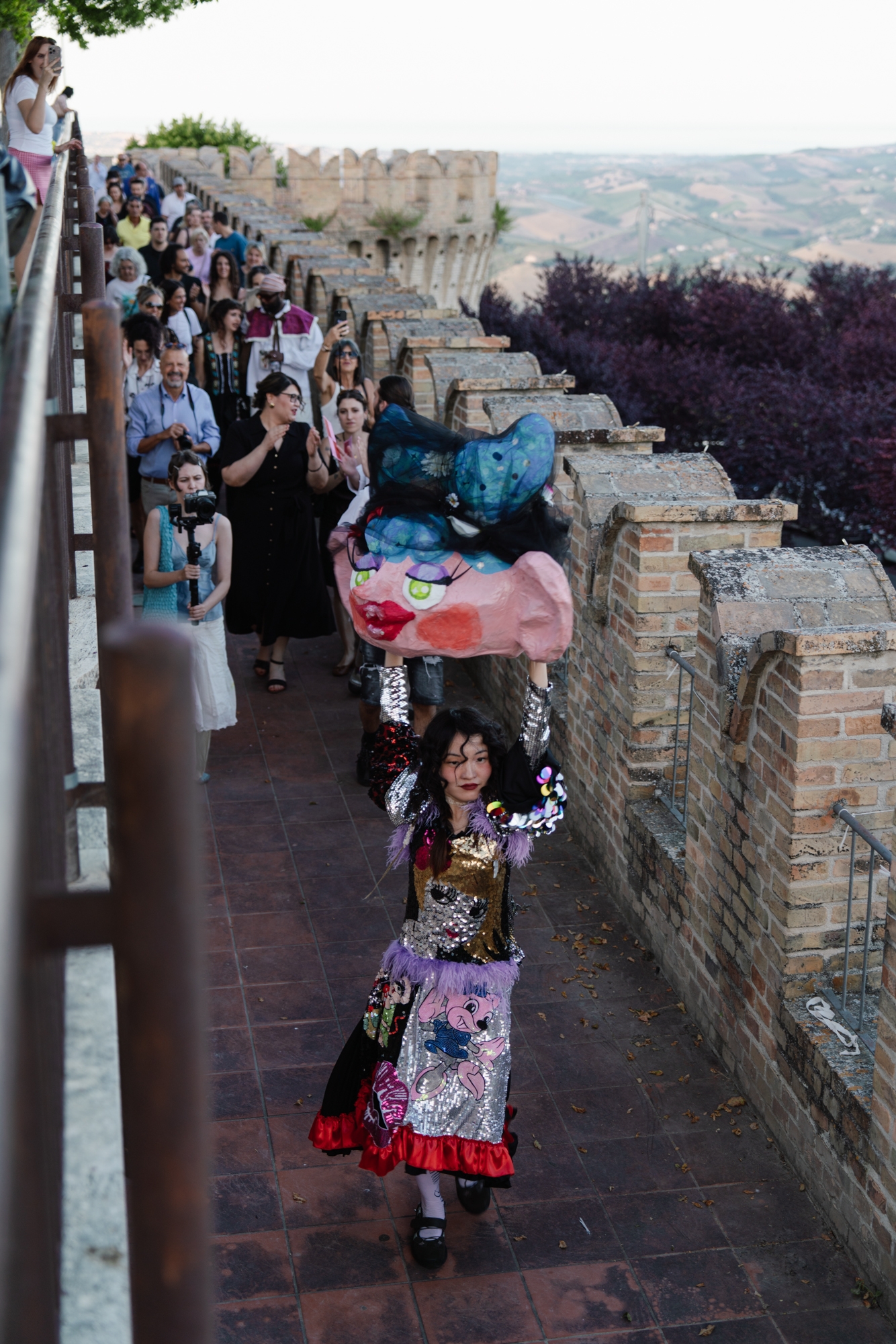
Weaving together irony, autofiction, and unapologetically tacky aesthetics, Cummar a fiure becomes a camp trope, a reimagined tradition to celebrate radical friendship and affects.
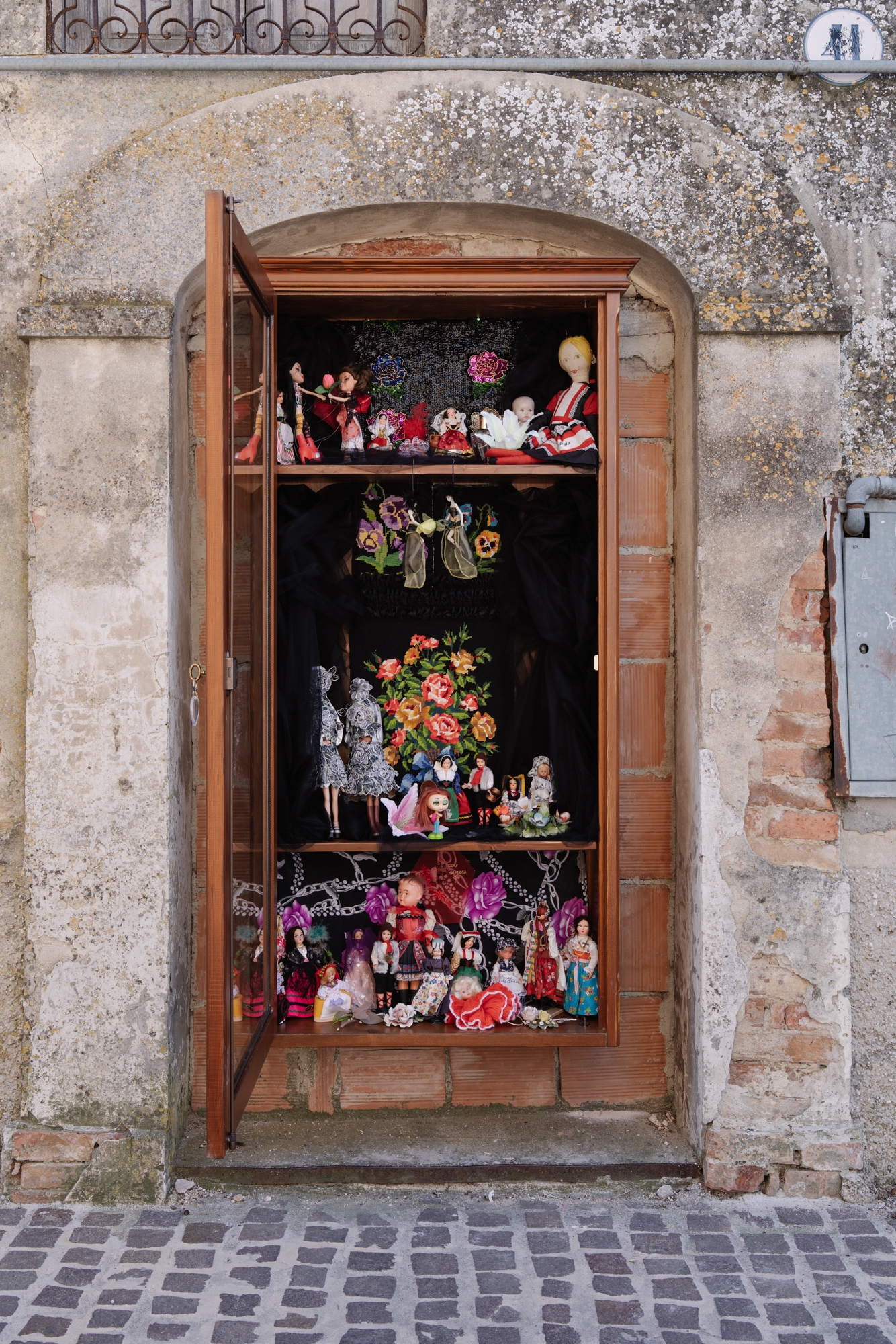
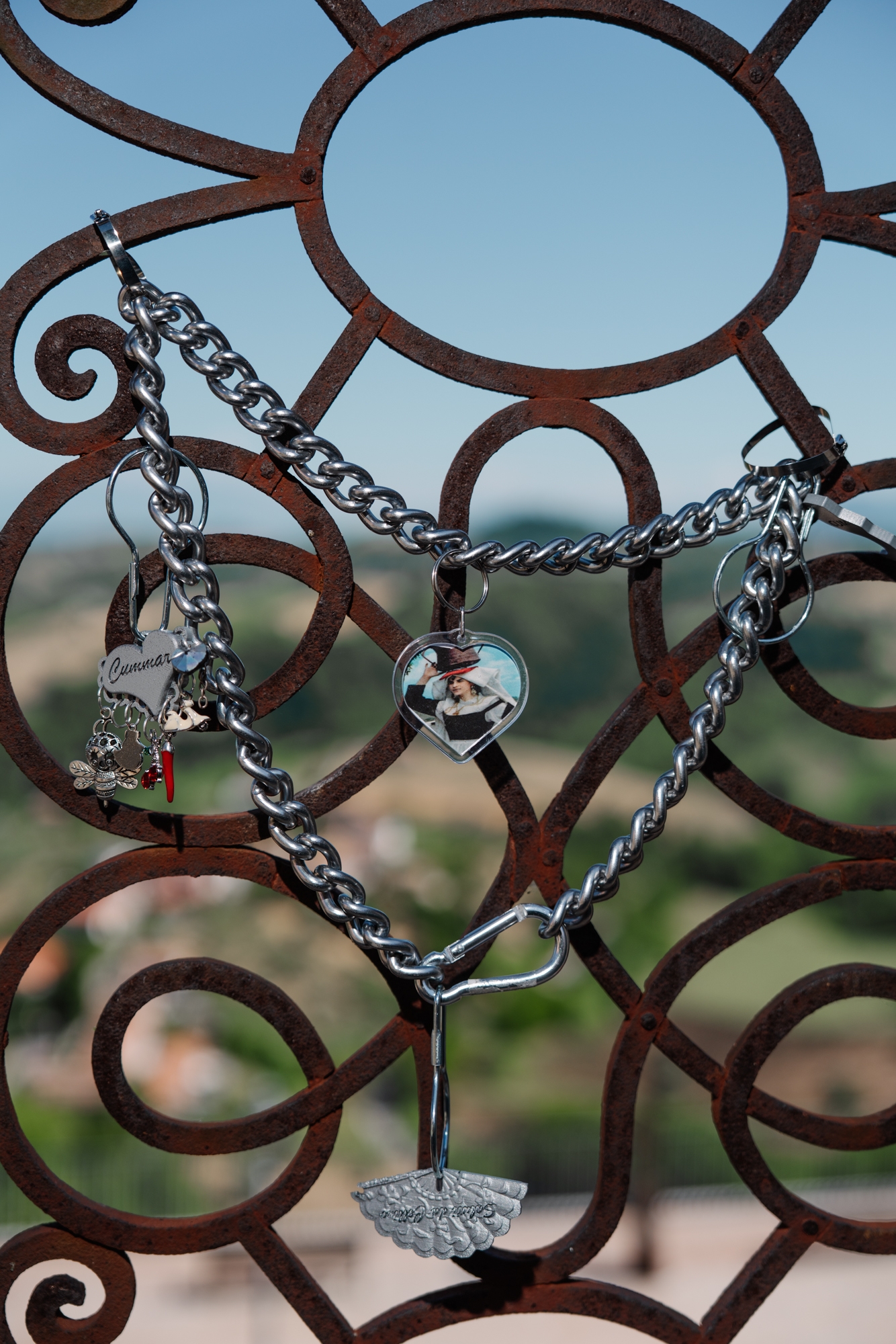
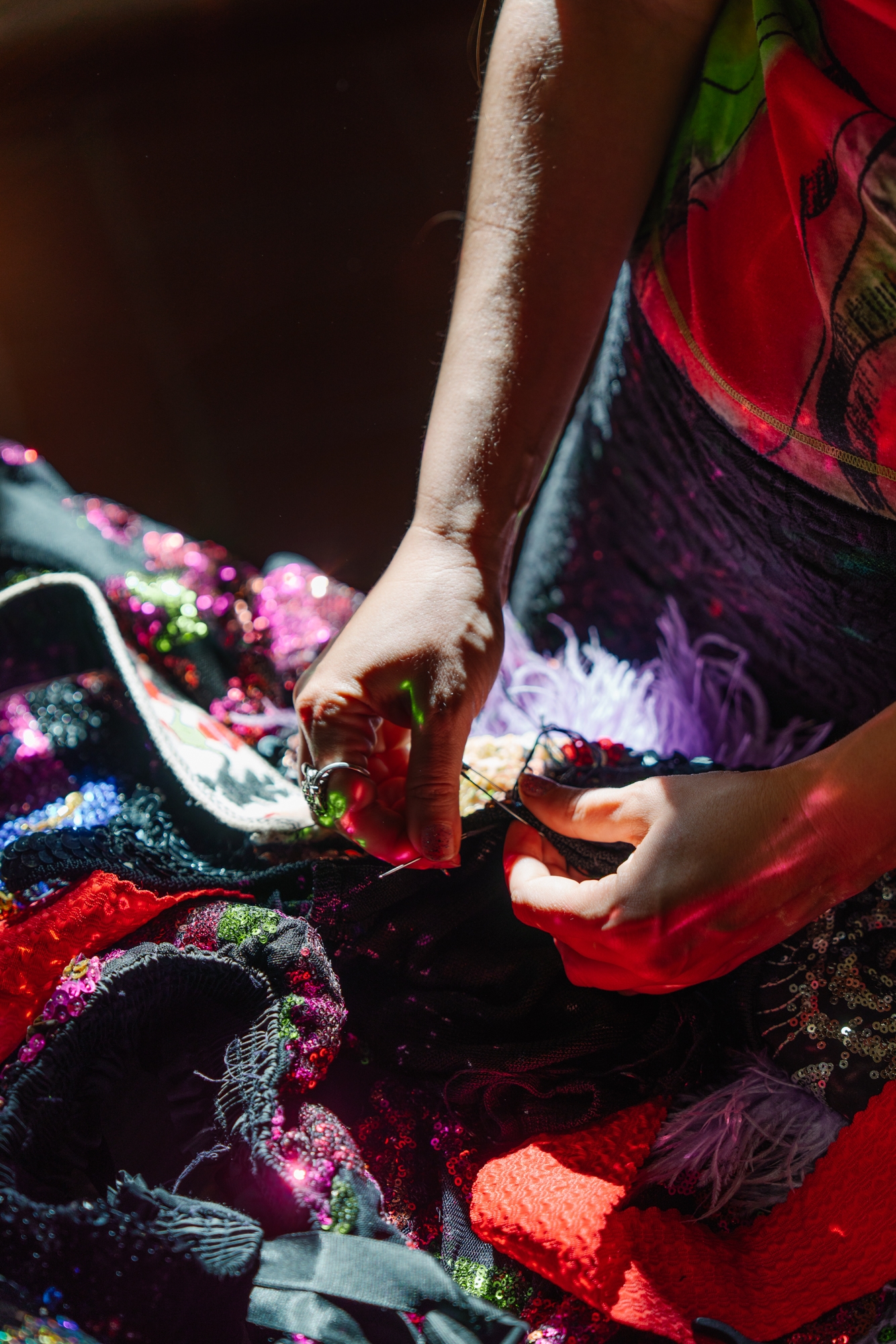
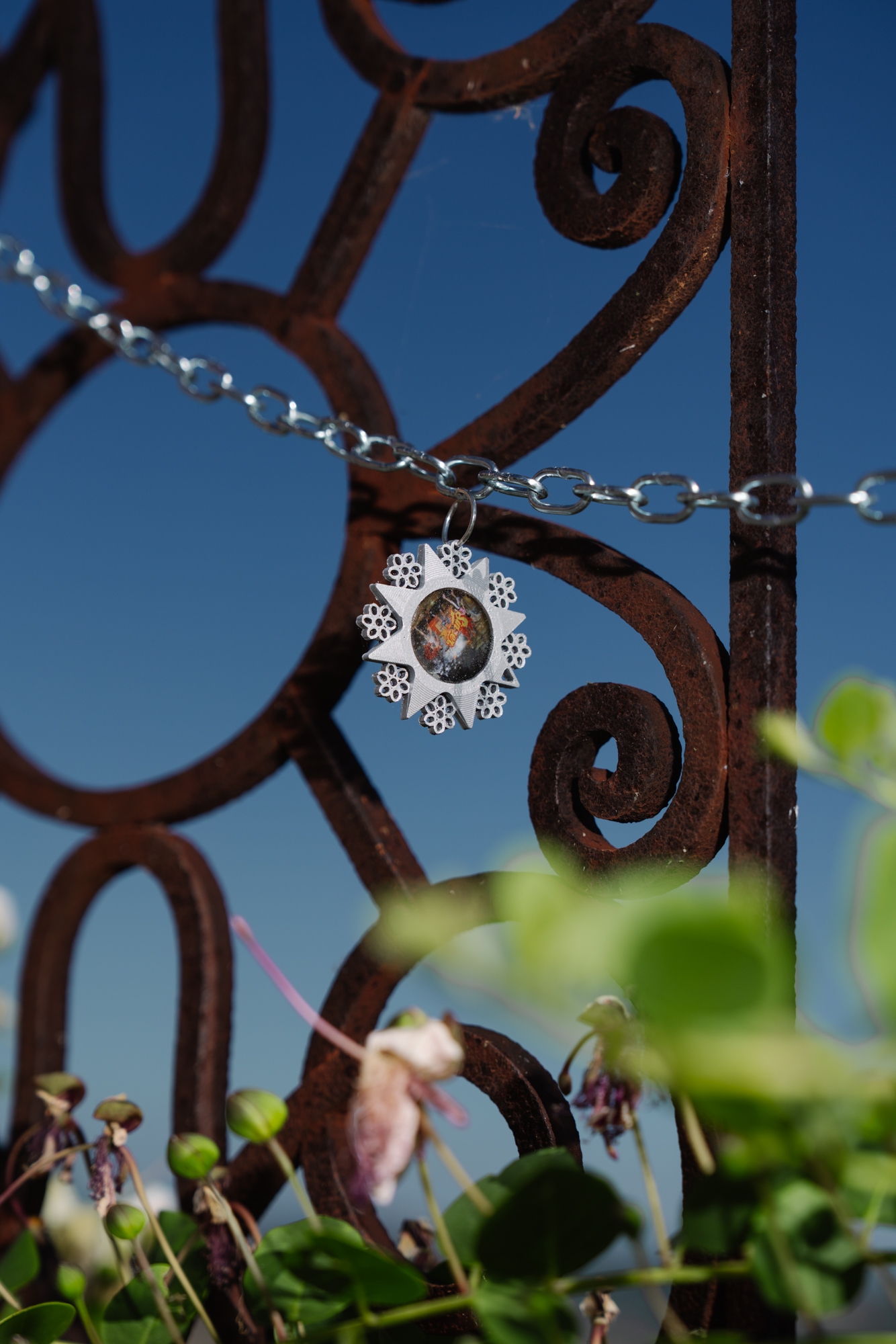
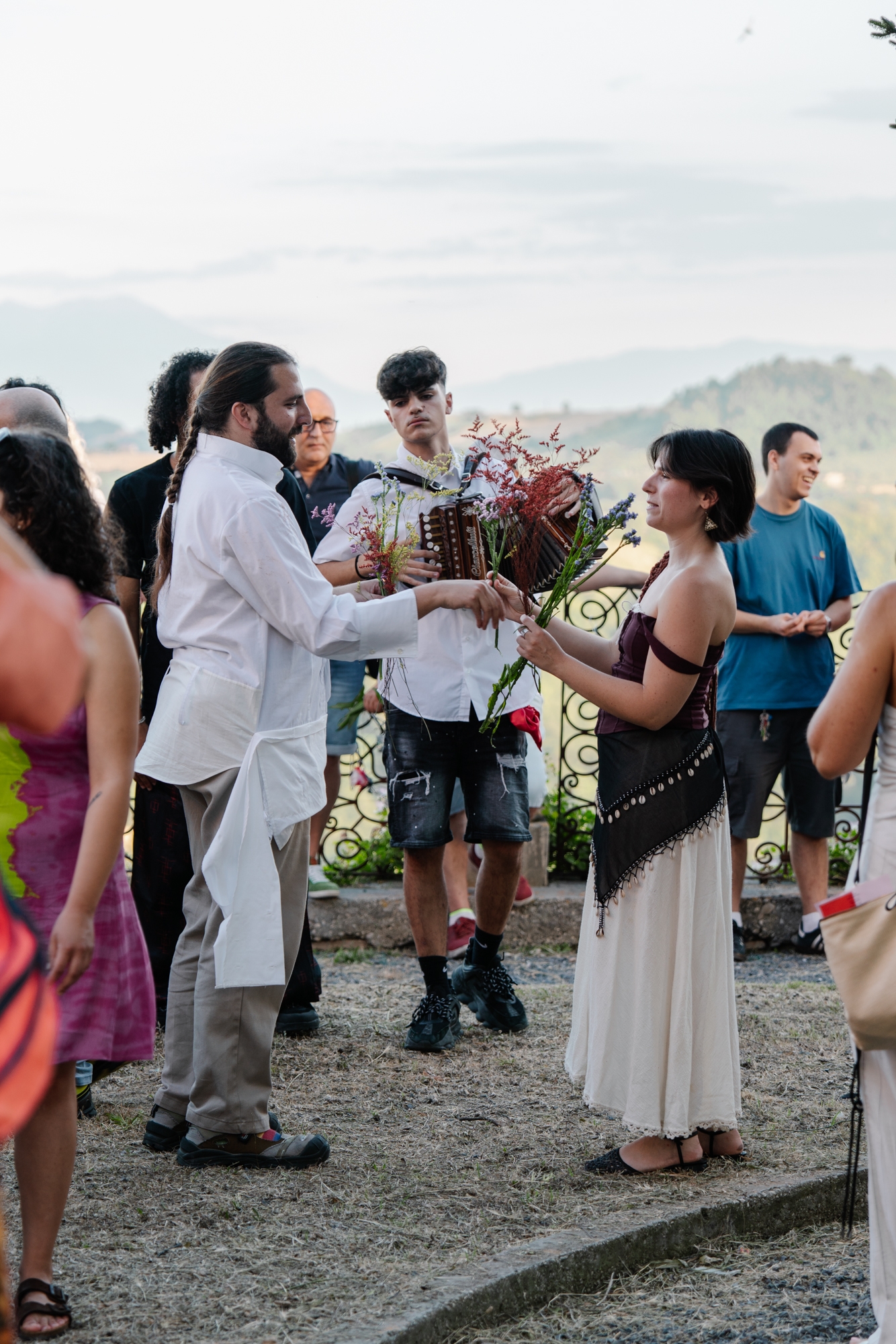
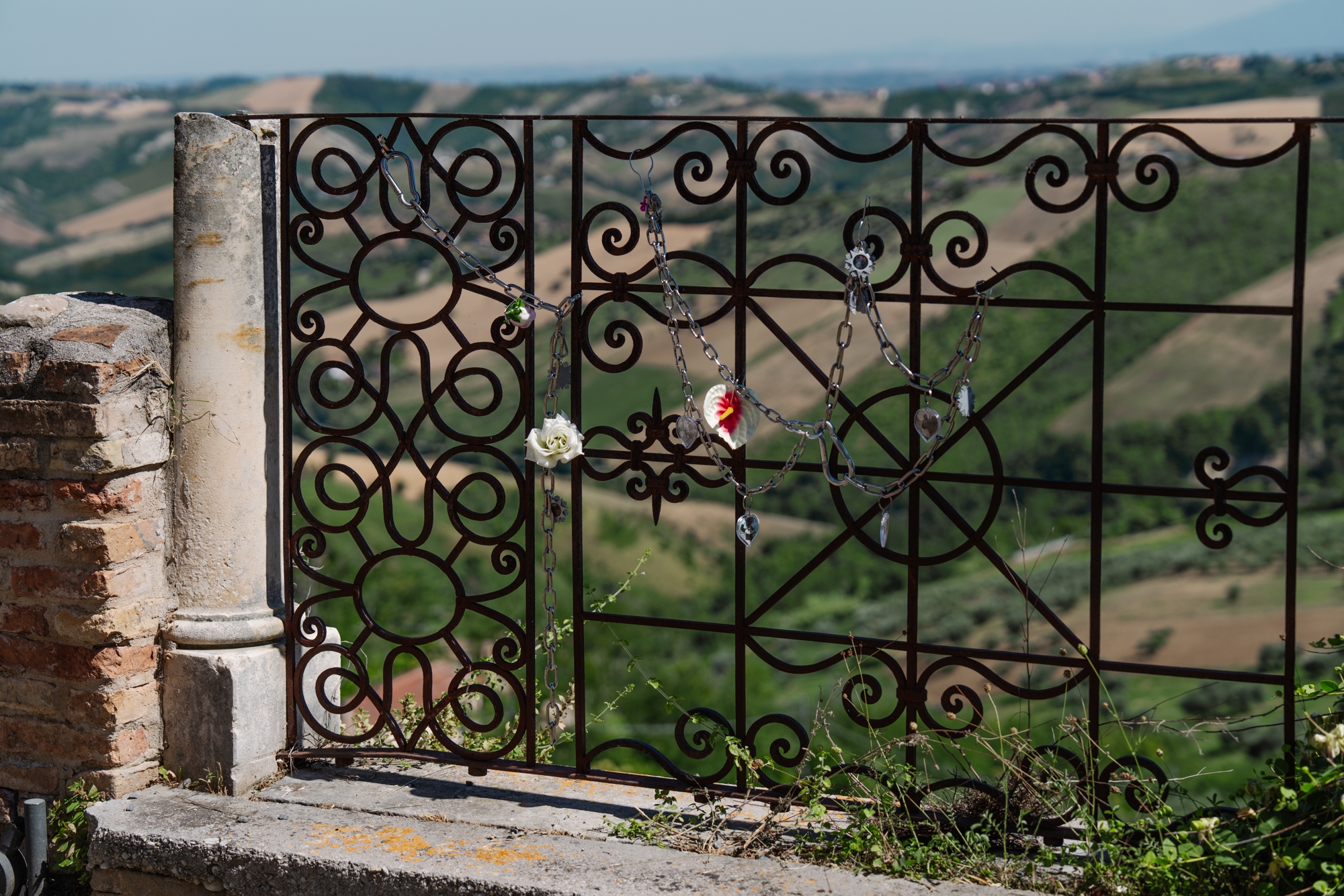
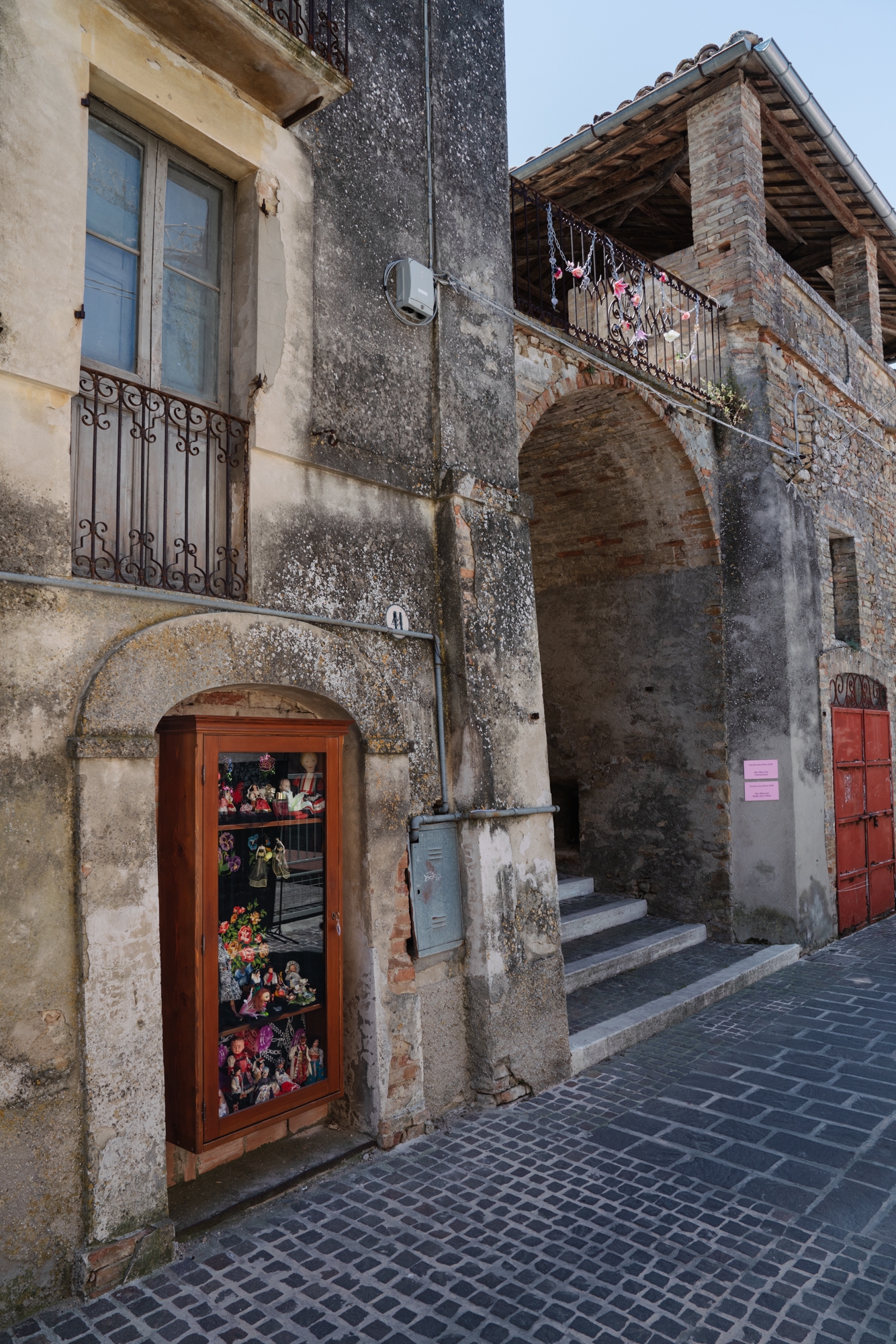
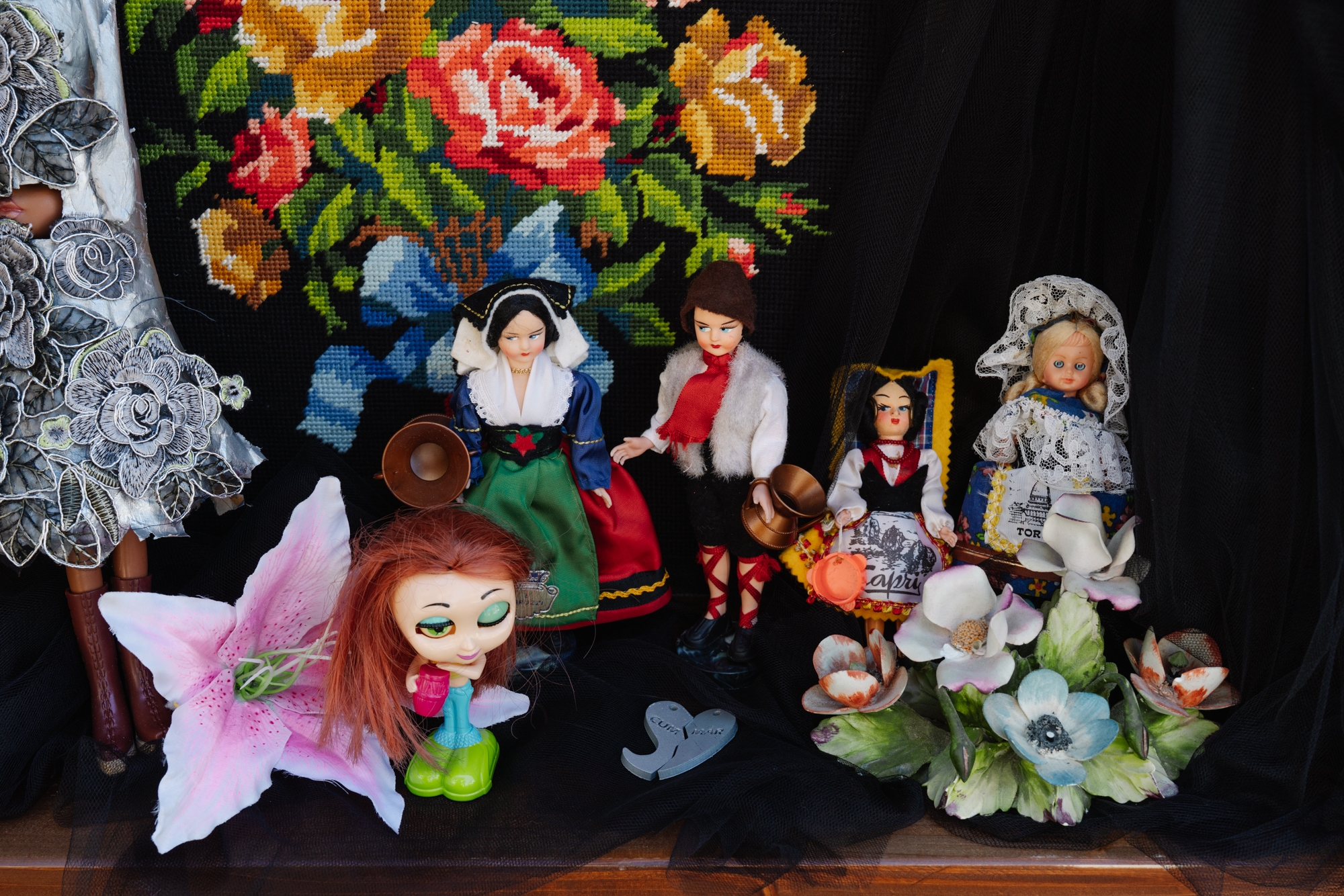
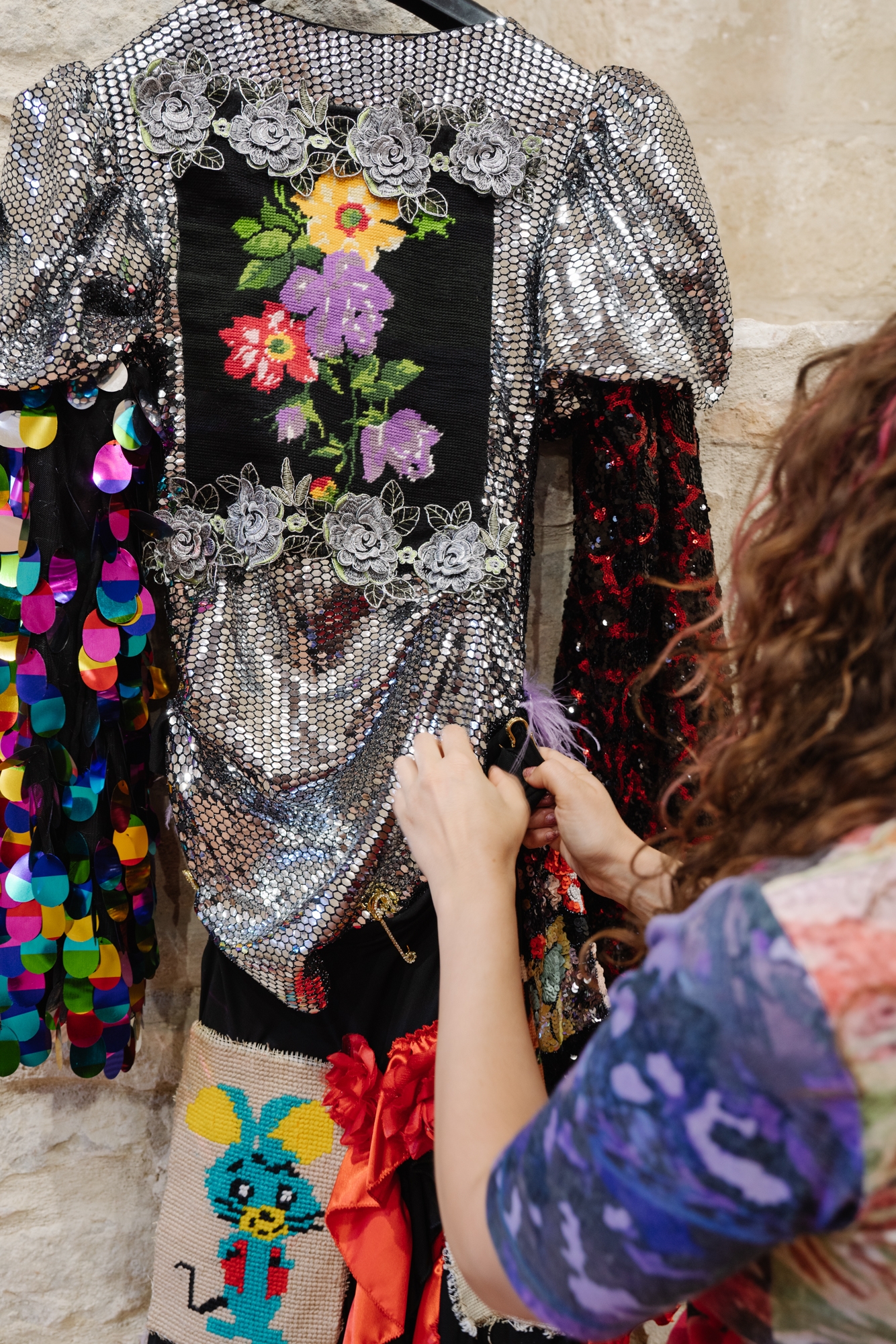
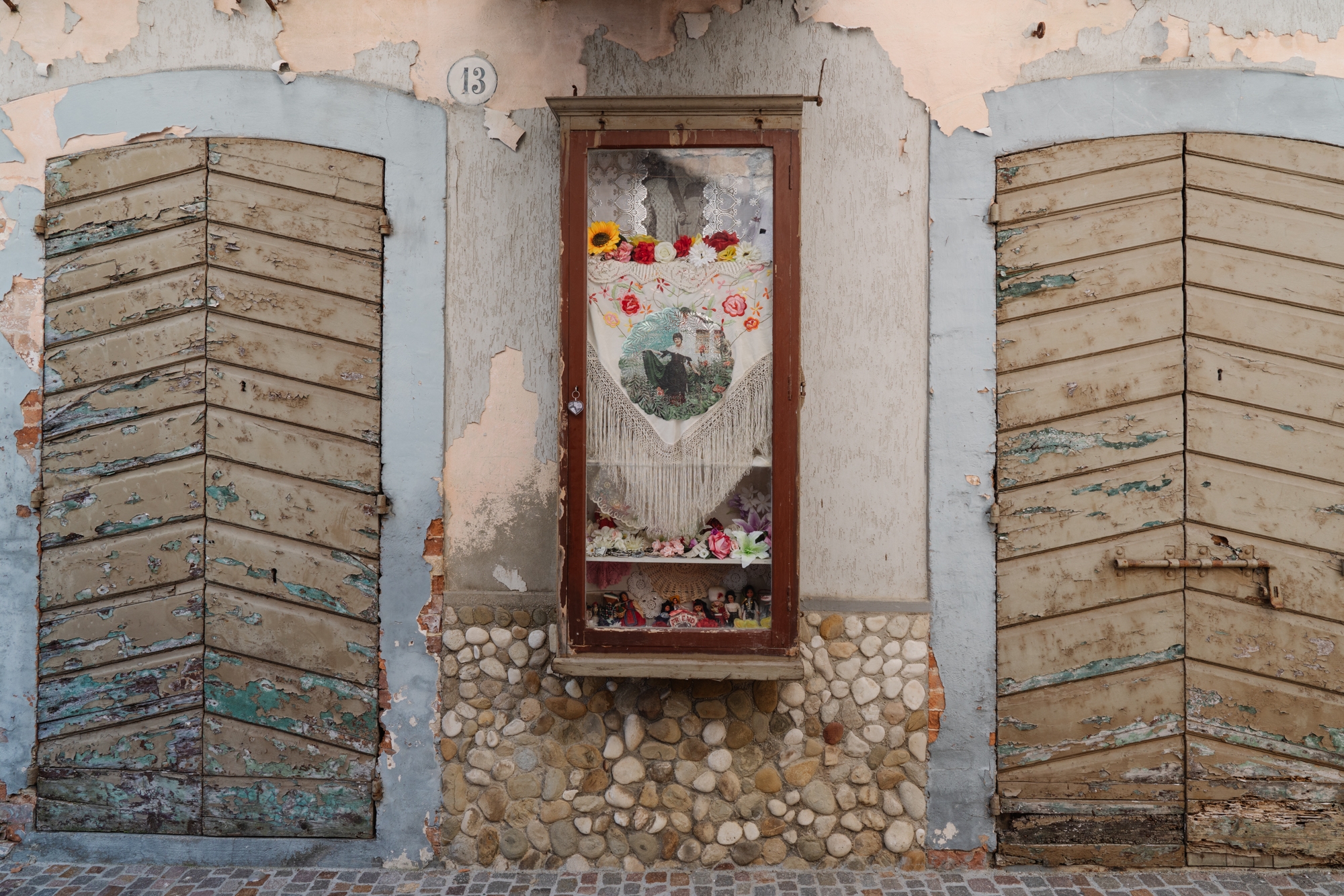
Alice Minervini, Cummar a fiure, Cellino Attanasio (TE), Abruzzo. Ph Giacomo Alberico
The Commare a fiore is an ancient folk custom once practiced in some rural areas of Abruzzo, now no longer in use. Celebrated during the summer solstice, it marked a symbolic moment in which a deep friendship was sealed through the exchange of a ramajette, a sprig establishing pacts of alliance and mutual support, with a commitment to sustaining a bond of sisterhood.
Following the convivial spirit of Cellino Attanasio, Alice Minervini’s project takes shape through word of mouth, oral memory and gossip: the celebration becomes a space for reinventing shared rituals.
Cummar a fiure stages marginalized female practices, transforming folklore, irony and a deliberately kitsch aesthetic into a poetic rite. At its center is the doll as a symbolic double, inspired by Abruzzese pupe and by pop culture.
After the performative moment of the opening, the installation spreads into the public space through a route marked by decorative garlands and dolls. The works will be reactivated throughout the summer through a series of events.
Works:
01 Alice Minervini, Cummaranza, 2026. Fabrics, lace, latex, chains, 3D-printed pendants, variable dimensions
Walkway along the town walls, Via Duca degli Abruzzi, Cellino Attanasio (TE)
02 Alice Minervini in collaboration with FrancaFungo (Gianfranco Colla), Spupazze, 2026. Papier-mâché, fabrics, foam rubber, lace, latex, accessories, flowers, variable dimensions
Interior of the medieval tower, Via Duca Abruzzi 10, Cellino Attanasio (TE)
03 Alice Minervini, Just a Phase, 2026. Dolls, fabrics, lace, latex, chains, variable dimensions
Display case, Via del Borgo, Cellino Attanasio (TE)
04 Alice Minervini, Really Just a Phase, 2026. Wood, glass, dolls, fabrics, lace, latex, chains, 185 x 85 x 25 cm
Via Roma 47, Cellino Attanasio (TE)
05 Alice Minervini, Cummaranza, 2026. Fabrics, lace, latex, chains, 3D-printed pendants, variable dimensions
Via Roma 47, Cellino Attanasio (TE)
The medieval tower on Via Duca degli Abruzzi can be visited during the following hours: Mon–Fri 8:30 am–12:30 pm, Sat–Sun 8:30 am–8:00 pm.
Information and special openings: 0861.66981 – Municipal switchboard 9:00 am–1:00 pm
Thanks to: Mayor Giuseppe Del Papa, Councillor for Culture Luisana Ferretti, Culture Delegate Councillor Amalia Temperini, the municipal administration, councillors, municipal offices and workers, Pro Loco, ITACA, Cul.Tur.A’, LND, AVIS, ANA, Protezione Civile, Croce Bianca, the Tacconelli family, Andrea Minervini, Tiziana Scota, Damien Ajavon, Oleksandra Horobets, Arianna Iodice, Maria Nico Moscatelli, Una Mathiesen Gjerde. A special thank you to Hamza Hdada for the technical support in 3D creation and printing.
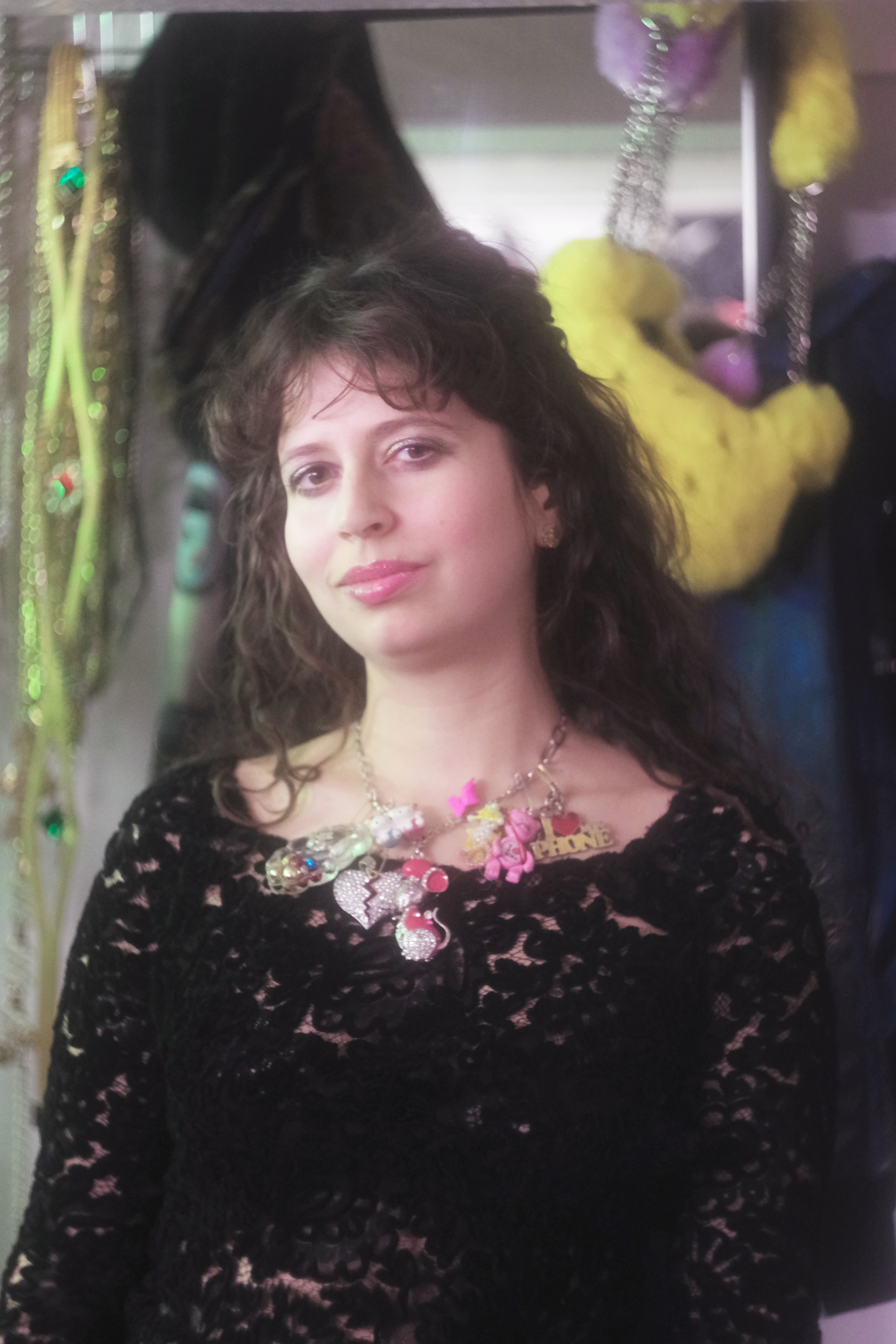
Alice Minervini (Florence, Italy, 1997), also known as pakkiana, is an artist and researcher whose work explores the intersections of autofiction, camp aesthetics, fashion folklore, and sentimentalism as tools for imagining alternative futures. She graduated in Visual Cultures from Goldsmiths University of London and is currently a PhD candidate at the Accademia di Belle Arti in Torino, with the project Per una Genealogia Affettiva Del Camp Nostrano (For an Affective Genealogy of Camp Nostrano). She co-founded the festival Two Hours Ago I Fell in Love, to deconstruct fascist legacies within contemporary imaginaries of love, sex, and gender identity. She has published fanzines and artists’ books, including Comizi d’Emigrazione, and has presented her research in international contexts such as Shmorèvaz, Paris (FR, 2023); NYU Casa Italiana (USA, 2025); Dos Mares, Marseille (FR, 2026).

Andrea Croce is an artist, producer, and researcher, trained in Fashion and Visual Arts at IUAV University of Venice. His work investigates the performative object as a critical device and relationships as an artistic and political practice. He is the founder of Unpae and is active in teaching, contributing to academies and institutions. For Una Boccata d’Arte in Abruzzo, he curated projects from 2021 to 2025.
MariaTeresa Daniele is a designer and researcher, trained in Fashion and Visual Arts at IUAV University of Venice. She completed a Master’s degree in Street Culture with a thesis on care and interdependence in creative processes within design and art. She works across research, art direction, and production, collaborating with cultural organizations and artists; she is part of the teams at Fondazione Studio Rizoma and Almanac.

Cellino Attanasio rises between the valleys of the Vomano and Piomba rivers, in a hilly landscape marked by ravine, historic cultivated fields, and a rich biodiversity concentrated within a relatively small area. Overlooking the hills of the province of Teramo, the town enjoys a panorama that stretches from the mountains to the Adriatic coast. The historic center preserves the city walls and the towers of the dukes of Acquaviva d’Aragona; one of these now houses the Municipal Antiquarium, dedicated to the archaeological heritage of the area. Beneath the streets, a network of caves, snow pits, and underground tunnels reveals the ancient structure of the subsoil. The identity of the village is expressed through the interplay of history, art, rural knowledge, and gastronomic traditions.