Evita Vasiljeva
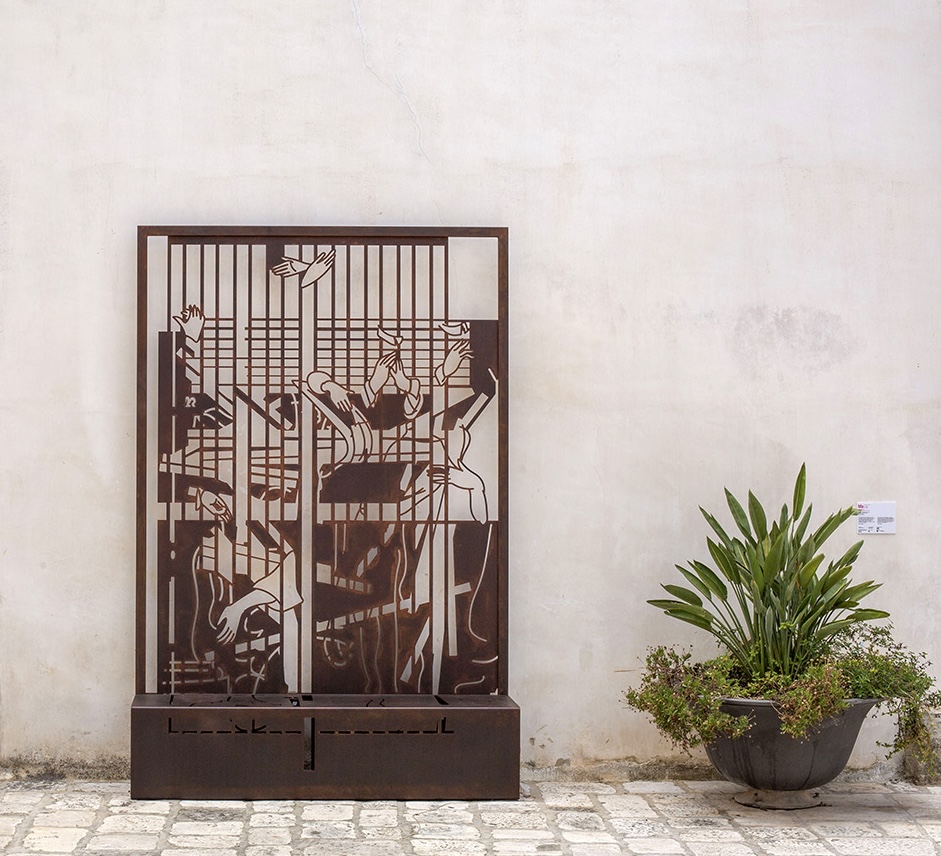
Barely Invisible Cities
Il tempo sembra fermo a Maruggio, come se gli abitanti sapessero come rallentarlo. Frammenti di storia si fanno spazio tra muri di pietra e tracce di santi. Un’altra linea temporale affiora, invisibile. Questa soglia è il mio punto di partenza: un portale che protegge il passato e il futuro di Maruggio
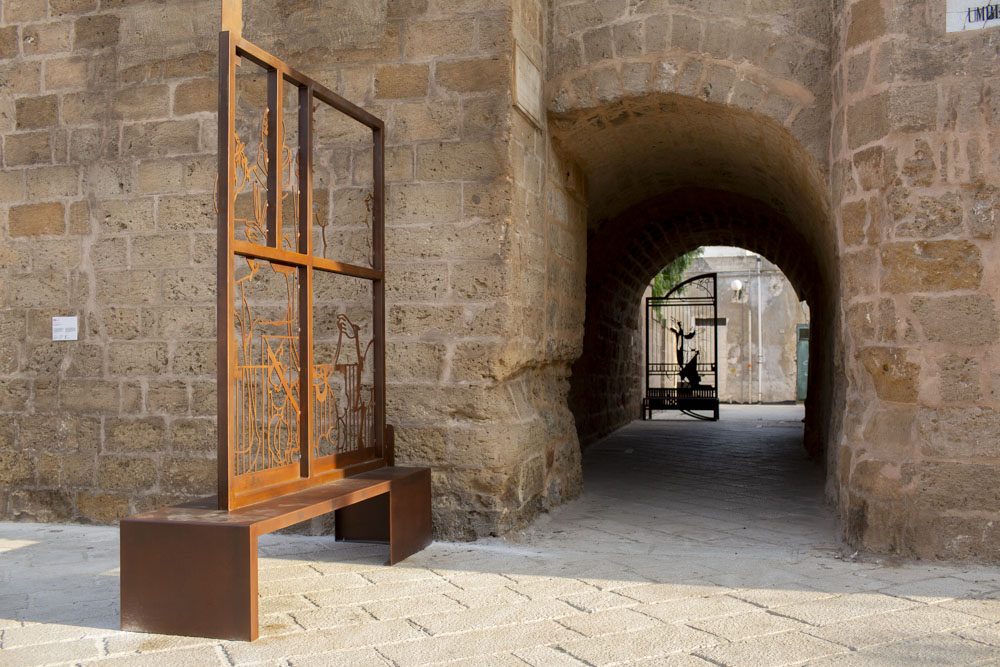
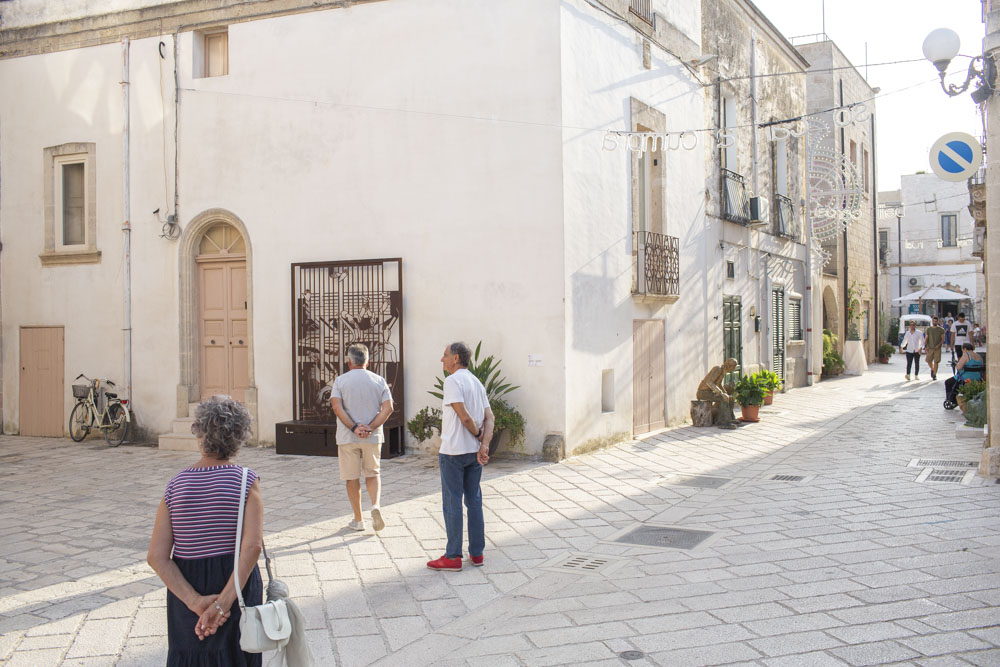
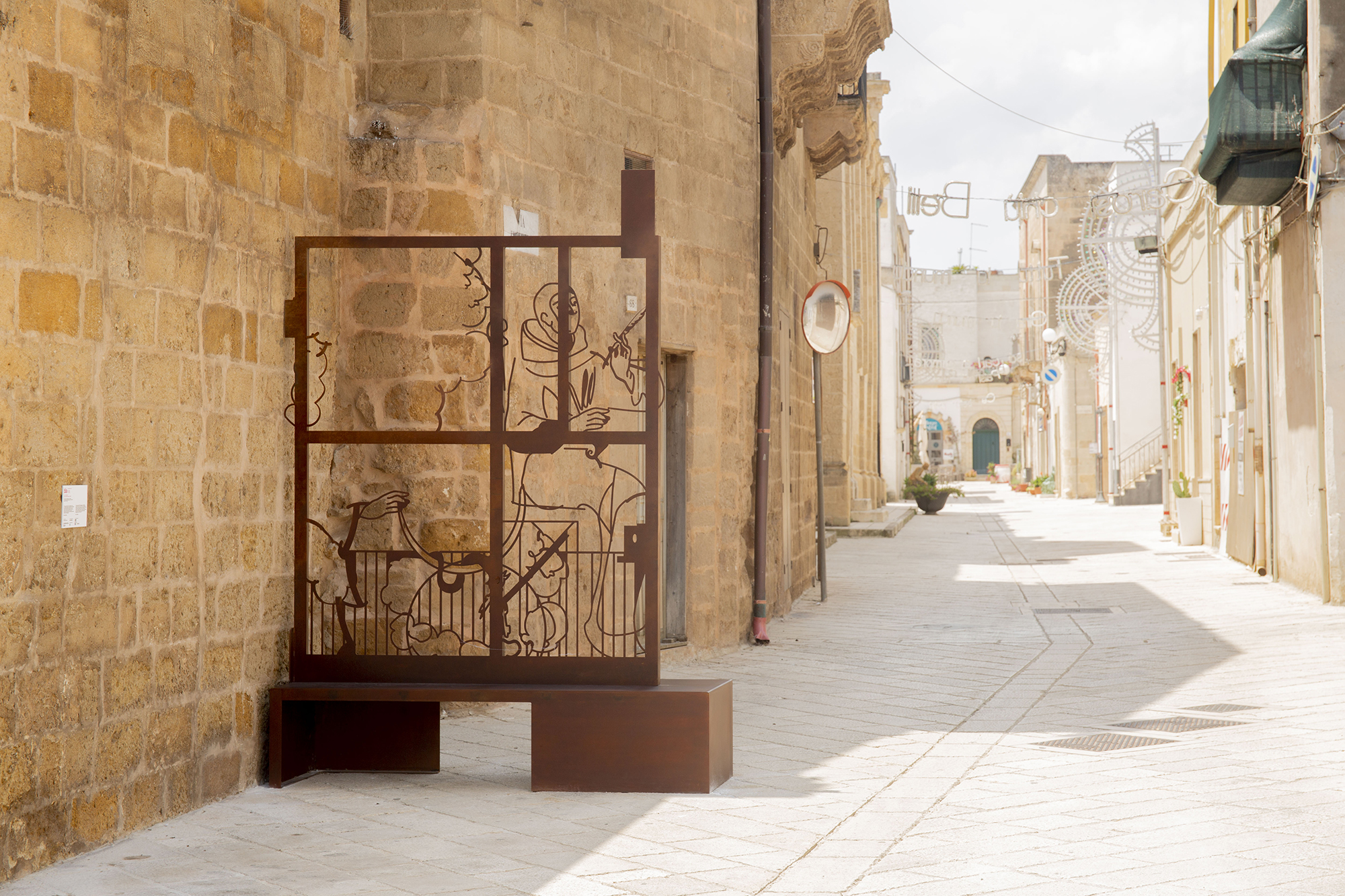
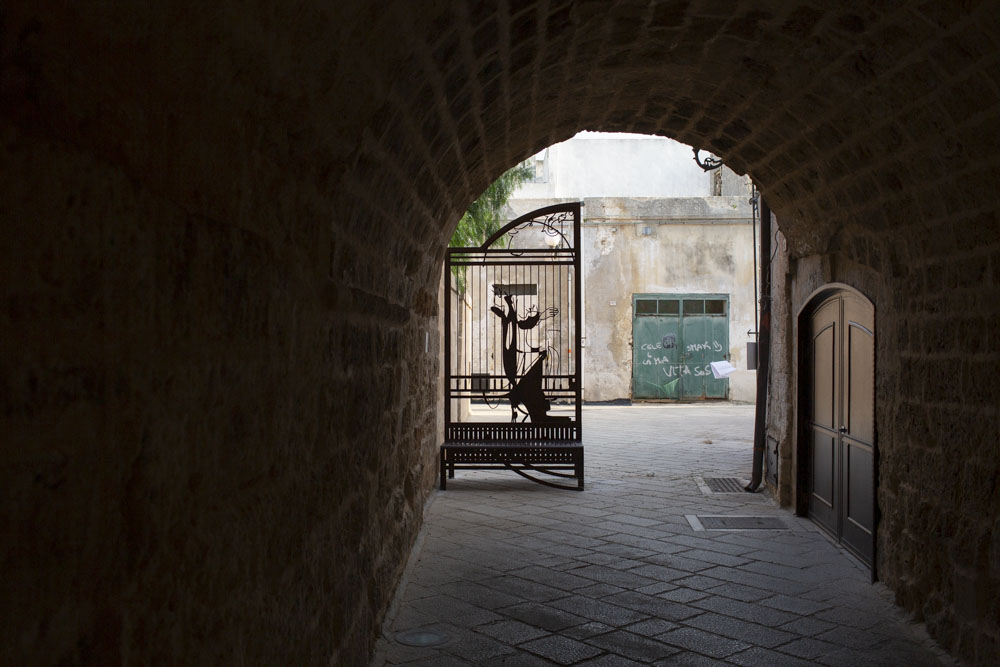
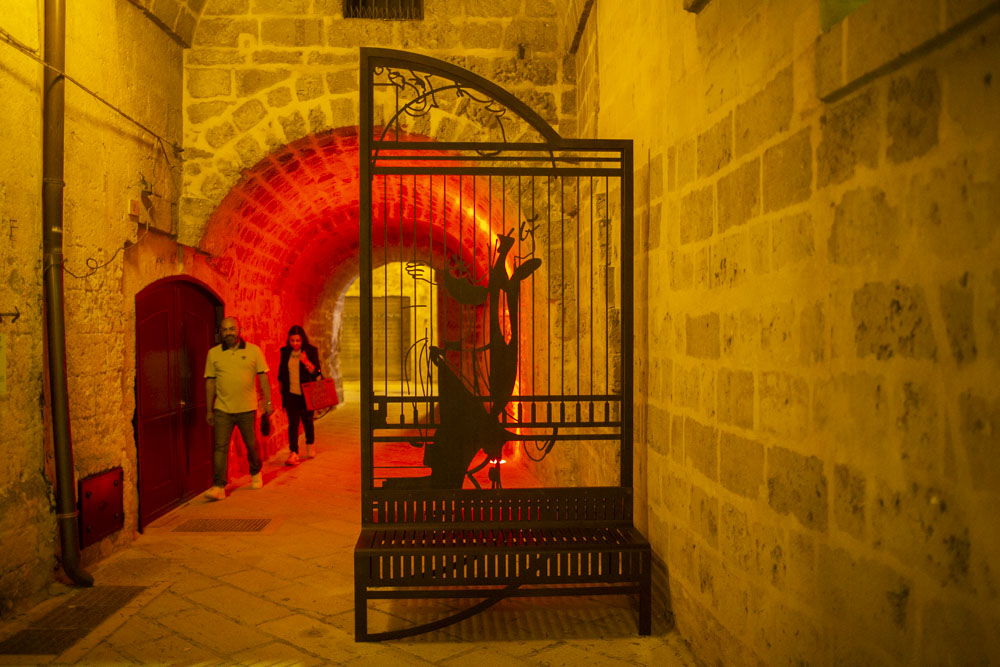
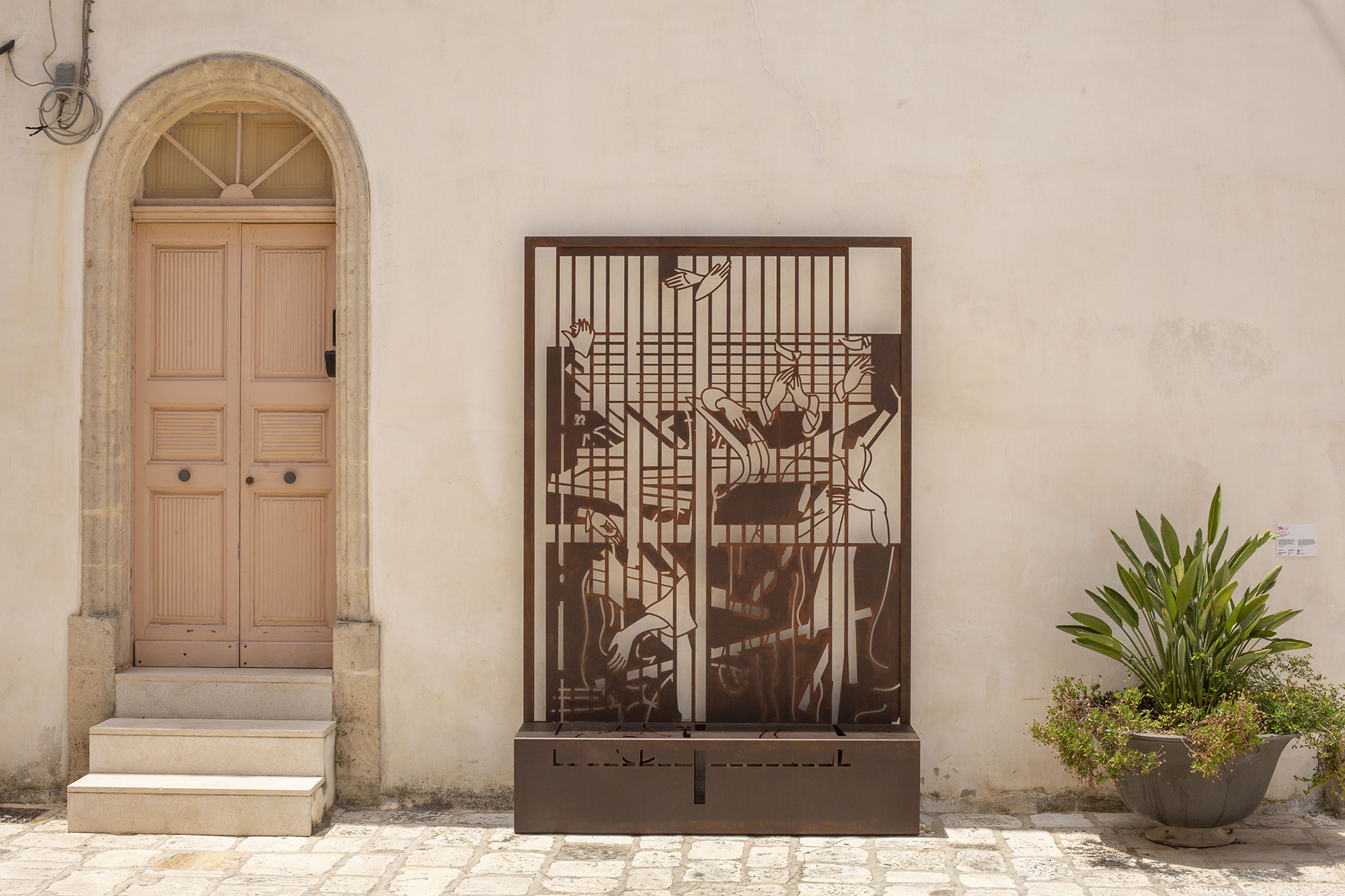
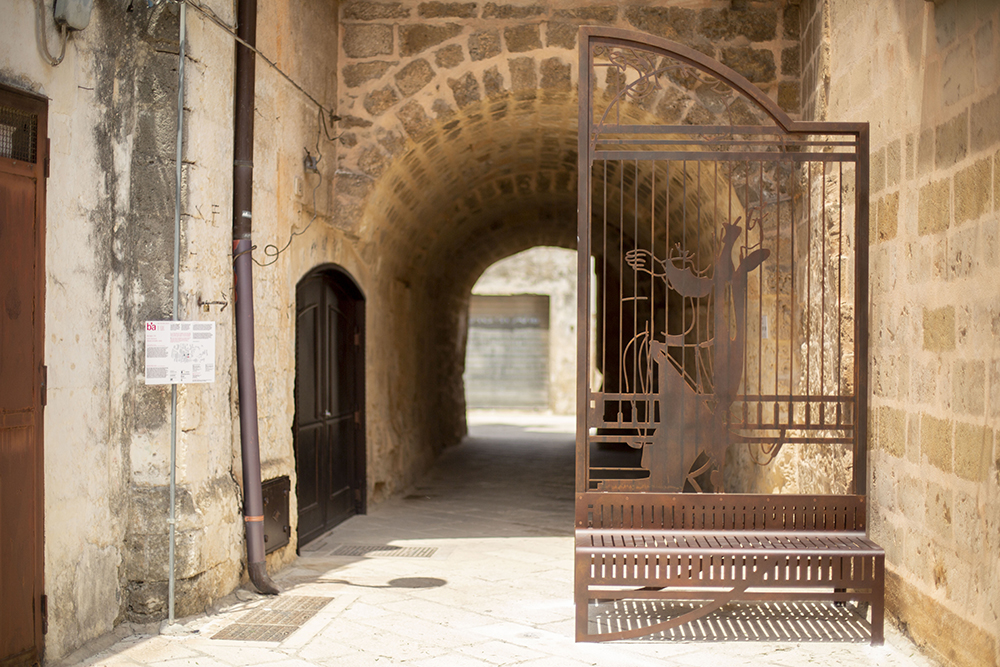
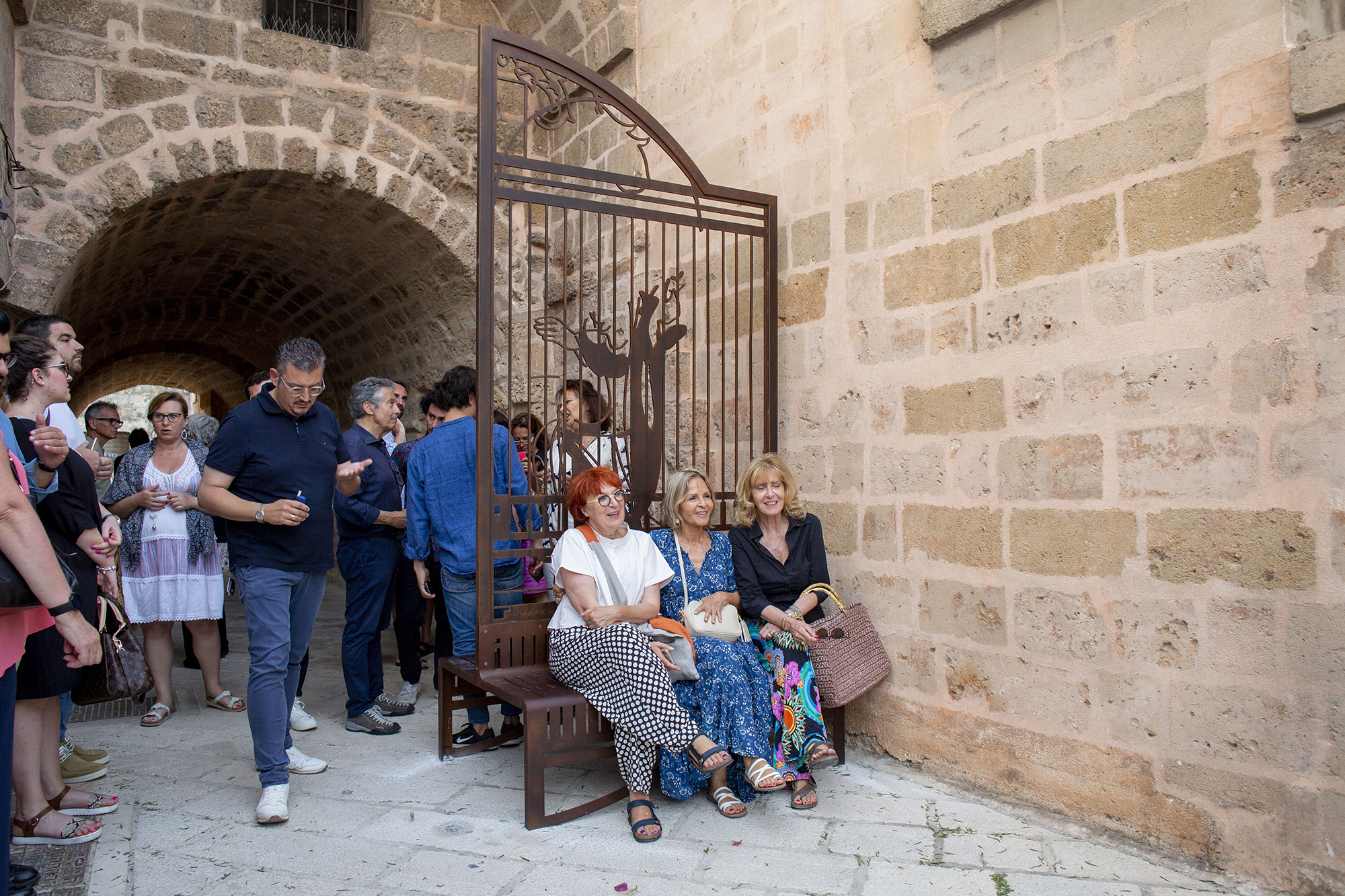
Evita Vasiljeva, Barely Invisible Cities, Maruggio (TA), Puglia. Ph. Christian Mantuano
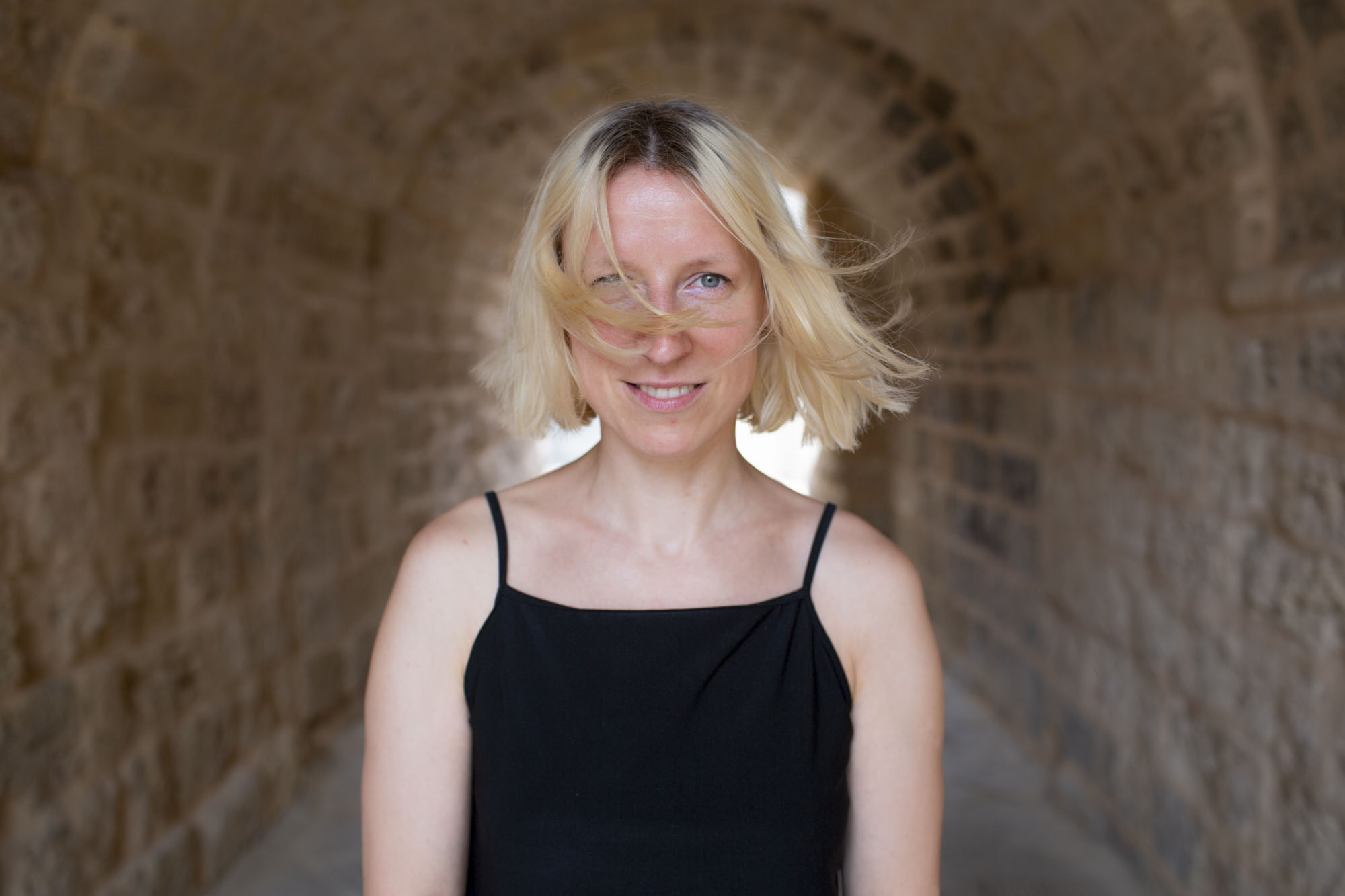
Evita Vasiljeva (Riga, Latvia, 1985) lives and works in Paris. Her practice includes sculpture, installation, and sound. Raised in Latvia during the post-Soviet transition, the artist draws from a visual and sonic imagery of suburban architecture and landscapes. She creates objects, devices, and interactive installations by appropriating materials, usually used for construction, such as concrete, armature, metal profiles, lanterns, and various electrical appliances, and by combining them with household objects: beds and blankets, fridges, microwaves, and soap, but also movement sensors which were commonly used in Latvia in the 90s to secure houses. By manipulating and repurposing a large variety of materials, Evita Vasiljeva invents her own aesthetic, as well as provokes relational dynamics between spaces, architecture, memory, and spectators’ bodies. While her works tackle the issues of anxiety and control, through ways of coexistence within the present moment, they always remain open for multiple interpretations.
The artist has participated in the Lyon Biennale (FR, 2022) and Baltic Triennial 14 (LT, 2021). Recent solo and group exhibitions include those at: Cēsis Contemporary Art Center, Cēsis (LT, 2022); Publiek Park, in collaboration with SMAK, Ghent (BE, 2021); Salon de Normandy by the Community, Paris (FR, 2020); Latvian Centre for Contemporary Art, Riga (LT, 2020); Muzeum Sztuki, Lodz (PL, 2020); Kim? Center for Contemporary Art, Riga (LT, 2019); Tallinn City Gallery, Tallinn (EE, 2018); Foundation Ricard, Paris (FR, 2018); P/////AKT, Amsterdam (NL, 2017). Her works are part of the collection of the Latvian National Museum of Art and numerous private collections.
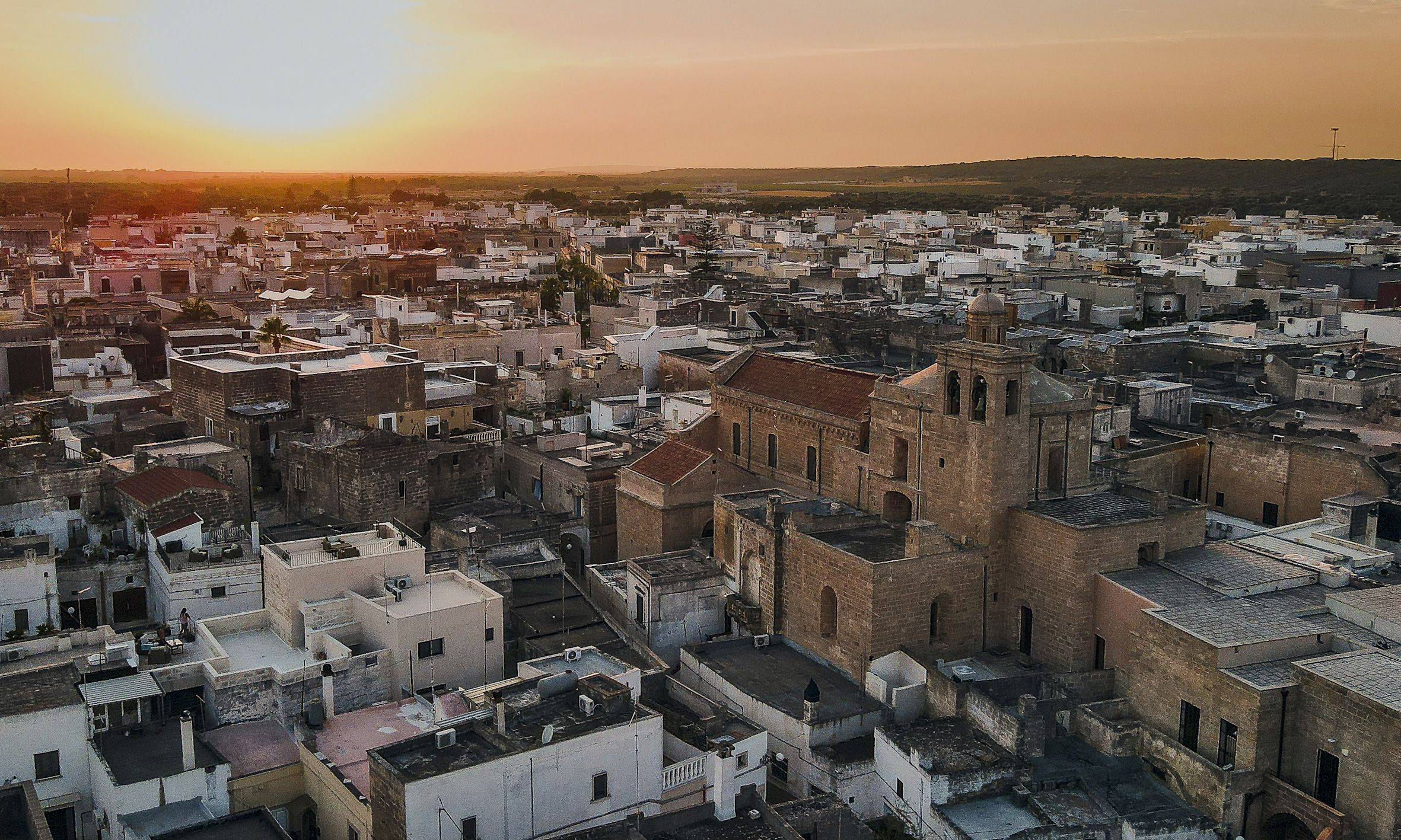
One of the ‘Borghi più Belli d'Italia’ (Italy's Most Beautiful Villages), Maruggio now has about 5,000 inhabitants and is located on the Ionian-Salentine coast of Apulia with its wonderful sea. Founded in 963 and annexed in about 1100 to the Terra d'Otranto (Land of Otranto) under the Order of the Knights Templar, it then passed to the Knights of Malta who defended it from Turkish pirates and built, in the 15th century, the splendid church Chiesa Madre Santissima Natività di Maria Vergine. The historical centre is a small labyrinth of narrow, winding streets lined by ancient whitewashed dwellings with Renaissance balconies of rare beauty. The landscape of Maruggio is dominated by impressive centuries-old olive trees, traditional masseria farmsteads, votive chapels and the majestic stone trulli (conical houses). Local culinary traditions are closely linked to fishing and agricultural production, such as pipaluri spritti (fried sweet chili peppers) and fai e foji (broad bean and vegetable purée), as well as the two bakery specialities made exclusively in Maruggio: li puddichi, spiced bread baked in all homes at Easter time, and li pezzuri, oven-baked calzones, stuffed pizza envelopes. Maruggio hosts a series of events, including ‘La Strada dei Saperi e dei Sapori’ (The Way of Knowledge and Flavours) and other traditional and religious festivities, such as the feast of the Patron Saints St. John and St. Christopher (13 - 14 July).