Matteo Fato
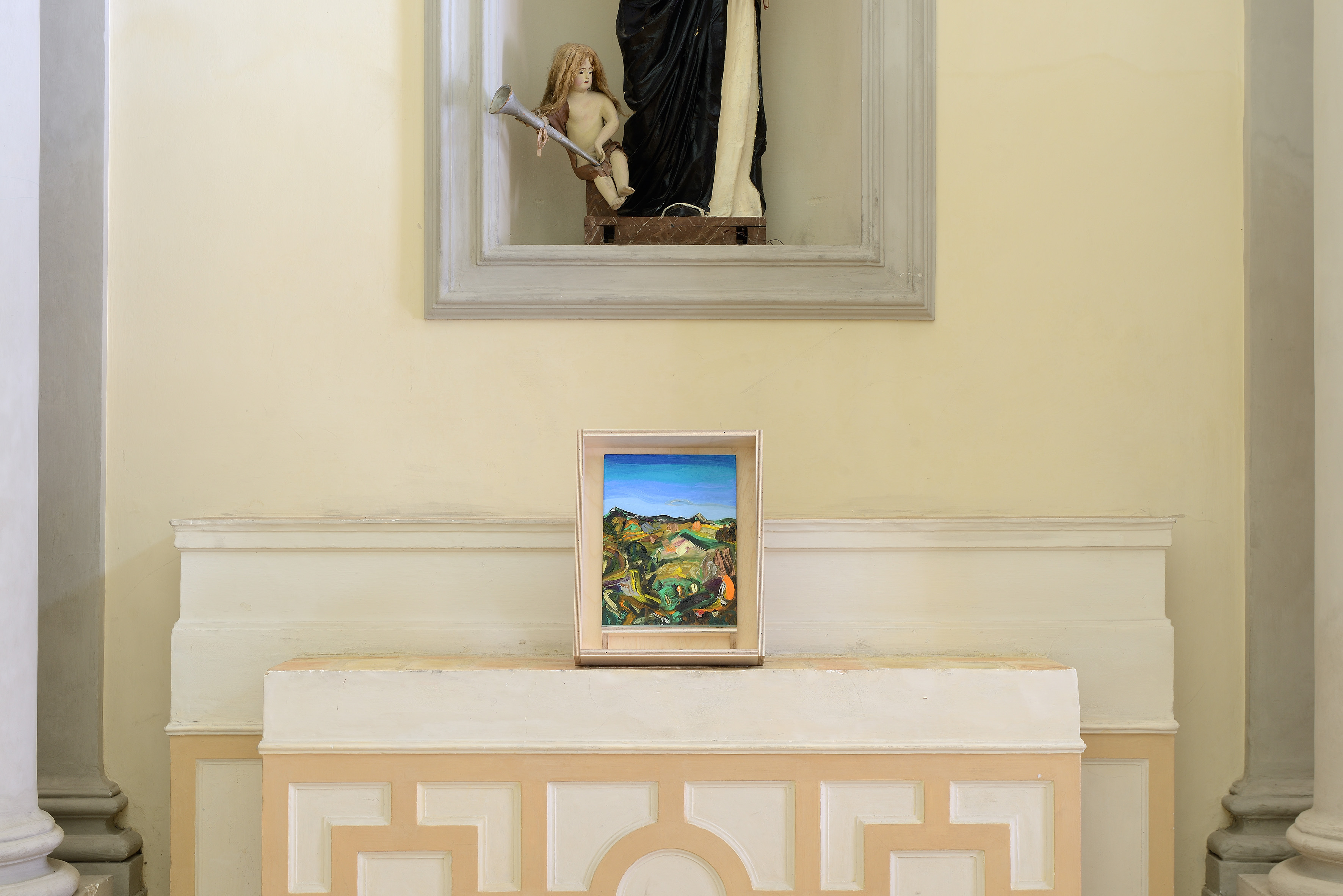
Fiamma d’amore viva (Il cielo e la terra non appartengono alla parola)
Nell’antica frazione medievale, il termine “fuochi” identificava i nuclei familiari residenti, così fato, con fiamma d’amore viva, torna a contrassegnare uno spazio intimo, di momenti vivi alla percezione
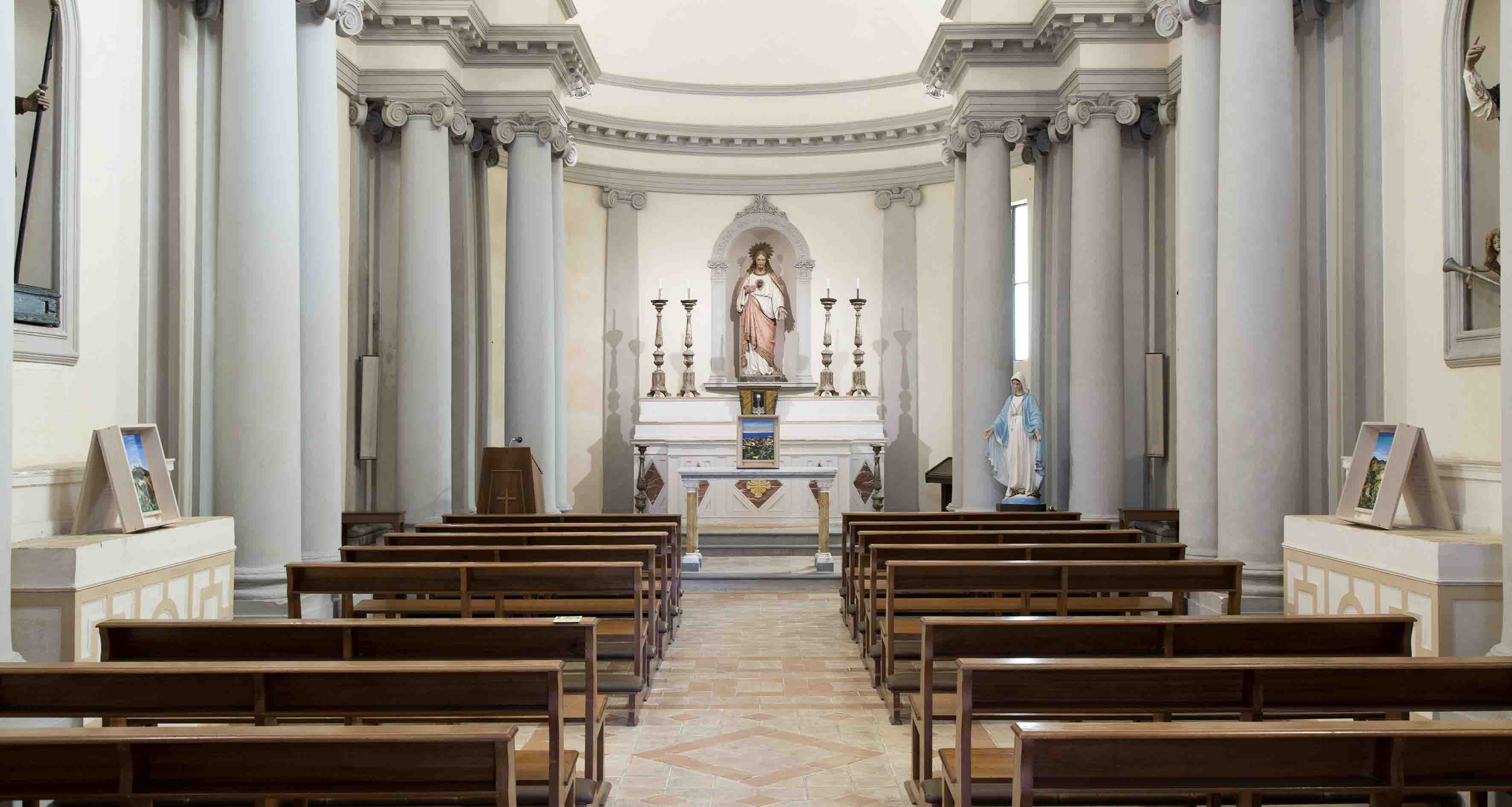
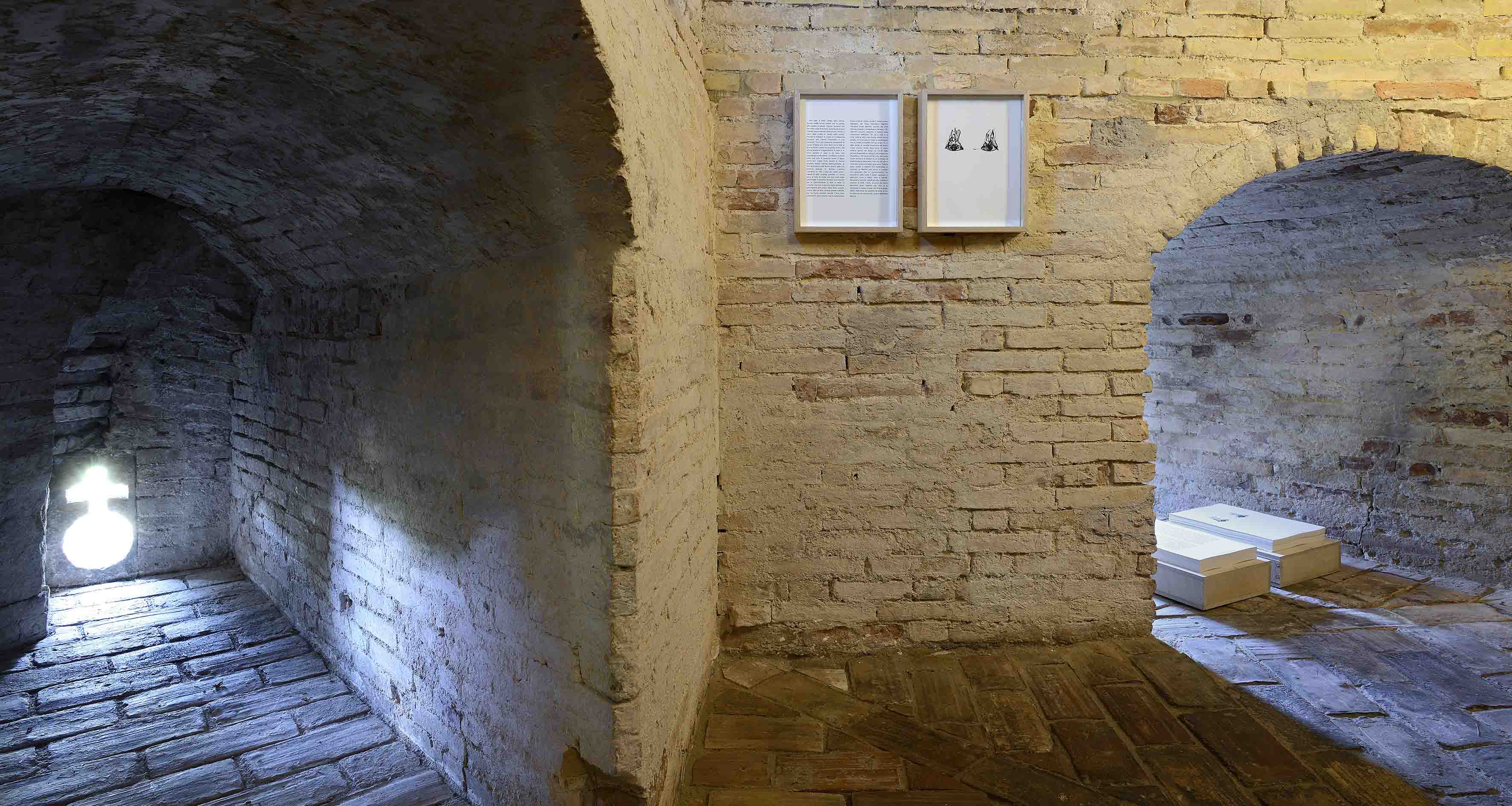
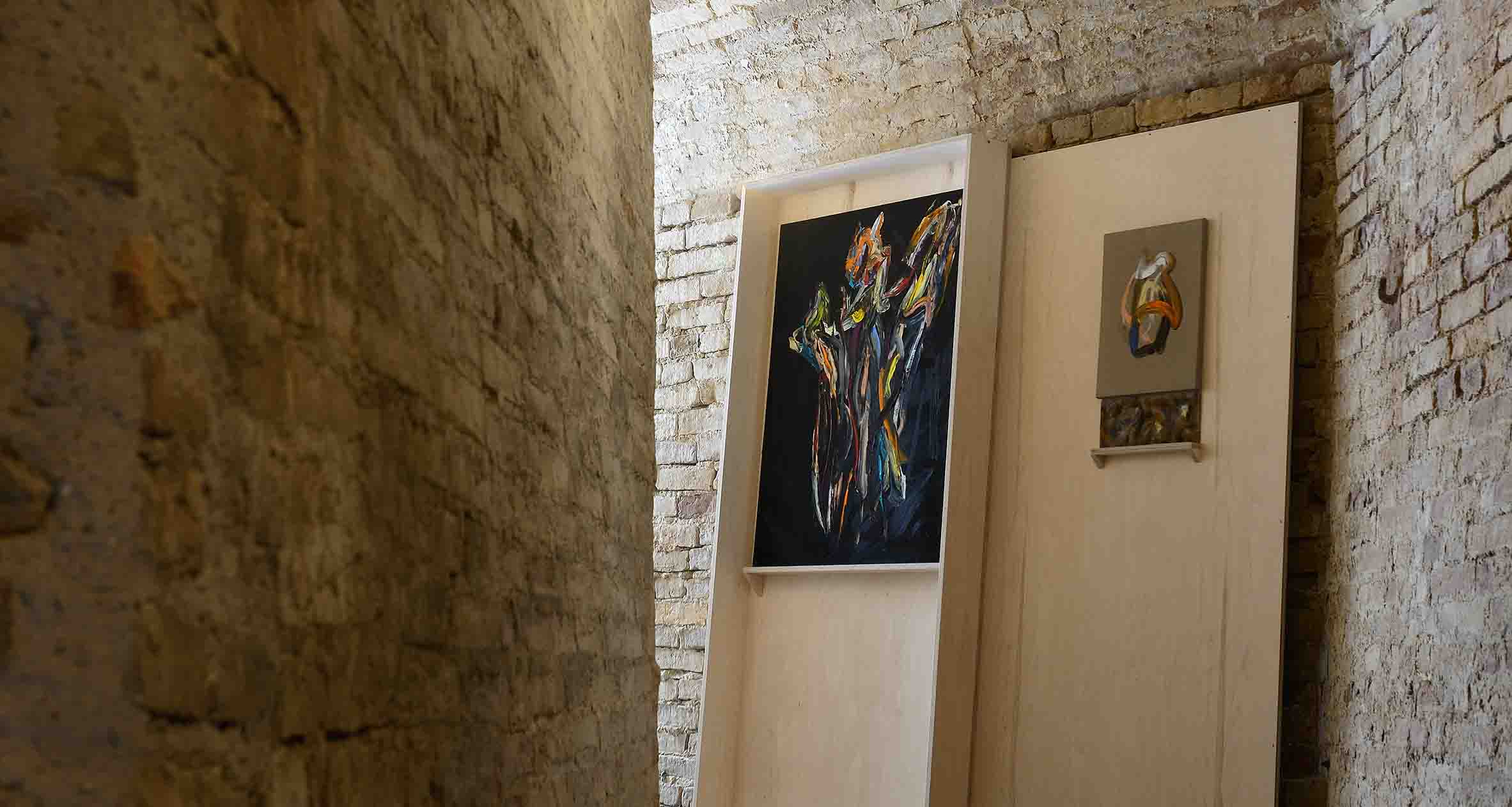
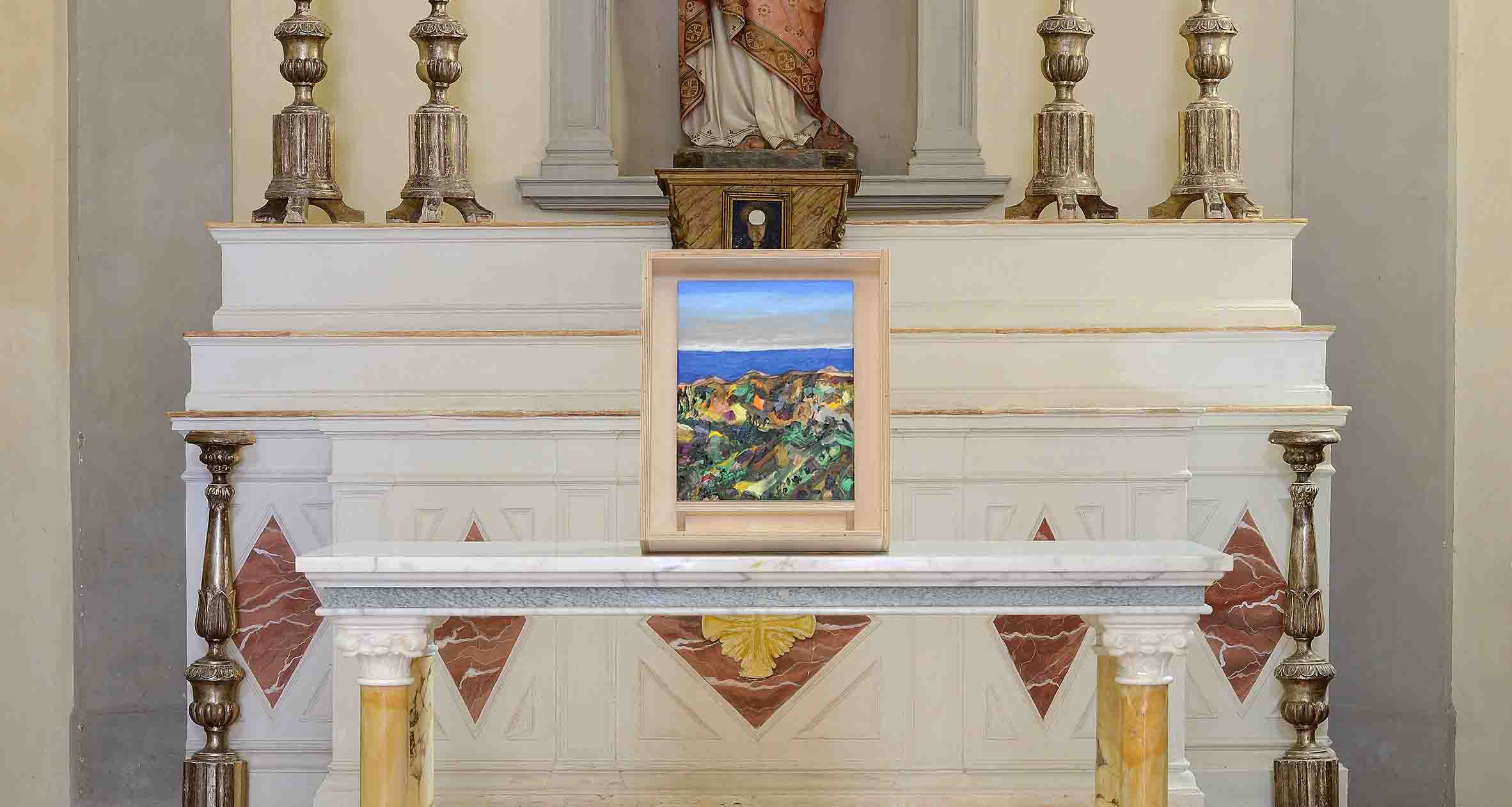
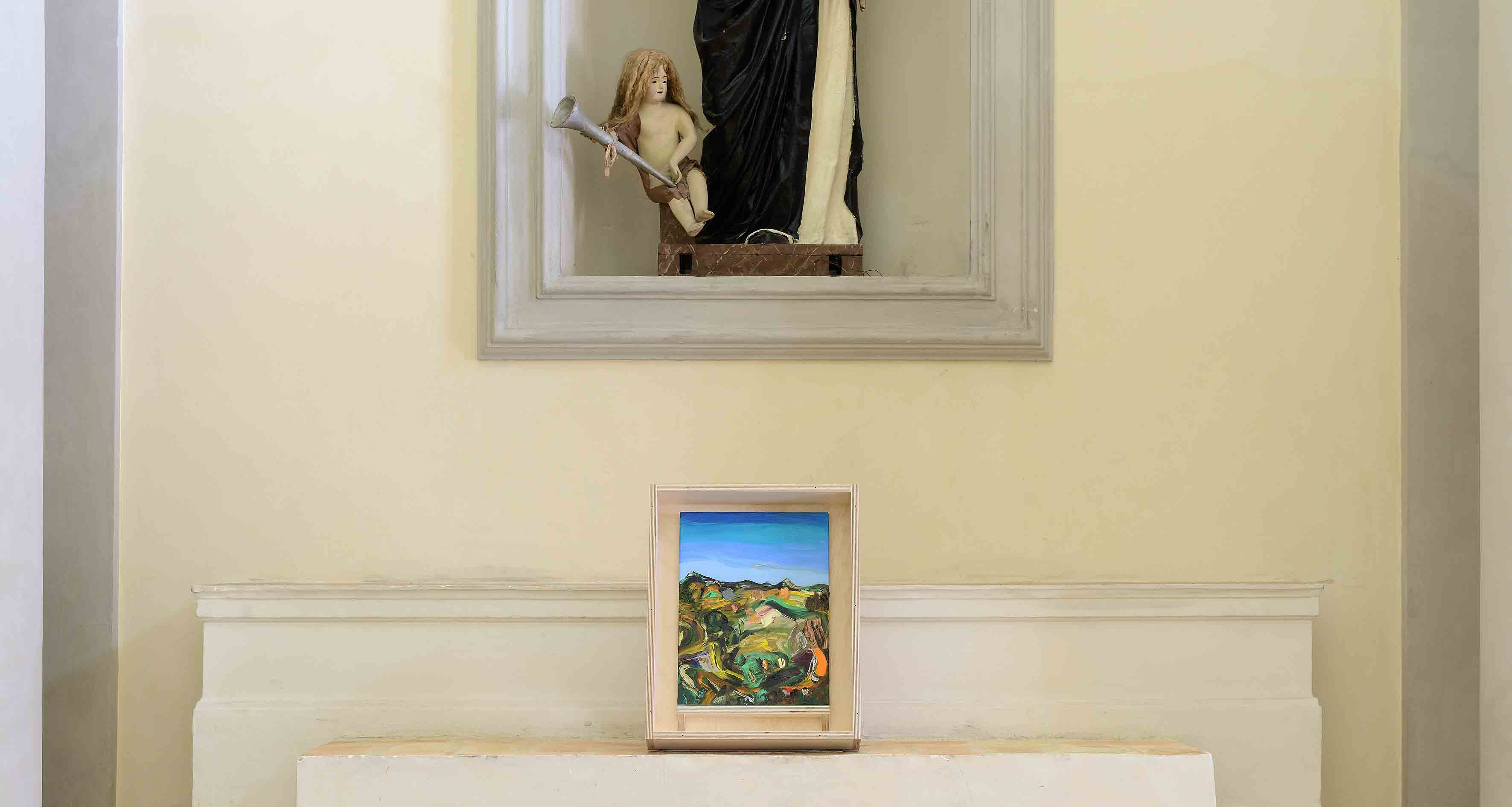
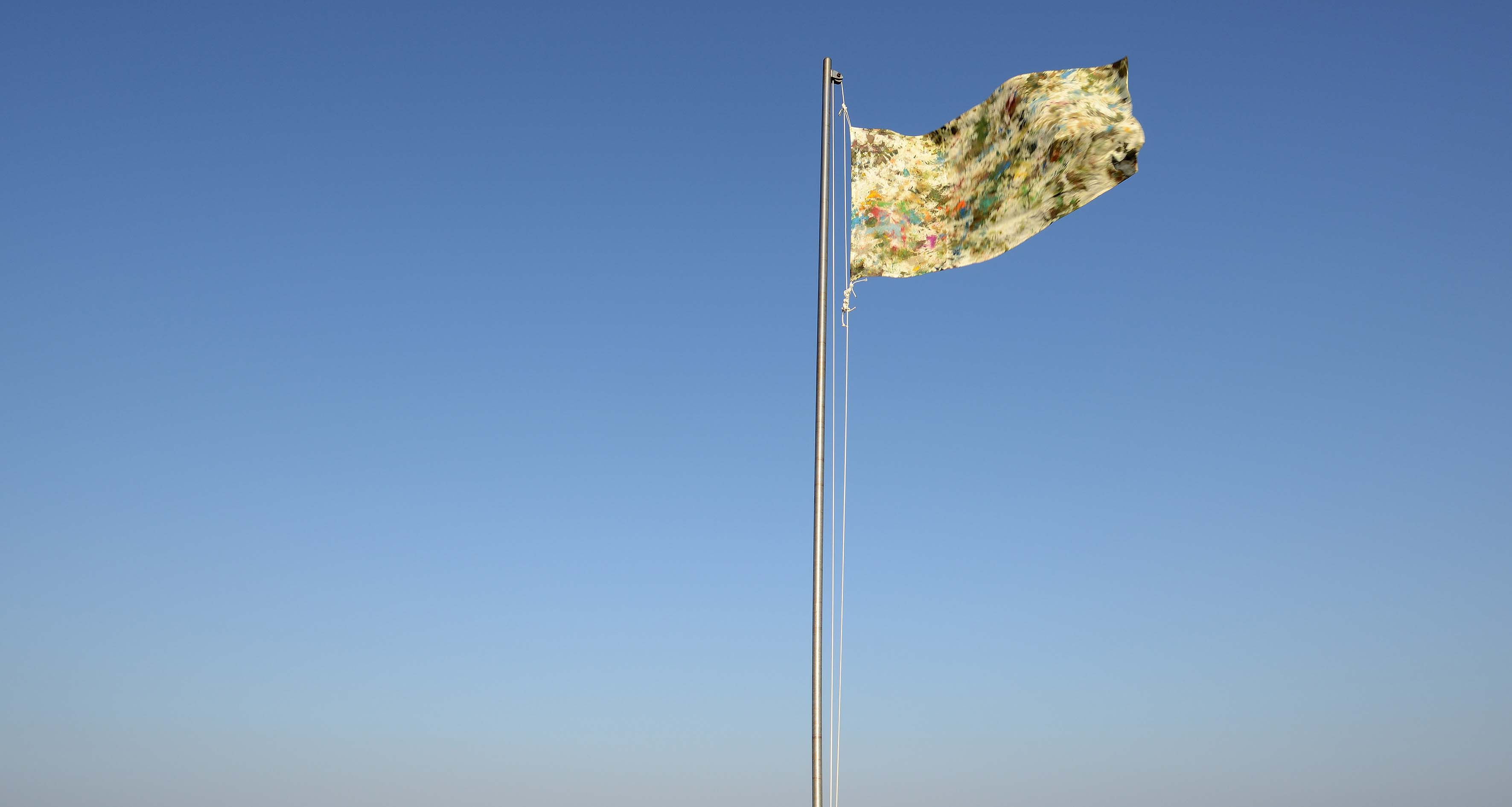
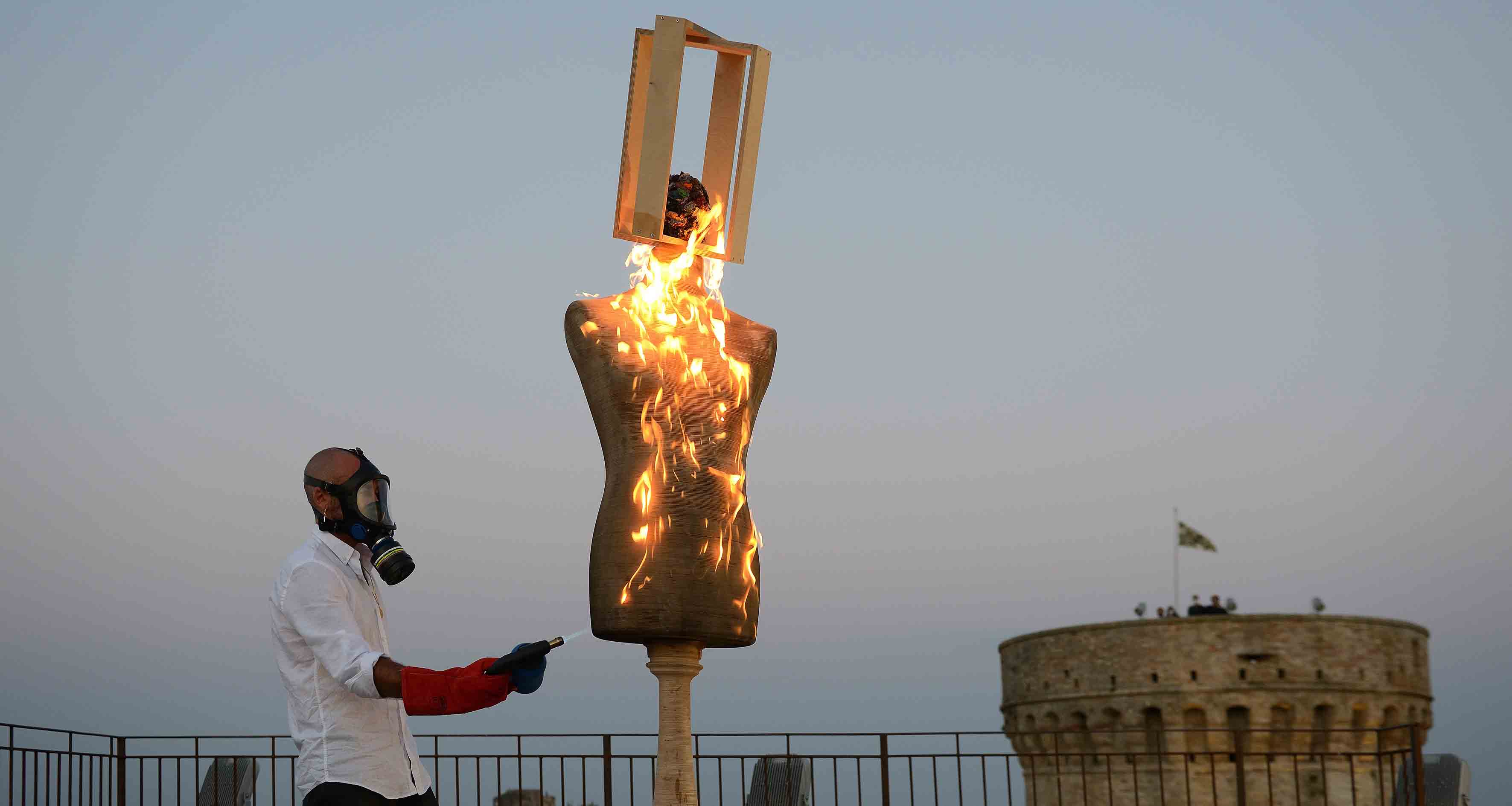
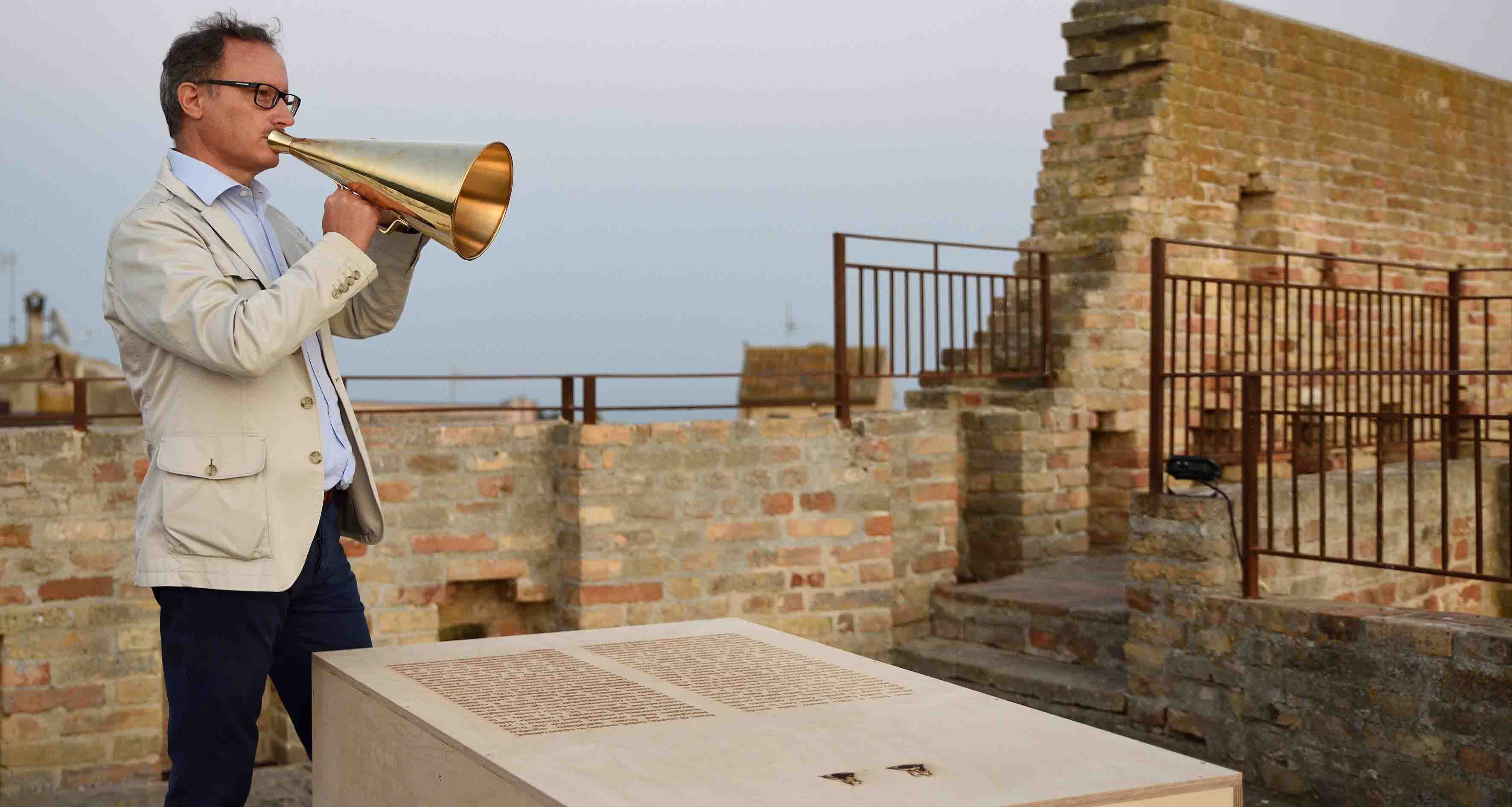
Matteo Fato, Fiamma d’Amore Viva (Il cielo e la terra non appartengono alla parola), 2020, Acquaviva Picena (AP), Marche. Ph: Michele Alberto Sereni
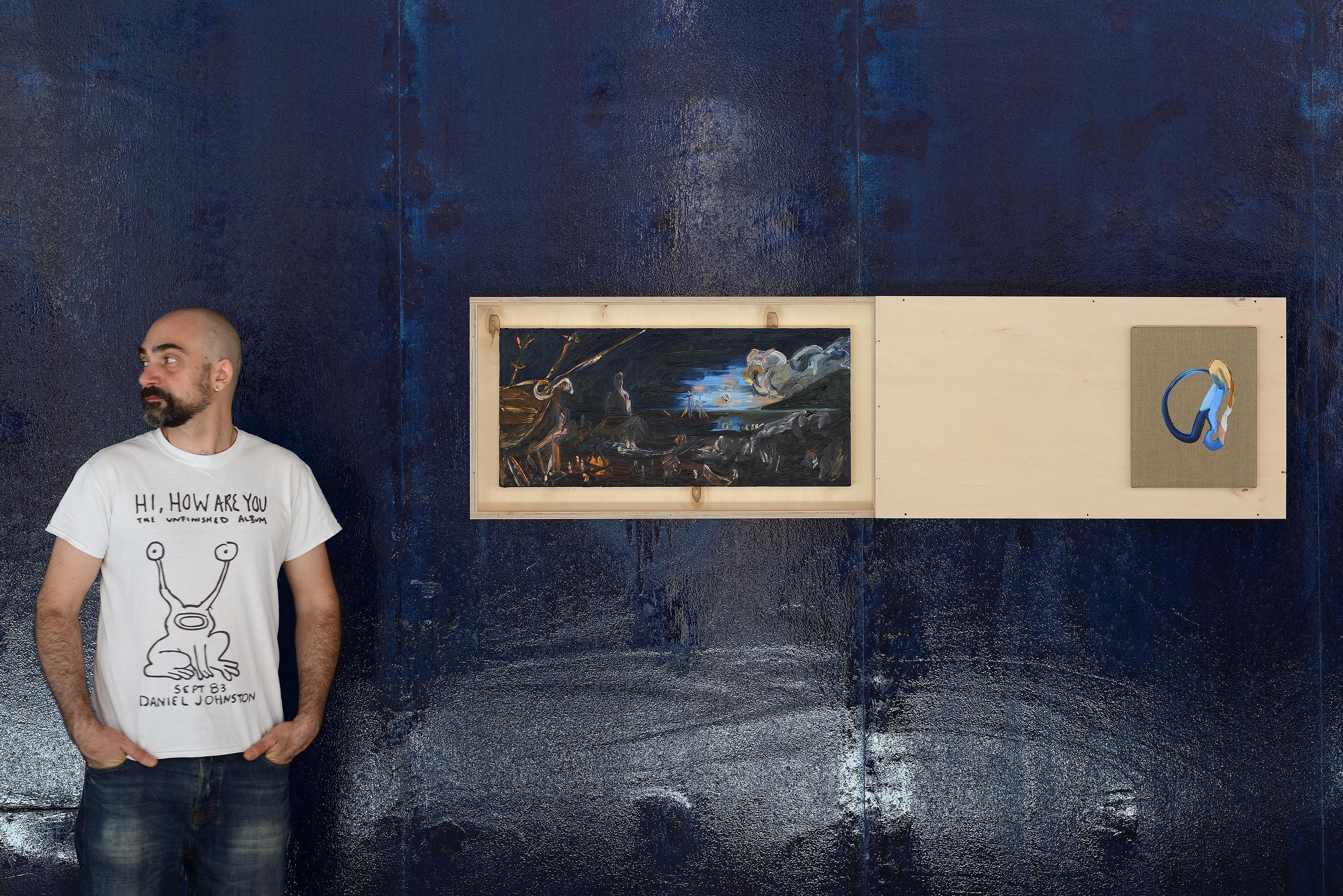
Critiquing the concept of uniqueness, Matteo Fato (Pescara, 1979) investigates the continual return and the mystery of concomitance, exploring different orders of reality through the mediation of painting. His art aims to trace the specular knot that binds an object to its image—to the work, that is—and to overcome the heterogeneity of natural and verisimilar things through unnatural joints and unlikely attributes. Painting precedes nature, and here it’s nature that imitates art. The usual relationship between appearance and reality is reversed.
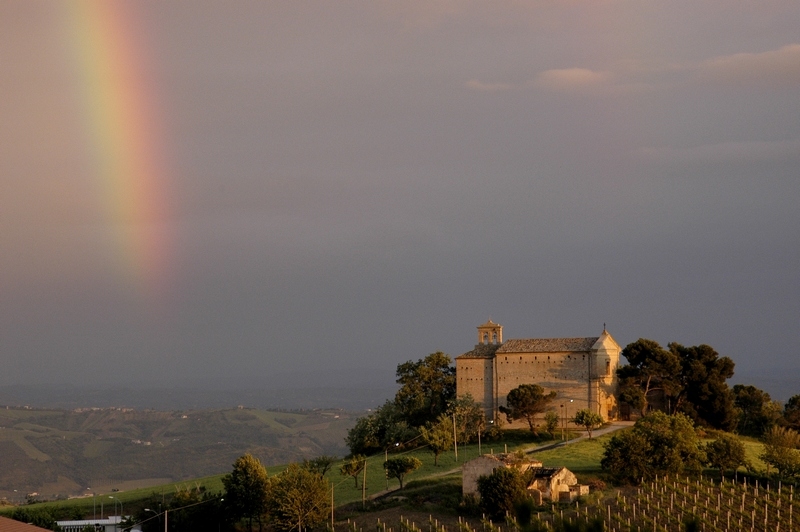
The medieval village of Acquaviva Picena is surrounded by walls and bastions. Its most impressive point is its mighty fortress, a masterpiece of Renaissance military architecture. The square is the barycenter of the historic center, arranged in an elongated shape between two opposite hills. Several monuments are of historical and cultural interest: the fortress, consisting of an irregular quadrilateral with angular ramparts that enclose a courtyard; the alley of Trabucco, which used to store catapult-like war machines in ancient times; the church and convent of San Francesco, founded in accordance with the tradition of the Saint of Assisi; the Museo della Pajarola, which holds woven straw baskets and artisanal willow tree works. Of particular importance is the museum itinerary La Fortezza nel Tempo (The Fortress over Time), which you can explore at the Archaeological Museum inside the major tower (Mastio) of the medieval fortress. An evocative multimedia presentation sheds light on the moment(s) the museum’s various items were discovered, taking visitors on a virtual visit through the excavations that have unearthed and helped reconstruct centuries-old building phases and reconstructions. All in all, it is an intriguing journey through the main historical phases of both the monument and the wider territory.