Aterraterra (Fabio Aranzulla e Luca Cinquemani)
Forenza multispecie
curated by Roberta Mansueto
"We imagined Forenza as a multispecies metabolic surface, a network of already existing forms of life that are often invisible and unwanted, in order to raise a question: can we move from the removal of the undesirable toward recognition and care, as a new collective perspective?"
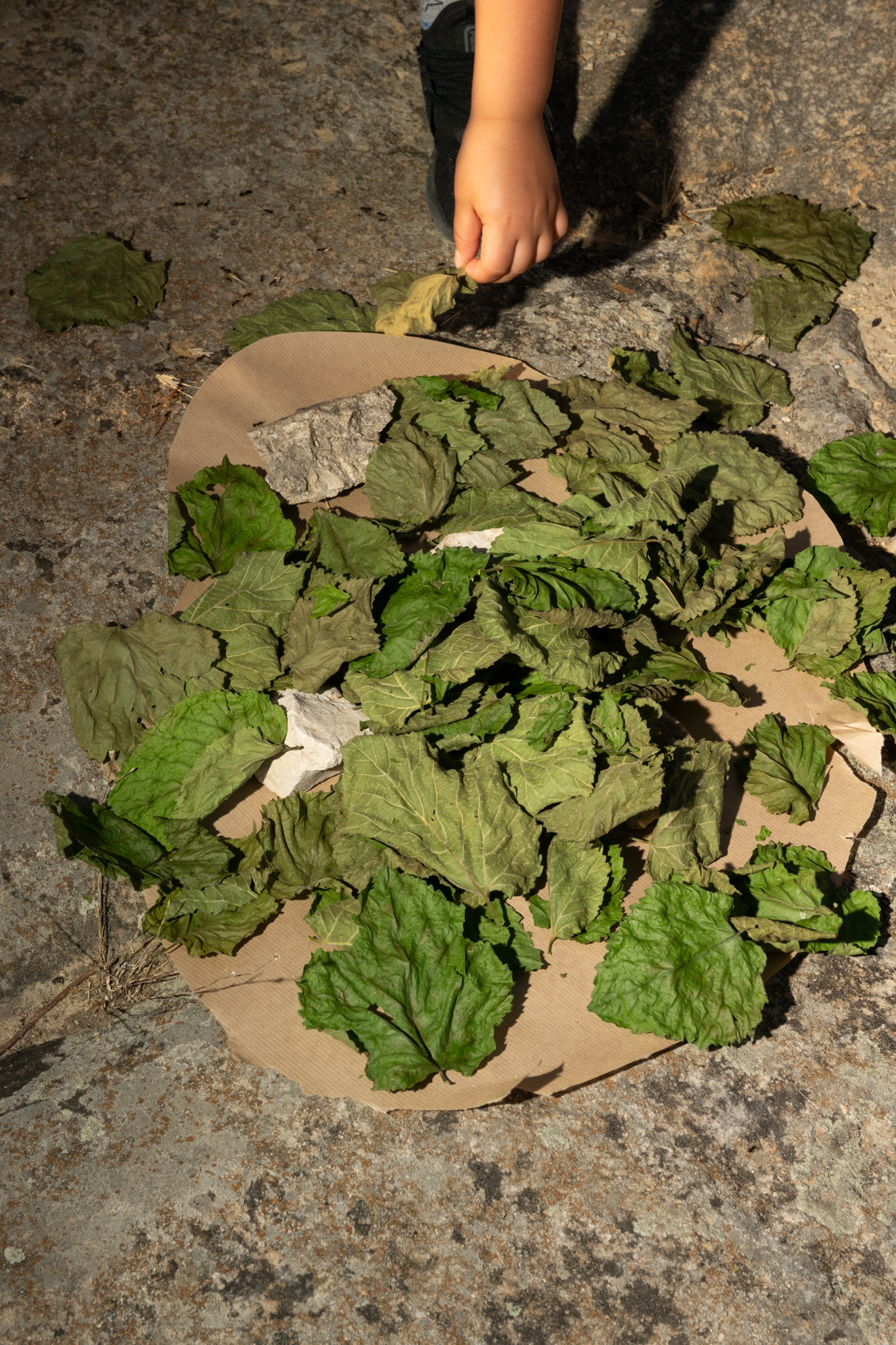
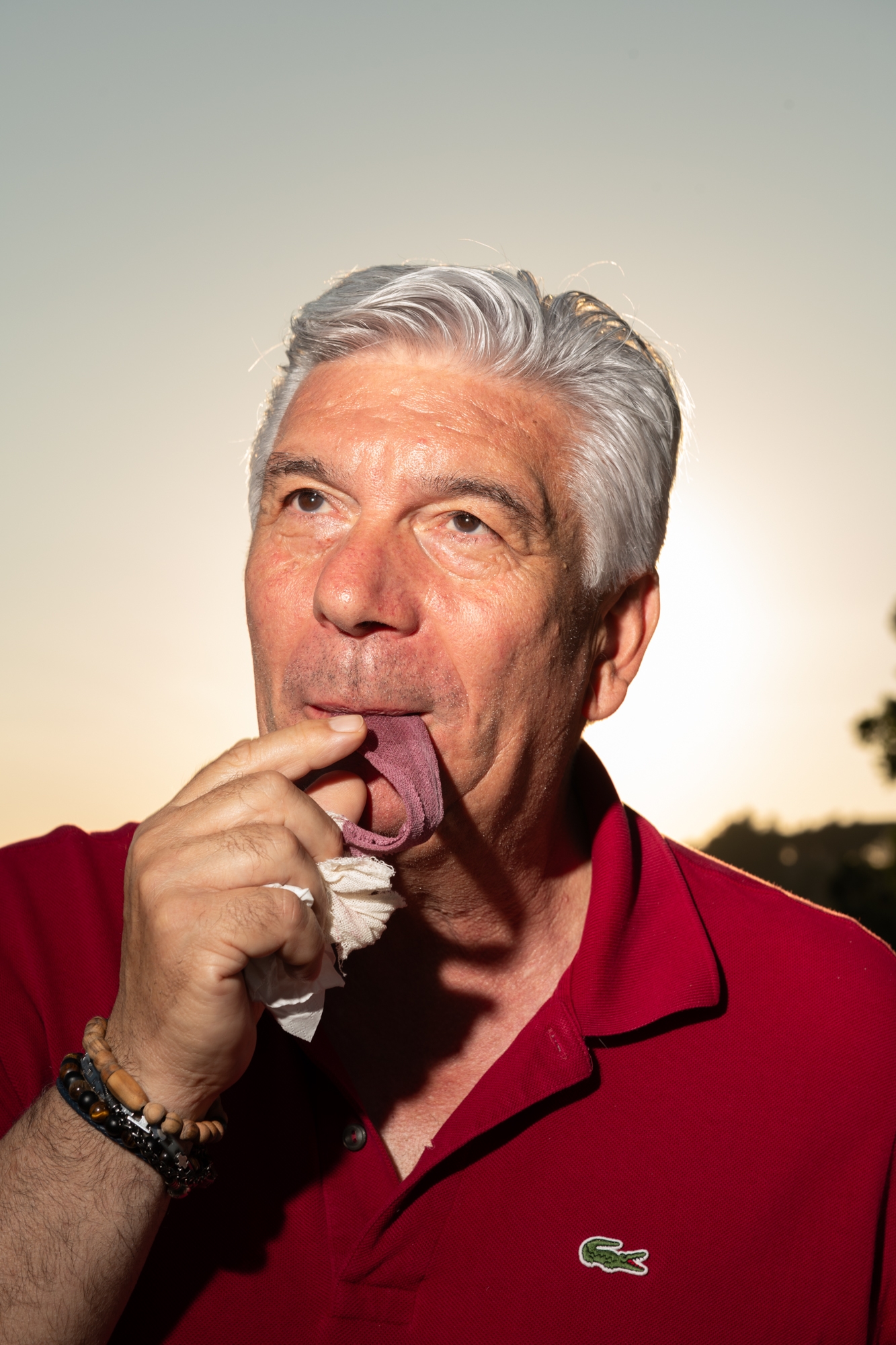
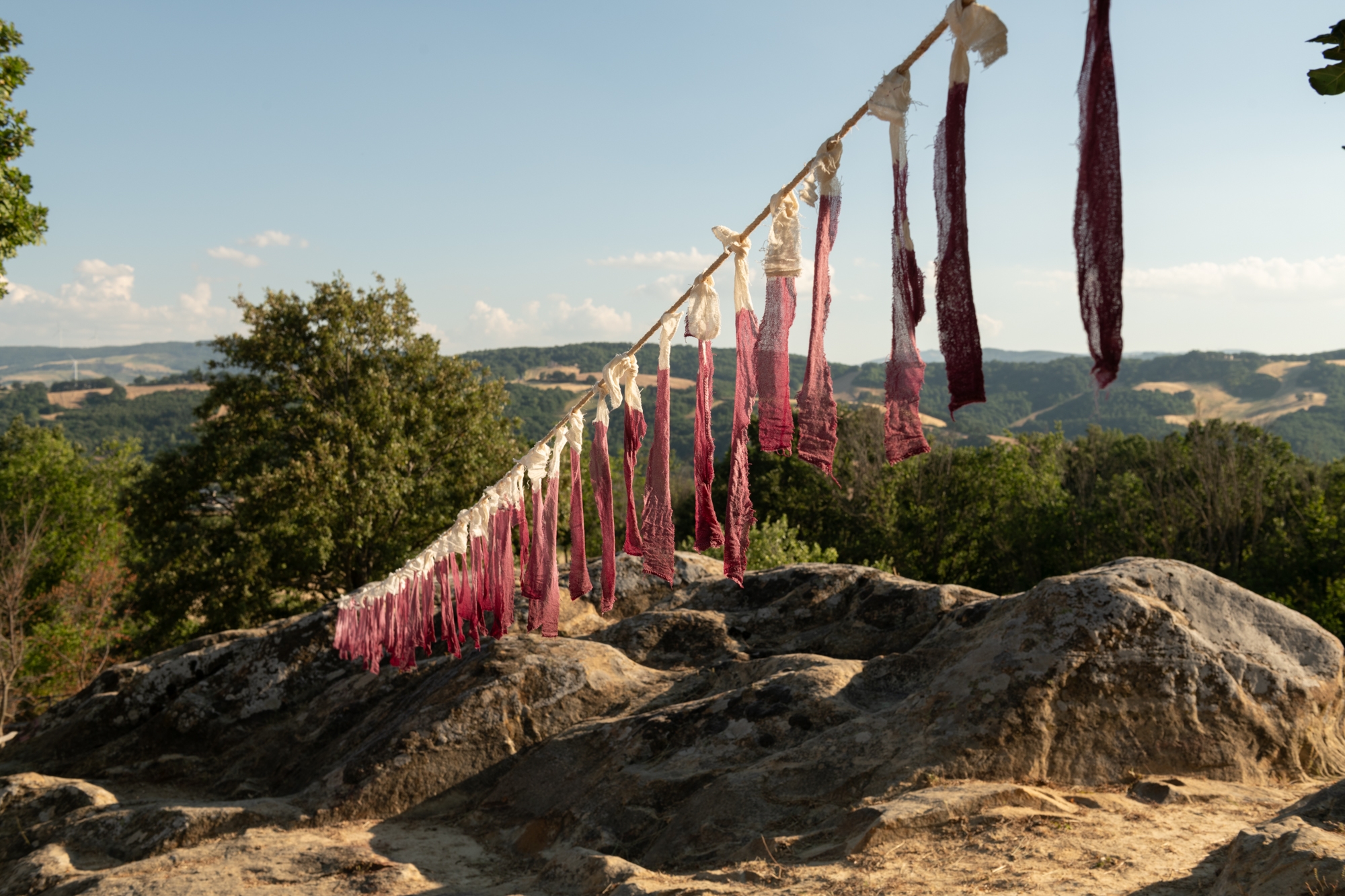
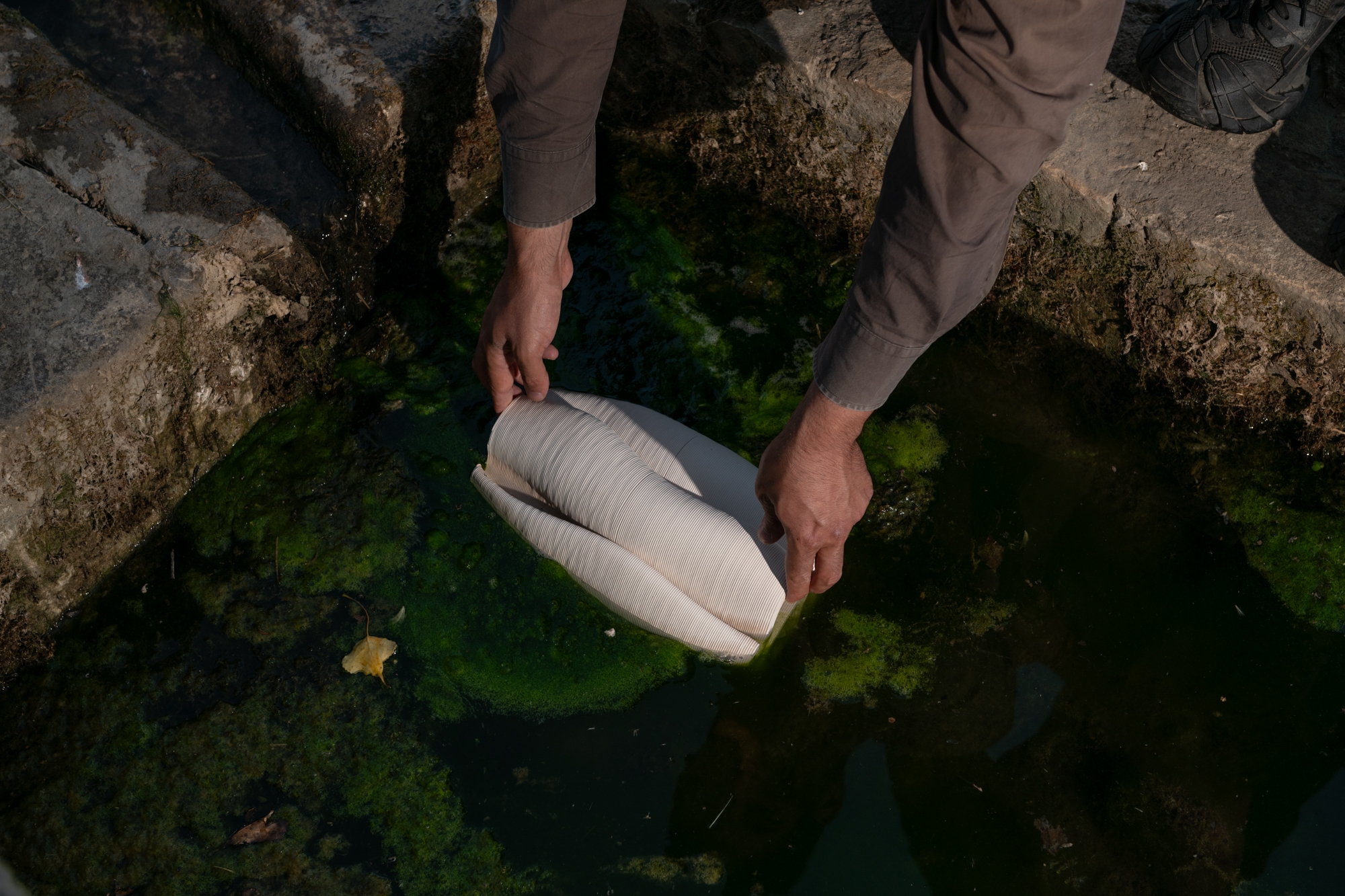
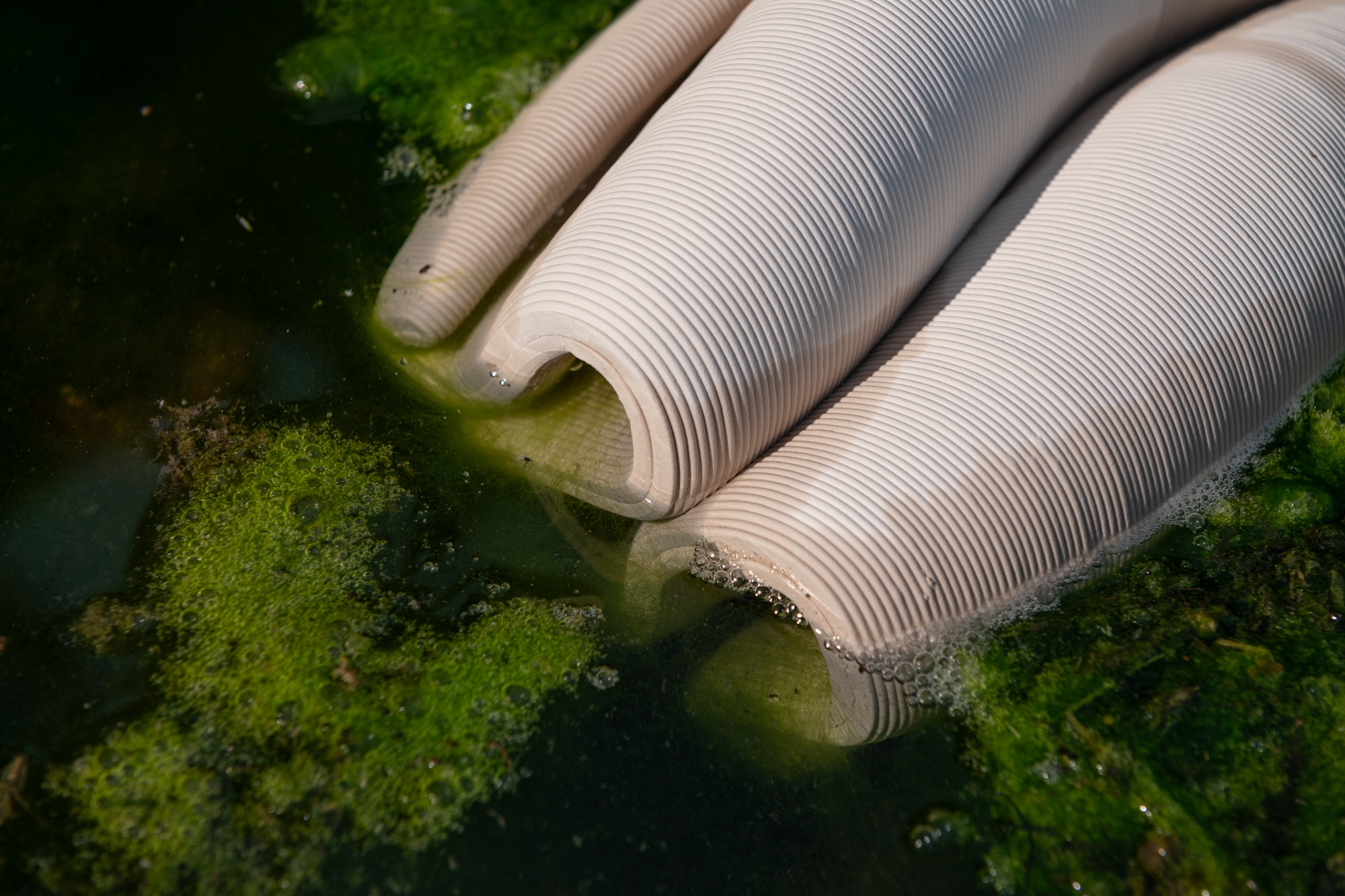
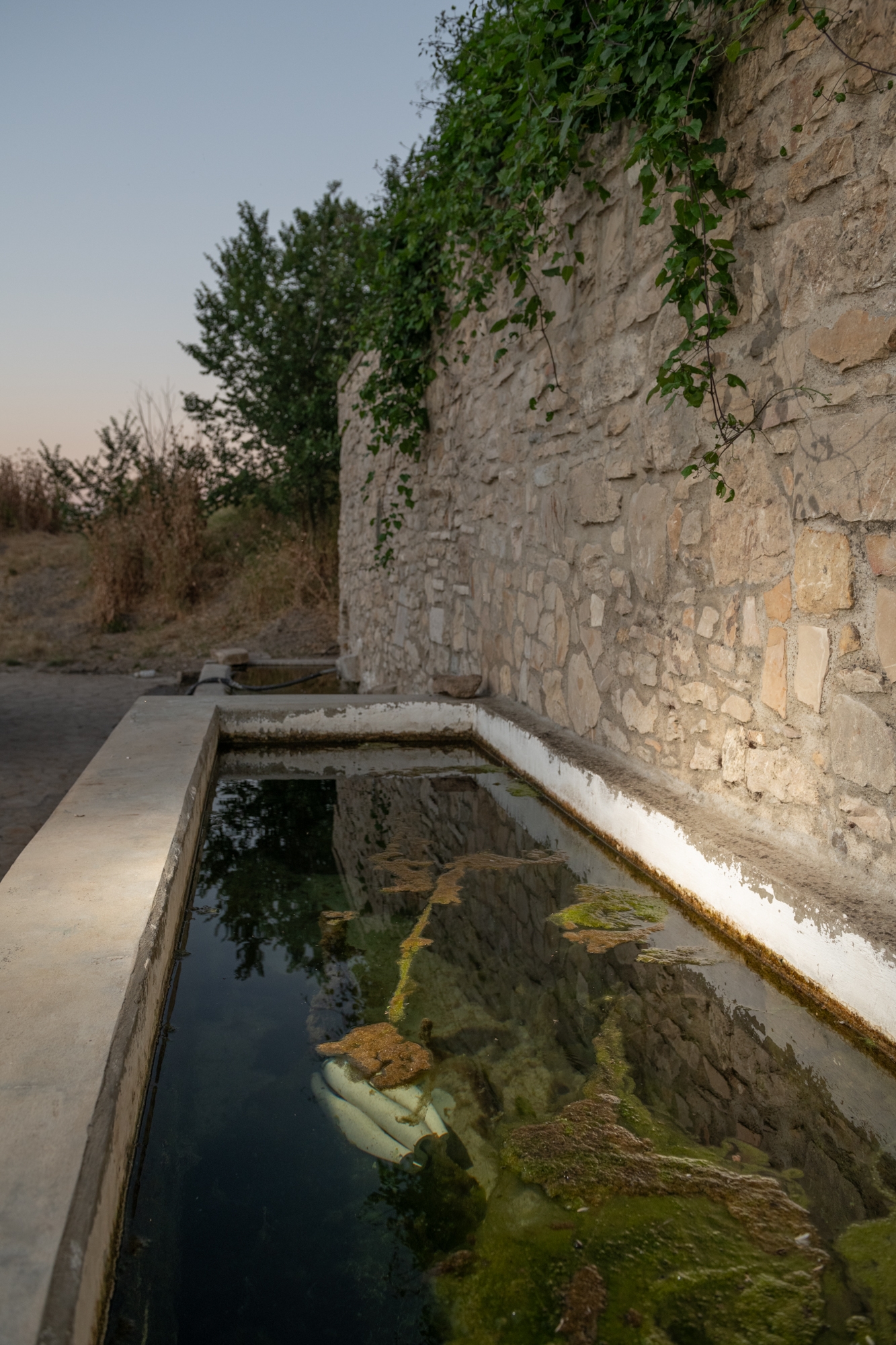
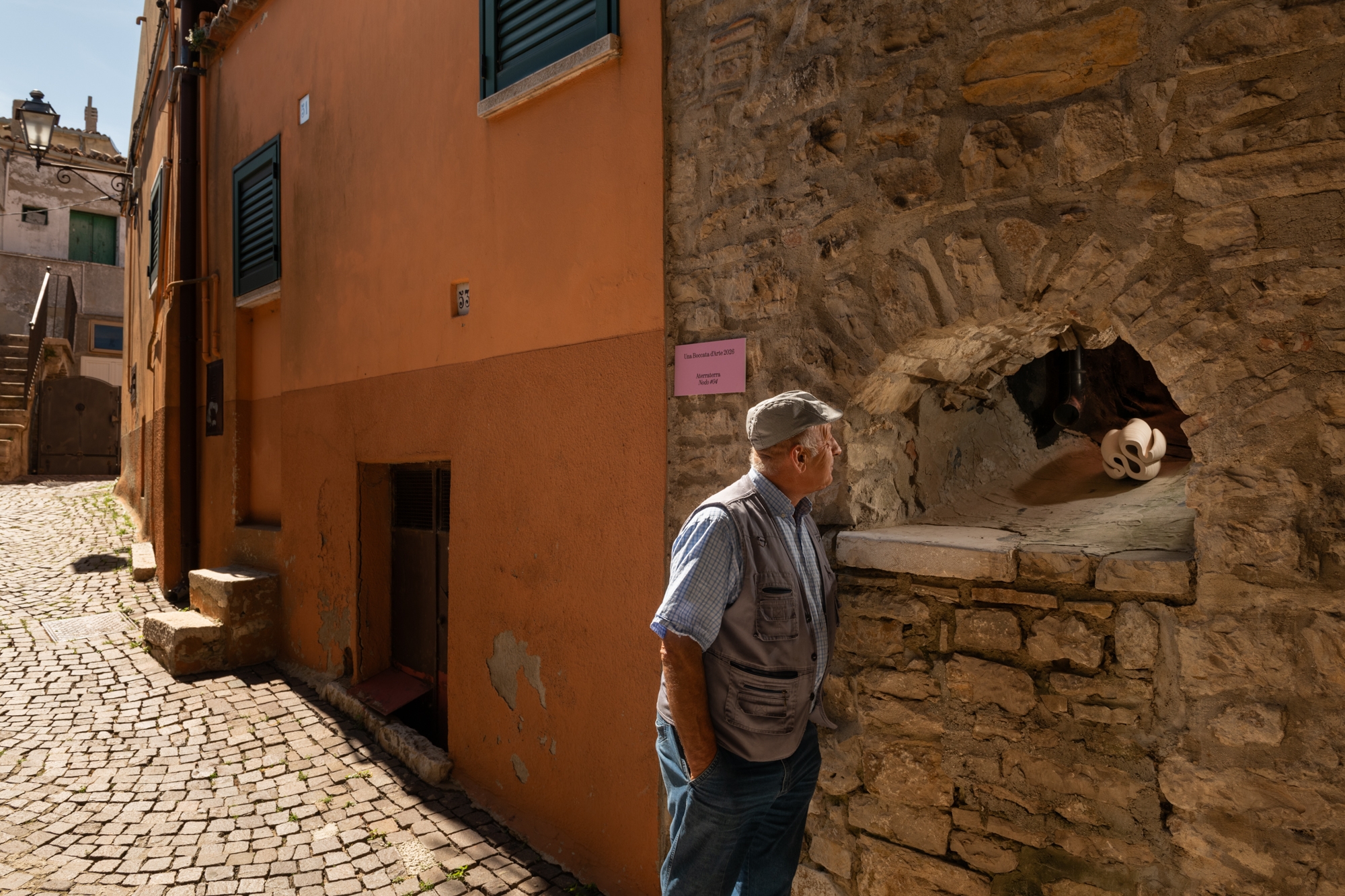
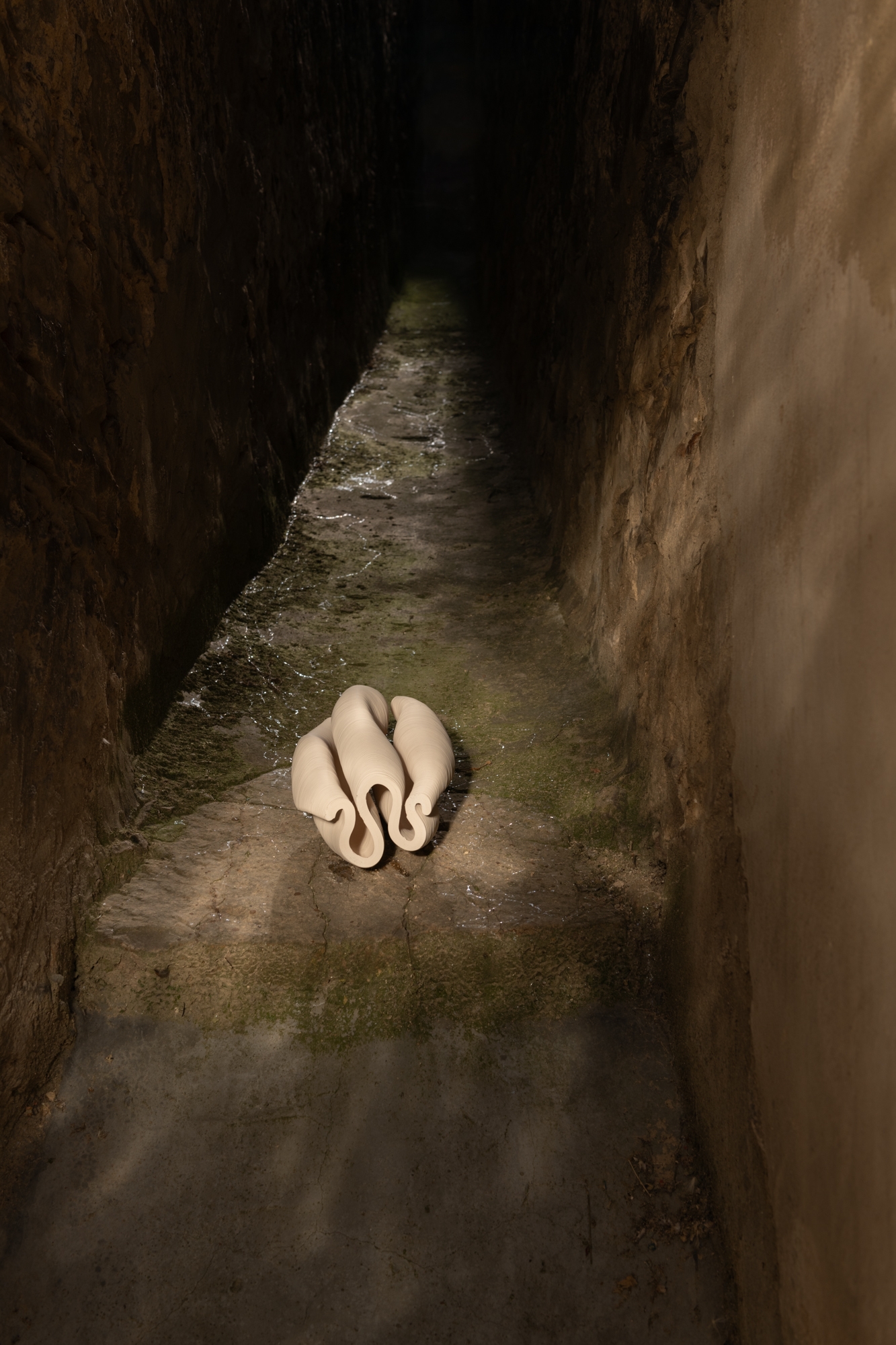
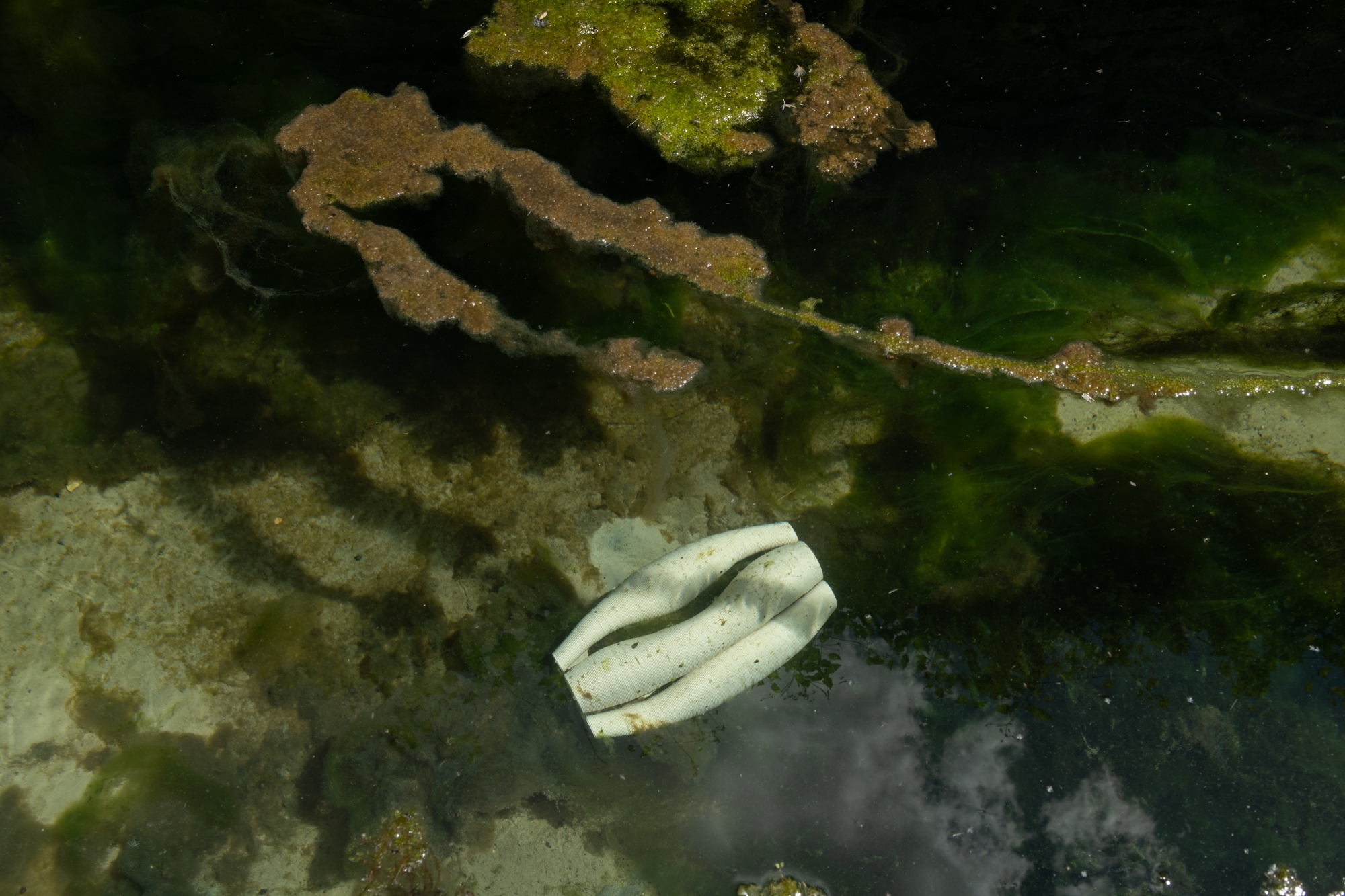
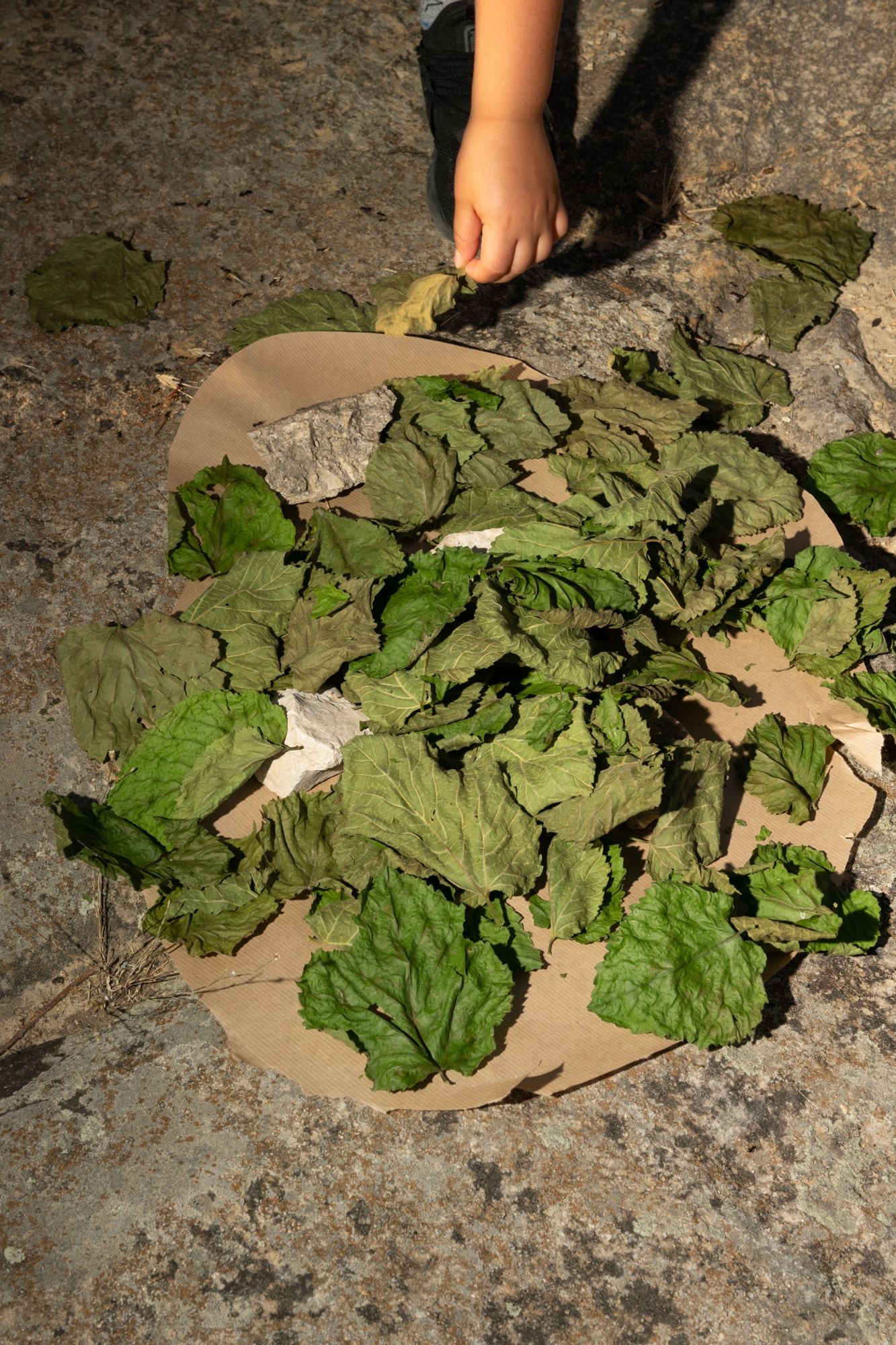
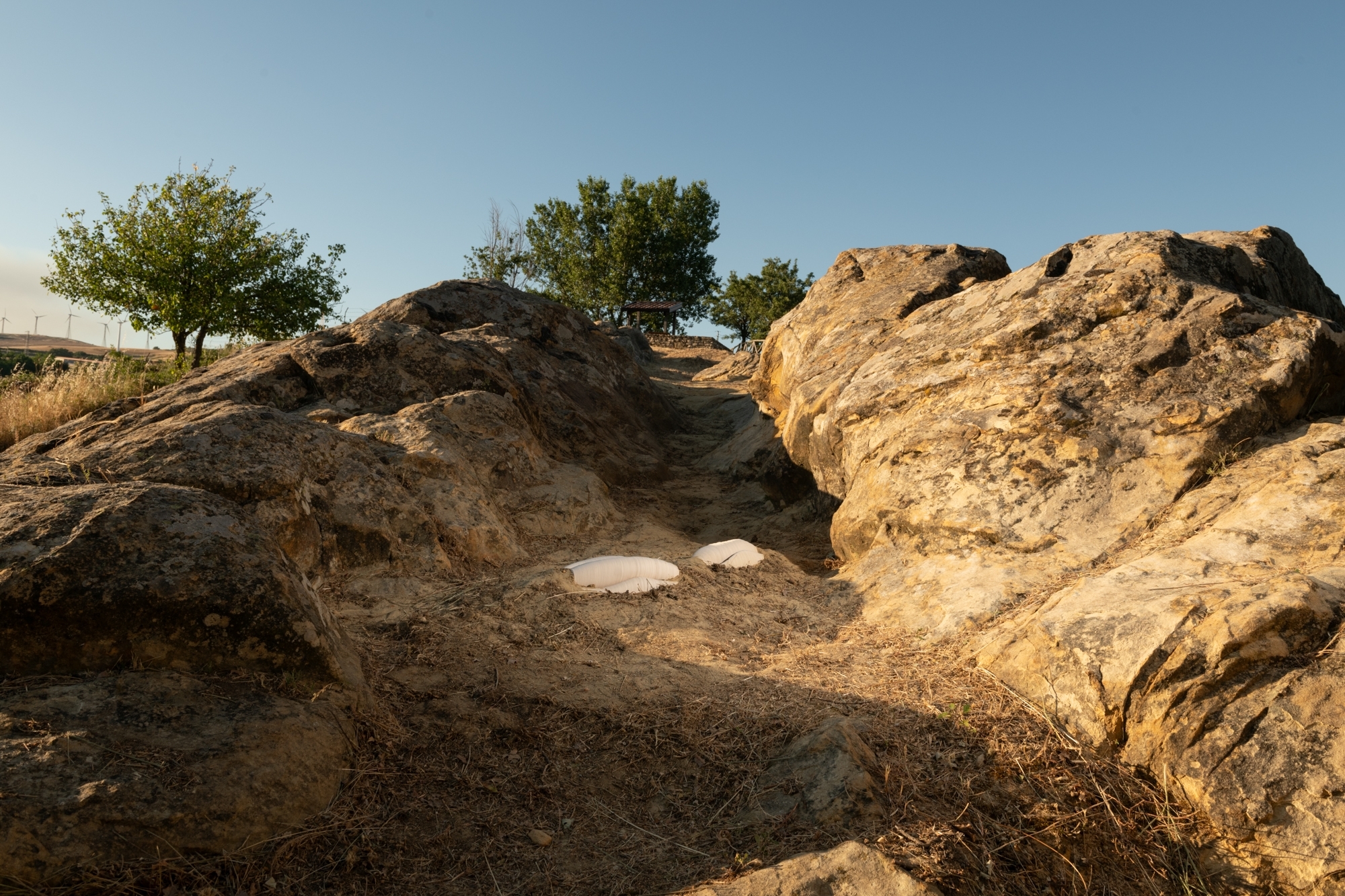
Aterraterra (Fabio Aranzulla e Luca Cinquemani), Forenza Multispecie, Forenza (PZ), Basilicata. Ph Gabriele Fanelli
With a statement of intent, Forenza welcomes its multispecies community.
By observing the bilges, spring fountains and ancient wine presses carved into the calcarenite stone, it is possible to identify forms of life that are barely visible to humans, yet essential to environmental balance.
The path created by the artists throughout the village enhances this ecosystem through five sculptures — micro-habitats made of 3D-printed clay, designed to encourage the spontaneous growth of cyanobacteria, mosses, algae, and lichens. Far from being simple porous sculptures, these works are genuine technological forms conceived to foster spontaneous processes of biological growth, bringing visibility back to what usually remains unnoticed or is considered undesirable.
Distributed across the village, the sculptures appear as nodes within the landscape, creating a widespread network that reveals the complexity of the more-than-human dimension: the town becomes a multispecies surface that acknowledges living organisms and metabolisms.
The website forenzamultispecie.eu documents observations and recordings throughout the entire edition of Una Boccata d’Arte.
Works:
01 Aterraterra (Fabio Aranzulla and Luca Cinquemani), Nodo #01, 2026. 3D clay printing, 45 x 25 x 25 cm
Fountain at the Ruins of the Monastery of Santa Maria degli Armeni, Strada Provinciale 66, Forenza (PZ)
02 Aterraterra (Fabio Aranzulla and Luca Cinquemani), Nodo #02, 2026. 3D clay printing, 45 x 25 x 25 cm
Palmenti of Forenza (PZ)
The Palmenti are visible from the picnic area. The work is installed within the rocky area and cannot be viewed up close.
03 Aterraterra (Fabio Aranzulla and Luca Cinquemani), Nodo #03, 2026. 3D clay printing, 45 x 25 x 25 cm
Savoche Fountain, Strada Provinciale 8 del Vulture, Forenza (PZ)
04 Aterraterra (Fabio Aranzulla and Luca Cinquemani), Nodo #04, 2026. 3D clay printing, 45 x 25 x 25 cm
Sentina - Don Saverio Arch, between Vico Storto and Vico Borcale, Forenza (PZ)
05 Aterraterra (Fabio Aranzulla and Luca Cinquemani), Nodo #05, 2026. 3D clay printing, 45 x 25 x 25 cm
Sentina - Corso Grande Umberto I 59, Forenza (PZ)
06 Aterraterra (Fabio Aranzulla and Luca Cinquemani), Forenza Multispecie, 2026.
An online site collecting multispecies texts, observations, and recordings throughout the 2026 edition of Una Boccata d'Arte. Web designer Chiara Tonndorf – forenzamultispecie.eu
Thanks to: the Municipal Administration of Forenza, Mayor Francesco Mastrandrea, Councillor for Youth Policies and Equal Opportunities Alessandra Brienza, Pro Loco and Servizio Civile Universale Forenza, Agriturismo Masseria Brienza, Women’s Association of Forenza, Unitre, Né Arte Né Parte, aPERTAmentE APS.
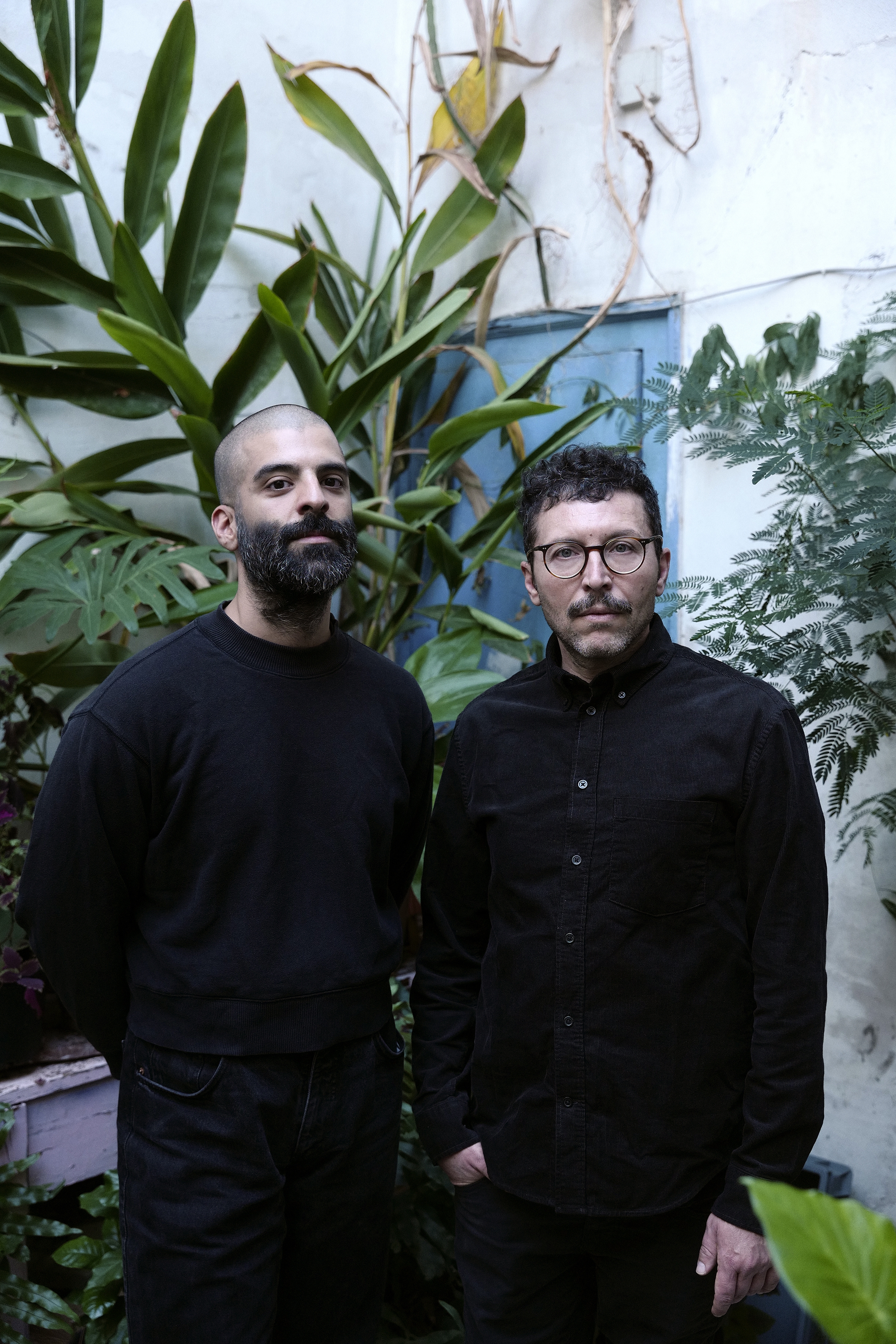
Aterraterra is a duo composed of Fabio Aranzulla (Karlsruhe, Germany, 1991) and Luca Cinquemani (Agrigento, Italy, 1979). The duo studied at the Academy of Fine Arts in Leipzig and completed a PhD in European Cultural Studies between Palermo and Düsseldorf. Their practice intersects art, ecology, and science, investigating—through installations and other media—the forms of discipline and anthropocentrism in the relationship with plants and other non-human life forms. It also examines ecological transformations driven by climate change. Recent projects include the exhibition Postvarietal Communities at the Museo Civico di Castelbuono (IT, 2025) and a residency at MODEM, Debrecen (HUN, 2025).

Roberta Mansueto is an independent curator and an activist in the preservation of plant biodiversity. She co-founded Tile project space (2014–2019) in Milan, and conceived several independent projects such as takecare and Orto Fertile, which operate at the intersection of performative research, independent publishing, and the safeguarding of ethnobotanical knowledge. Since 2020, she has been a co-founder of Salgemma, an independent editorial platform and curatorial project hub based in Puglia, dedicated to promoting and supporting artistic and cultural research in the region. For Una Boccata d’Arte in Basilicata, she curated projects by Hanne Lippard in Grottole (2022), Arianna Pace in Rivello (2023), Giulio Locatelli in Sasso di Castalda (2024), and Vaste Programme in Miglionico (2025).
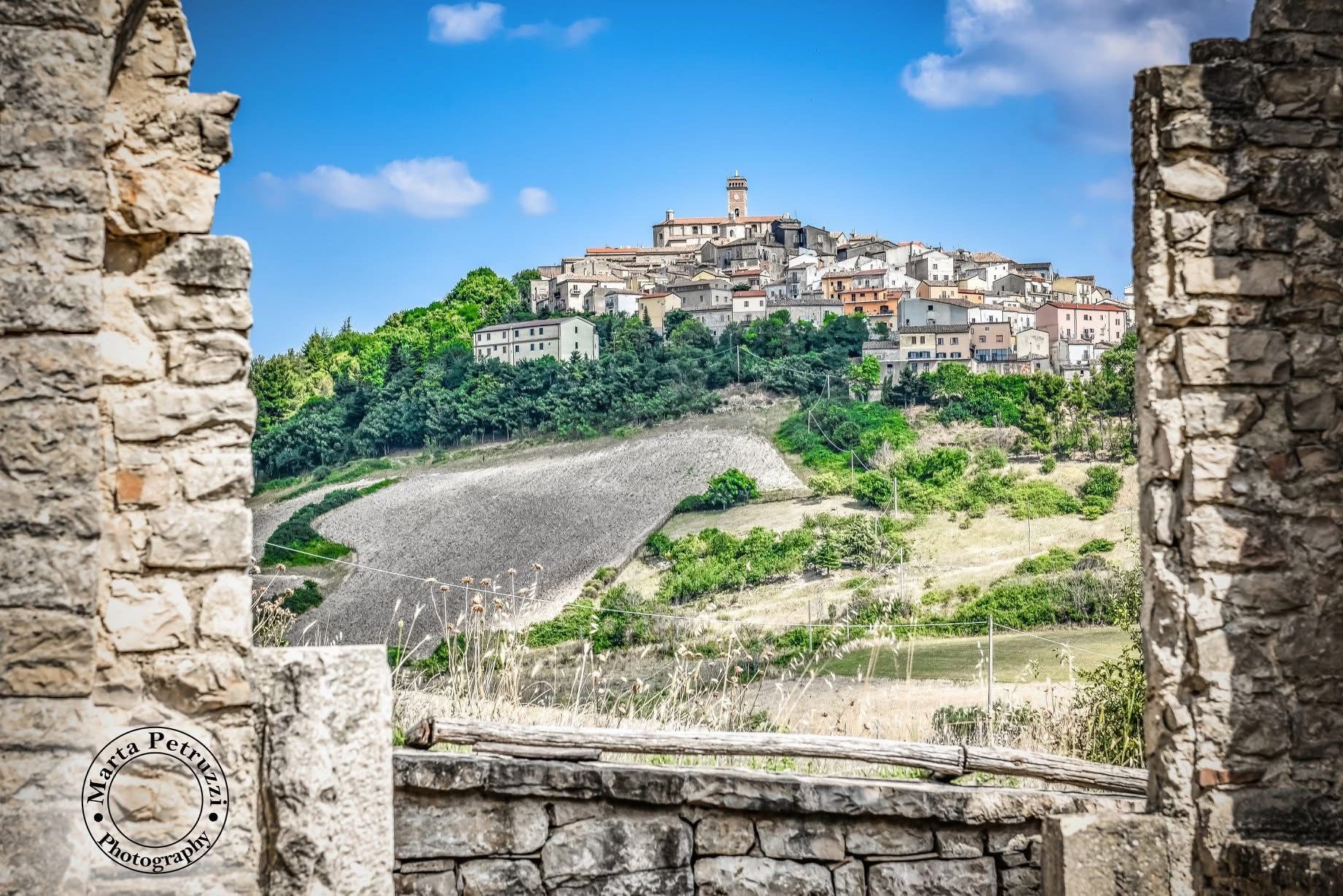
Forenza, in the province of Potenza, stands at 836 meters above sea level in the heart of the Vulture area, overlooking the Bradano Valley. The village is known for its sweeping views, stretching from Mount Vulture to the Tavoliere plain and as far as the Gargano.
Surrounded by woodlands, cereal fields, olive groves and vineyards, Forenza preserves in its historic center a dense network of streets, stone houses, and ancient churches that tell of its medieval origins, now complemented by street art interventions and historical photographs scattered throughout the urban fabric. The town’s history intertwines a chivalric past with the myth of the Templars. According to some sources, with the arrival of the Normans in southern Italy, Forenza became a feud of the Pagani family, to which the legendary Hugues de Payns—recognized by many scholars as the founder and first Grand Master of the Knights Templar—is believed to have belonged.