Maja Escher
Piedi caprini, capelli di polpo
curated by Matilde Galletti
Piedi caprini, capelli di polpo
Guided tour with the kids that imagined Dea Cupra
2 October 2026 h. 6:00 pm
Borgo Marano, Cupra Marittima (AP)
Maja Escher
curated by Matilde Galletti
"I developed a form of speculative archaeology using collective drawing exercises to access a shared subconscious memory of the image of the goddess, reactivating a place of worship dedicated to feminine energies and divinities in contemporary culture."
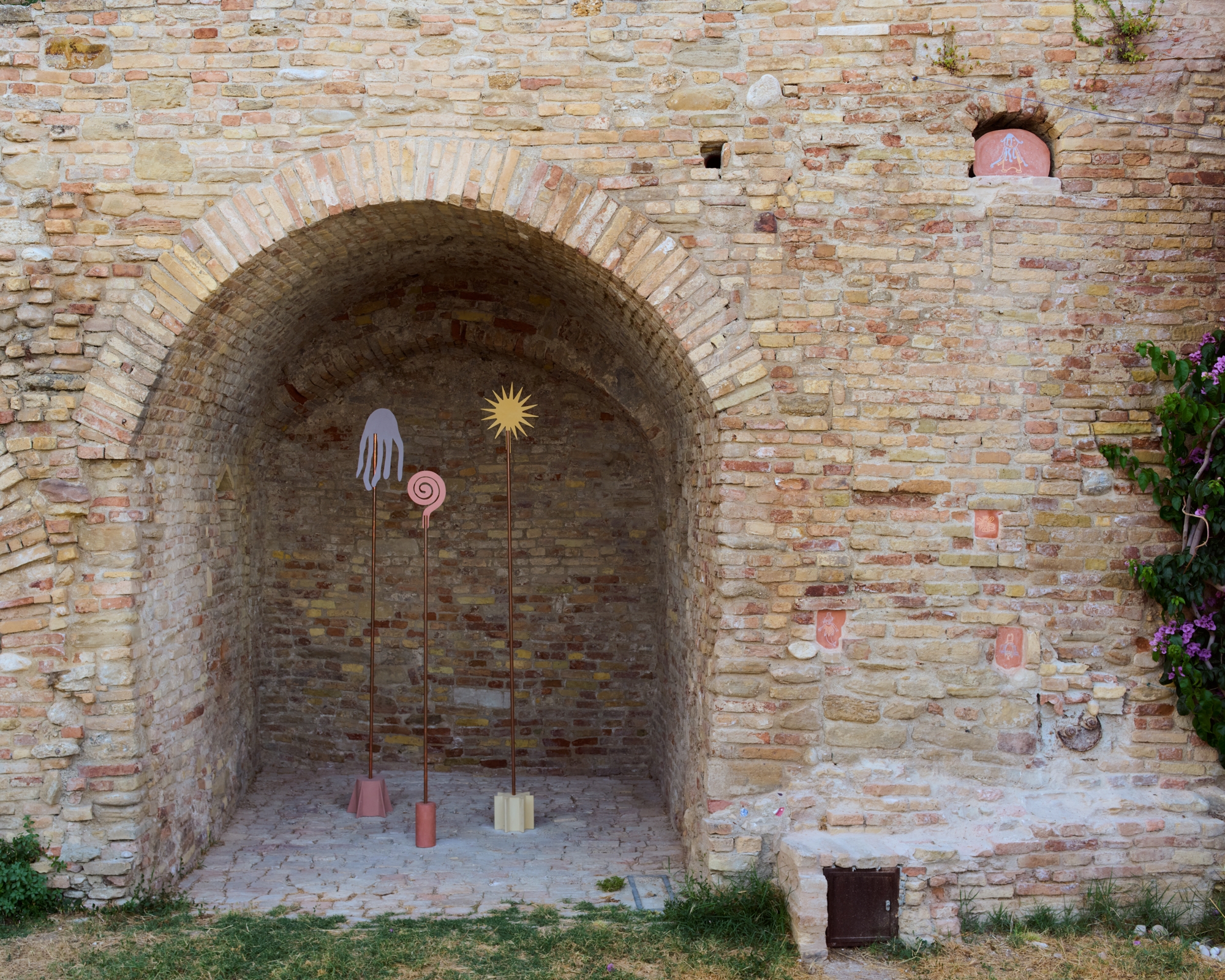
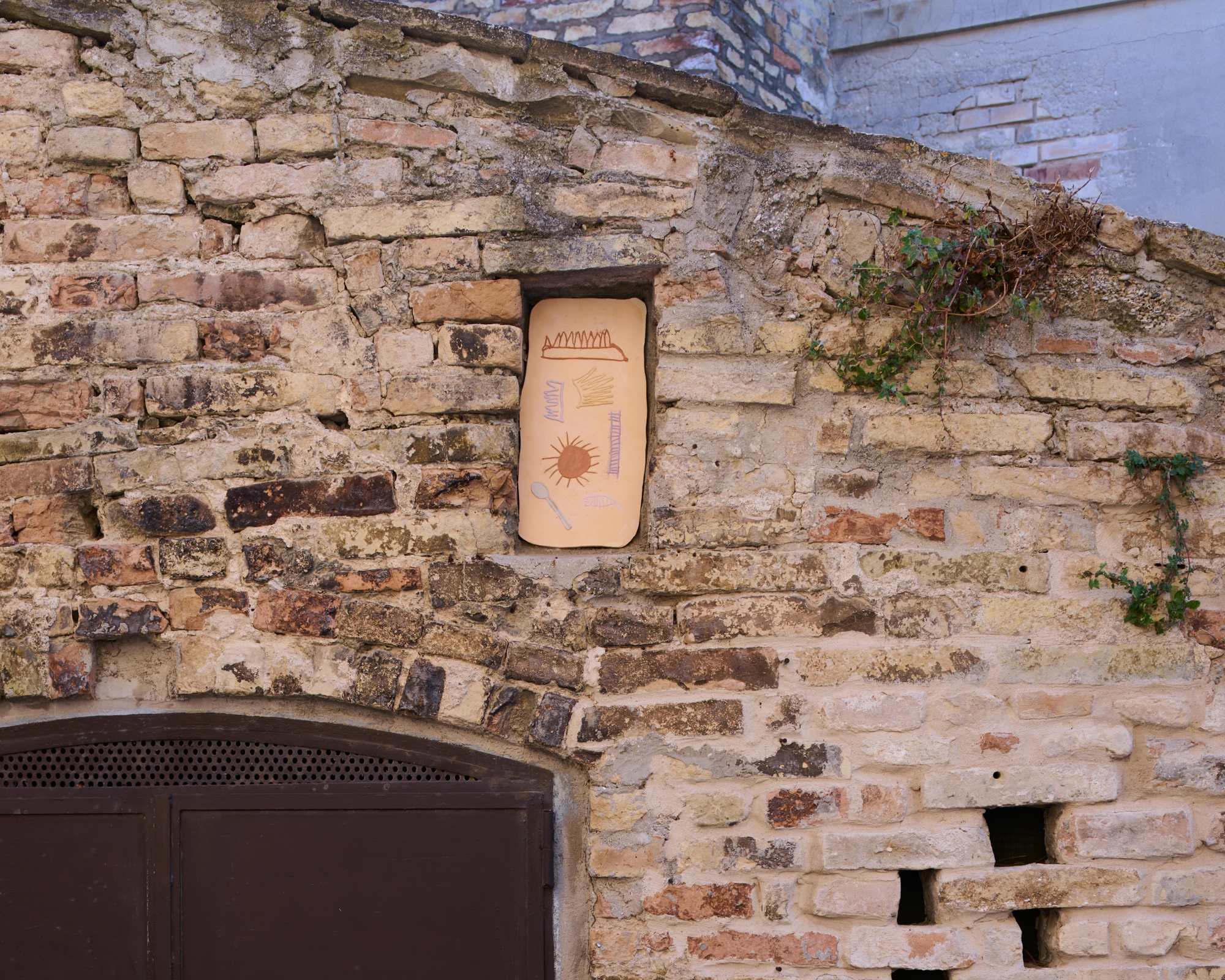
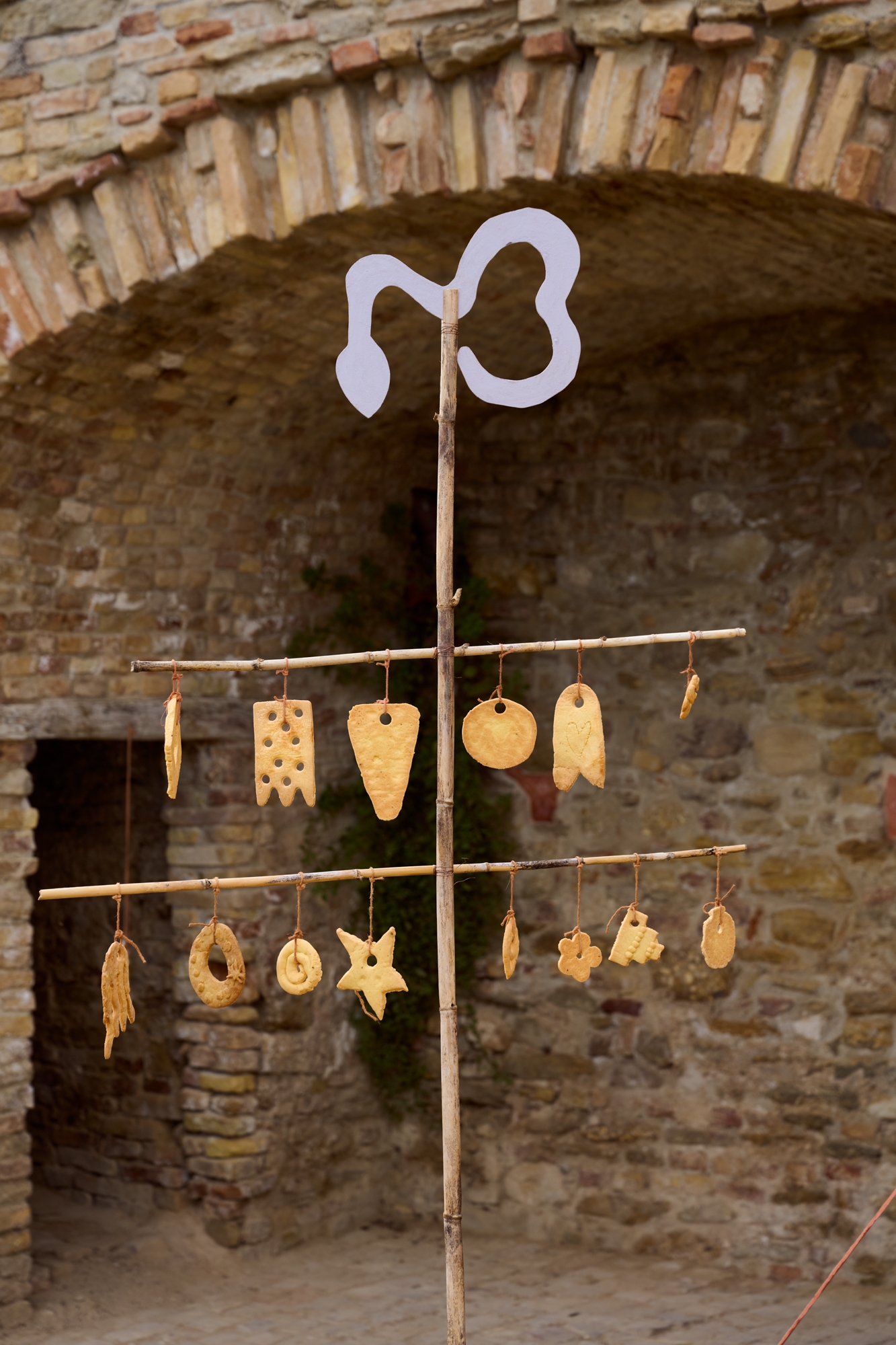
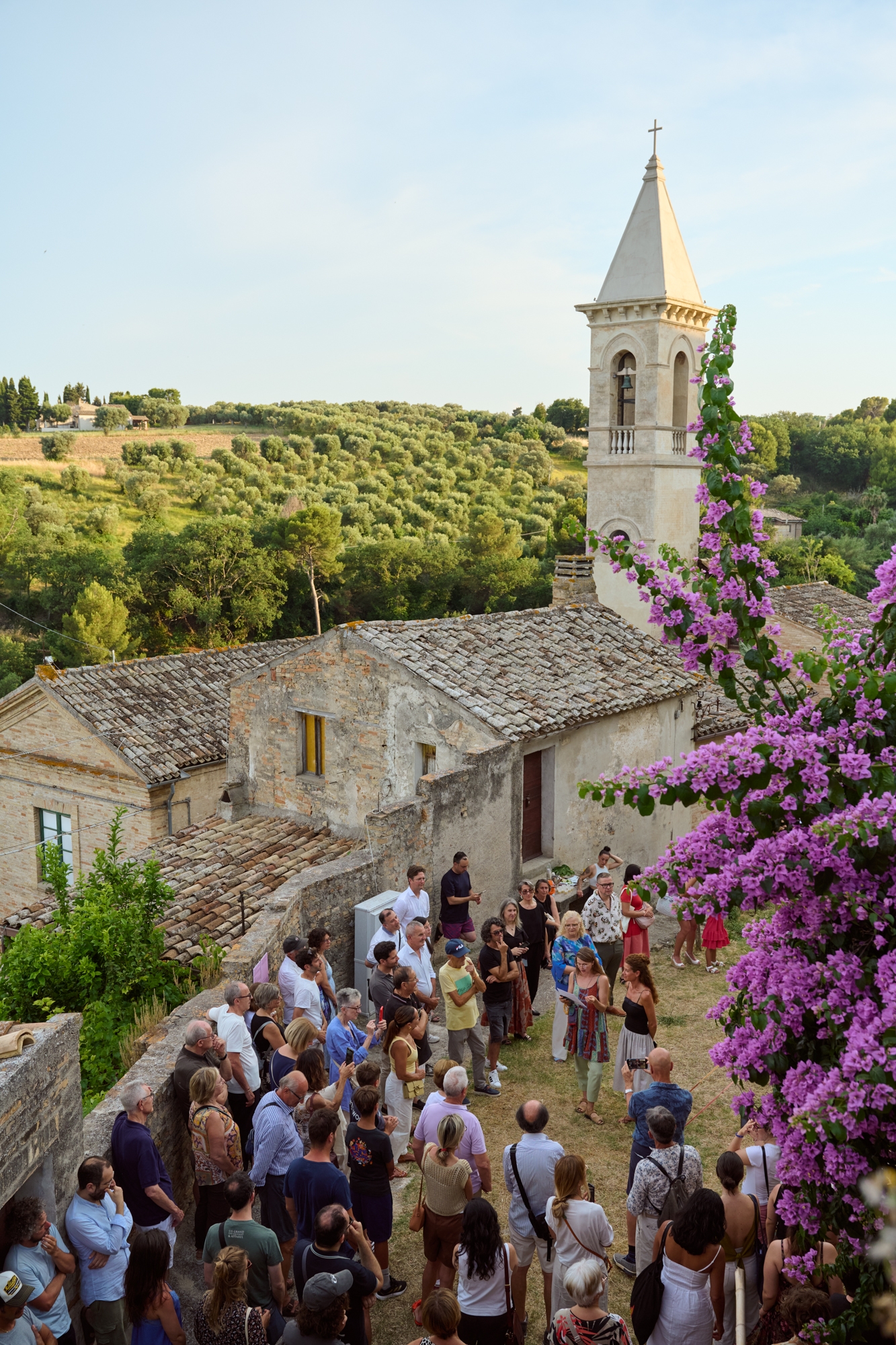
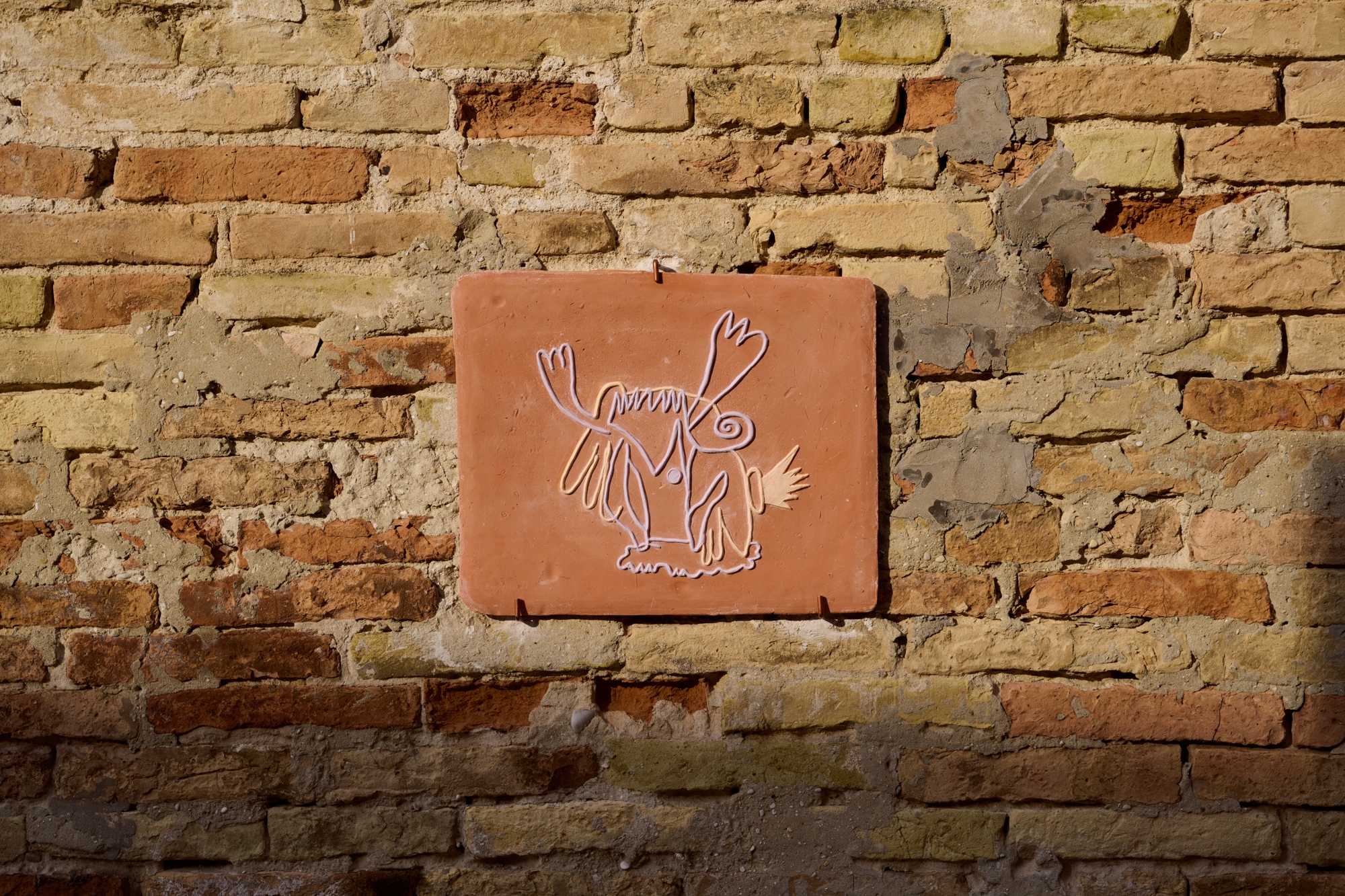
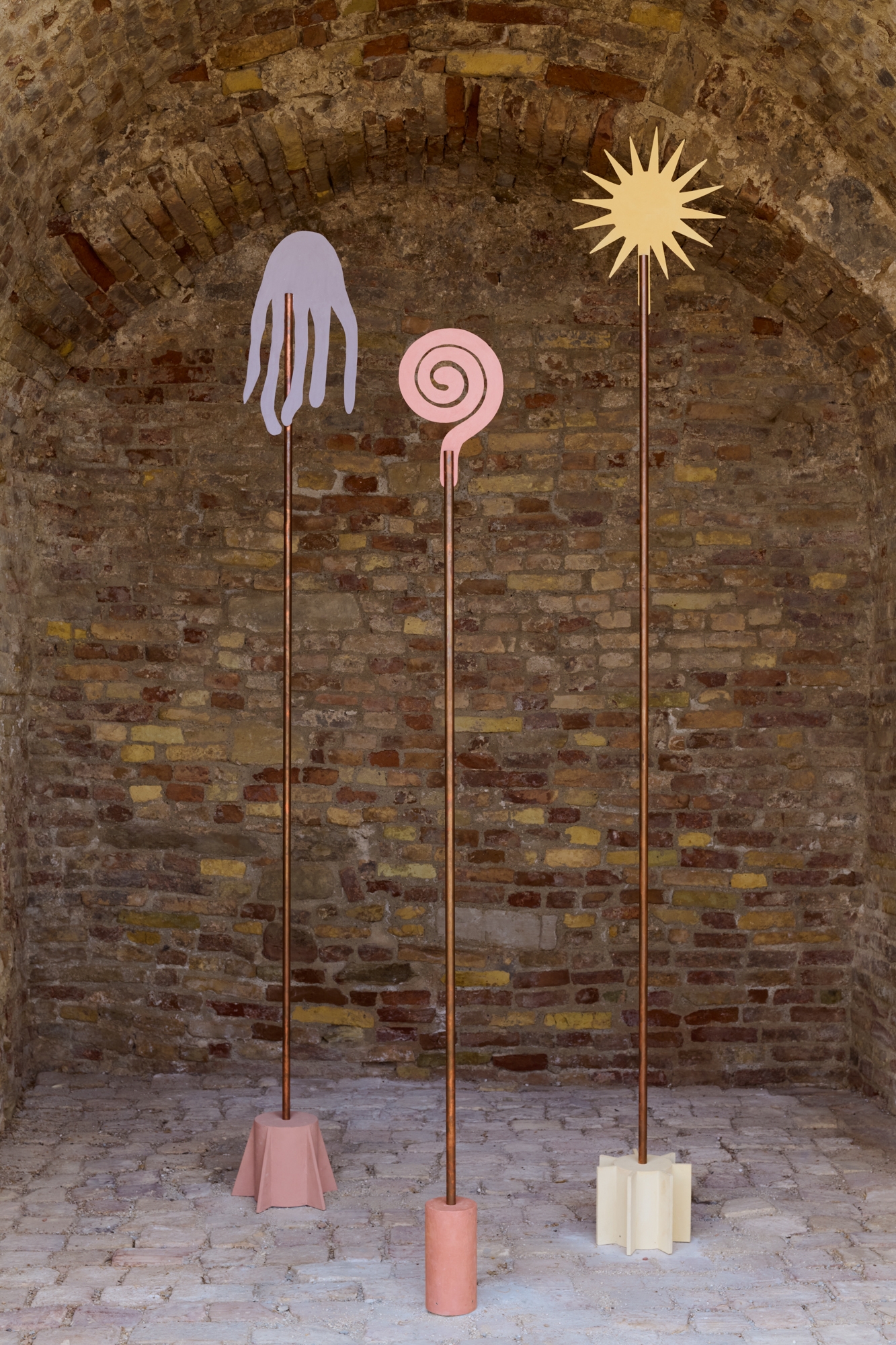
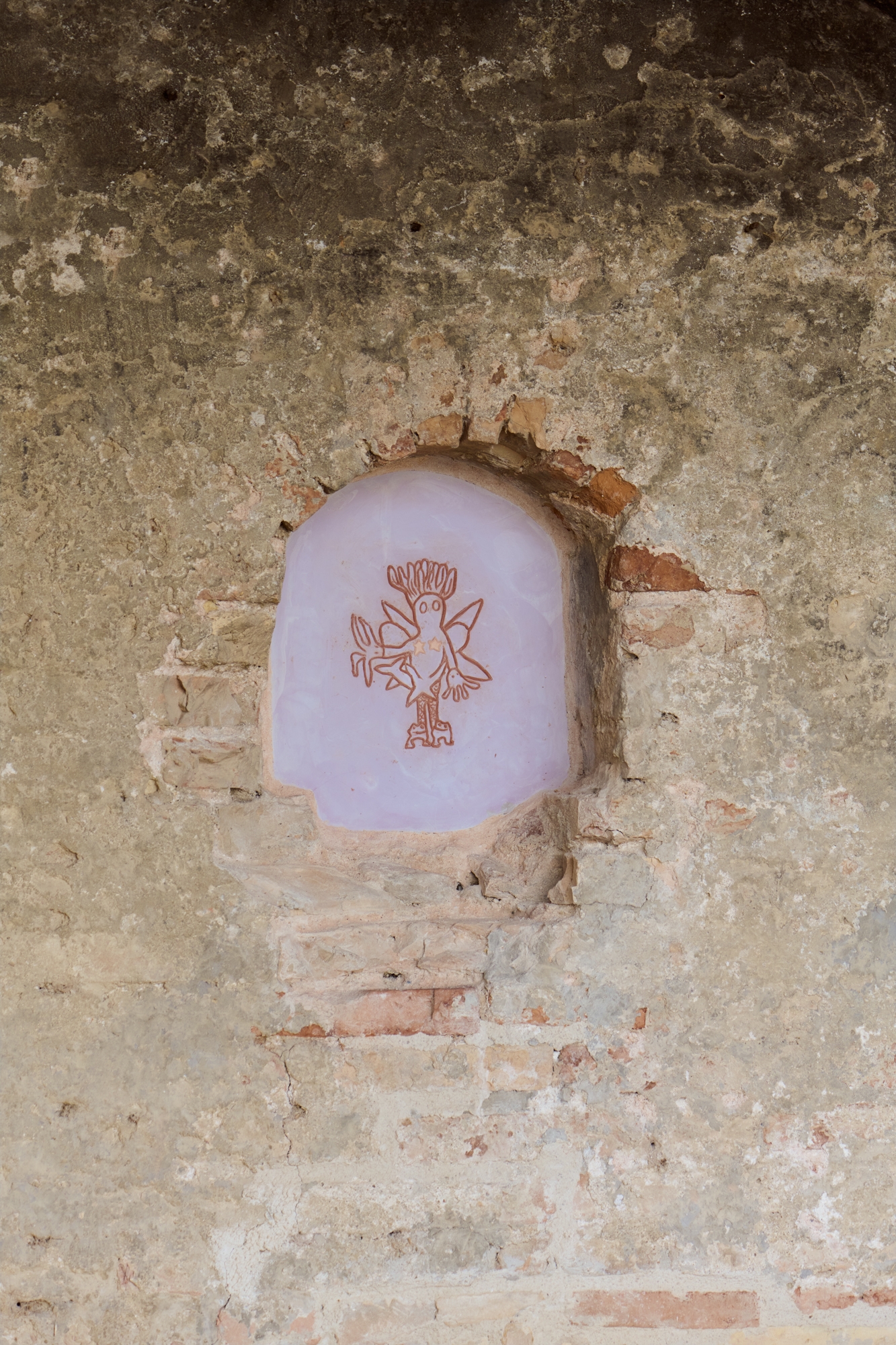
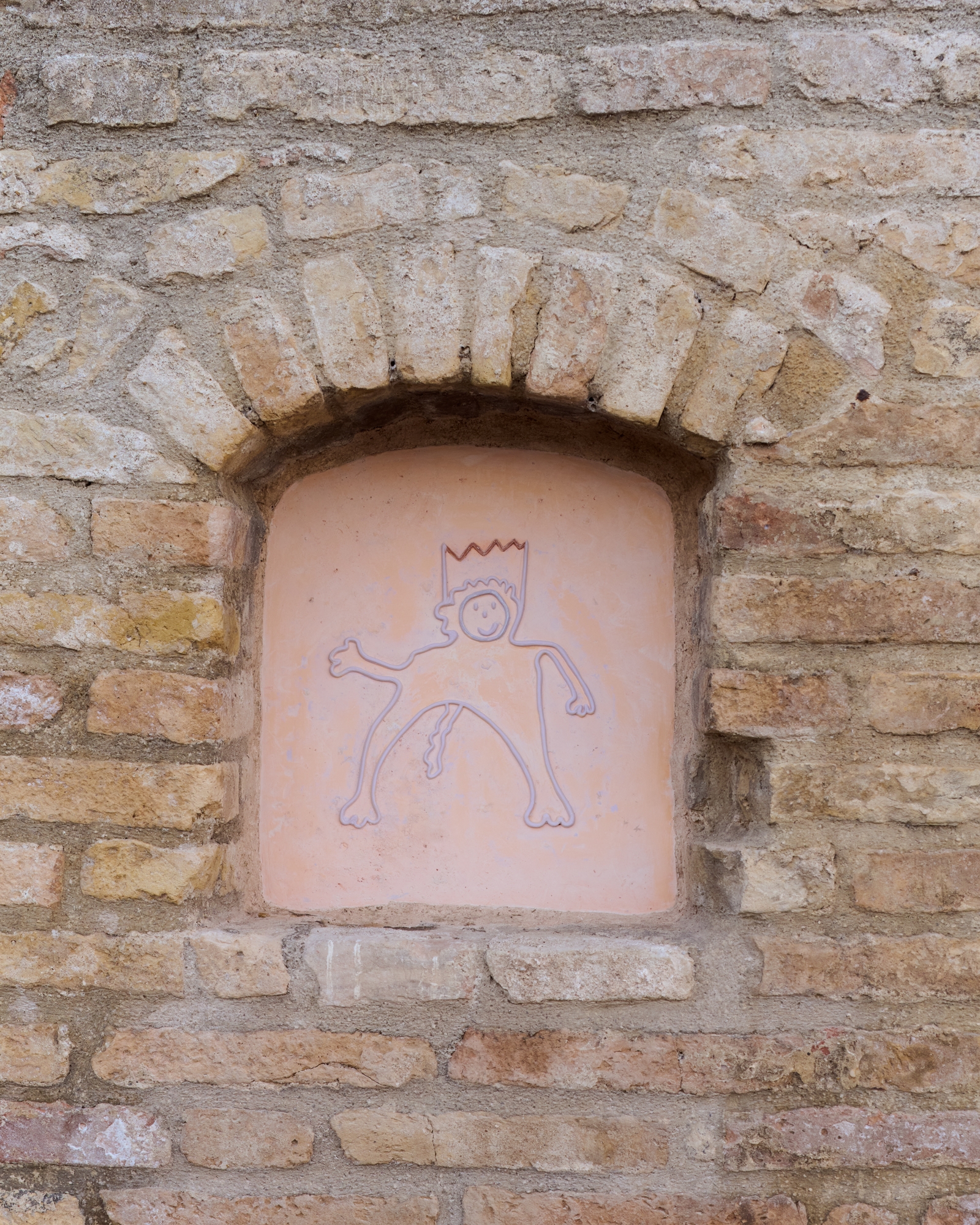
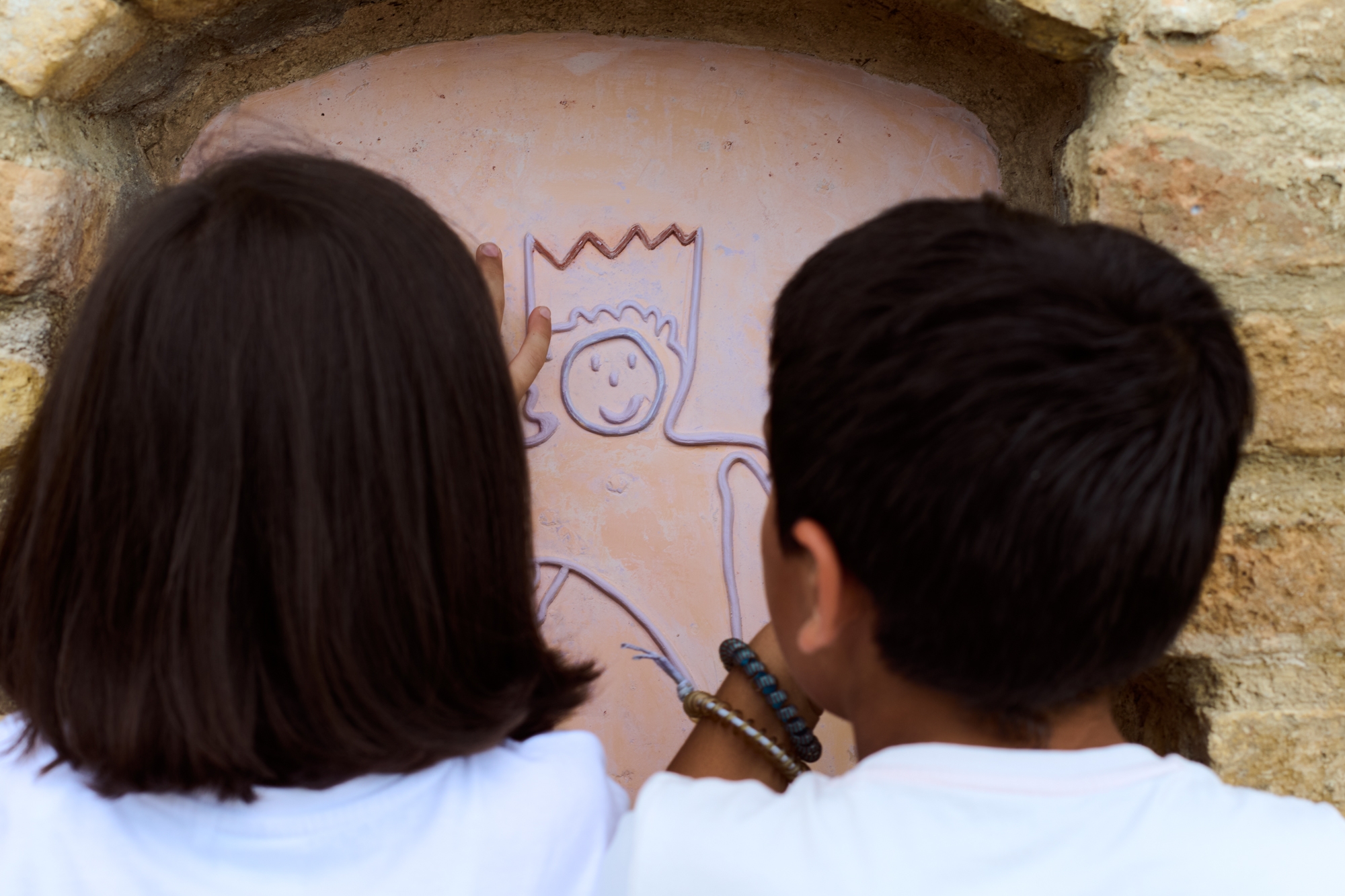
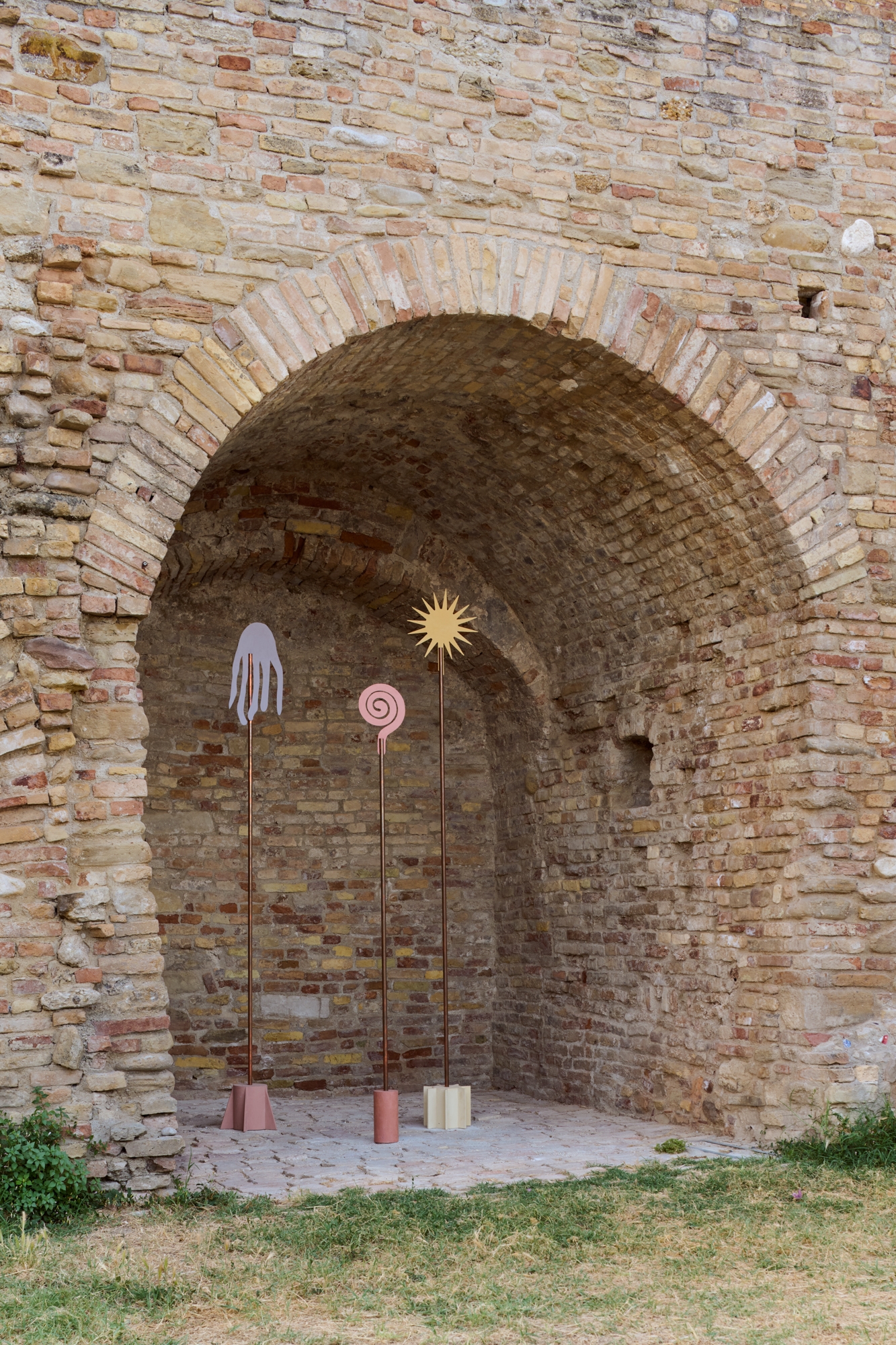
Maja Escher, Piedi caprini, capelli di polpo, Cupra Marittima, Marche. Ph Matteo Natalucci
In Cupra Marittima, traces of a pre-Roman era emerge: remains of walls and stairways that seem to conceal the presence of the temple of the Goddess Cupra, a deity associated with earth and water. Not even the iconography of the goddess herself has survived, though she was once worshipped by the local populations.
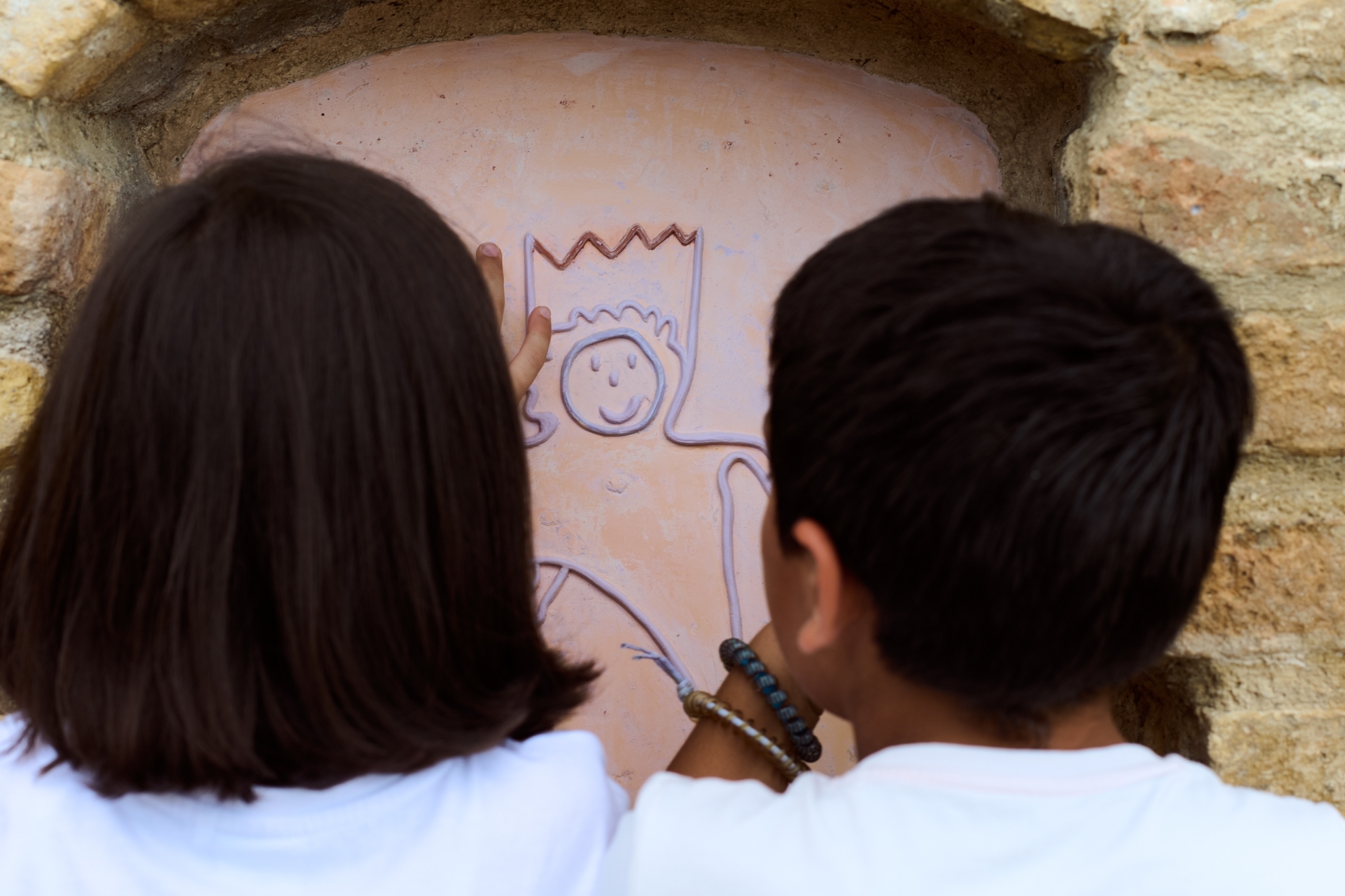
Maja Escher’s intervention slips into this fracture, inhabiting the existing architecture and revealing the myth through the creation of a domestic altar dedicated to the Goddess. A series of terracotta plaques, produced through a process of speculative archaeology initiated by the artist together with children and elderly residents of Cupra Marittima, are embedded into the walls of Borgo Marano, the upper village: a path that gradually outlines the image of the deity, shaped by the collective imagination, and traces the way toward the new temple. Here, visual elements inspired by the place — from local vegetation to the historic maritime traditions — appear as offerings celebrating the Goddess Cupra.
Work:
01 Maja Escher, Piedi caprini, capelli di polpo, 2026. Clay gathered on site, copper, iron, wire, fabrics, shells and stones, variable dimensions
Borgo Marano, Cupra Marittima (AP)
A diffuse intervention throughout the village: a series of painted terracotta elements accompanies the visitor along a path leading to the main work.
Piedi caprini, capelli di polpo
Guided tour with the kids that imagined Dea Cupra
2 October 2026 h. 6:00 pm
Borgo Marano, Cupra Marittima (AP)
On the occasion of the closing event of the project "Piedi caprini, capelli di polpo", Maja Escher has envisioned setting in motion a walk through the streets of Borgo Marano together with the boys and girls from the elementary school she worked with to create the terracotta tiles placed on various walls throughout the village. The children will act as guides, telling the stories of the drawings and the thoughts connected to each image.
Speculative Archaeology Workshop with Maja Escher
27 and 28 April 2026
Cupra Marittima (AP)
The children of the primary school and the elderly residents of the nursing home are involved in an imaginative workshop of speculative archaeology. The artist’s aim is to open a playful dialogue with them in order to give a face and a body to the Goddess Cupra, reconnecting participants with local history and exploring where their imagination may lead them.
Thanks to: Mayor Alessio Piersimoni, Councillor Eliana Ameli, Mattis Heilscher, Andrea Mora, Lara Moriconi, Lucía Leirós Porto, Ariel Pinheiro, Fernando Roussado, Joana Salgueiro, Settimio Tassotti.
A special thank you to all the children, elderly people and fishermen who contributed to the project: Ramona Agostini, Daniele Camela, Romina Caminonni, Maria Carlini, Jhonny Acevedososa Crodoba, Ermanno Agnotti, Francesco Ameli, Esra Amzi, Serena Basili, Sofia Bejaoui, Saverio Butta, Alice Calabrò, Sofia Centanni, Anna Ciarrocchi, Leonardo Ciarrocchi, Alexandru Coruanu, Noah De Filippo, Giulio Del Zompo, Christian De Micco, Rosanna Di Virgilio, Diego Ferraro, Marco Flamini, Ilaria Galavotti, Sonia Ben Gazhela, Alessio Hasalliu, Ejoele Hoxha, Jad Ibn Cheikh, Amedea Ionni, Davide Lanciotti, Erid Lloshi, Hassine Mabrouk, Marta Mancini, Rebecca Mancini, Antonio Matthias Manetti, Samuel Mannocchi, Lorenzo Morganti, Rita Marini, Rossana Mazza, Tiago Nolria, Margherita Novelli, Sofia Pieroni, Milena Pistolesi, Ambar Martina Flores Rodriguez, Lidia Rosetti, Gioconda Rossi, Maria Ruggeri, Mario Michele Scutti, Antonio Teodori, Irma Urbinati, Emidio Zazzetti, Amelja Xhebexhiu.
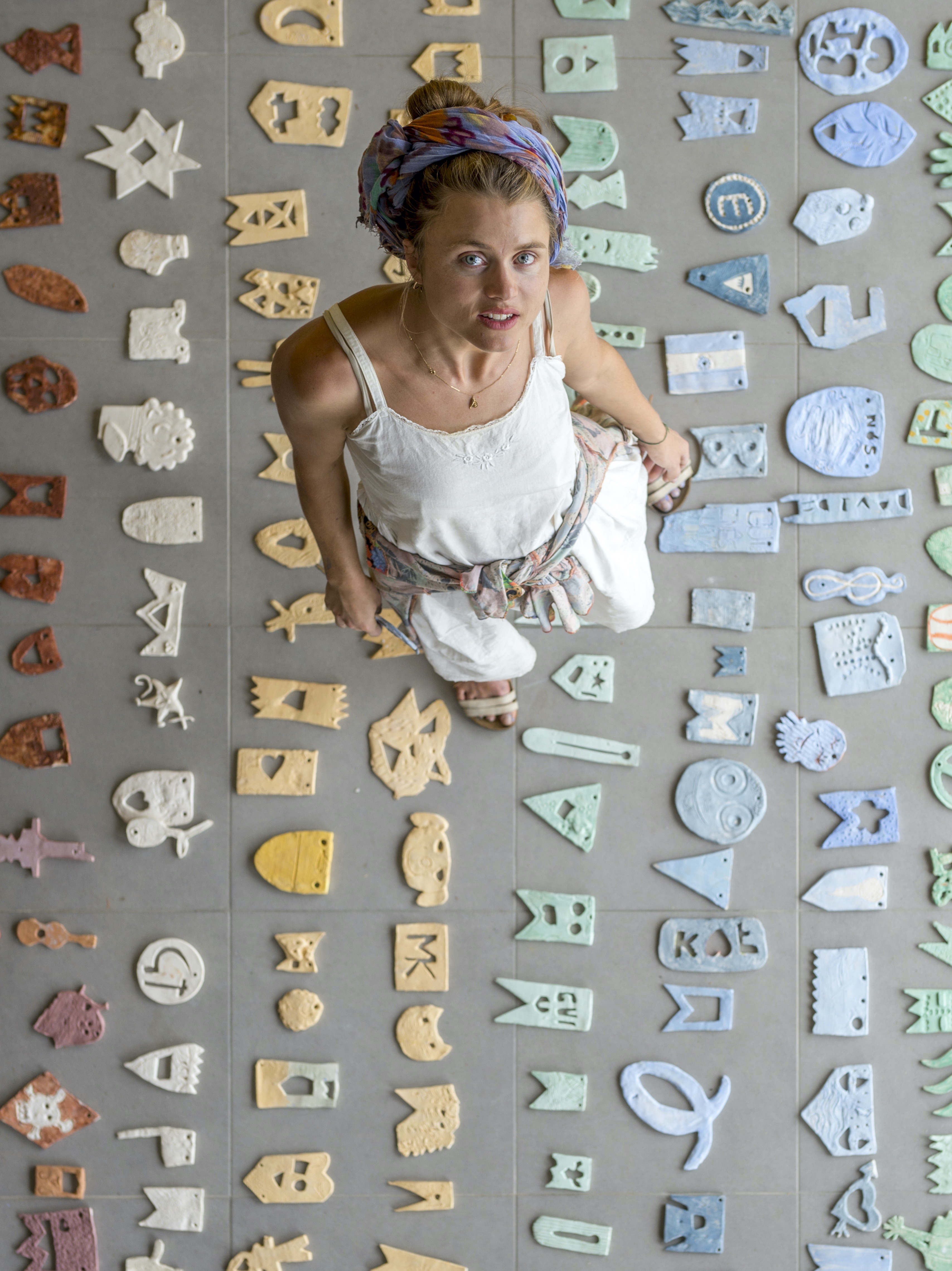
Maja Escher (Santiago do Cacém, Portugal, 1990) holds a BA and an MA in Multimedia Art from the Faculty of Fine Arts in Lisbon, including a study grant in London.
Her practice emerges from a direct relationship with territory and its materialities—stories, songs, clay, reeds, stones, ropes, pigments, and plants. Through processes of gathering, experimentation, and collaboration, she transforms these elements into installations and objects that explore the interdependence between body, land, and language. Her work brings together ecological observation, local technologies, and practices of listening and sharing, often incorporating oral knowledge, songs, and popular sayings.
She has participated in Manifesta 15 Barcelona Metropolitana, Barcelona (ES, 2024) and residencies such as Projecto Lugar at CAM – Fundação Calouste Gulbenkian, Lisbon (PT, 2025).
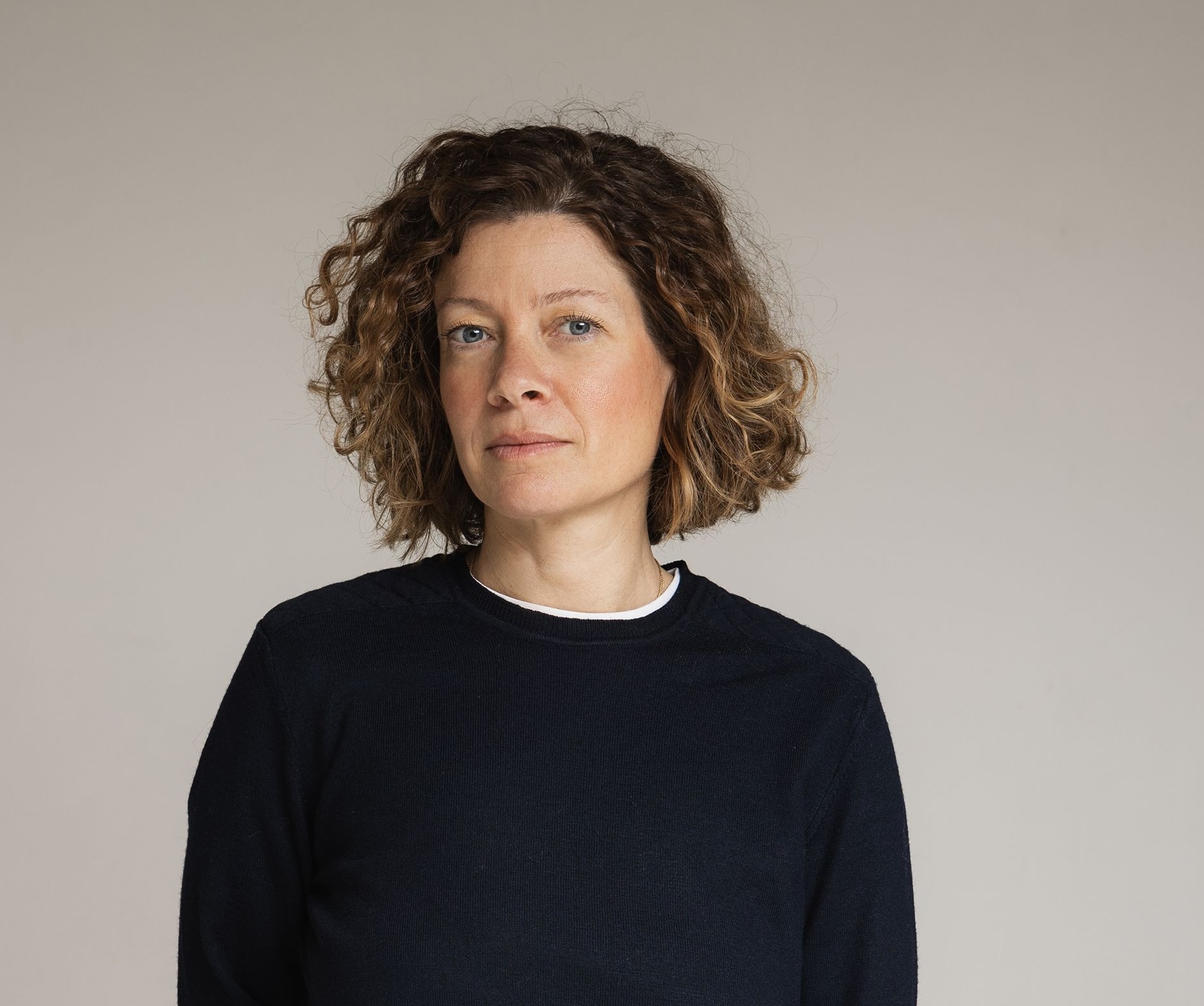
Matilde Galletti is curator and professor of Contemporary Art at the Brera Academy of Fine Arts, Milan. She has trained and collaborated with the Gerardo Dottori Archives of Perugia, with the association a.titolo of Turin, with the magazine Titolo. She has studied visual poetry, working on the archives of Anna Oberto in Genoa and of Arrigo Lora-Totino. Founder and curator of Karussell, a project that deals with spreading contemporary art in the southern Marche. She runs the archive of the artist Mario Airò. For Una Boccata d'Arte, she curated the projects of Caterina Morigi in San Ginesio (2024) and Giuseppe Abate in Altidona (2025), Marche.
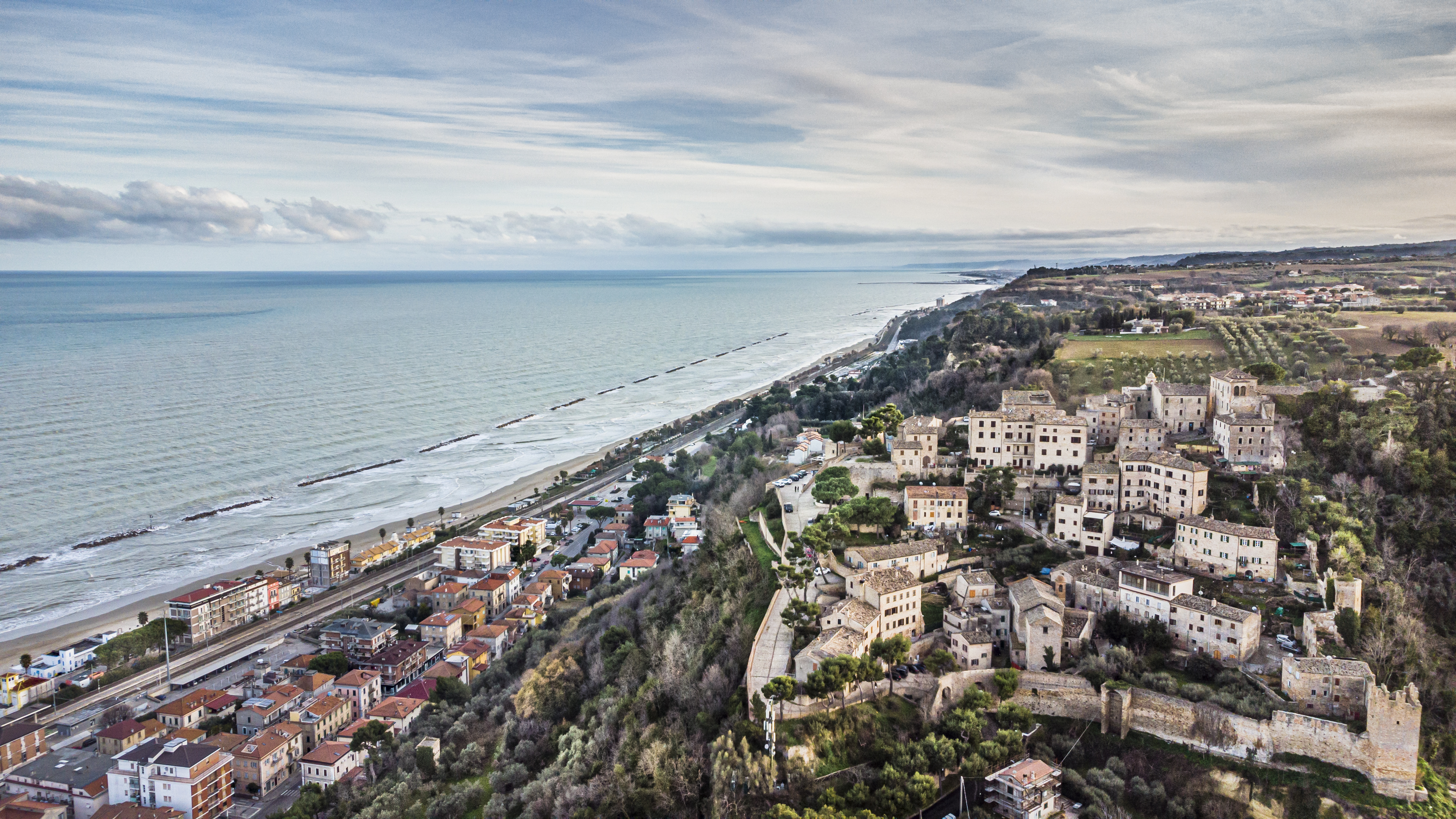
Cupra Marittima, on the Riviera delle Palme in the province of Ascoli Piceno, is a rare example of a seaside town that preserves clearly distinct traces from the different periods of its history. The modern area stretches along the coast, the medieval village of Marano rises on the hill, while to the north of the present-day settlement lie the remains of the Roman city of Cupra Maritima.
Inhabited since the Paleolithic era, it was first an important Picene settlement and later a Roman colony, of which the Forum, the temple dedicated to the goddess Cupra, and a villa with baths and a nymphaeum still remain. The ancient fortified village of Marano still preserves its walls, the 12th-century towers, the noble palaces, the medieval churches, and the Archaeological Museum of the Territory. Along the coast, instead, stands the Piceno Malacological Museum, which houses nearly one million specimens and exhibits of primitive art connected to the world of shells.