Irene Macalli
Qui il vento ricorda per noi
curated by Giulia Monroy
Qui il vento ricorda per noi
Publication’s presentation with Pungitopo editrice
3 October 2026 h. 6:30 pm
Palazzo Milio, Ficarra (ME)
Irene Macalli
curated by Giulia Monroy
"The wind becomes a poetic image: memories mingle within it, as if reaching toward the sky, in a place where depopulation calls for acceptance, for those who stay and those who leave."
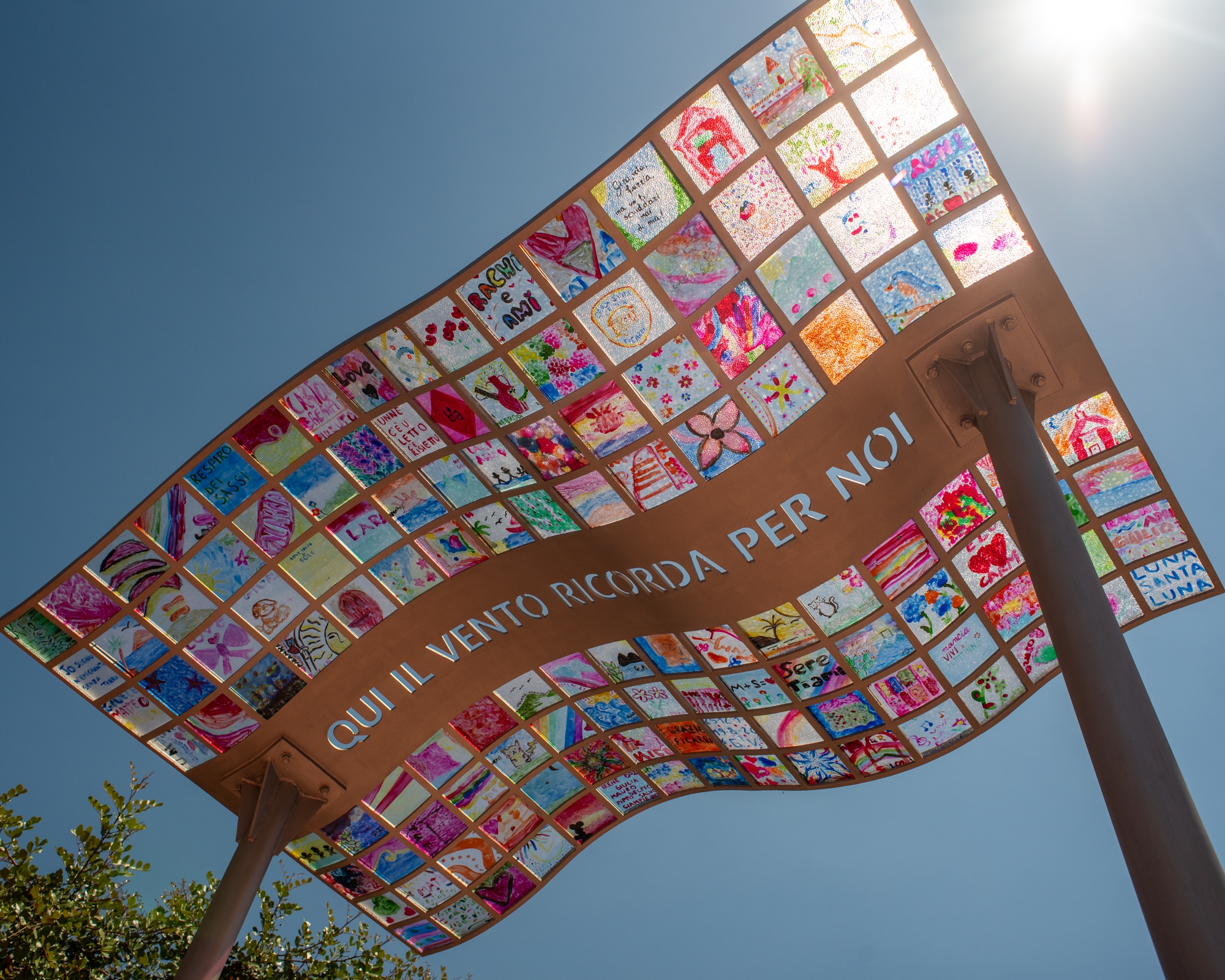
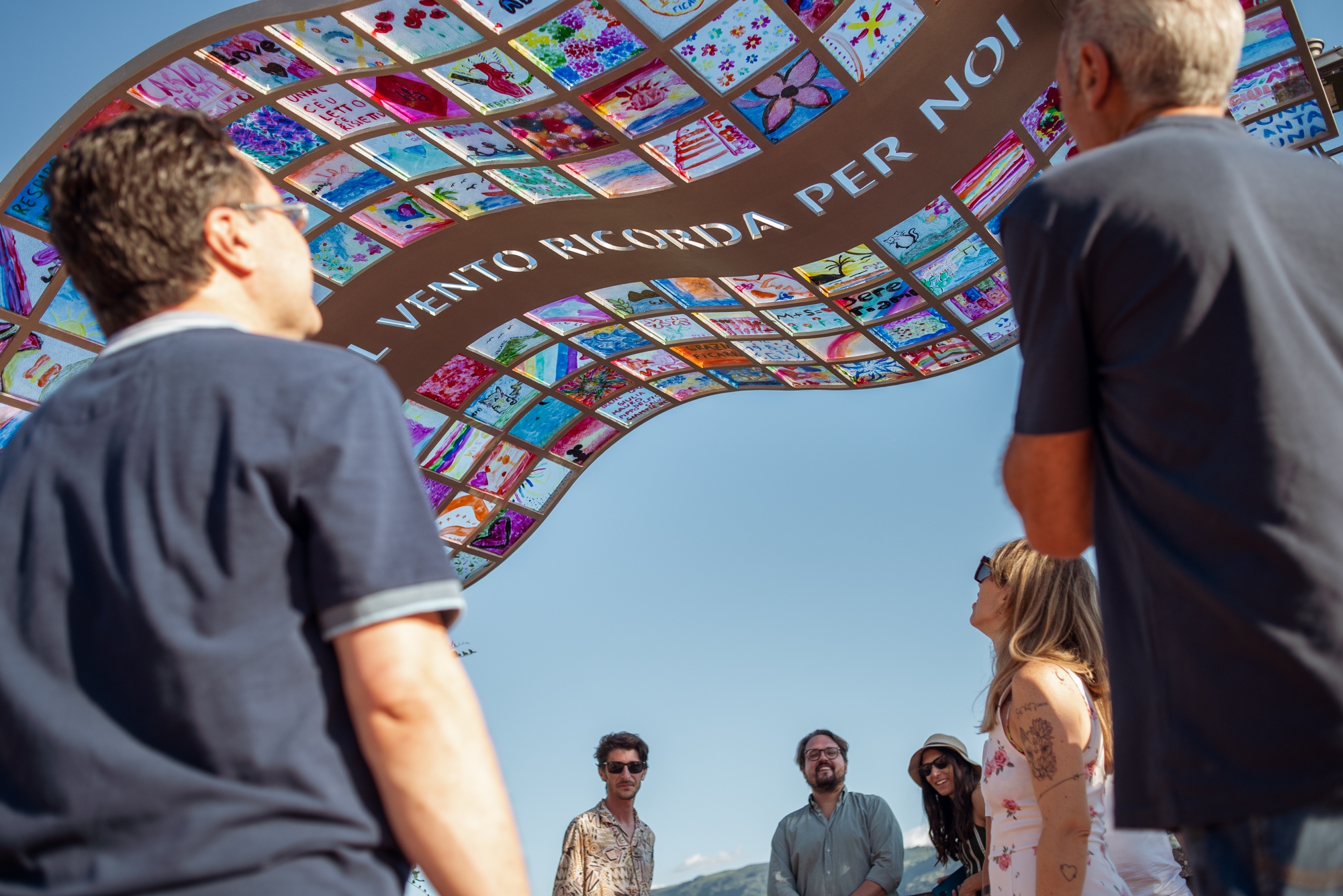
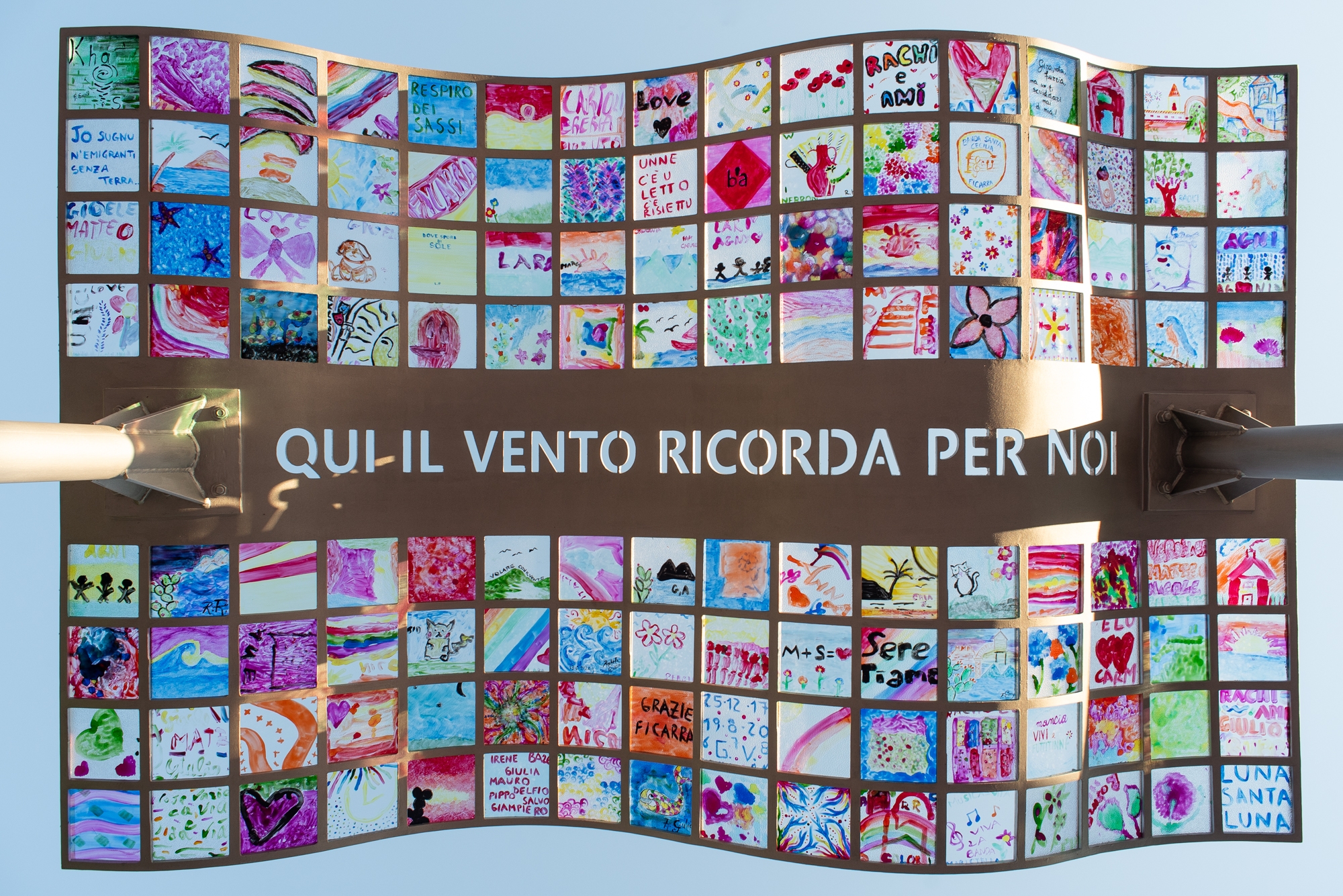
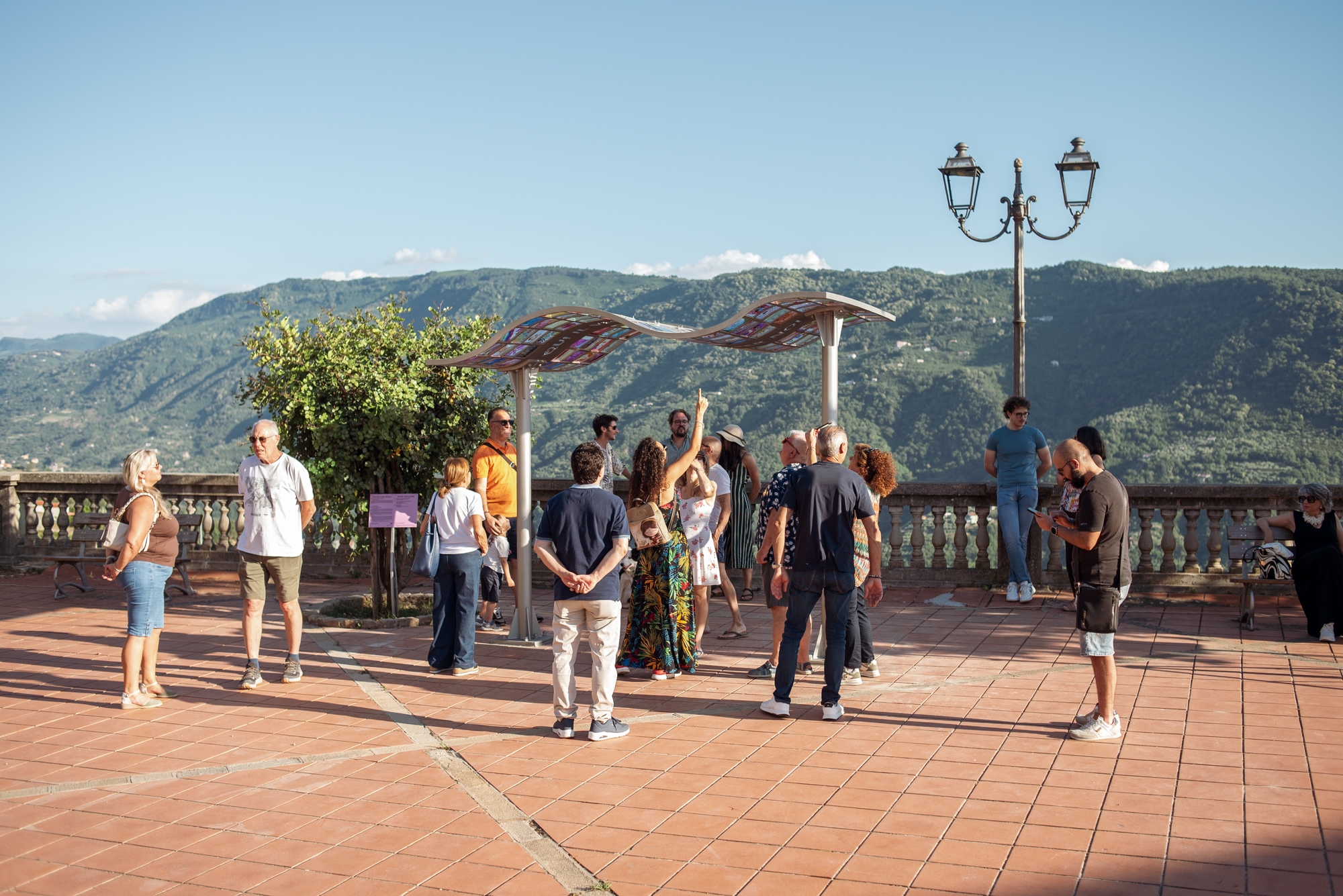
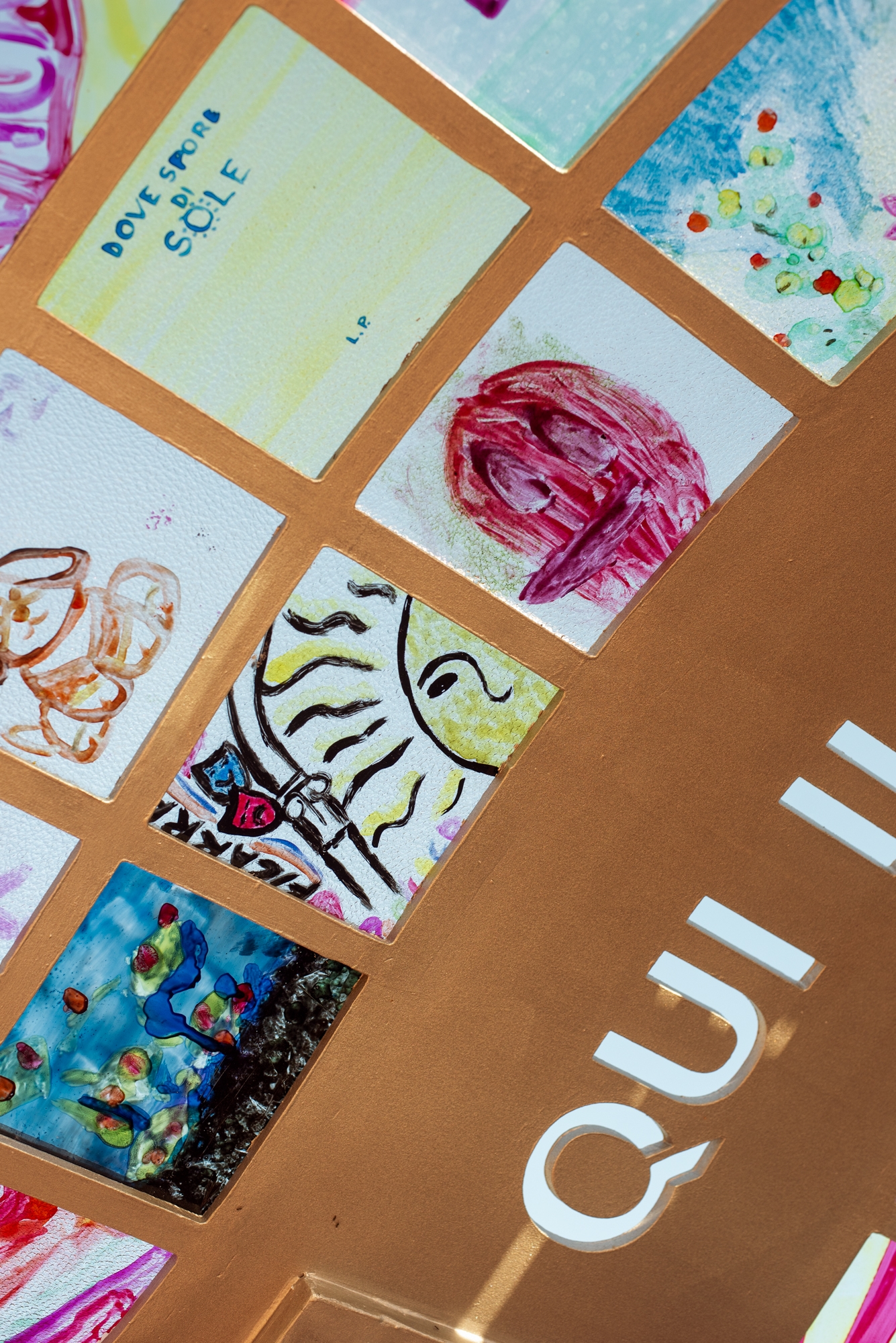
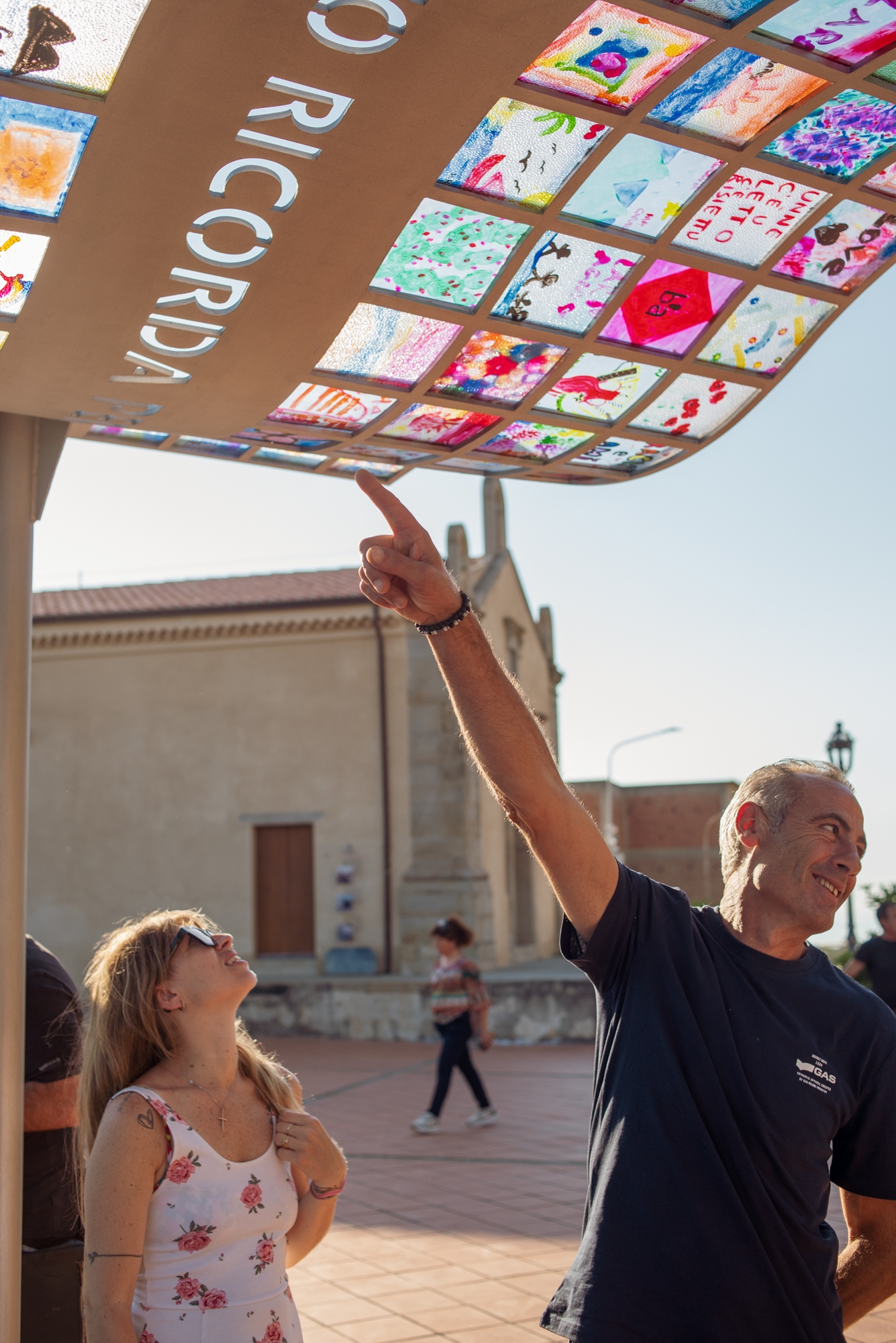
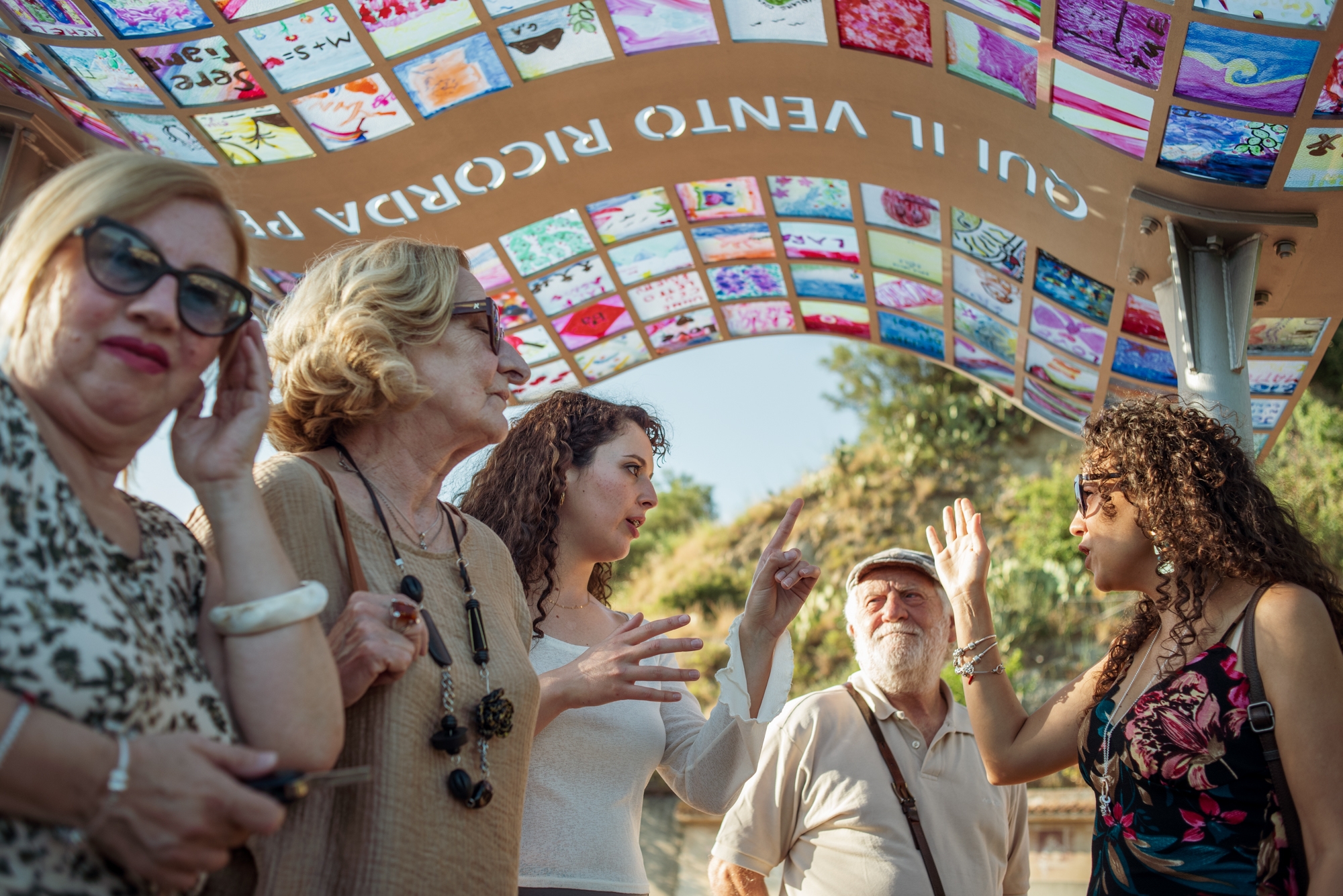
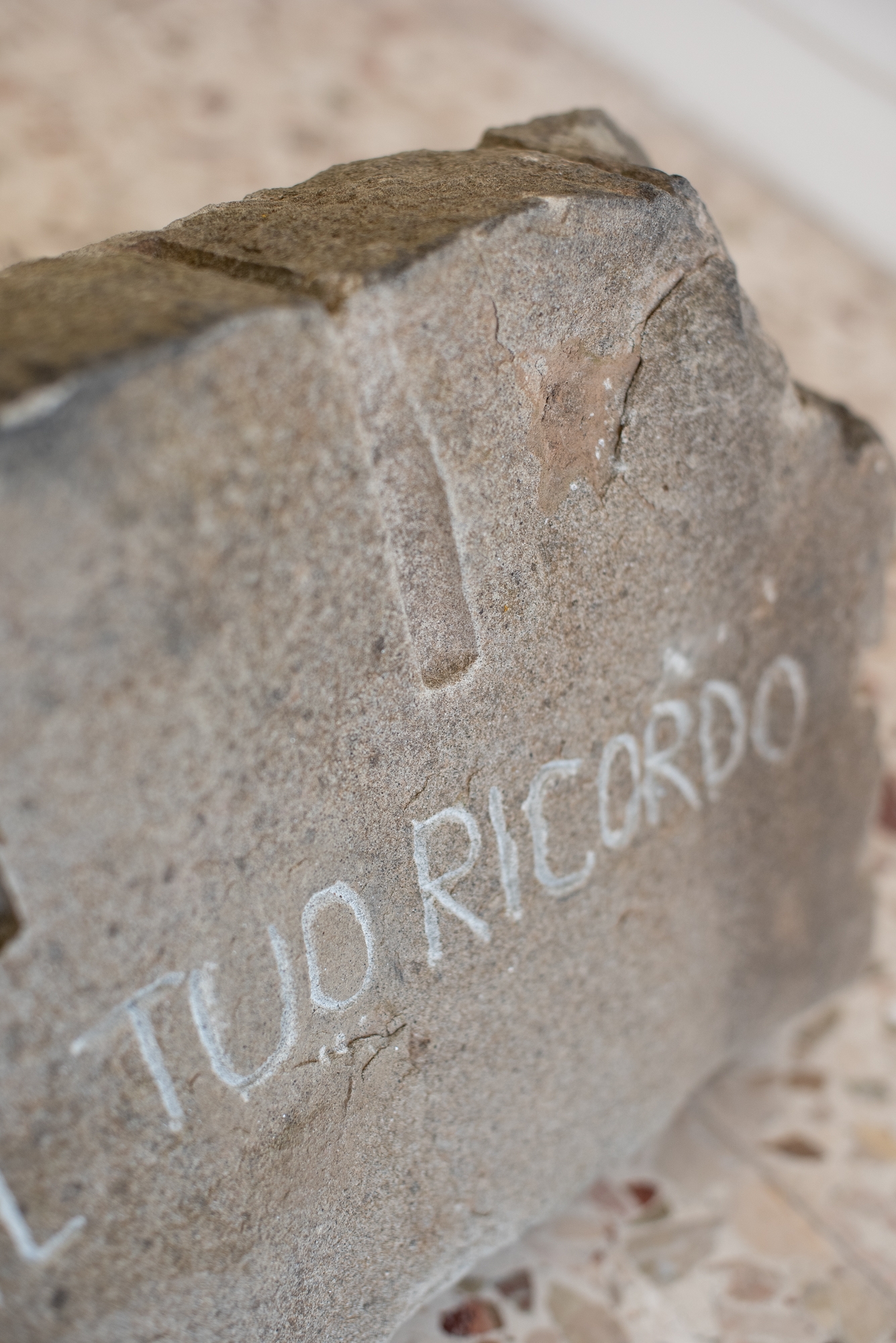
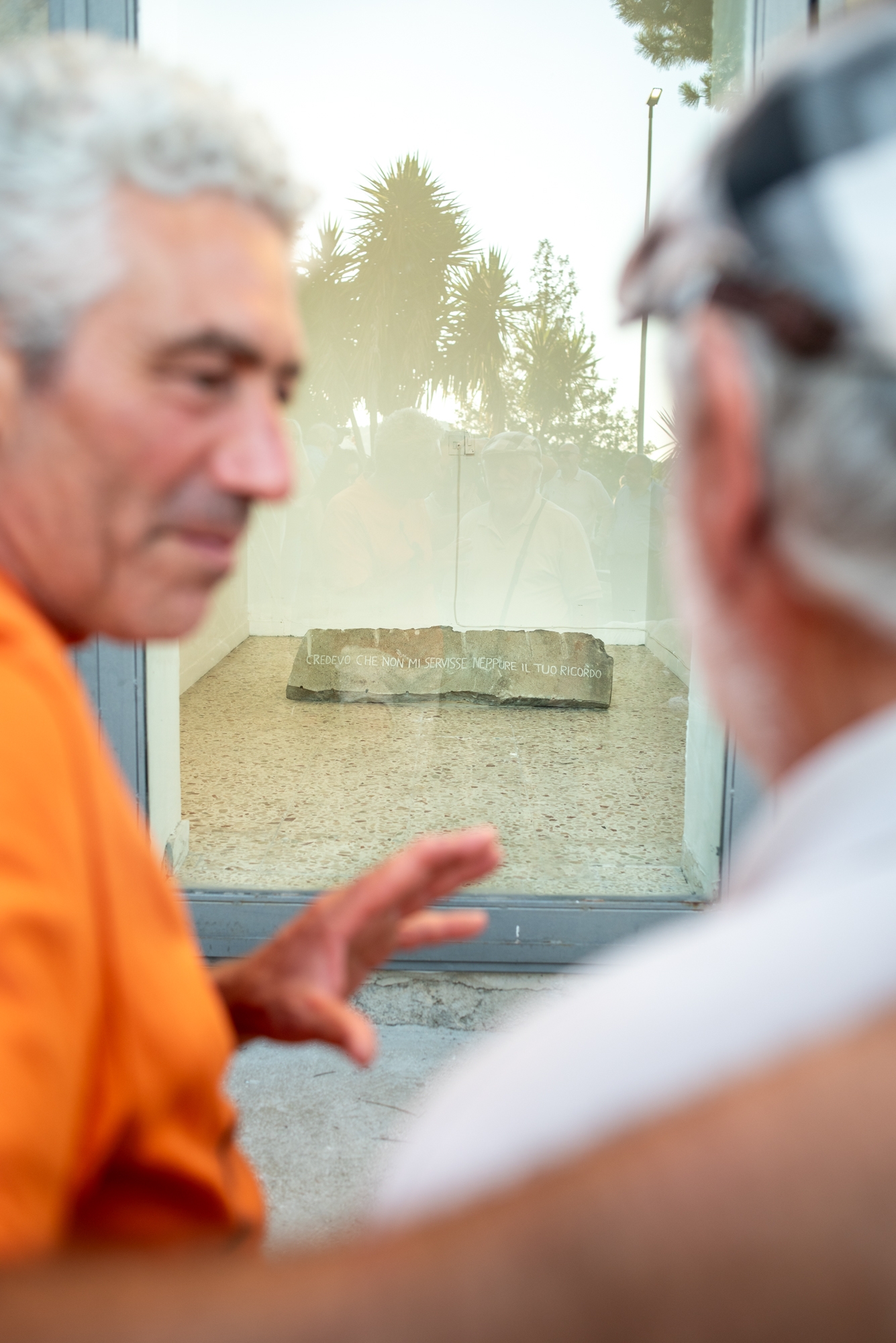
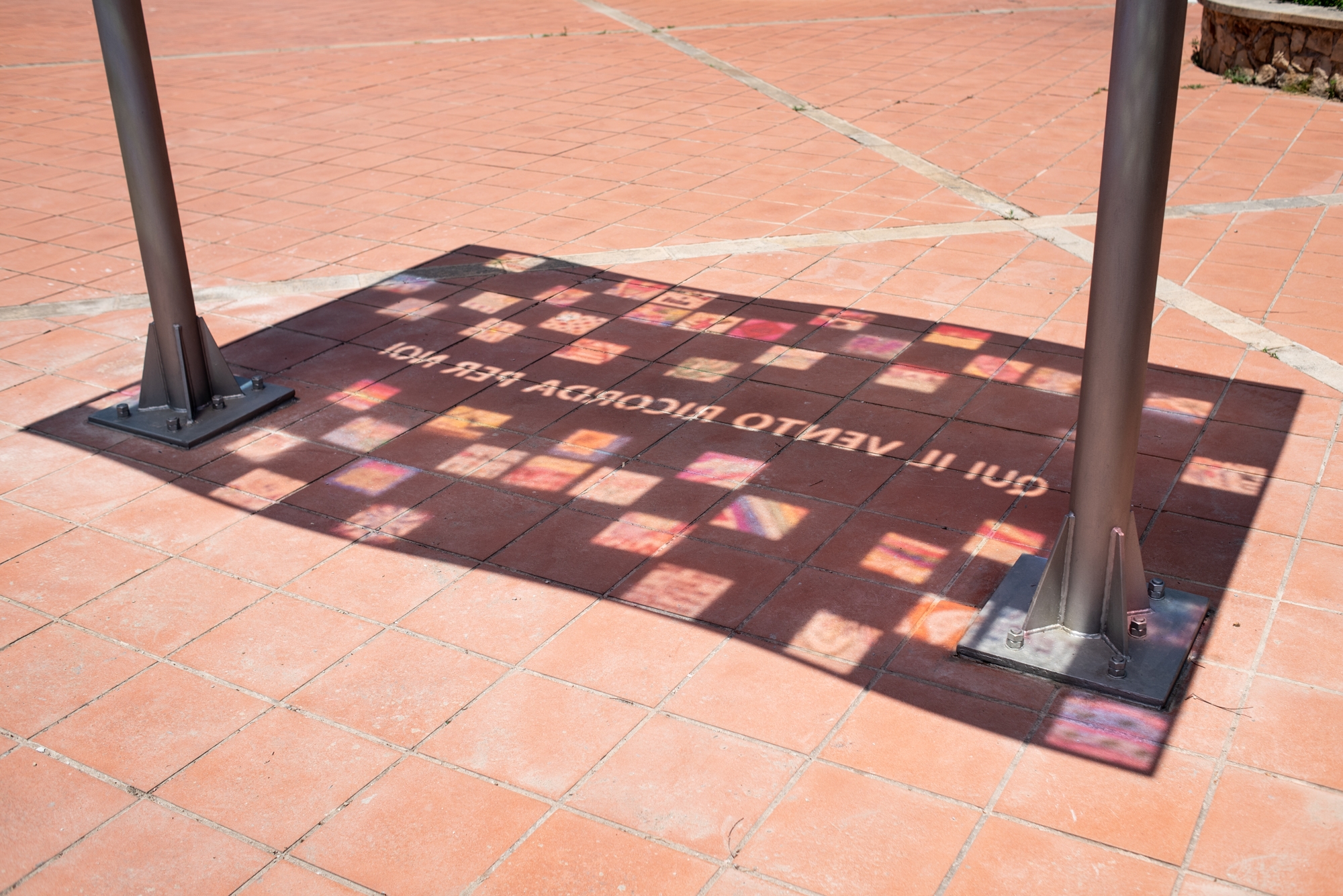
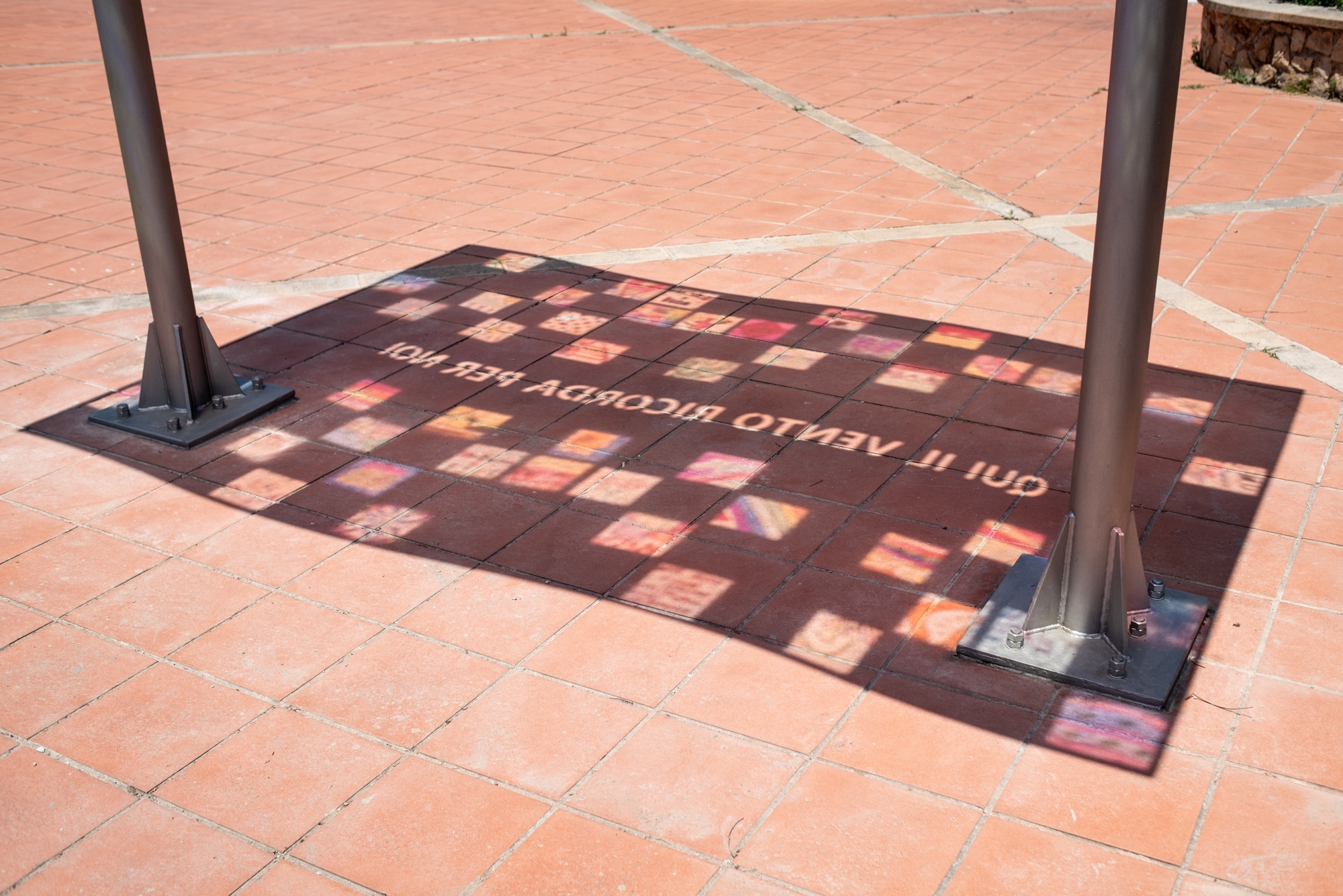
Irene Macalli, Qui il vento ricorda per noi, Ficarra, Sicilia. Ph Roberto Boccaccino.
The project emerges from the encounter with Ficarra’s community and from the desire to transform collective memory into a shared and living experience. Drawing upon the book Ficarra libro mio, the artist reactivates a participatory process by inviting residents to contribute with words, marks and images painted on transparent surfaces. These “tiles of memory” come together in a public installation conceived for Piazza delle Logge, where light and wind become narrative elements.
The work takes shape as a space for meeting and contemplation, capable of connecting past and future. In a context marked by depopulation, the project restores centrality to relationships, envisioning new ways of inhabiting through art and participation.
In parallel, the artist collaborates with local stone-carving artisans to create a sculptural work engraved with a significant phrase from the book. From the encounter with Maestro Delfio Plantemoli emerges a sound installation that reinterprets a poem from the text through traditional Sicilian instruments and rural songs in an experimental key.
Works:
01 Irene Macalli, Qui il vento ricorda per noi, 2026. Iron, polycarbonate, glass paint, 240 x 300 x 200 cm
Piazza delle Logge, Ficarra (ME)
02 Irene Macalli, Credevo che non mi servisse neppure il tuo ricordo, 2026. Engraving on local sandstone, 35 x 130 x 25 cm
Via Roma 49, Ficarra (ME)
03 Irene Macalli in collaboration with Delfio Plantemoli, Cori me’, 2026. Audio track, 3’40”.
Via Roma 49, Ficarra (ME)
Qui il vento ricorda per noi
Publication’s presentation with Pungitopo editrice
3 October 2026 h. 6:30 pm
Palazzo Milio, Ficarra (ME)
On October 3rd at 6:30 PM at Palazzo Milio, artist Irene Macalli will retrace the participatory process that led to the creation of the public installation Qui il vento ricorda per noi. Through a workshop open to the community, words, signs, and images were traced onto transparent surfaces using glass paint, giving shape to personal memories, fragments, and presences. Born from the encounter with the community of Ficarra, the work offers itself as a space for meeting and contemplation, a device capable of connecting past and future. The closing event will be an occasion to present the publication released by Pungitopo.
Qui il vento ricorda per noi. Un laboratorio per chi resta e chi è partito.
12 - 14 giugno 2026, h. 10:00
Ex Scuola Media C.da Natoli, via Natoli 15, Ficarra (ME)
Tre giorni di incontro con l'artista Irene Macalli per riattivare il senso di co-creazione nato nel 2012 con Ficarra libro mio. Si riscoprirà il sentimento verso il proprio territorio, trasformando la memoria del libro in un nuovo processo creativo condiviso. Il laboratorio consisterà nella scrittura e nel disegno su mattonelle trasparenti con colori per vetro. Le memorie future verranno poi simbolicamente alzate al vento attraverso l'installazione Qui il vento ricorda per noi pensata per Piazza delle Logge.
Il workshop si tiene venerdì 12, sabato 13 e domenica 14 giugno dalle 10:00 alle 12:30 e dalle 16:30 alle 19:30.
Thanks to: Mayor Rodolfo Basilio, the cultural delegate Mauro Cappotto, Delfio Plantemoli, Aurelio Indaimo, Giampietro Raffaele, Antonino Batia, Pippo Faranda, Salvatore Carbone, Lucio Falcone, Rosetta Messina, Tiziana Rasizzi Spurio, Sergio Giglia, Carmelo Adriano, Giuseppe Gammeri, and the entire community of Ficarra are gratefully acknowledged.
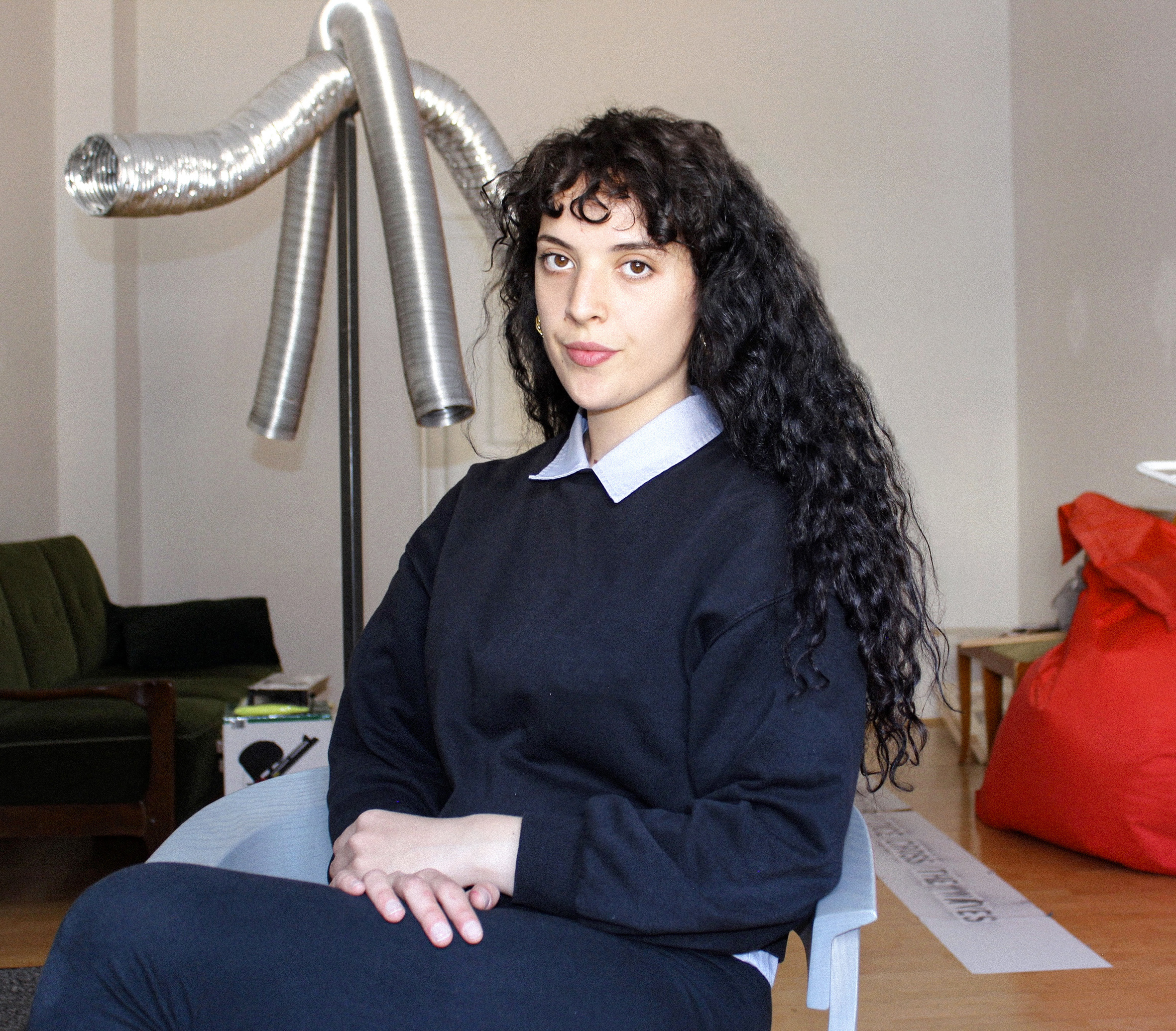
Irene Macalli (1999, Sant'Agata de' Goti) is an artist and doctoral candidate at the Academy of Fine Arts in Naples. She trained in Sculpture in Naples at ABANA and in Turkey at MSGSU in Istanbul, participating in several group exhibitions in Italy, Turkey, and Germany. She has gained formative experience at the studio of Marisa Albanese. Her research focuses on small rural communities through participatory projects with local communities. She is the creator and founder of the project L'arte come riscatto sociale nei piccoli comuni, which gave rise to a book published by Giacovelli Editore and her solo exhibition Archivio rurale. Un muro di terra at Capnapoliest (Naples, 2025). She won the Premio Generazione at Art Days Napoli–Campania (2023) and completed a three-month residency at Artist in Residence Munich (2025).
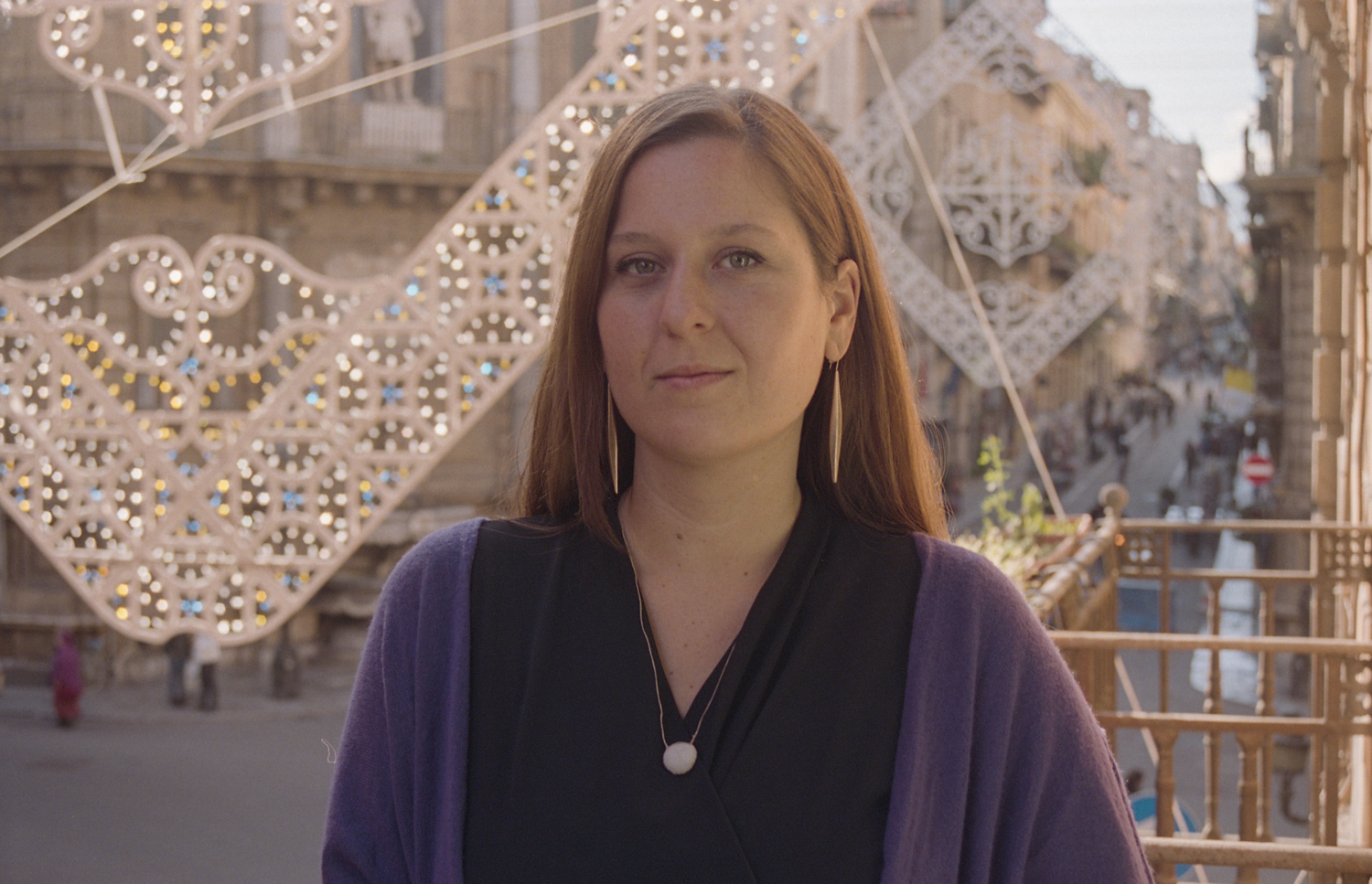
Giulia Monroy (Palermo, 1990) graduates in Exhibition Space Design and Museum Setups from the Academy of Fine Arts of Palermo. She works in production within the field of visual arts. From 2017 to 2023, she was a gallery assistant at Francesco Pantaleone, and from 2021 to 2024, she served as a curatorial and management assistant for ZACentrale, Fondazione Merz. She collaborates with ruber.contemporanea and Fondazione Ghenie Chapels.
In 2024, she founded studio moy, a project offering guided tours of artists' studios in Palermo.
For Una Boccata d'Arte in Sicily, she curated the projects of Ella Littwitz in Pollina (2023), Nicola Baratto & Yiannis Mouravas's project in Sant’Angelo Muxaro (2024) and Nicola Martini in Custonaci (2025).
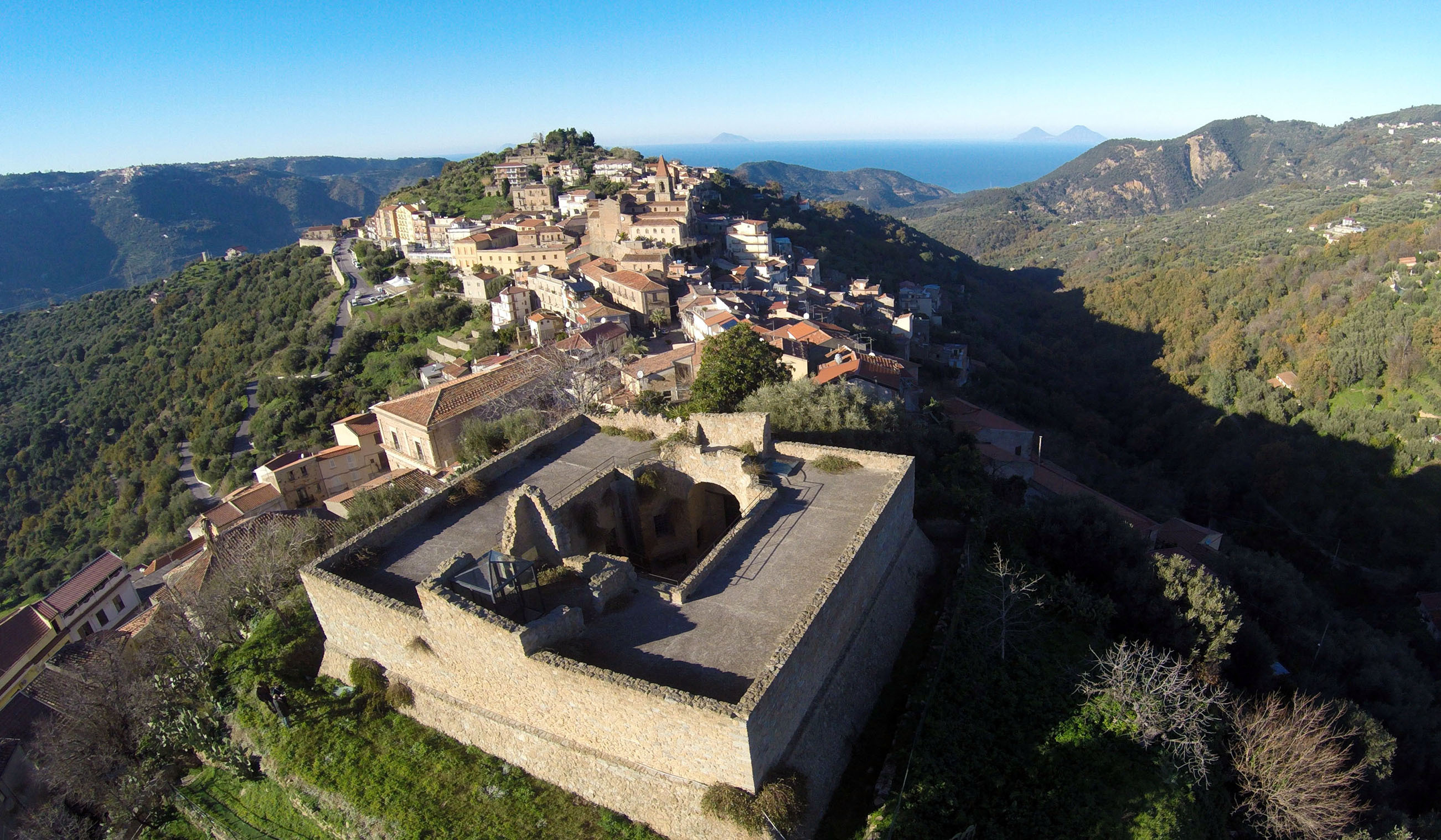
Ficarra is located among the Nebrodi Mountains, at 450 meters above sea level and just a few kilometers from the Tyrrhenian coast. The historic center, with its stone streets, ancient balconies, and noble palaces, preserves a collective memory shaped by artisanal work and shared traditions. The village skyline is marked by three main sites: the ruins of the Convent of the Observant Friars Minor, known as the Convent of the Hundred Arches; the Mother Church, of Norman origins, which dominates one of the hills of the historic center; and the Prison Fortress, with its past as a medieval castle and noble residence. The town’s cultural vitality is reflected in the Museo Diffuso, the widespread museum that connects thematic collections and places of memory, including the Silk Room and the museum dedicated to the poet Lucio Piccolo di Calanovella. Ficarra also served as inspiration for some significant passages in The Leopard by Giuseppe Tomasi di Lampedusa.