Dominique White
Residence Time
curated by Valentina Buzzi
Mi aspetto che il sole mi illumini ancora
Publication’s presentation
2 October 2026 h. 5:30 pm
Piazza Chiesa, Monteleone Rocca Doria (SS)
Ilare
curated by Anna Pirisi
with Piera Masala, Foghiles e Luca Sanna
"In this project, I draw upon a continued interest of ex-votos and the abstraction of the ship as an object loaded with memory, history and community care.
This project is a love letter to those who do not return to land."
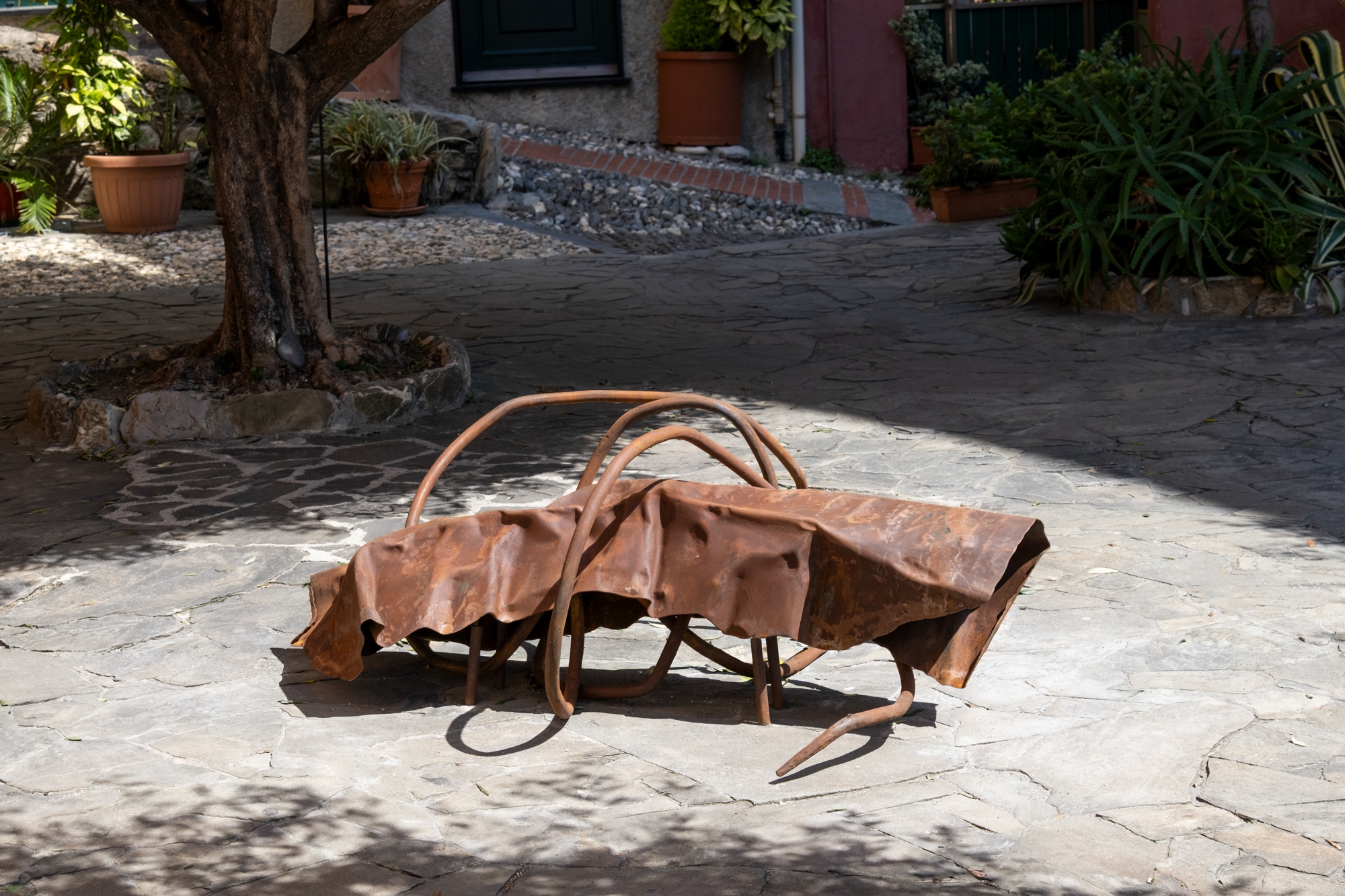
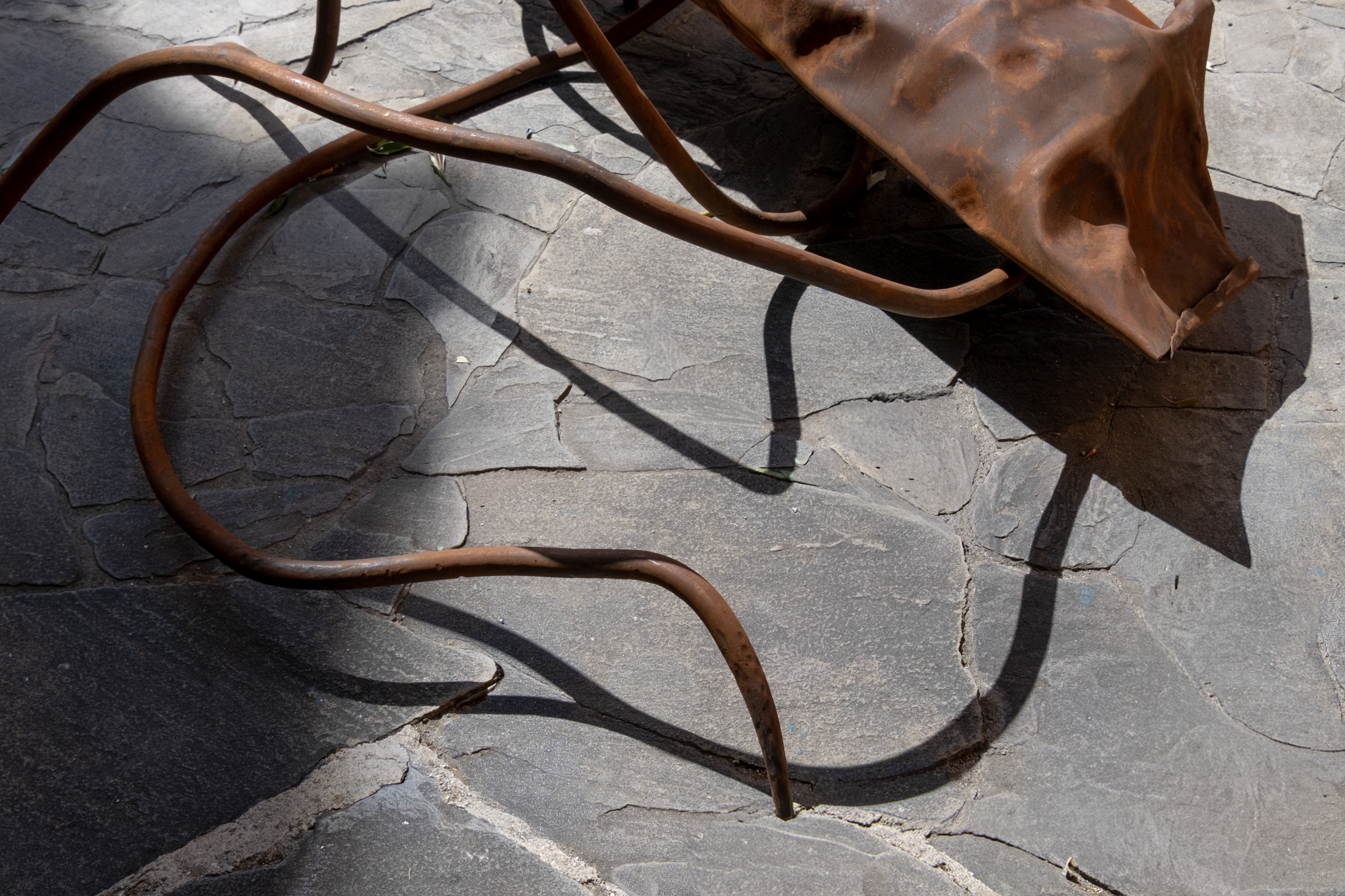
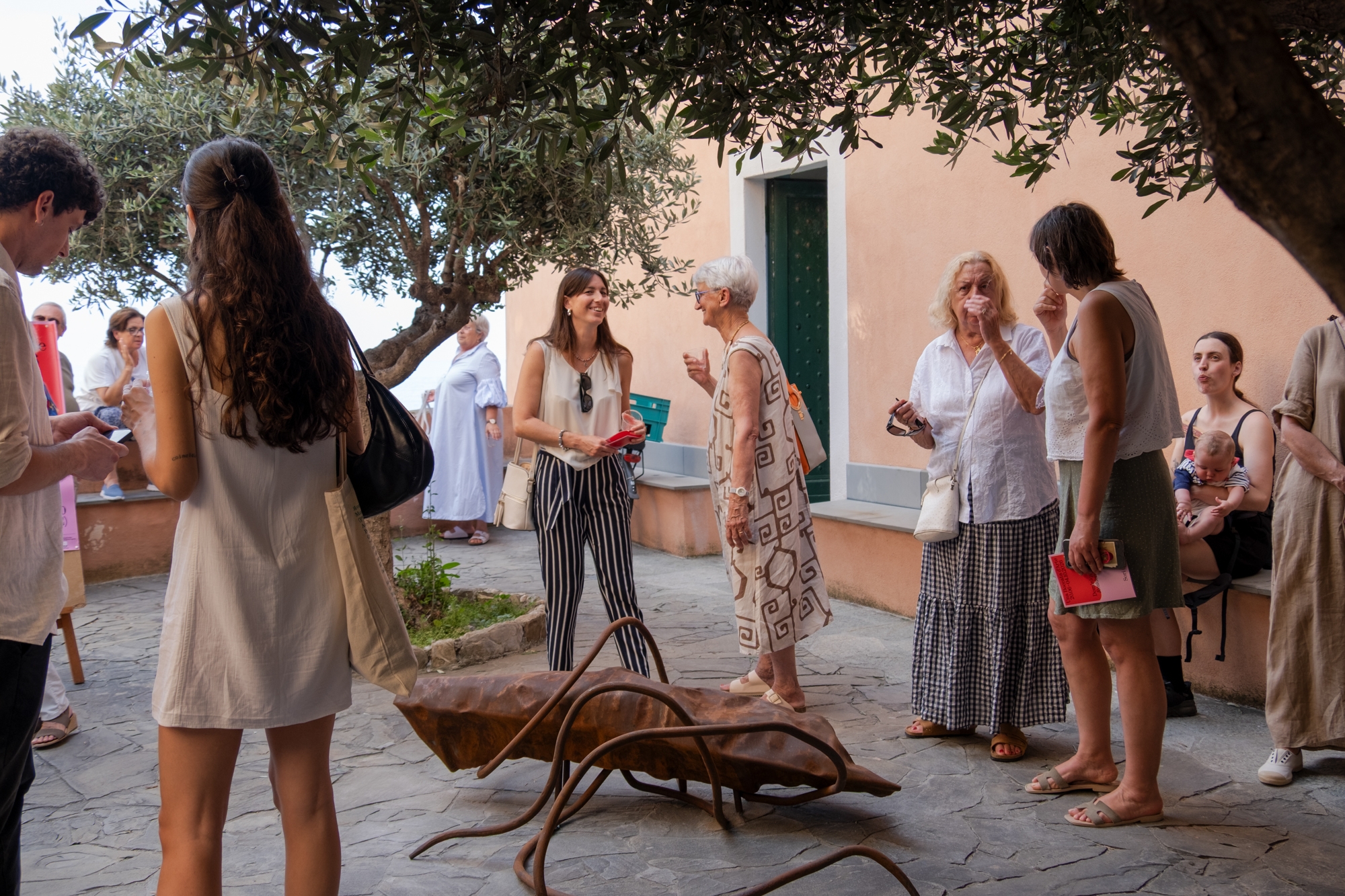
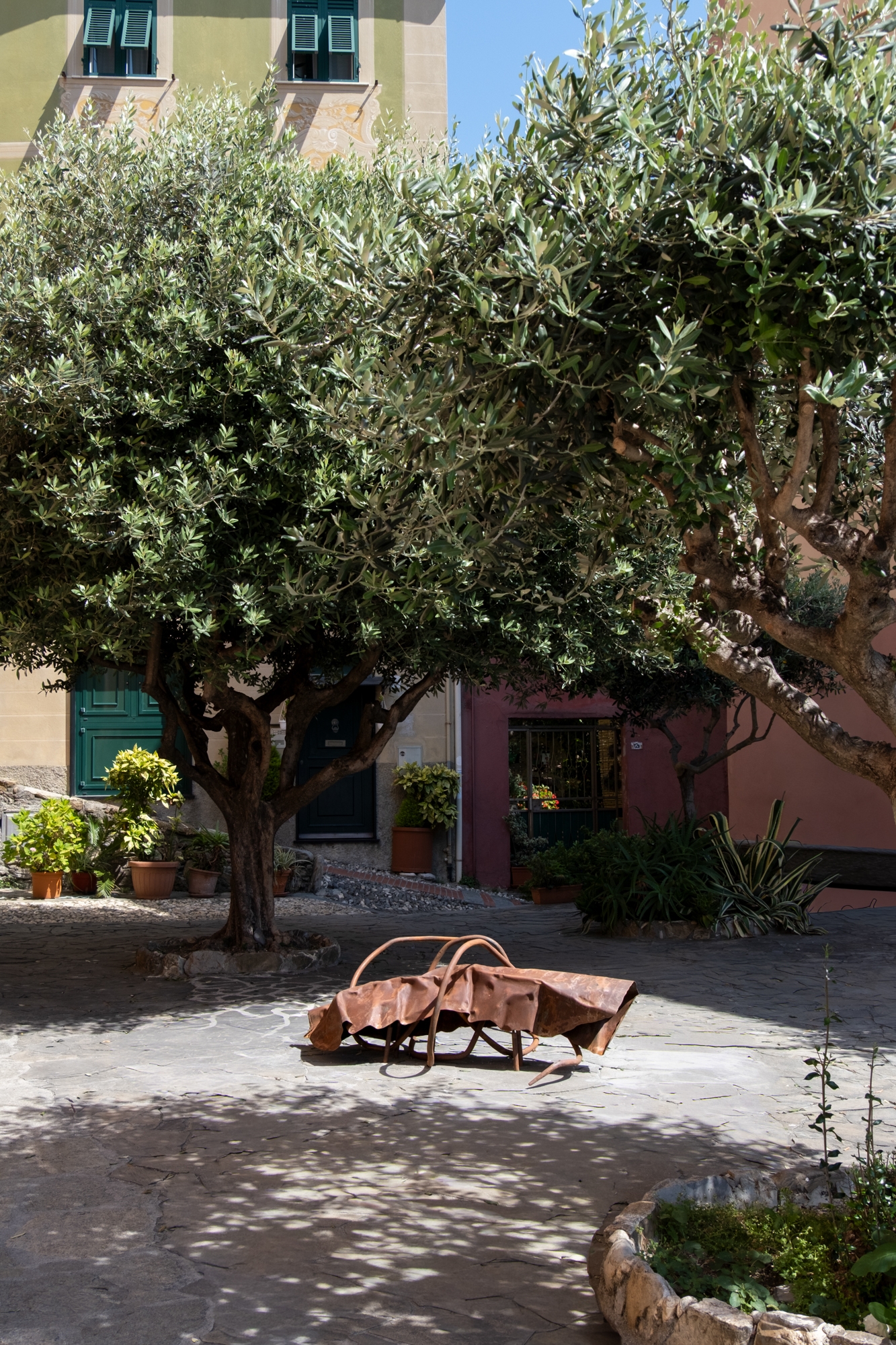
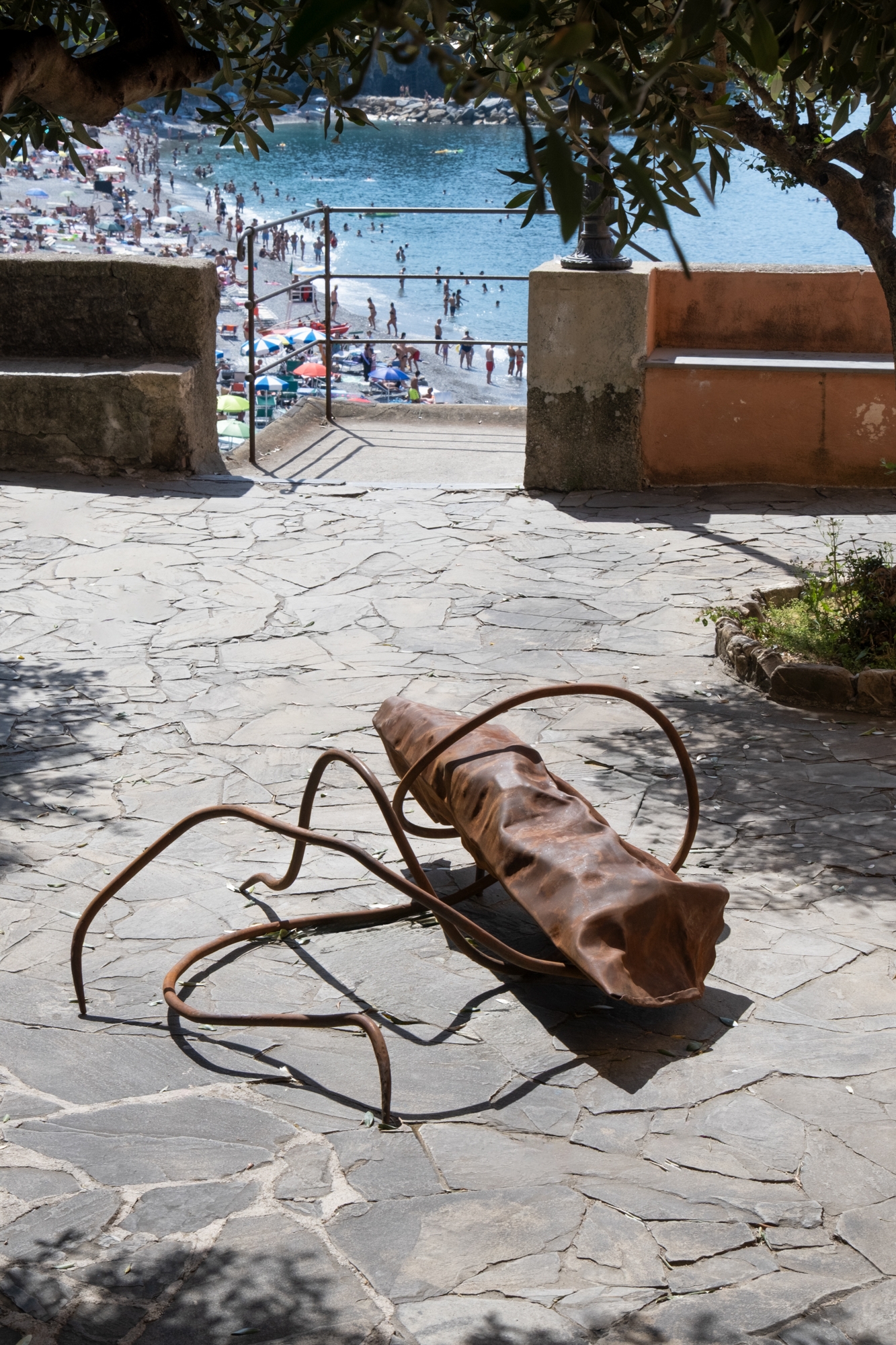
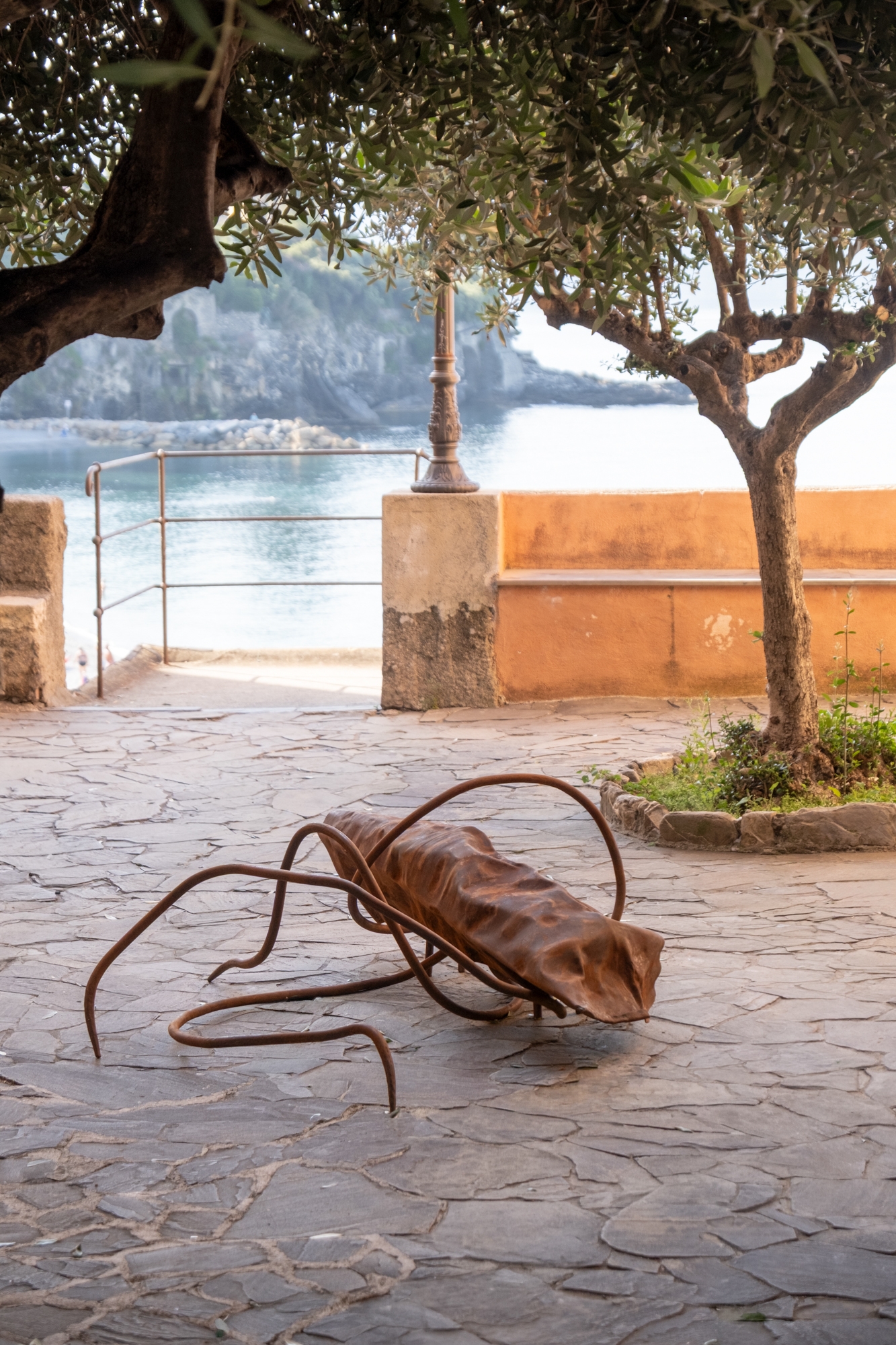
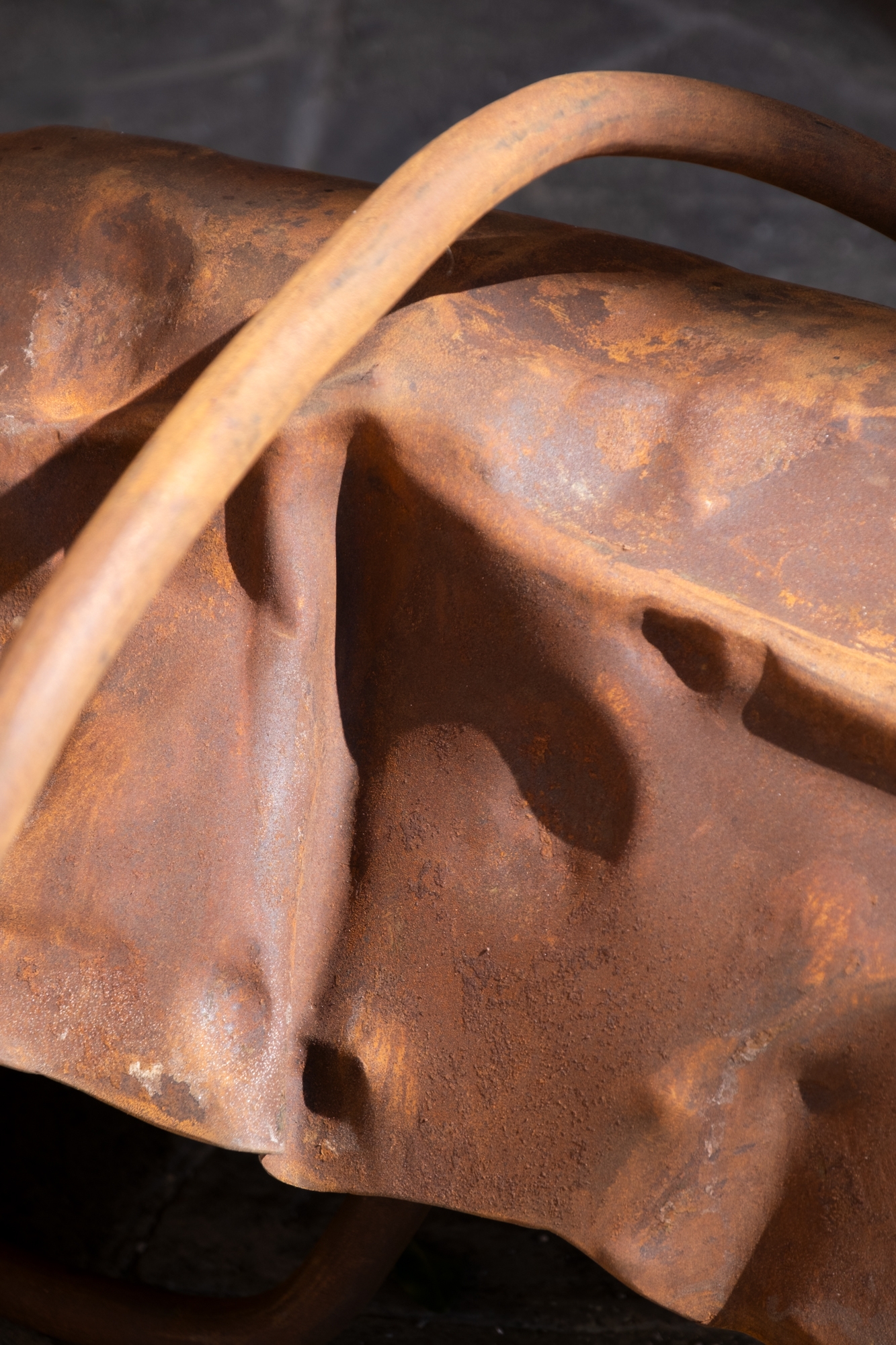
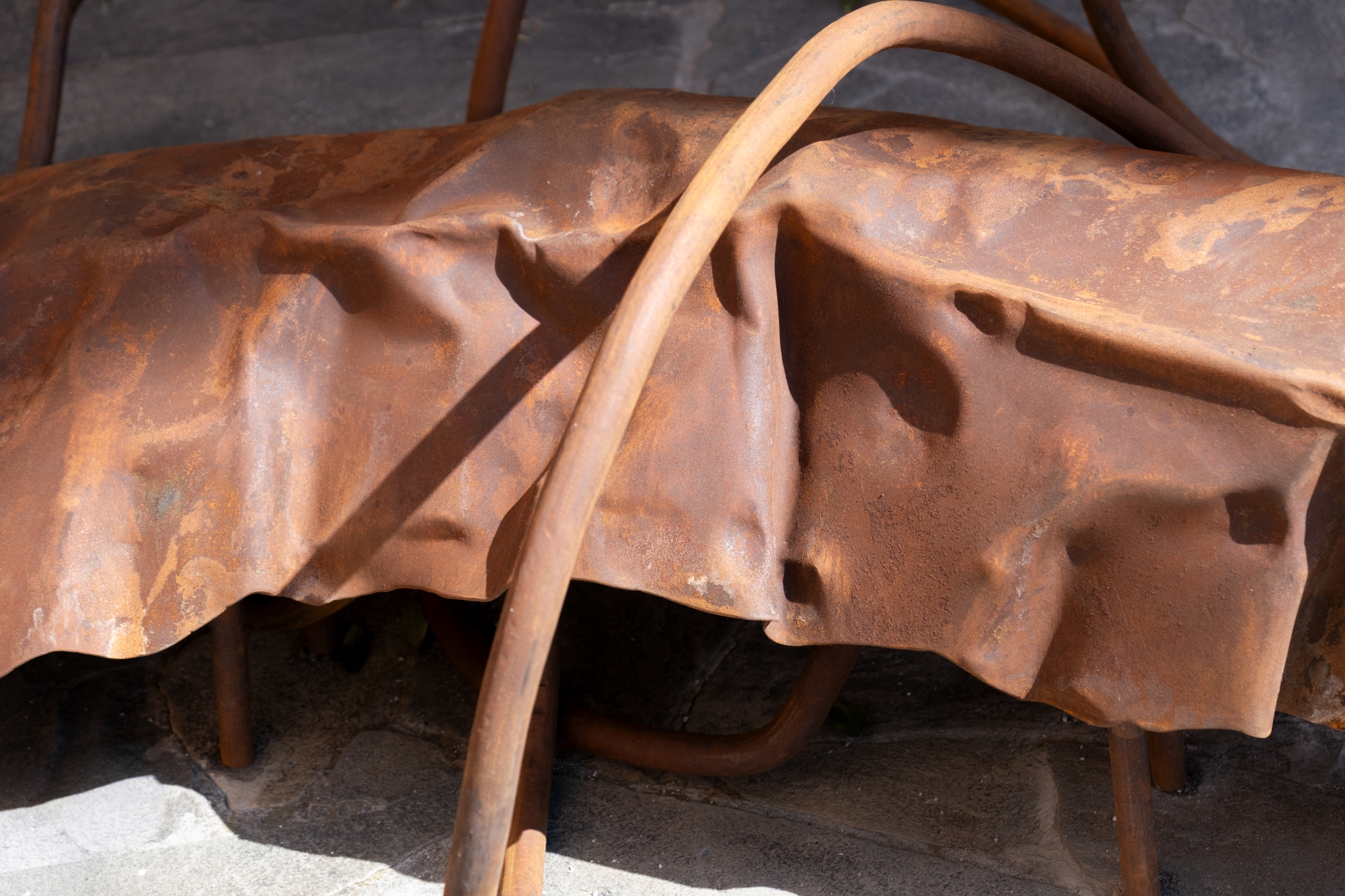
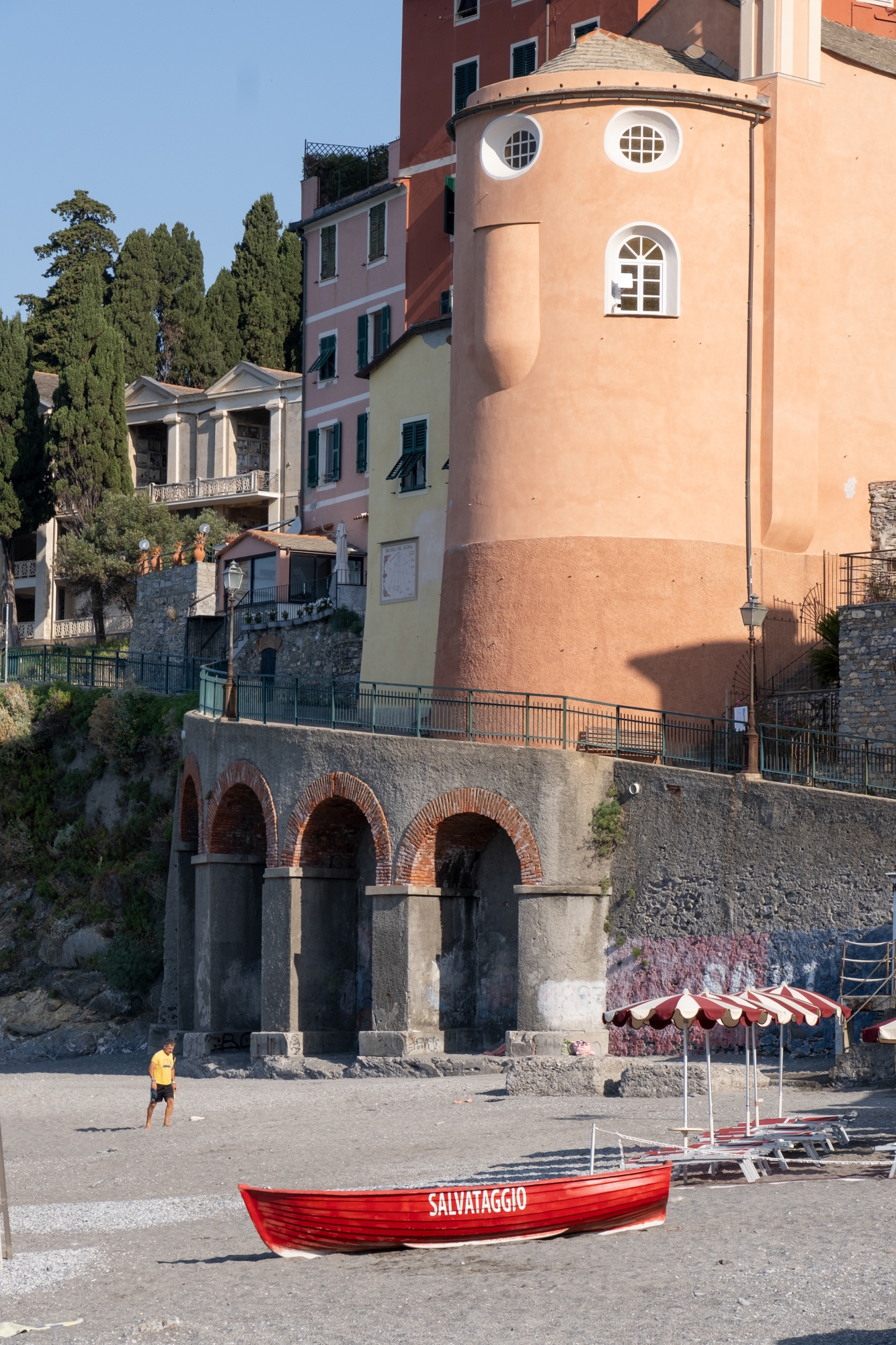
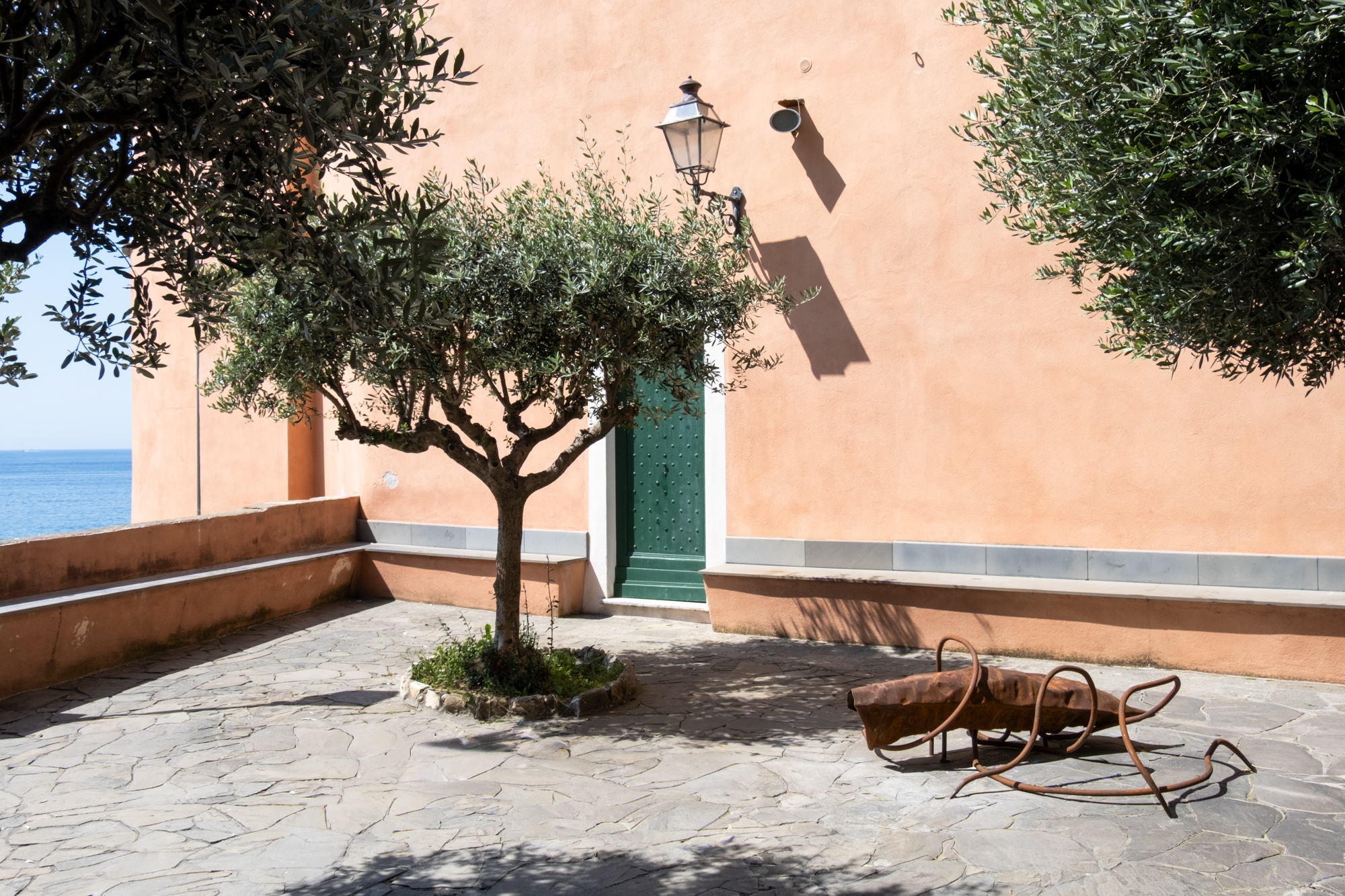
Dominique White, Residence Time, Sori (GE), Liguria. Ph Chiara Rebolino
Inspired by the tradition of maritime ex-votos, Dominique White’s research begins in Sori and intertwines with a broader sailing culture shared among France, Italy, and Greece. Through archival research, encounters with local folks, and direct visits to the ex-votos preserved in the Church of Nostra Signora delle Grazie, the work reinterprets forms tied to individual experiences, translating them into a contemporary language suspended between memory and transformation.
The sculpture takes shape as a symbolic ex-voto dedicated to those who remain indefinitely at sea, recalling the scientific concept of Residence Time, meaning the biochemical and perpetual permanence of matter within the marine ecosystem, here inspired by its poetic translation in the writings of Christina Sharpe, evoking a collective and timeless dimension that spans past, present, and future.
Here, the artist explores the sea as an ecosystem where bodies and shipwrecks do not vanish, revealing how the lives of sailors and their vessels are inextricably intertwined. The work thus presents itself as an open gesture toward the sea and the lives that have crossed it: a sea understood as a space of memory, where loss weaves into a possible form of immortality.
Work:
Dominique White, No one dies of old age at sea, 2026. Iron, 120 x 130 x 50 cm.
Piazza Sant’Erasmo, Sori (GE)
Mi aspetto che il sole mi illumini ancora
Publication’s presentation
2 October 2026 h. 5:30 pm
Piazza Chiesa, Monteleone Rocca Doria (SS)
Ilare
curated by Anna Pirisi
with Piera Masala, Foghiles e Luca Sanna
Thanks to: the Municipality of Sori and its administration, the Ligurian Region, the Pro Loco of Sori, the company Olcese-Ricci, Aldo Pezzana — Prior of the Oratory of Sant'Erasmo and curator of the Quaderni di storia di Sori, Farida Simonetti — art historian and expert in Ex-Votos, Don Nicola Improda — parish priest of Sori, Patrizia Rebora, Paolo Stagno, the Associazione Amici del Mare, and the volunteers of the Museo Marinaro di Camogli. Special thanks also go to Architect Alessandro Giaconia and to blacksmiths Giorgio and Luca Pellizzaro for their assistance in the realisation of the work and its project. The contribution and collaboration of each and every one of them were essential to the success of this initiative.
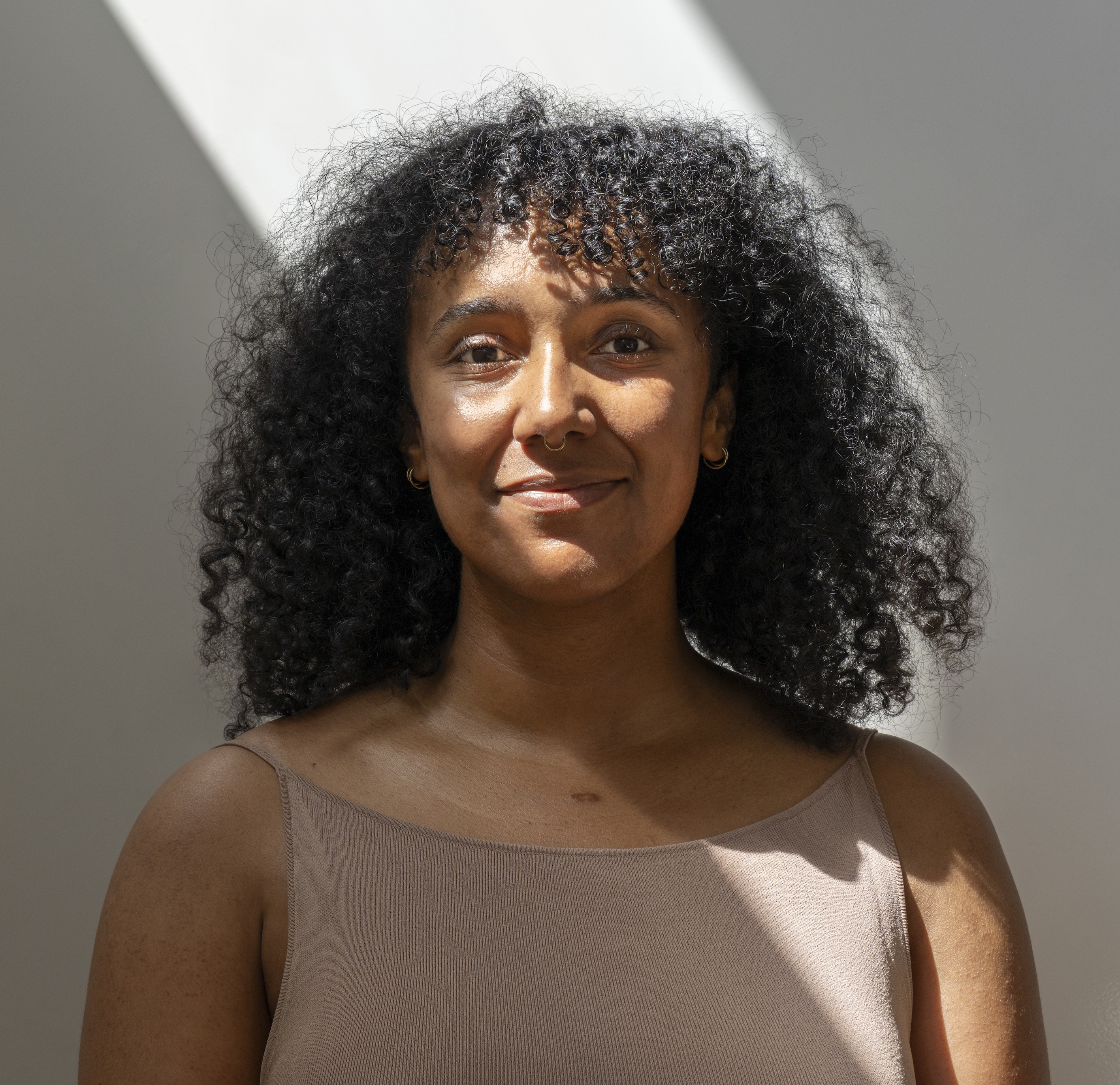
Dominique White (UK, 1993) intertwines theories related to Black subjectivity, Afro-pessimism, and grassroots hydrarchy (a concept related to the dismantling or subversion of individuals' ability to conquer new lands by sea), alongside nautical myths particularly relevant to the Black Diaspora. White redefines the term “shipwreck(ed)” as a reflexive verb and a state of being, embodying its abolition through her work. Her sculptures, or beacons evoke marine worlds that prophesy the emergence of stateless individuals in contemporary society: "a [Black] future that, while not yet materialized, must arrive." (Campt 2017 in Yussof 2018). She graduated from Goldsmiths, University of London. Major solo and two-person exhibitions include All Great Powers Collapse from the Centre at Kunsthalle Basel (Basel, CH, 2026), Deadweight at Whitechapel Gallery (London, UK, 2024), and Dominique White and Alberta Whittle: Sargasso Sea at ICA Philadelphia (Philadelphia, USA, 2024).

Valentina Buzzi is a curator, writer, and researcher working between Europe and Asia. Her practice explores cross-disciplinary approaches to contemporary art, with a focus on science, cultural heritage, and cultural policy. She was Artistic Director of the first Italian Pavilion at the Gwangju Biennale (2023) and curated Lee Bae’s official collateral exhibition at the 60th Venice Biennale. She currently co-curates the contemporary art programming at the Korean Cultural Center of Paris for the 140th anniversary of France–Korea relations. She is a Curatorial Researcher at the Park Seo-Bo Foundation, an independent editor for SKIRA, and a contributor to Art Asia Pacific.
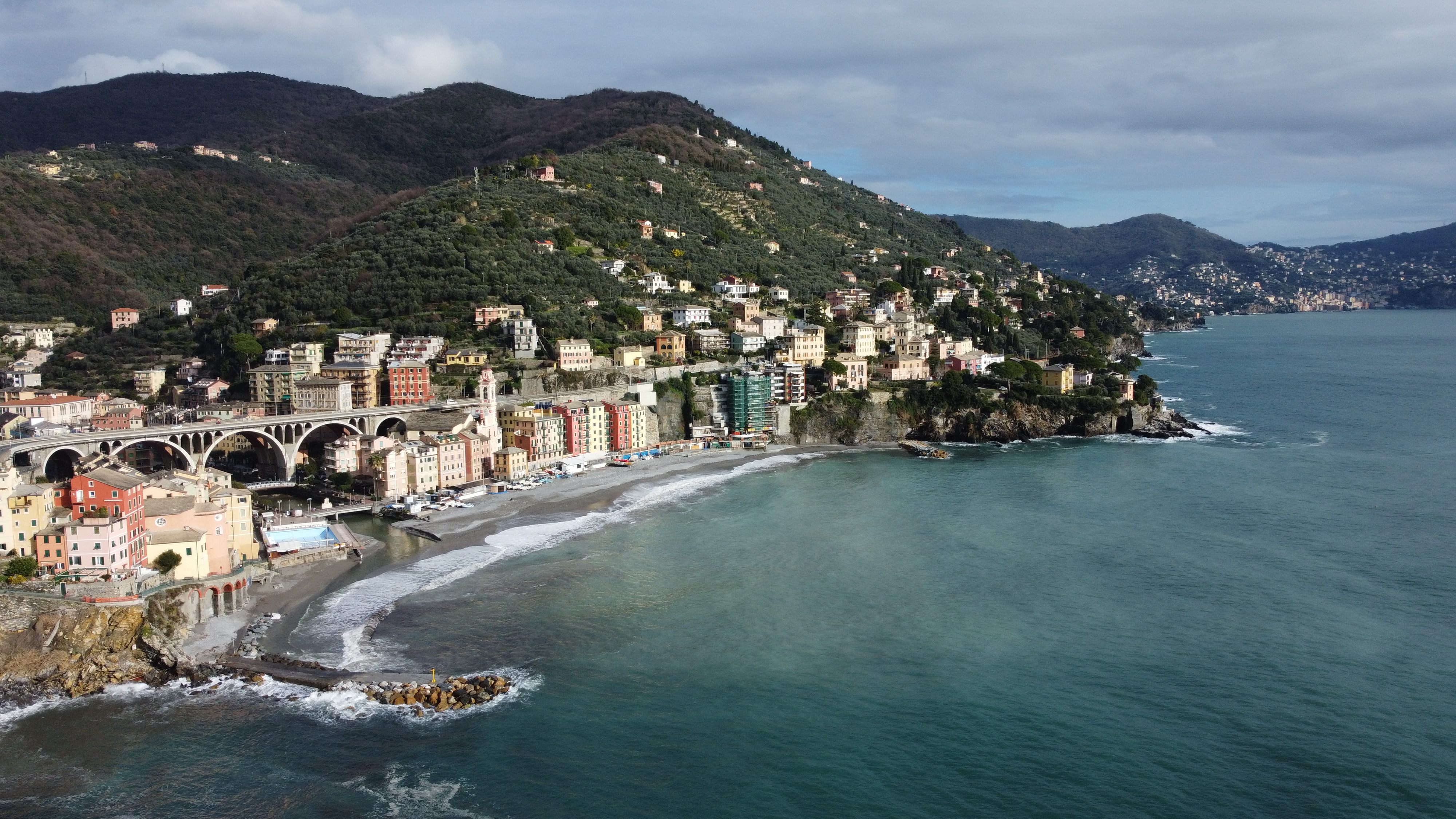
Sori is a seaside village in the Golfo Paradiso, east of Genoa. Its territory stretches from the sea up to Mount Becco, offering a remarkable variety of natural environments.
The earliest documented records date back to 1143, attesting to its foundation in that period. In the following centuries, Sori developed thanks to trade and its maritime tradition, although, like many coastal towns, it suffered looting and attacks by pirates.
In the local sanctuary, numerous ex-votos from the 17th to the 19th century are preserved, together with the Madonna delle Grazie, known as the Black Madonna, to whom tradition attributes several miracles, including protection from corsair raids.
The name of the village derives from “luogo solatio,” meaning a sunny, light-filled place—a definition that still reflects its mild climate and bright atmosphere today. It is especially in summer that Sori comes alive, when the rhythm of the town intertwines with life by the sea.