Enea Toldo
Se ascolti tutto risponde
curated by Elena Graglia
Opening
Sunday, June 21 at 11:30 a.m.
Ponte medievale, Fontainemore (AO)
"I used glass as an extraneous element to bring into focus the aquatic, vegetal, and mineral entities of the village, opening up a perspective on our relationship with these elements and its transformations. I conceive of ecology as interdependence, and therefore as care. I activate fragility in order to observe what happens."
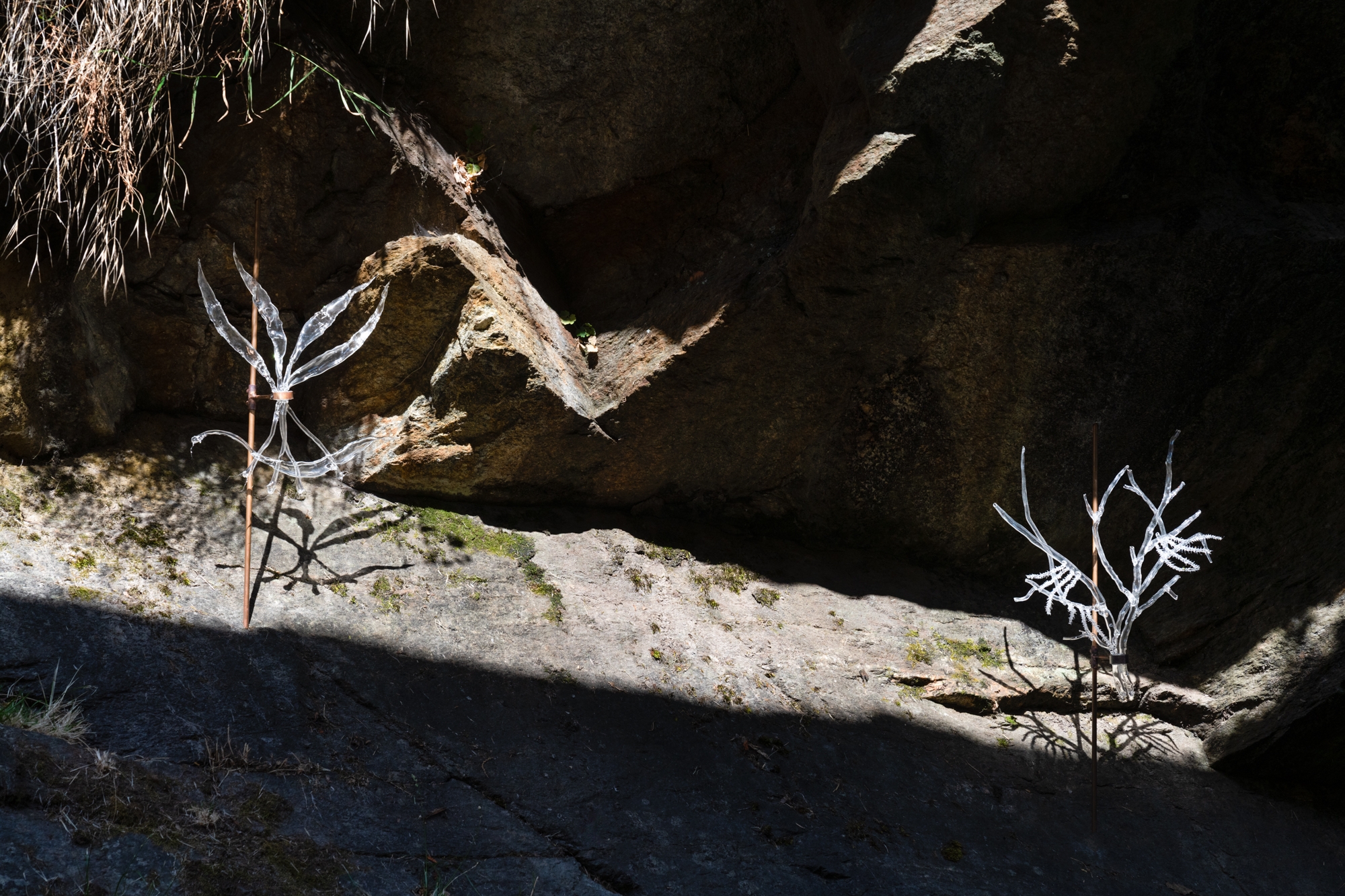
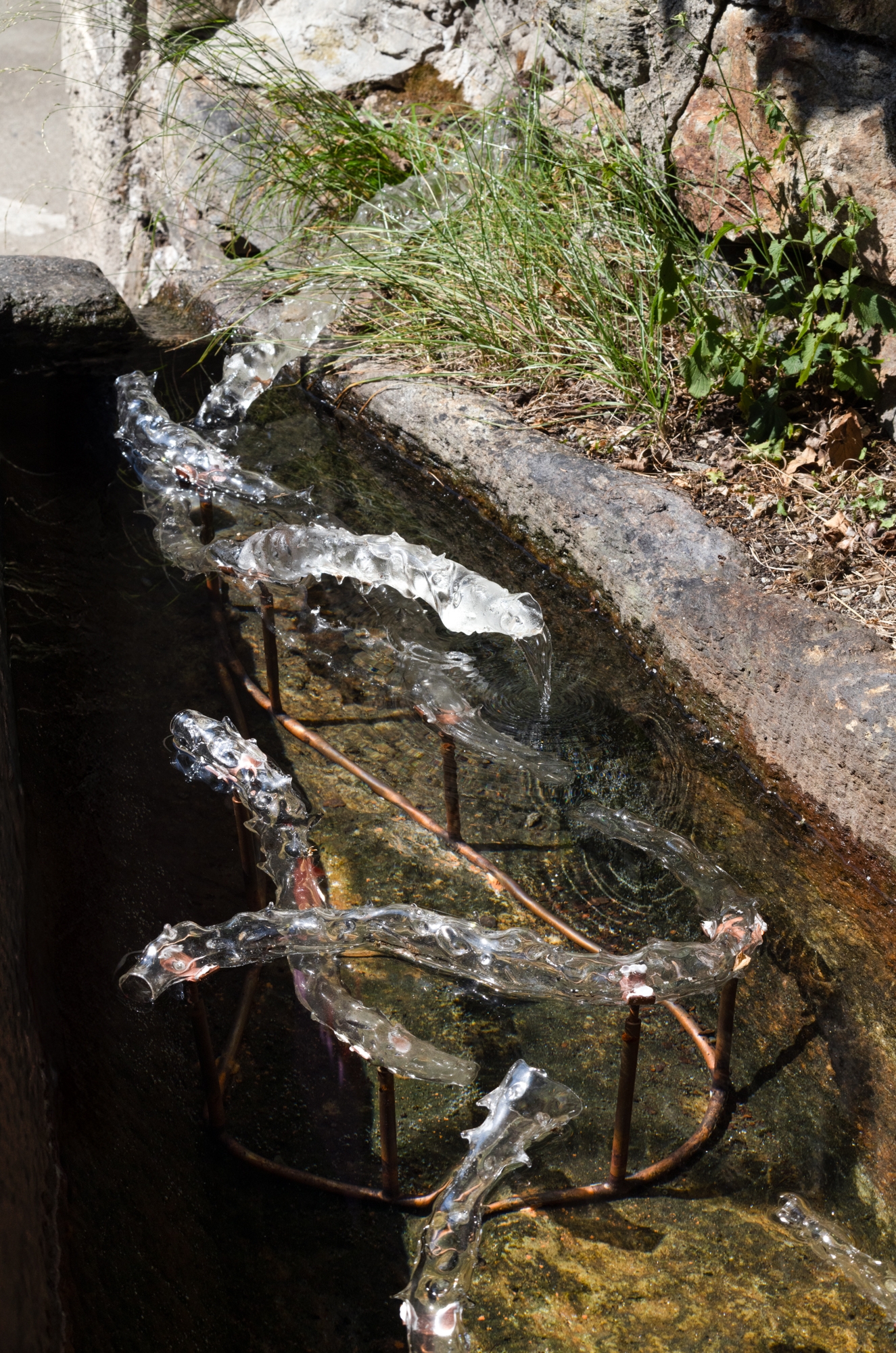
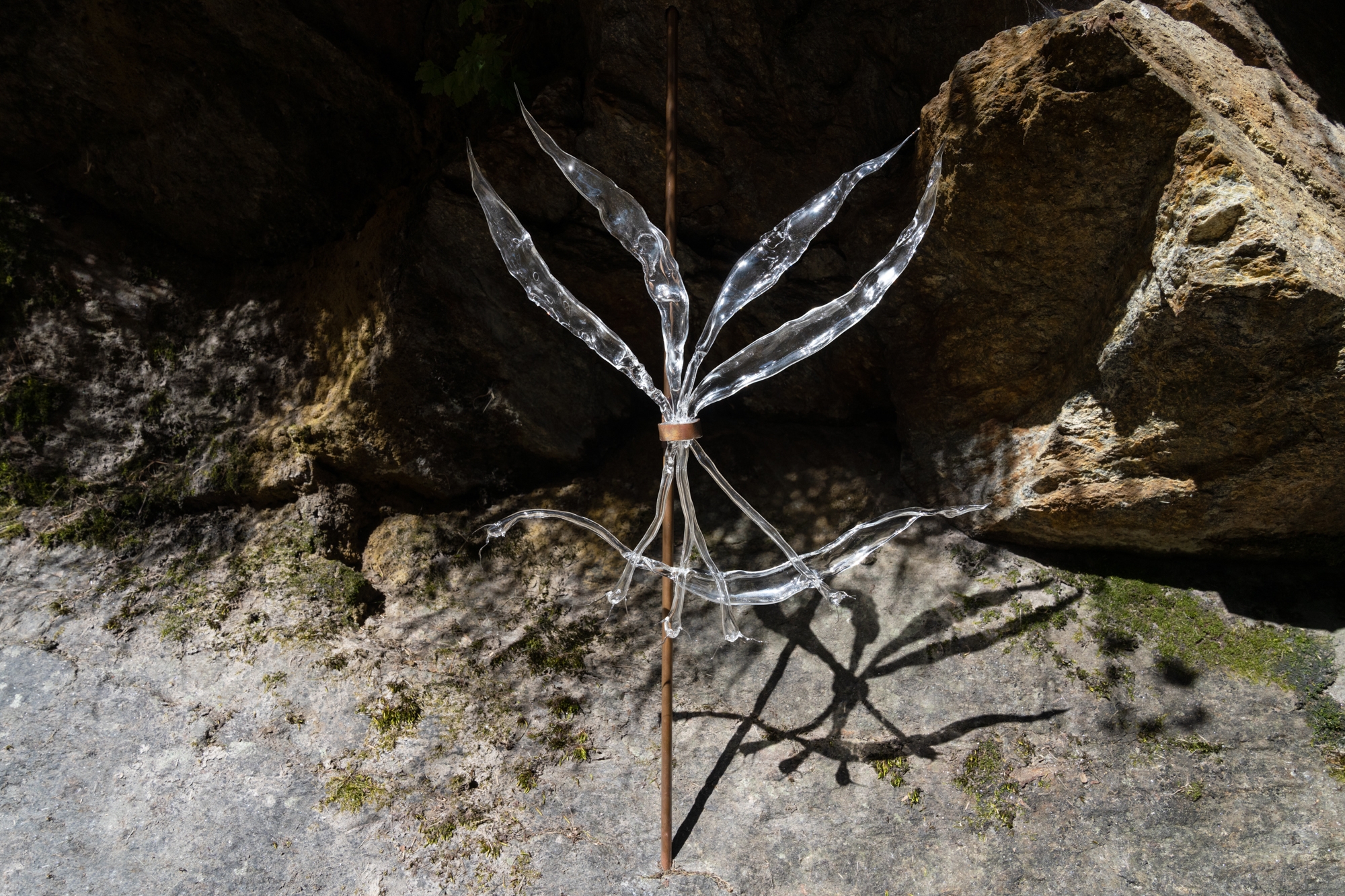
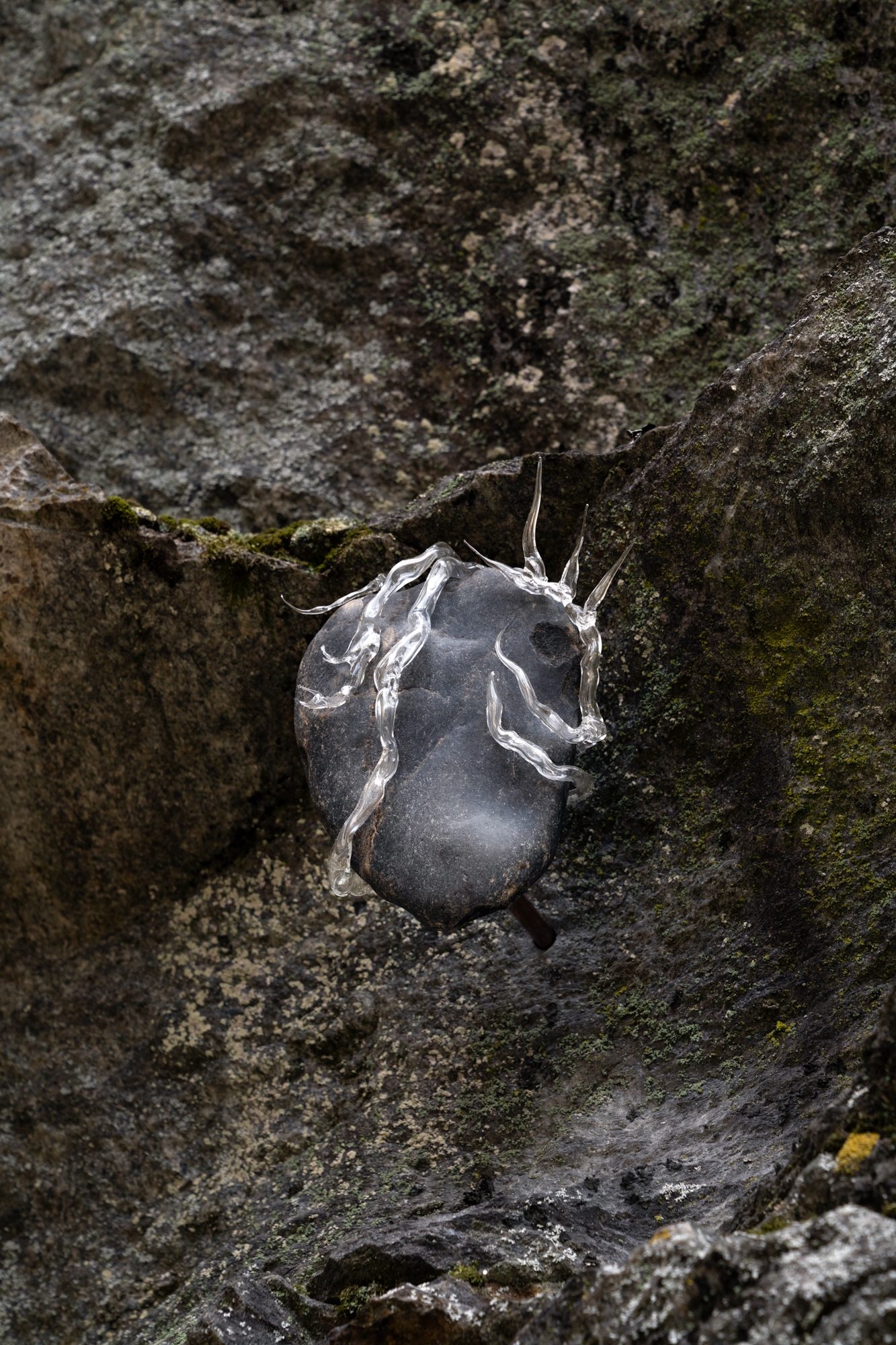
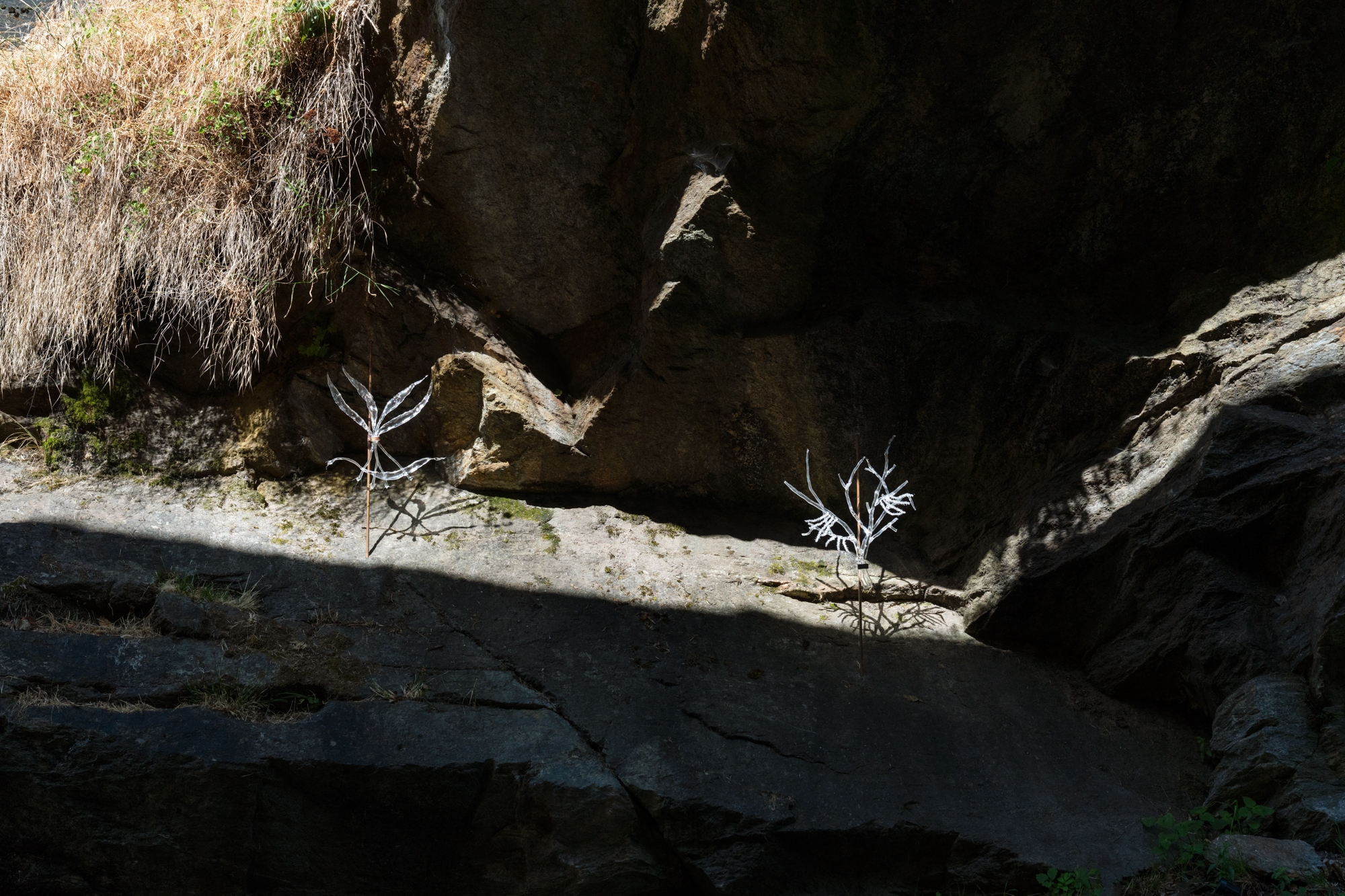
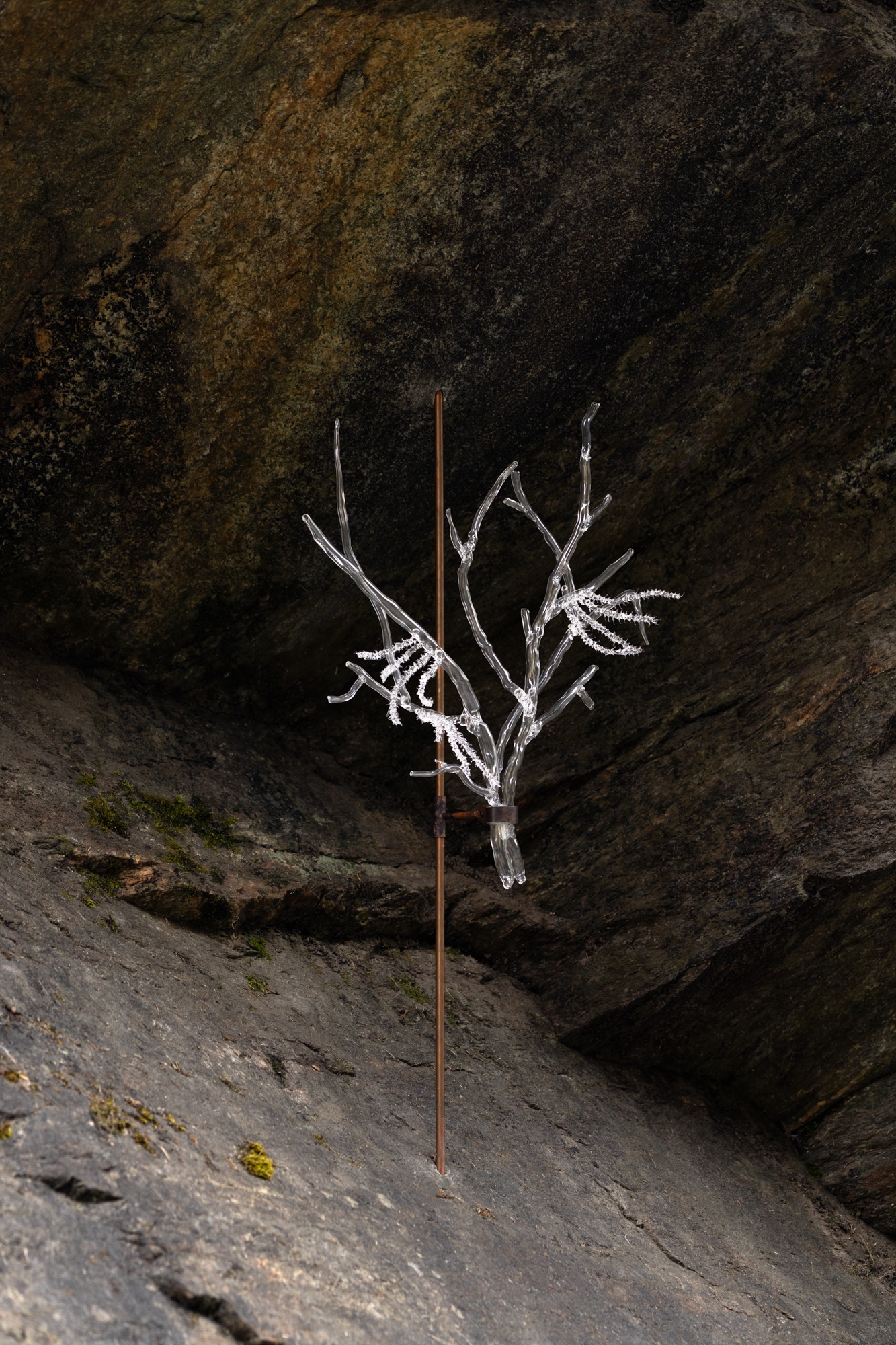
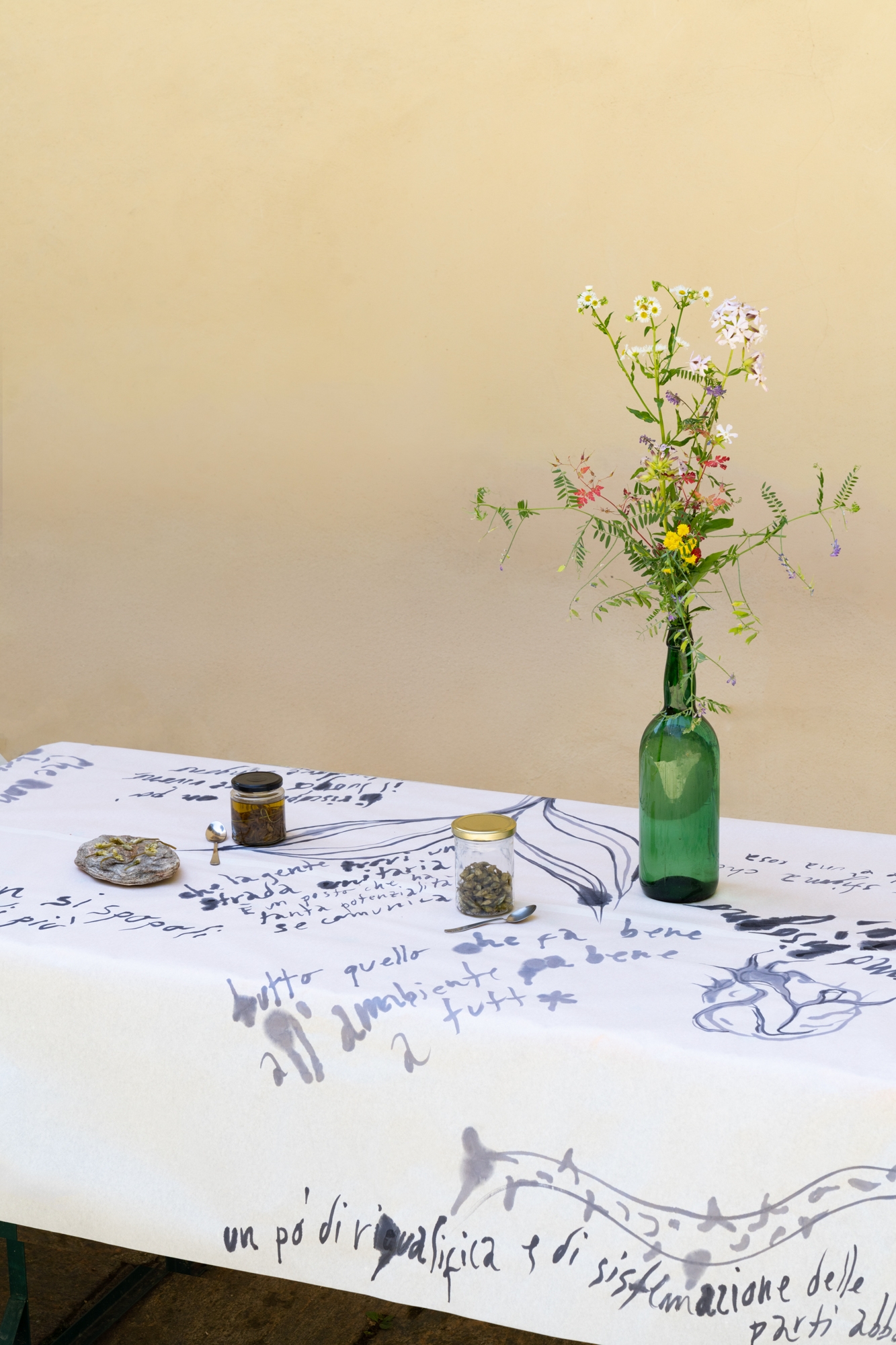
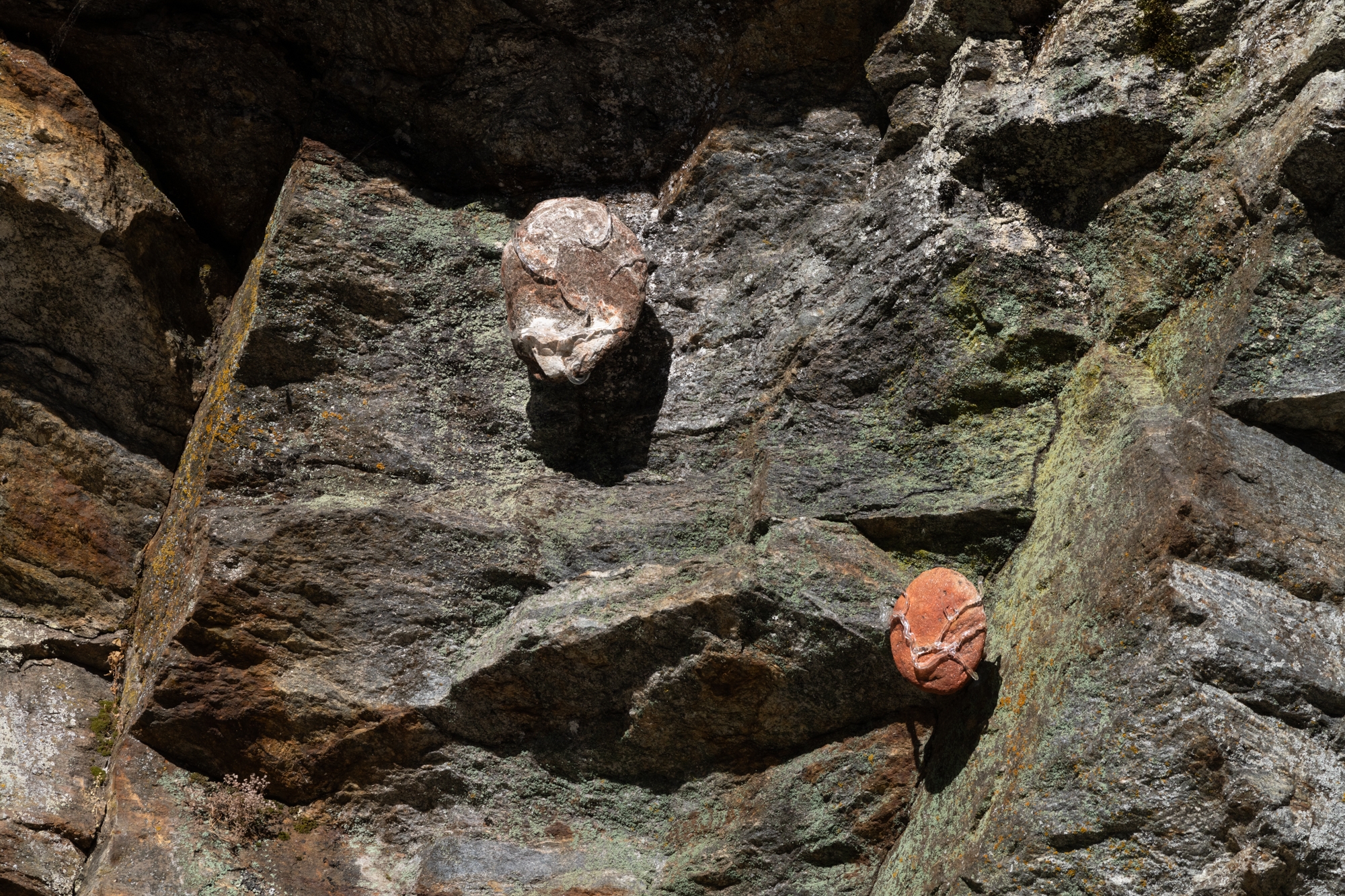
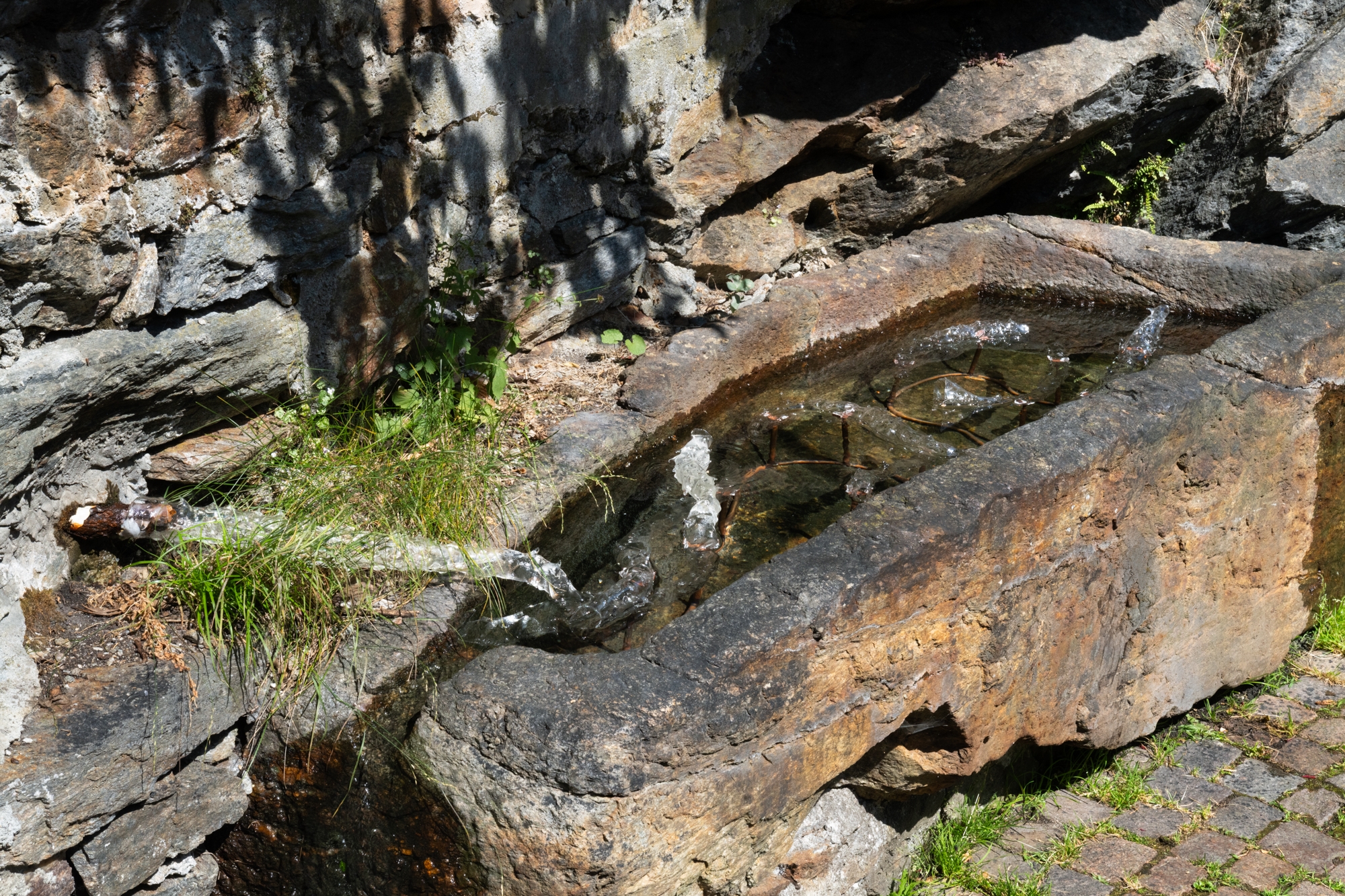
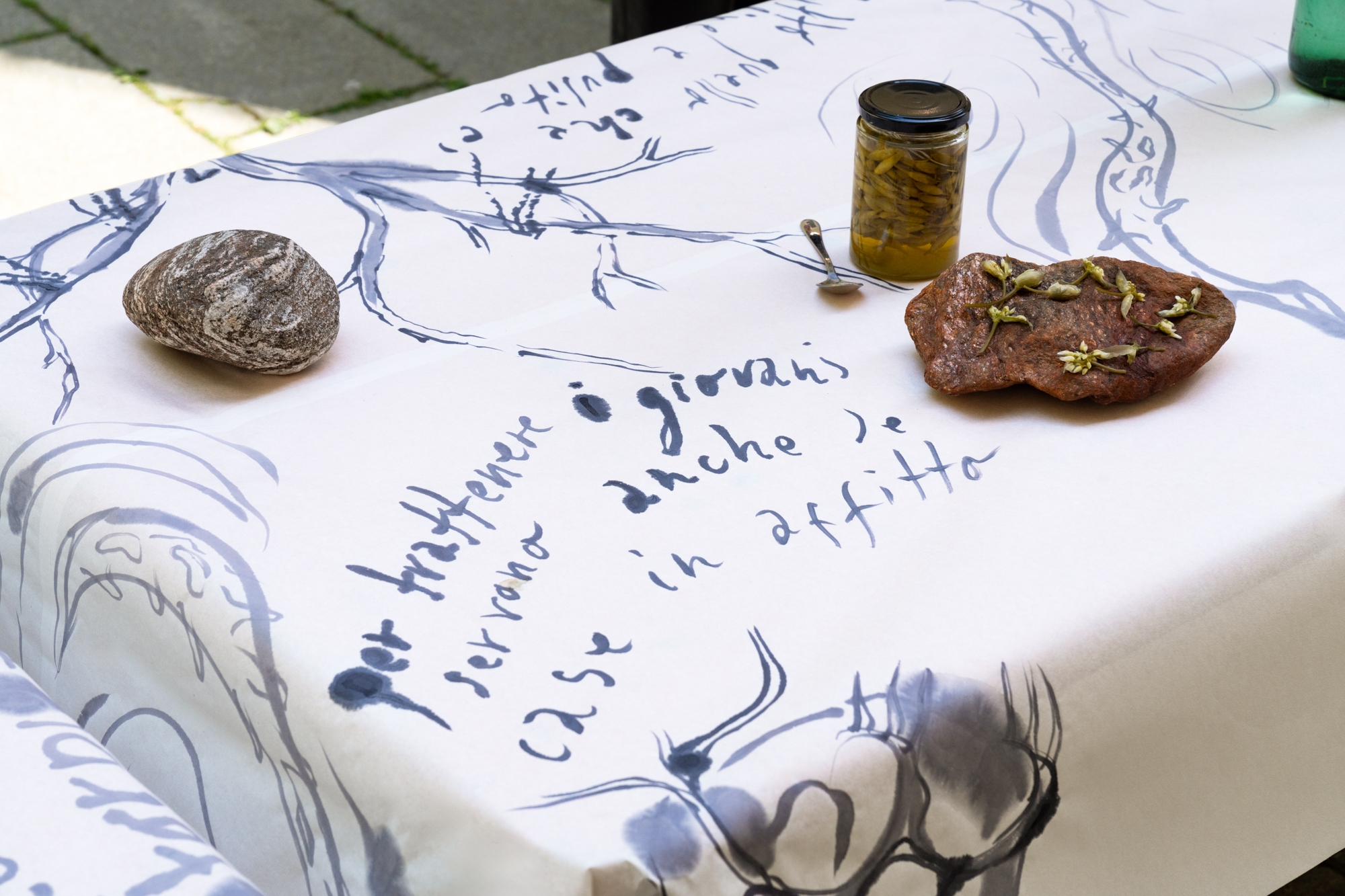
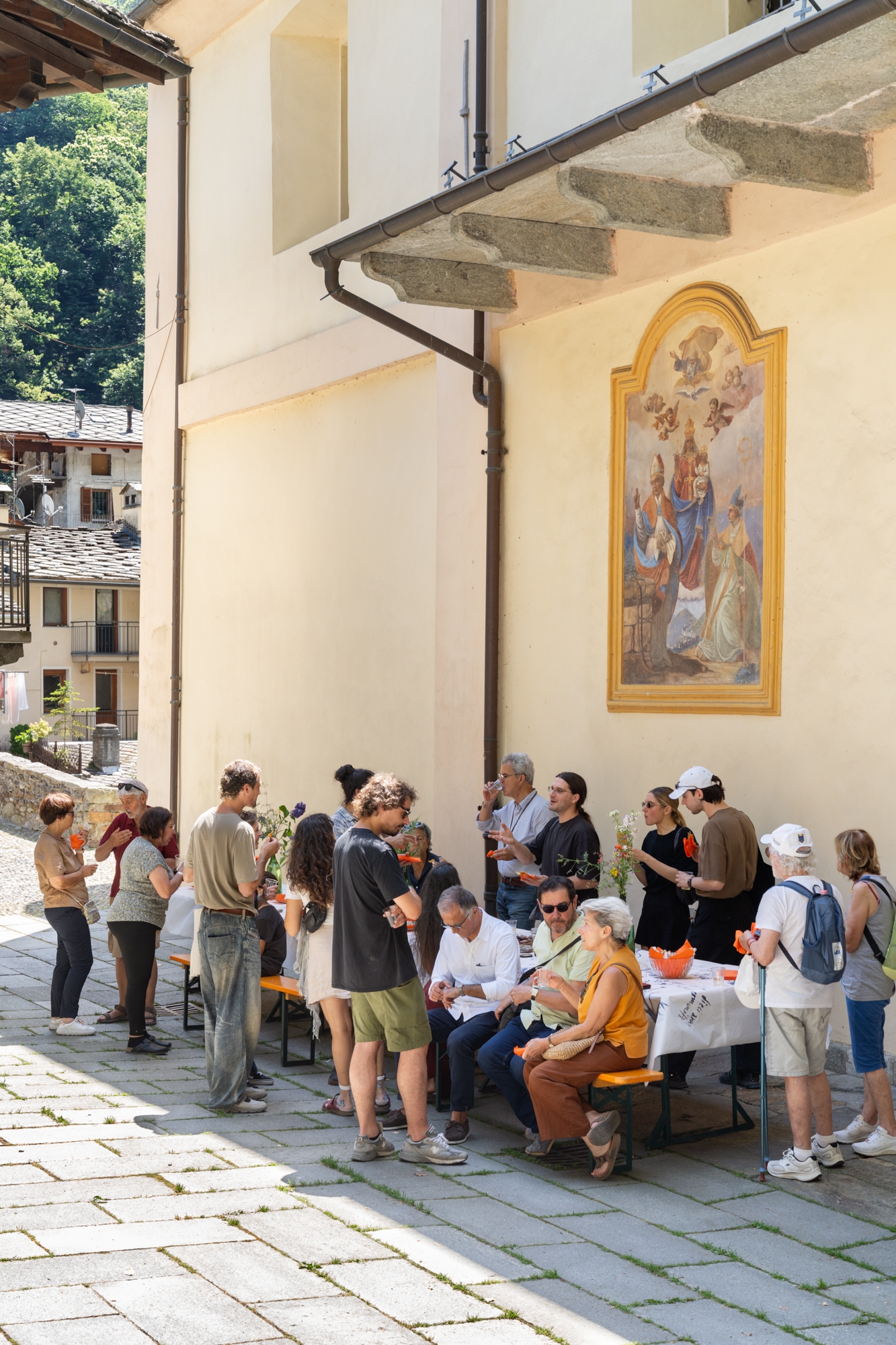
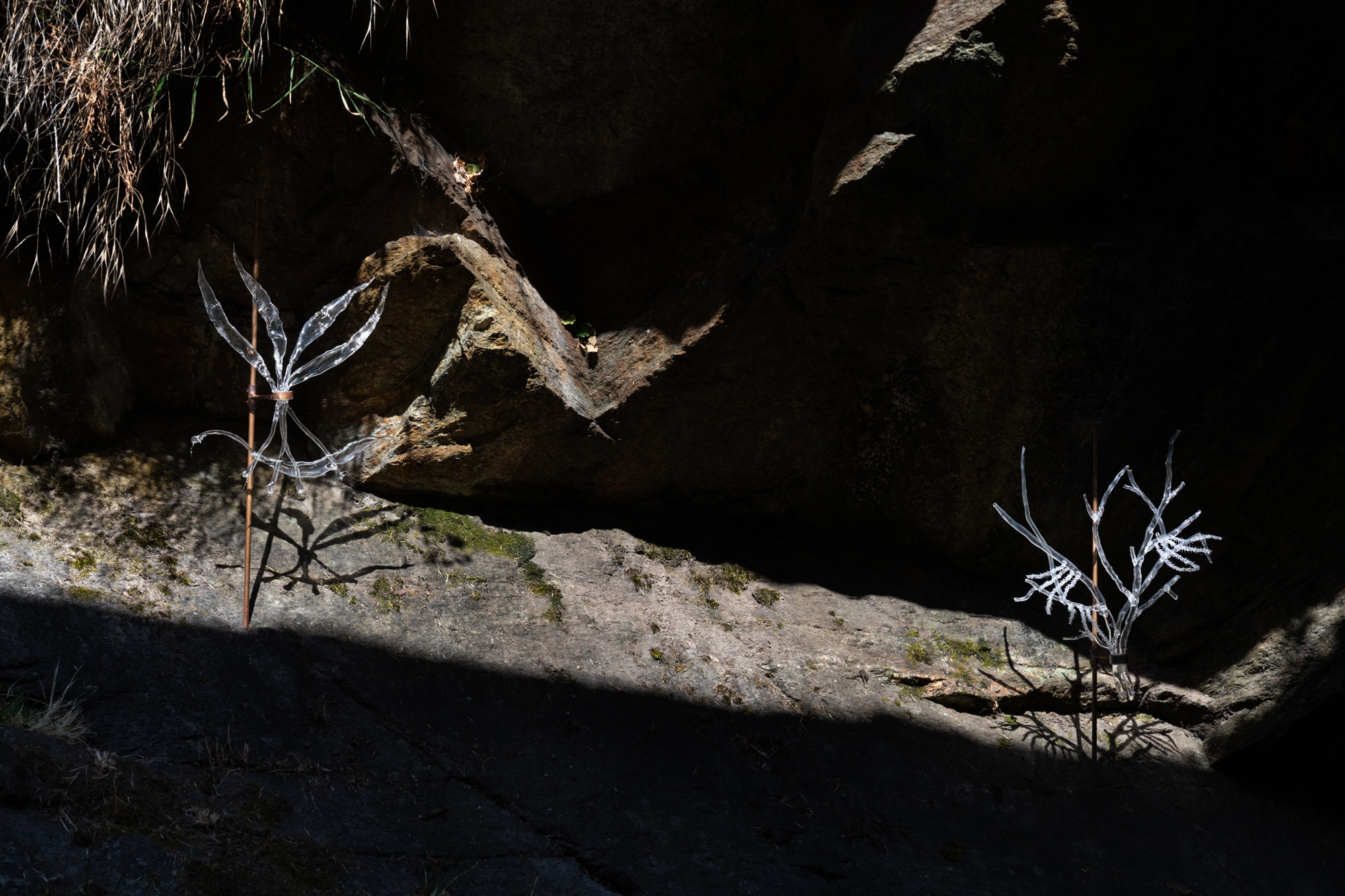
Enea Toldo, Se ascolti tutto risponde, Fontainemore, Valle d’Aosta. Ph Lorenzo Capelli.
“What do you hope for this place?” is the question the artist posed to the residents of Fontainemore, setting in motion his residency in the village. From the voices gathered across different generations, three fundamental elements emerge: water, stone, and plants. Part of the village’s daily life for centuries, the river has been an essential resource but also a complex presence, now made more unstable by climate change, which makes floods less predictable; stone tells the story of the local stonemasons’ tradition, still visible but increasingly rare; plants, such as wild garlic and chestnut, once formed an important part of the diet, now less present.
Glass enters the landscape and sits alongside these elements without adding to them, but by shifting the gaze toward what already exists. The installations arise from observation and follow the forms and rhythms of the place. From this interweaving takes shape Se ascolti tutto risponde, a vision made of relationships and interdependencies, in which the bond between community and territory is continuously redefined. Reverberation becomes an image of this process: like an echo or a reflection, it returns and transforms what surrounds it. Fragility is not something to be resolved, but a condition to be experienced—one in which to observe how humans and the environment influence and transform one another.
Ph. Lorenzo Capelli
Artworks:
01 Enea Toldo, Chi decide la tua forma?, 2026. Borosilicate glass, variable dimensions. Fountain near the Piazza della Chiesa di Sant'Antonio Abate
02 Enea Toldo, Chi ti ha insegnato a resistere?, 2026. Borosilicate glass, river stones, variable dimensions. Piazza della Chiesa di Sant'Antonio Abate, Fontainemore (AO)
03 Enea Toldo, Chi parla ancora con te?, 2026. Borosilicate glass, variable dimensions. Piazza della Chiesa di Sant'Antonio Abate, Fontainemore (AO)
Thanks to: Mayor Riccardo Pession, Councillor Massimiliano Vacher, Soffieria Remark, Lorenzo Lunghi, Mosè Creux and Vincenzo Marcone for their invaluable support, together with the entire community of Fontainemore.
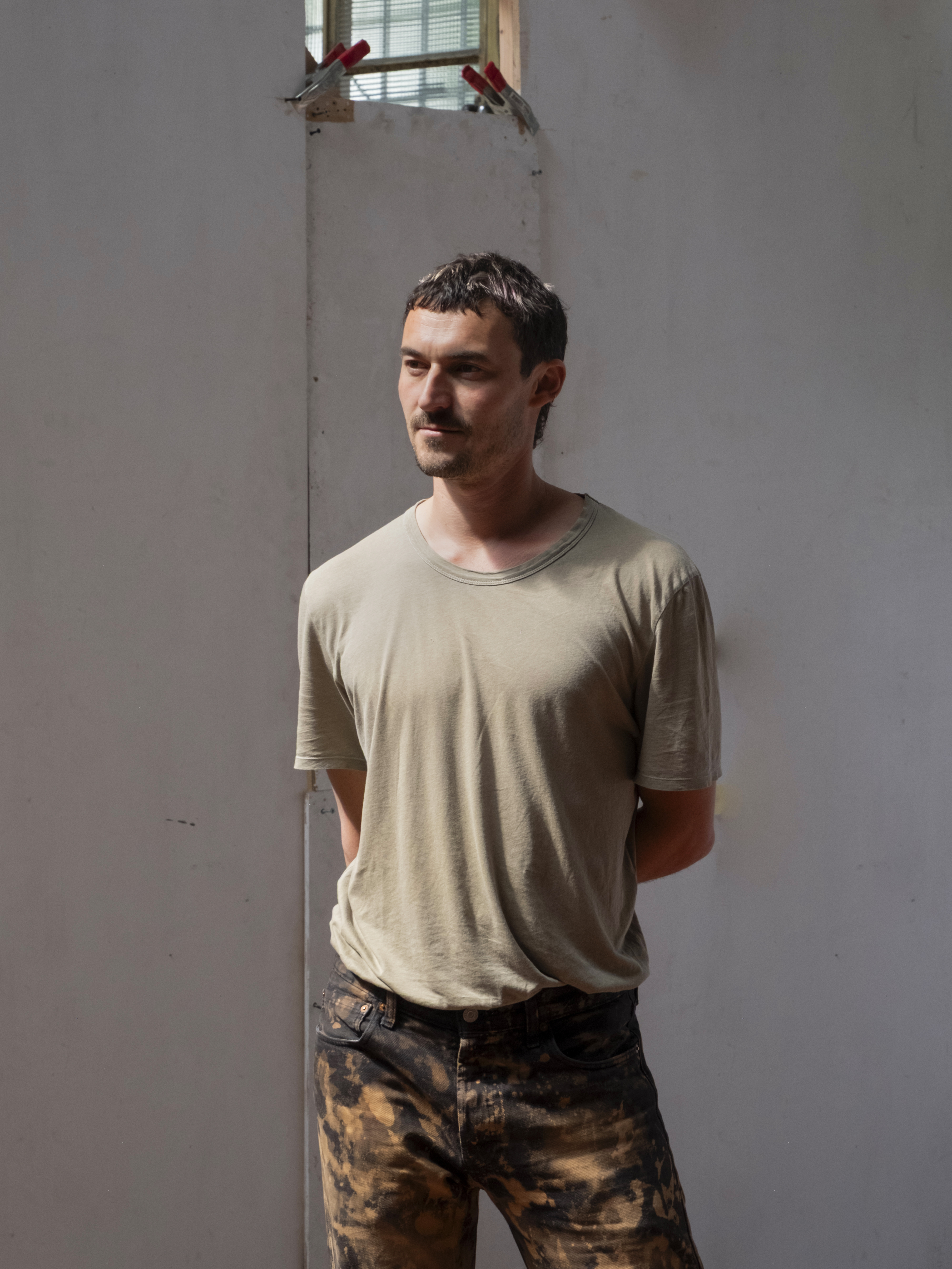
Enea Toldo (Locarno, Switzerland, 1988) is an artist living and working between Switzerland and his studio in Milan. He works with raw earth–based plasters and pigments, rethinking the materiality of the canvas through ecological construction techniques. By leaving traces while simultaneously representing nature, his works evoke unusual sensations of closeness and earthy smells. He has recently held solo exhibitions at DS Galerie (Paris, FR, 2025); Villa Clea, Milan (IT, 2024); and Condominio, Milan (IT, 2024). He has participated in group exhibitions including Material Art Fair Mexico (MX, 2025); Kulturfolger, Zurich (CH, 2025); and z2o gallery, Rome (IT, 2025), as well as international residencies such as Savvala, Latvia (LV, 2025).
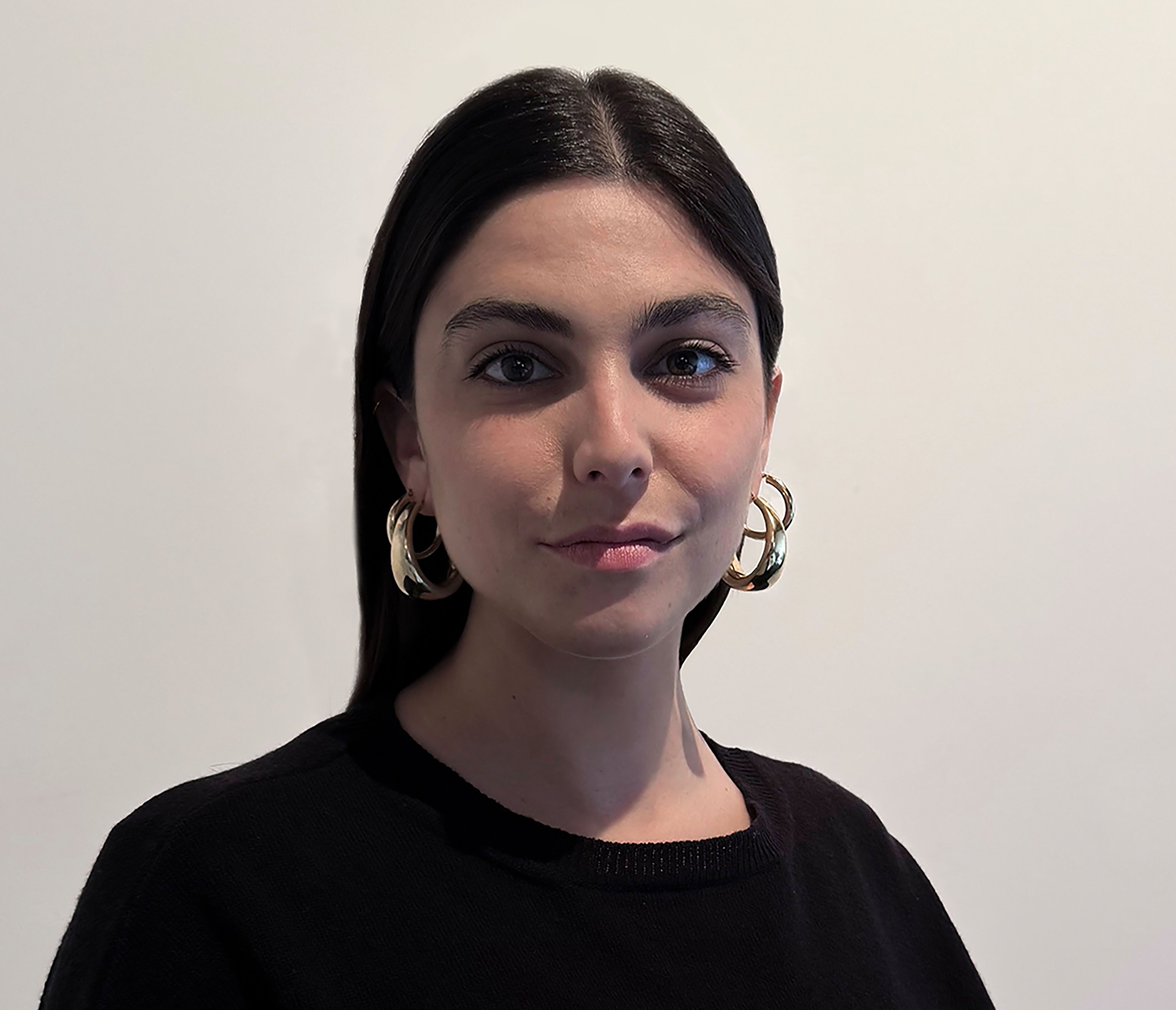
Elena Graglia is an independent curator and producer based in Venice and Milan. After earning a degree in Cultural Heritage Conservation and Management from Ca’ Foscari University of Venice, she completed a Master’s degree in Curatorial Practices at the Istituto Europeo di Design in Florence. She has worked as gallery manager at Galleria Castiglioni in Milan, specializing in contemporary painting, and as exhibition producer for the Kosovo Pavilion at the Venice Biennale. She currently works as a producer for MAY Venice, an agency focused on production and communication for contemporary art. For Una Boccata d’Arte in Valle d’Aosta, she curated Hetty Laycock’s project in Ollomont (2025).
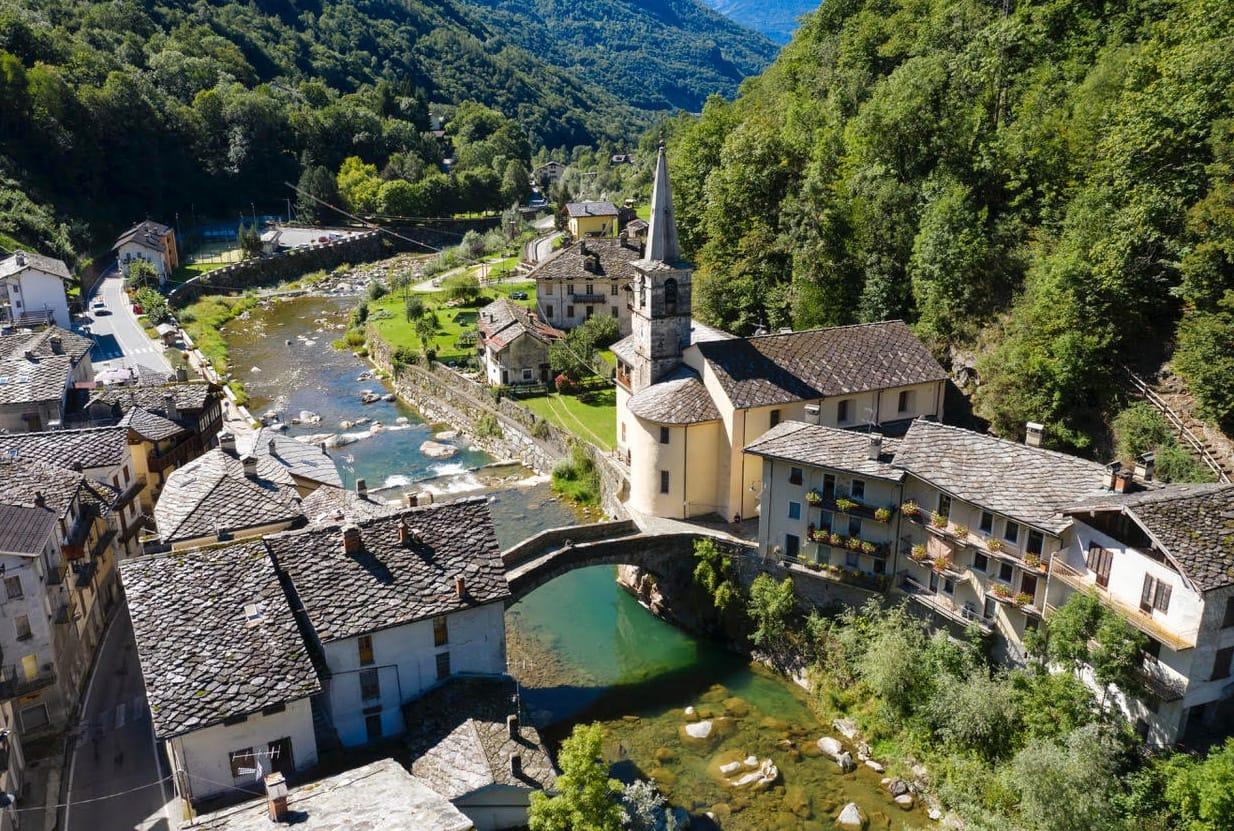
Fontainemore is a small village nestled amongst unspoilt woods, mountains and alpine pastures. The Church of Sant’Antonio Abate stands out against the landscape, adding a Gothic touch to the Mont Mars Nature Reserve, with its historic medieval bridge over the Lys stream; the area is dotted with frescoed chapels and traditional stone houses, precious testimonies to the craftsmanship of its historic bricklayers, the maçons, who for centuries migrated seasonally, taking their skills beyond the region’s borders. Among the town’s most deeply felt and long-standing traditions is the Procession of Oropa, an ancient pilgrimage that every five years brings the believers to the Sanctuary of the Black Madonna of Oropa, renewing a profound bond of faith, identity and collective memory.