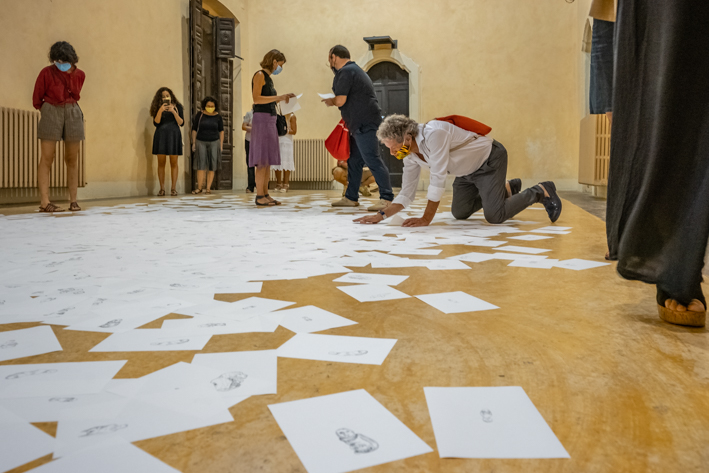
Claudia Losi
Whalebone arch
Whalebone arch è il capitolo finale di un racconto che tesso da quasi vent’anni, una ‘soglia’ formata da due ‘mascelle di balenottera’ di terra rossa sbiancata che viaggerà fino al finisterrae d’italia, il salento.
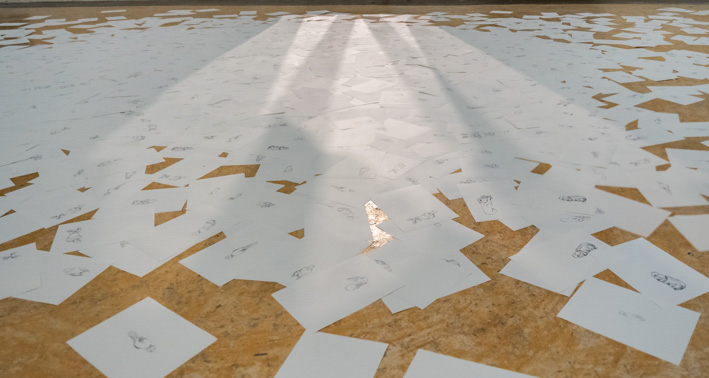
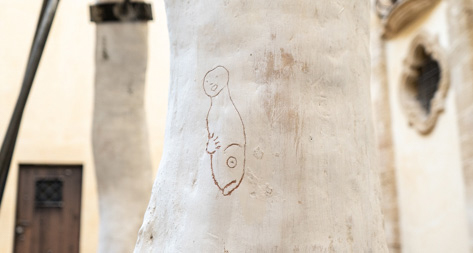
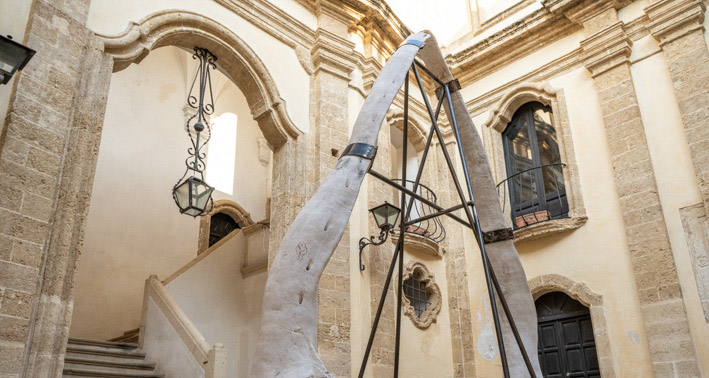
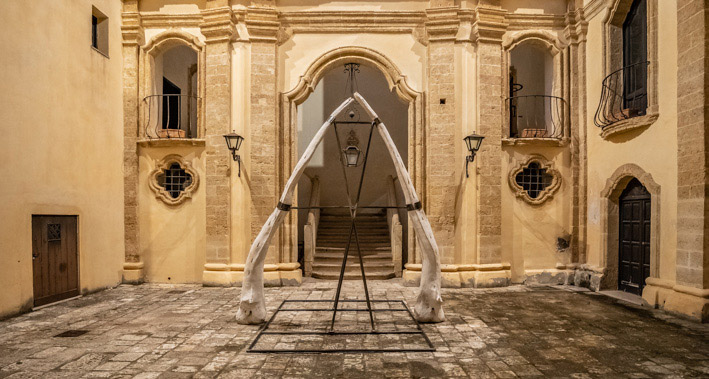
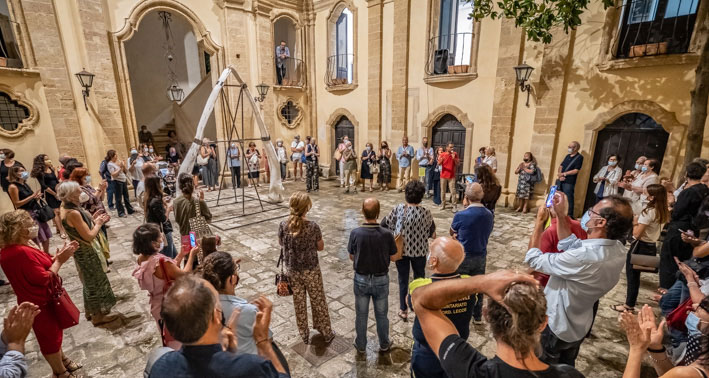
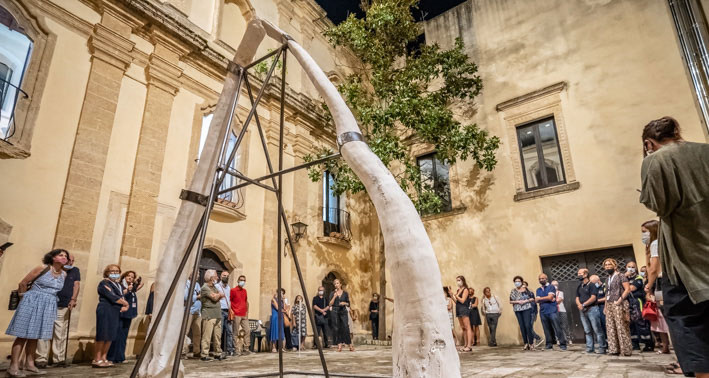
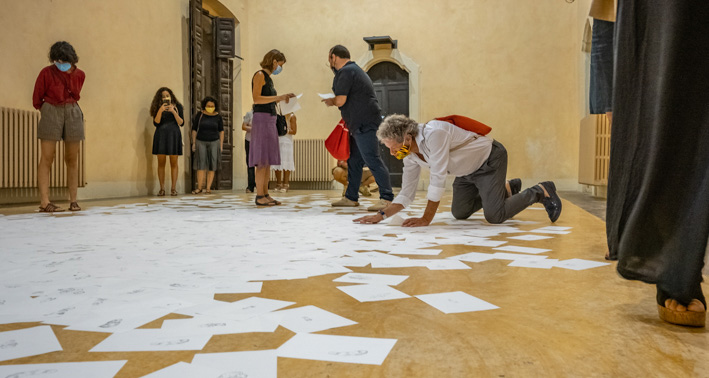
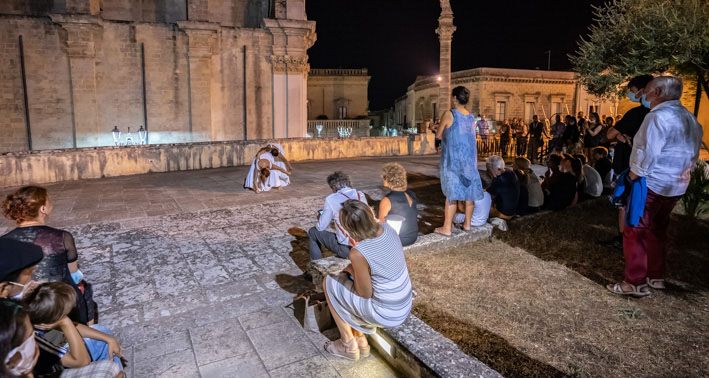
Claudia Losi, Whalebone Arch, 2020, Museo della Civiltà Contadina "Gino Orlando", Presicce-Acquarica (LE), Puglia. Ph. Pierpaolo Luca
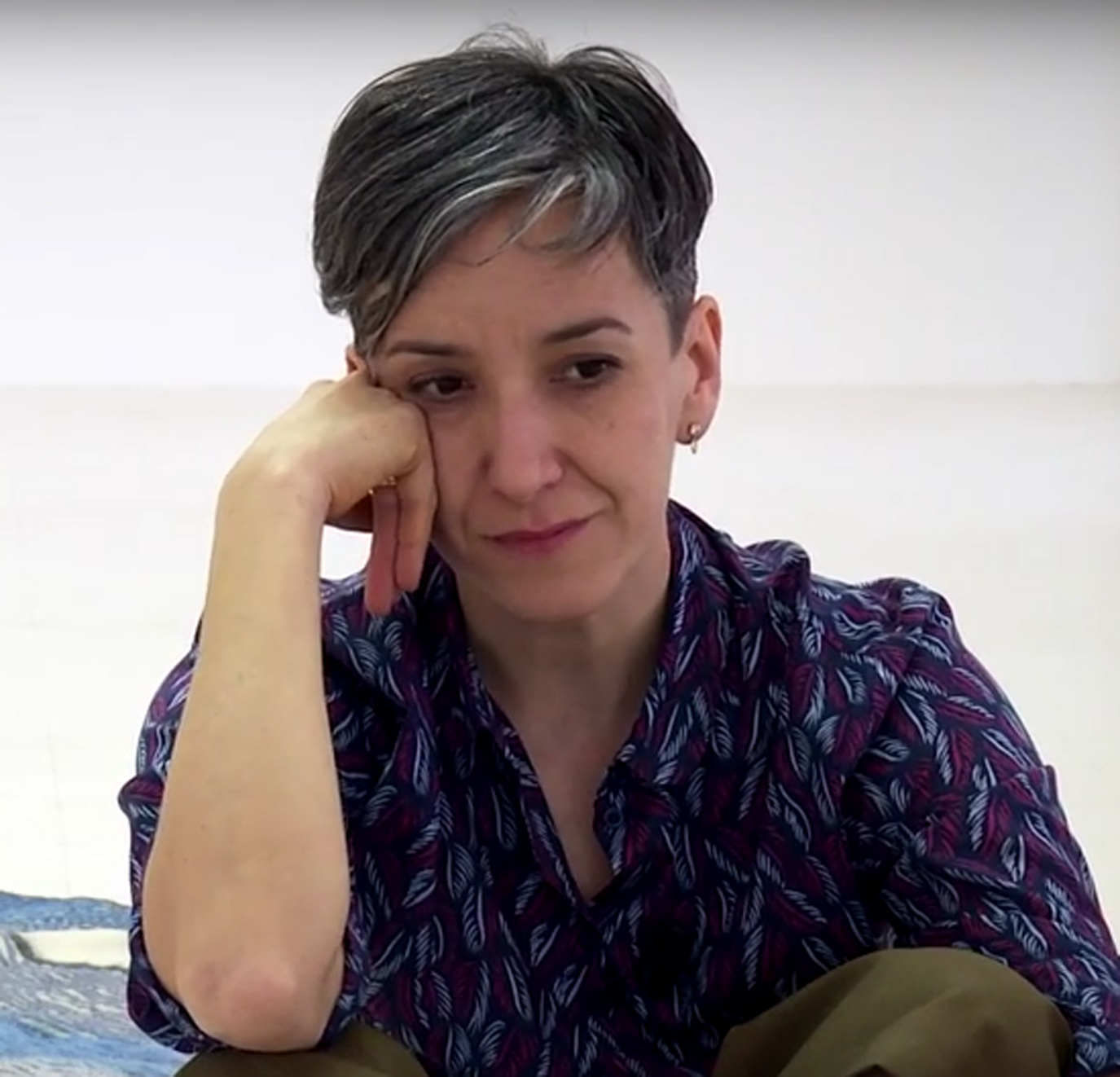
The work of Claudia Losi (Piacenza, 1971) focuses on the observation of the environment, natural and anthropized: the attention to natural sciences and humanities is a constant reference. Attentive to the historical and anthropological aspects of the environment in which we live, Claudia Losi is interested in exploring the concept of narrative through art and writing, sometimes creating new and temporary communities of human interaction and sharing of imaginaries.
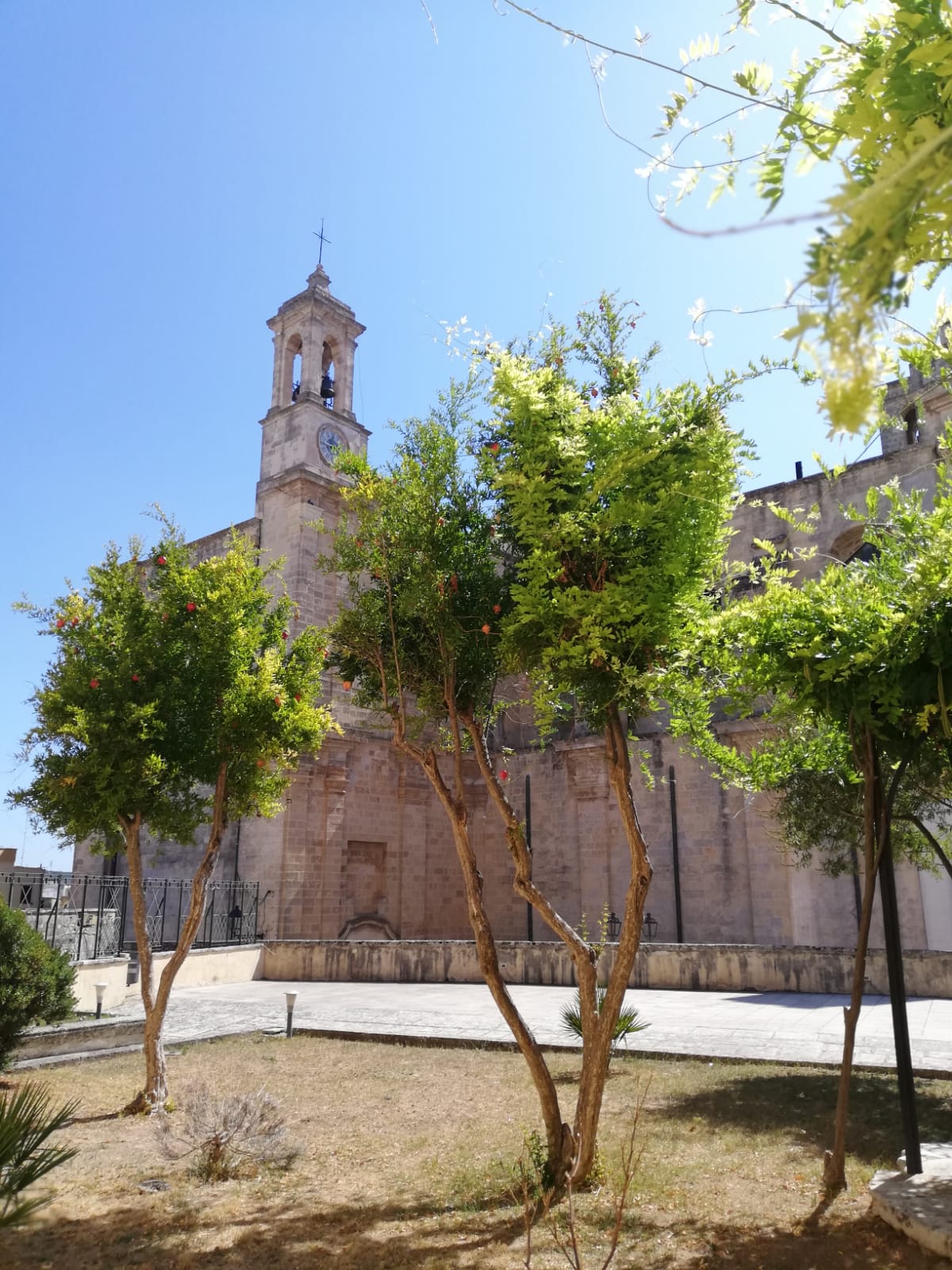
The village of Presicce is a unique town within the Salento territory thanks to its 23 underground oil mills located mostly among the ancient alleys and the central Piazza del Popolo.
The evocative aura that characterizes the alleys, squares and courtyard houses, the important noble and bourgeois palaces, the churches and chapels, the underground oil mills of Via Gramsci and Piazza del Popolo allows one to rediscover the atmosphere of the past, when the simplicity and concreteness of the peasant spirit coexisted with that of the nobility and the landed bourgeoisie who, since the second half of the sixteenth century, decided to invest their assets in this village. The traditional peasant civilization is represented by the museum located inside the Ducal Palace, providing important evidence of the local culture with particular attention paid to everyday life, agricultural work and trades.